REVELATIONS IN SCIENCE: instead of sound sleep — deformed children

Art design: huxley.media via Photoshop, inspired by René Magritte’s painting Portrait of Stephy Langui, 1961
HOW IT BEGAN
A
thousand years ago it was already said that the main condition of knowledge is doubt. Even quite serious research may overlook something, fail to take something into account — and instead of success the researcher will face catastrophe. One can almost never be sure that absolutely everything has been considered. Yet the probability of this should still be reasonably high.
The German chemist Otto Ambros (1901–1990) willingly took part in the Nazi development of poisonous gases. He received 8 years in prison as a result of the Nuremberg Trials, served his sentence, and then decided to turn to completely peaceful chemistry. He was assisted by Heinrich Mückter, who had participated in experiments on prisoners in Buchenwald, and Hermann Wirt, a long-standing NSDAP member. Speaking of karma may not be very serious, yet it is still curious why, even with good intentions, they ended up creating a terrible poison that sent thousands of children to their graves and left just as many mutilated…
Having earned good money in the difficult postwar years on soap and soda, Hermann Wirt founded the company «Chemie Grünenthal», which produced medicines. A noble cause, after all — nothing like torturing prisoners. In 1954, information emerged about the company’s chemists discovering a new substance with calming and sedative effects. But there is a hypothesis that Otto Ambros had already synthesized it back in 1944, testing it on concentration camp inmates — Grünenthal immediately claimed numerous human trials, but it is entirely unclear on whom exactly.
IT ALL BEGAN VERY BRIGHTLY…
The drug seemed completely safe. Terrifying 100-fold overdoses did not lead to the death of laboratory animals. The substance received a beautiful name — thalidomide. The appealing advertising slogan, «Deep and natural sleep lasting all night», inspired trust. In 1955 the company unofficially distributed samples to various medical institutions, and by 1957 it had launched mass production for sale. Within a couple of years, the drug was being sold in 46 countries under 37 different names, without any additional testing — everything seemed perfectly fine…
OVERLOOKED SIGNALS
Was there a chance to prevent the catastrophe at an early stage? I believe yes. As early as 1956, an employee of Chemie Grünenthal began giving the drug to his pregnant wife, and their daughter was born without ears! Unfortunately, no one connected this rare deformity with the use of an untested medication. Moreover, the drug began to be specifically recommended to pregnant women to ease the usual discomforts of pregnancy — primarily insomnia, anxiety, and morning nausea.
Warning signs kept growing: starting in 1959, Chemie Grünenthal began receiving numerous reports of peripheral neuritis that developed alongside thalidomide use. Yet sales continued to rise — according to some data, at the time, the only drug selling better was aspirin! The company itself cold-bloodedly denied any connection between thalidomide and the emerging complications, and even the need to make it a prescription-only drug.
More and more children were being born with only rudiments of limbs. This condition was called phocomelia — seal-limbedness — and indeed, the resemblance was striking. At first, the cause of these horrifying deformities was blamed on nuclear tests, which at the time — before the test ban treaty — genuinely terrified the world. No one immediately suspected the simpler explanation.
SHE SAVED AMERICA
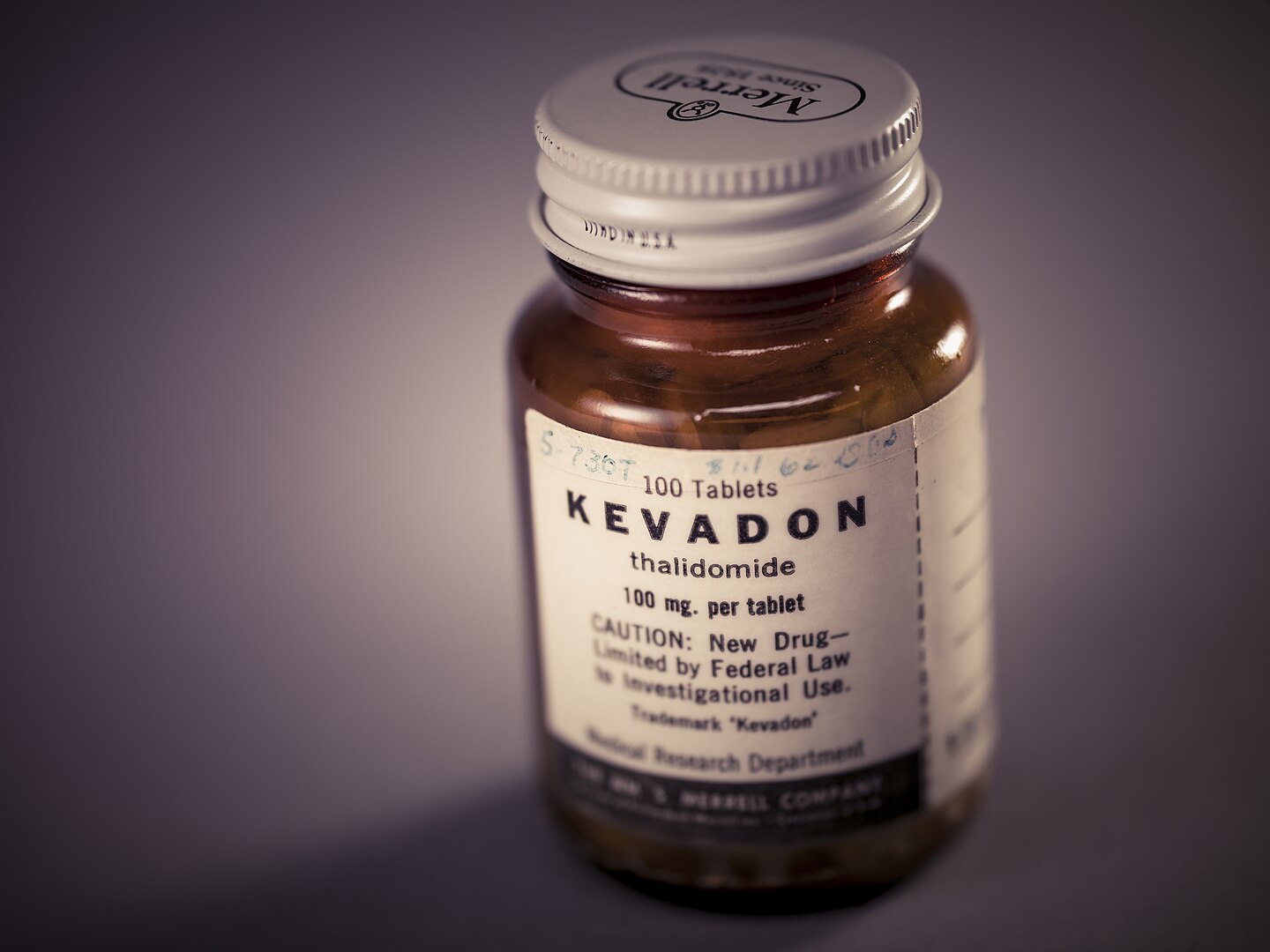
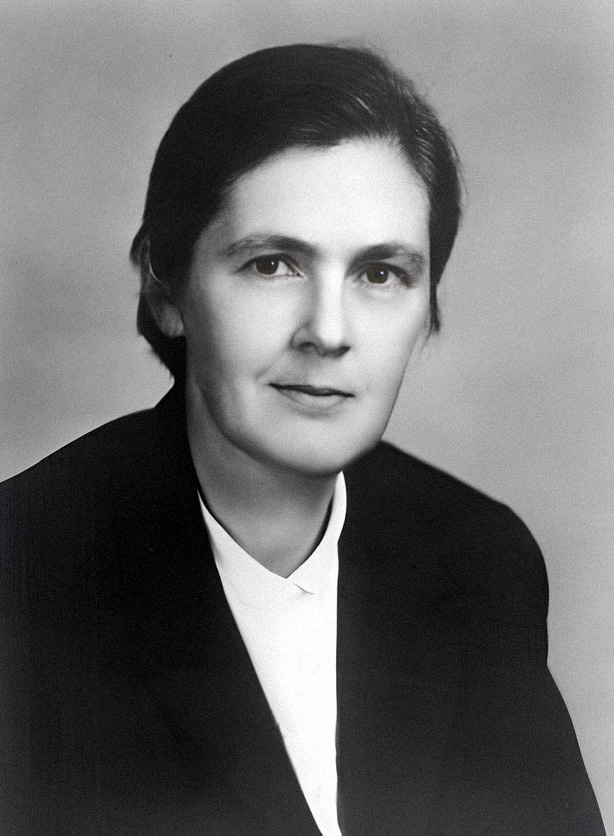
Meanwhile, in 1960, the new drug was preparing to enter the vast market of the United States. The reputable Richardson-Merrell Company was planning to launch large-scale production under the commercial name Kevadon. Doctors’ reports, of course, were positive — insomnia and irritability disappeared, but… The responsible employee of the FDA, the U.S. federal agency overseeing food and drug safety, Dr. Frances Kelsey, reviewed the case and gave a firm «no!»
What was it? A brilliant intuition? Not at all — simply integrity and conscientious performance of duty. As mentioned earlier, complaints about peripheral neuritis had already begun a year before — yet there was not a single word about this in the documents accompanying the drug! Richardson-Merrell was required to provide this data, but did not even consider doing so. Instead, the company resorted to bureaucratic pressure — anyone wanting a sense of this should read Arthur Hailey’s novel Strong Medicine, which was inspired by this very story.
Frances Kelsey stood her ground and did not change her decision. America was spared what the rest of the world would later call «the thalidomide catastrophe». In 1962, when the truth became clear, President Kennedy awarded her the Medal for Distinguished Civilian Service; she became only the second woman in the country to receive this honor. In 2015, Kelsey left this world at the age of 101. The future depends far more on people like her than on bombs, banks, or business.

MURDEROUS EVIDENCE
By 1961, the Australian gynecologist McBride and the German pediatrician Lenz had, almost simultaneously, proven that the birth of children with severe deformities was closely linked to their mothers’ use of thalidomide during pregnancy. There had been around 40,000 cases of peripheral neuritis alone — how could this go unnoticed? And the number of maimed children was horrifying — approximately 12,000! Half of these unfortunate newborns died fairly soon, and I would not presume to judge whether the survivors were any better off than those who passed away.
The doctors immediately sent their findings to the influential medical journal The Lancet, and about fifty countries began revoking authorization for thalidomide. The media covered the story extensively, and now the world had to understand how this had happened and what to do next. Italy and Japan delayed action for an additional nine months after the damning publications — and people suffered who easily could have been spared.
It turned out that the synthesis of thalidomide actually produces two isomers of the compound, differing like mirror reflections — right- and left-rotating forms. One provides all the therapeutic effects, while the other causes the deformities. Separating one from the other is extremely difficult and expensive, not to mention that one isomer can convert into the other directly inside the human body…
But why did Chemie Grünenthal deny the connection between these pathologies and thalidomide to the bitter end, until it became absolutely impossible to do so? Because the mouse and rat studies had shown no abnormalities! Yes — but monkey studies had. Those studies were far more expensive, however, and were simply not conducted at the time. Later, when they were finally performed, the results left no doubt.
PERSONALITIES
And yet, among the victims, there were those who managed to build meaningful lives. The German Thomas Quasthoff was born with severely underdeveloped arms and legs, and even in adulthood his height reached only 134 cm. But he studied tirelessly, discovered a remarkable vocal talent, and went on to receive three Grammy Awards and numerous other distinctions, including the Grand Cross of the Order of Merit of the Federal Republic of Germany — and even the Ukrainian Order «For Courage» (which, I must say, feels pleasant for my country). Thomas performs around the world, is regularly invited to Carnegie Hall, and teaches at the Berlin University of the Arts. Achieving all this was far more difficult for him…
It was no easier for Alison Lapper, who was born with short legs and no arms, yet she persisted and became a renowned artist. Alison married, but when her husband learned she was pregnant, he fled — fearing she would have a disabled child. Her son, however, was born completely healthy. Tragically, this did not save him: bullied at school because of his mother’s condition, he developed a mental illness and died of a drug overdose at 19.
In 2005, London unveiled a remarkable sculpture by the well-known sculptor Marc Quinn, for which Alison Lapper served as the model. The artist depicted her pregnant, reminding the world how her talent and strength of will gave rise to something new. During the 2012 Paralympic Games in London, a giant replica of this sculpture served as the centerpiece for a major event dedicated to the athletes and to all who understood how much she had endured…
BELATED COMPENSATION
Over time, lawsuits were filed against Chemie Grünenthal. In December 1970, the court issued a ruling requiring the company to pay 100,000,000 marks in compensation to the victims. A year later, a nationwide German fund was established to support thalidomide victims; by 1992, it had already paid out more than half a billion marks. Similar funds were created in other countries as well. It is almost laughable to debate whether such compensation is sufficient — but at least it was something…
And in October 2012, Germany also erected a monument to the «thalidomide children», depicting, naturally, a child without limbs. At the unveiling ceremony, for the first time in 50 years, the CEO of Chemie Grünenthal spoke publicly and acknowledged the company’s guilt — earlier, it had somehow never been possible. He said: «We ask forgiveness for the fact that for almost 50 years we have failed to find a humane approach to you and instead remained silent», explaining it by «the shock caused by the shattered human lives».
Here is what the mother of Lynette Rowe, a thalidomide survivor from Melbourne, replied through tears: «It’s so hurtful! He wants us to believe that Grünenthal didn’t apologize for 50 years because it was in a quiet state of shock. I suspect he doesn’t even know what shock is… We had a disabled baby, so we had to face blows of fate day after day». A more accurate response is hardly possible — at least if one uses only polite language…
THAT’S NOT ALL
It all seems clear… but wait — things are far more complicated! In 1964, in Jerusalem, the physician Jacob Sheskin, fully aware that thalidomide was banned, gave it to a patient dying in agony from complications of leprosy — and the patient immediately felt relief! Sheskin continued his research and found that among 173 leprosy patients treated with thalidomide, 92% achieved complete remission. As a result, in 1998 the very same FDA that once refused to register thalidomide — thanks to Dr. Kelsey — approved it for the treatment of leprosy.
And in the 1990s, Dr. Barlogie from Arkansas discovered that thalidomide worked miracles against a relentless malignant tumor — multiple myeloma. The life expectancy of patients who had not responded to chemotherapy or bone marrow transplantation doubled. It turned out that thalidomide could even help those with forms of this cancer resistant to all other treatments.
Around the same time, Drs. Kaplan and Stirling demonstrated that thalidomide and its analogues could be successfully used not only against these diseases, but also against tuberculosis — which had learned to defend itself against antibiotics — and even AIDS. The leadership of the small research startup Celgene took a risk and pursued this field. They began acquiring rights to existing thalidomide-related developments, and soon it was proven that lenalidomide, a derivative of thalidomide, not only significantly helps patients with multiple myeloma but is also suitable for maintenance therapy following stem cell transplantation. As a result, in 2019 Celgene was acquired by the American corporation Bristol-Myers Squibb for the enormous sum of $74,000,000,000 — no transaction in the pharmaceutical market had reached such value since 1999!
What should we understand from this terrifying and fascinating story? Probably that nature is more cunning than we are and grabs us by the collar at the slightest sign of dishonesty or negligence. Our chances of success can be increased by accuracy, methodical work, and absolute conscientiousness. And also by people like Frances Kelsey — but where on earth can we find them, dear Lord?!
LITERATURE
- Phillip Knightley, Harold Evans, Elaine Potter. Suffer the Children: The Story of Thalidomide (1979)
- Martin Johnson. The Thalidomide Catastrophe: How it happened, who was responsible and why the search for justice continues after more than six decades (2020)
When copying materials, please place an active link to www.huxley.media
Select the text and press Ctrl + Enter


