REVELATIONS IN SCIENCE: Weismannism-Mendelism-Morganism, and How It Was Fought


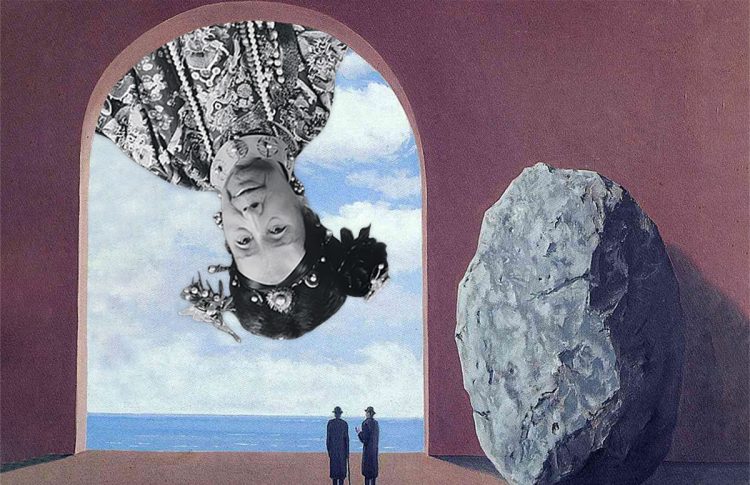
Art design: huxley.media via Photoshop, inspired by the painting Portrait of Stephy Langui, 1961, by René Magritte.
BIOLOGICAL DISASTER
S
oviet science made a certain contribution to global science. The list of Nobel laureates included six Soviet physicists, two chemists, three writers (excluding the émigrés Bunin and Brodsky), two Peace Prize laureates, and even an economist. But in the category of «Physiology or Medicine» — not a single name! Sciences in any way connected with biology were in a miserable state in the USSR. It is enough to recall the gap in the yield of the most widespread crop — wheat — between the USSR and Europe: in the 1950s it was one and a half times lower, and by the 1970s the difference had reached threefold! I personally remember the poor harvest of 1962 — the inedible «Zabaikalsky» bread made with corn and peas, priced at 15 kopecks a loaf in every bakery, while other bread was available only rarely, and people stood in line for it for an hour at a time! The later U.S. grain embargo led to the near-total disappearance of meat from store shelves. What happened next — everyone knows. And many of these «miracles», which led to the end of the USSR without any formidable weapons, science owes to a single individual — Trofim Denisovich Lysenko (1898–1976), academician of the USSR Academy of Sciences, the Ukrainian SSR Academy of Sciences, and VASKhNIL, and a three-time recipient of the First-Class Stalin Prize.
THE BEGINNING OF A CAREER
He was born in the Poltava region, in the village of Karlivka, into an ordinary peasant family. His youth fell in the post-revolutionary years, when peasant origin was not a disadvantage but an advantage for gaining education and advancing one’s career. In 1921, Trofim graduated from the School of Horticulture in Uman; in 1925, from the Kyiv Agricultural Institute, after which he went to work at a breeding station in the Azerbaijani city of Ganja.
A contemporary scholar writes: «Lysenko’s first assignment was to investigate the possibility of growing leguminous cover crops to provide livestock with feed and to obtain green fertilizer. The winter of 1925–1926 was mild, and Lysenko’s peas survived. An officially assigned journalist wrote a front-page article in Pravda praising the achievements of this moderately educated peasant and greatly exaggerating the results of the project».
So what does this mean — that one harsh winter might have spared Soviet biology from its nightmare? Not quite so simple — Lysenko truly was a gifted man, above all a talented orator and, as we would say today, a master of public relations. He widely publicized any minor success in the press, and in personal conversations with those in power, he most often managed to convince them of his infallibility. Thus it happened with his soon-to-follow sensational innovation — vernalization.
VERNALIZATION
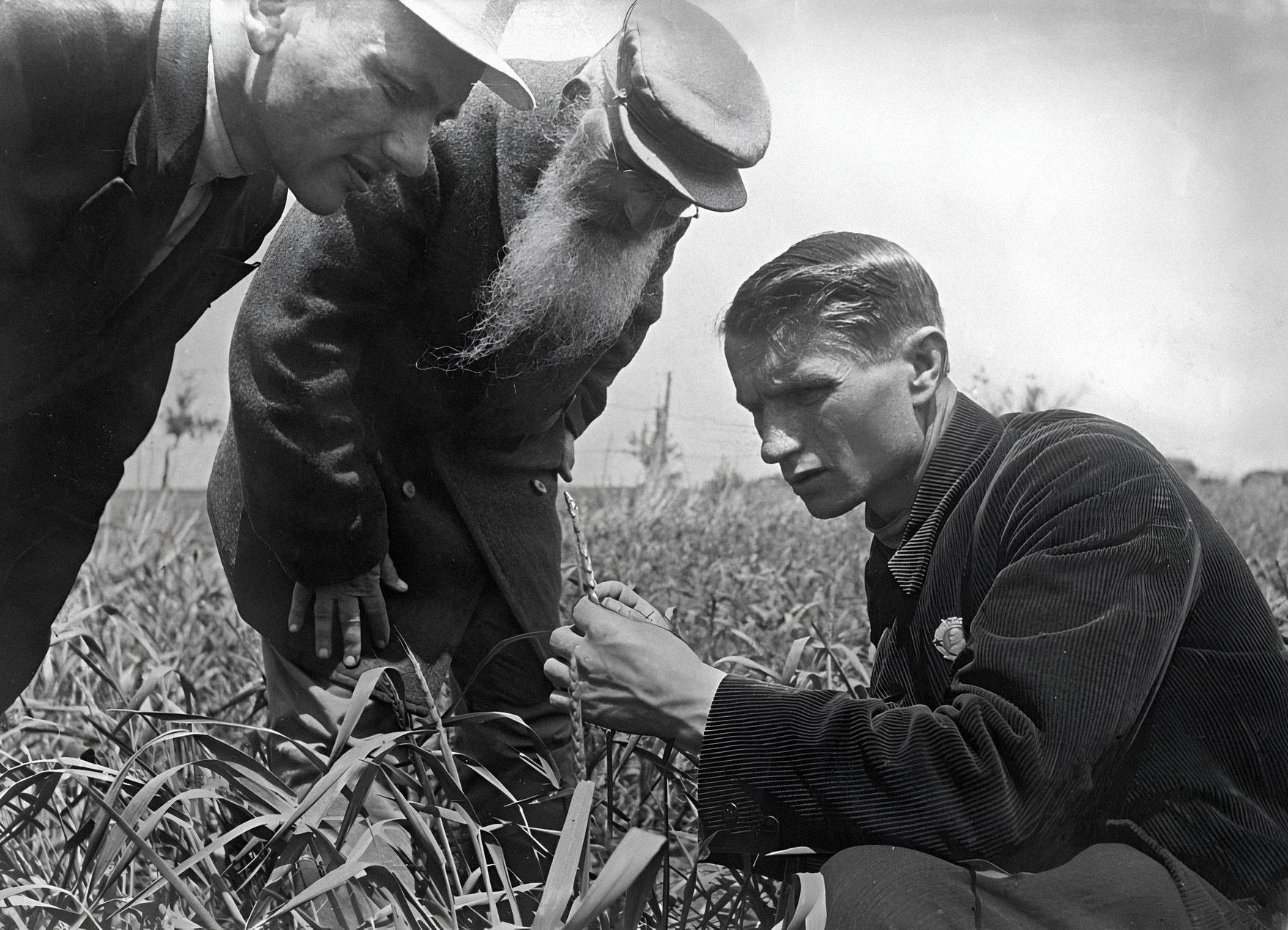
Popular science books, one of which I read in childhood, begin the story of vernalization with the fact that Lysenko’s father, Denis Nikanorovich, sowed not spring but winter wheat in the spring, although winter wheat is generally sown in autumn. To do this, he kept the grain in a cold and damp place. A natural question arises: why? Perhaps he was hiding the grain from the dekulakization campaign then underway? Quite possibly… But the fact remains that the wheat grew and produced a harvest. Does vernalization work? Yes, it is still occasionally used today, but it does not lead to noticeable increases in yield. It began to be actively introduced: in 1935, vernalized crops covered 2.1 million hectares; in 1937 — 8.9 million hectares; in 1940 — 14 million hectares (with a total cultivated area of 105.4 million hectares). In the early 1930s, Lysenko’s work was also supported by Academician Nikolai Vavilov, who considered the possibility of using vernalization to shift plant vegetation periods, which could help in breeding new varieties and avoiding harsh winters.
Lysenko actively promoted the results of vernalization, even publishing a special journal for this purpose. But the implementation of vernalization began to slow down for a simple reason — it practically did not increase yields, required significant labor in preparing the grain, demanded double seeding rates to compensate for damaged kernels, and also increased the risk of grain infection with the highly dangerous fungal disease «covered smut»… As early as 1935, Academician Konstantinov analyzed a substantial body of yield data and concluded that the yield increase amounted to as much as 4 kilograms per hectare (Lysenko claimed it was 20 times higher — hardly a masterpiece either…). Yet the press continued to praise vernalization as an outstanding achievement of Soviet science.
MICHURINIAN AGROBIOLOGY
By that time, Lysenko had even invented a new science — agrobiology. More precisely, «Michurinian agrobiology» — he decided to reinforce his efforts with the name of Michurin, a successful breeder known worldwide. This was very convenient, since Michurin had passed away and could no longer object to him. Yes, Michurin spoke about the role of «education», that is, the adaptation of a plant to new environmental conditions. This somehow coincided with Lysenko’s theories. But they never communicated, conducted no joint work — Michurin’s name was simply used as a publicity device, and in this, Lysenko was a great master. Today, Lysenko’s theory is described as «mechanolamarckism» — similar views were expressed by the French naturalist Jean-Baptiste Lamarck. According to his theories, the consequences of the use or disuse of certain organs can be inherited — for example, a giraffe constantly reached for high-growing branches and thus became tall. Lamarck never clearly explained how or why particular traits are inherited, and Lysenko did not need such explanations — after all, Stalin himself was, in a certain sense, a Lamarckist, with his own theories about educating a new human being.
According to Lysenko, the transformation of one organism into another under the influence of external factors was a very common phenomenon. Wheat could, under the influence of external conditions, degenerate into rye. The weed wild oat was not a separate plant — oats simply degenerated into it under poor conditions. A small willow warbler fed one of its chicks better than the others, and it degenerated into a cuckoo. And his supporters described in detail how a pine tree degenerated into a spruce. Is this actually so? By no means — sometimes wheat contaminated with rye is sown, and in cold weather the wheat freezes while the rye survives. If weeds are not controlled, oats become overgrown with wild oats, without any transformations. And the cuckoo example is simply absurd — even small children know that the cuckoo just lays its egg in the warbler’s nest. But this troubled Lysenko far less than the opinion of Party ideologues, to whom he promised multiple increases in yield, and when this failed to materialize, he offered new, beautifully worded promises.
WEISMANNISM–MENDELISM–MORGANISM
He categorically rejected the theory of heredity advanced long ago by Gregor Mendel. He declared the works not only of Mendel but also of Morgan, the founder of the chromosomal theory of inheritance, to be «bourgeois», «reactionary», and «idealist», and at the infamous 1948 session of VASKhNIL, he even uttered the phrase that went down in history: «Genetics is a venal handmaiden of imperialism». He dismissed Weismann’s experiment, in which the tails of 20 generations of mice were cut off and yet they continued to be born with tails, arguing that mice were not agricultural animals (indeed, they do not produce much milk, lay no eggs at all, and yield little meat), and therefore such research was bourgeois idealism that hindered Soviet scientists from achieving higher milk yields and harvests. Lysenko combined his condemnation of these scholars into the formula «Weismannism–Mendelism–Morganism», which became a terrifying brand marking those doomed at least to dismissal. Incidentally, Academician Kapitsa considered Weismann’s experiments unnecessary, noting that Jews continue to be born uncircumcised, and women — virgins…
THE DEATH OF VAVILOV
Quite a number of scientists found the courage to oppose Lysenko. Vavilov also changed his opinion of him, and as a result, Lysenko’s supporters, paraphrasing Cato’s statement about Carthage, coined the slogan «Babylon must be destroyed». This phrase is attributed to Lysenko’s chief ideologue, Isaak Prezent, and by Babylon, they meant the VIR — the All-Union Institute of Plant Industry, headed by Vavilov. On October 21, 1939, Vavilov spoke with Stalin for the last time. Stalin addressed him as «Citizen Vavilov» and sarcastically asked whether he intended to concern himself with various «botanical trifles» instead of increasing crop yields. Vavilov tried to speak about the work of the VIR, but Stalin, who had not offered him a seat, quickly ended the meeting with the words: «Is that all, Citizen Vavilov? You may go. You are free». As experience showed, not for long. On June 6, 1940, Vavilov was arrested; the arrest warrant explicitly stated that he was guilty of fighting against Lysenko. He was subjected to prolonged torment during an extremely biased investigation and, on July 9, 1941, was sentenced to death. On July 23, 1942, the sentence was commuted to 20 years in labor camps, and on January 26, 1943, he died in a prison hospital. In 1985, Academician Efroimson, who himself had served two prison terms in the camps, said of Vavilov: «He did not perish. He died like a dog. He died of pellagra — a disease caused by absolute, extreme exhaustion».
THE VASKhNIL SESSION
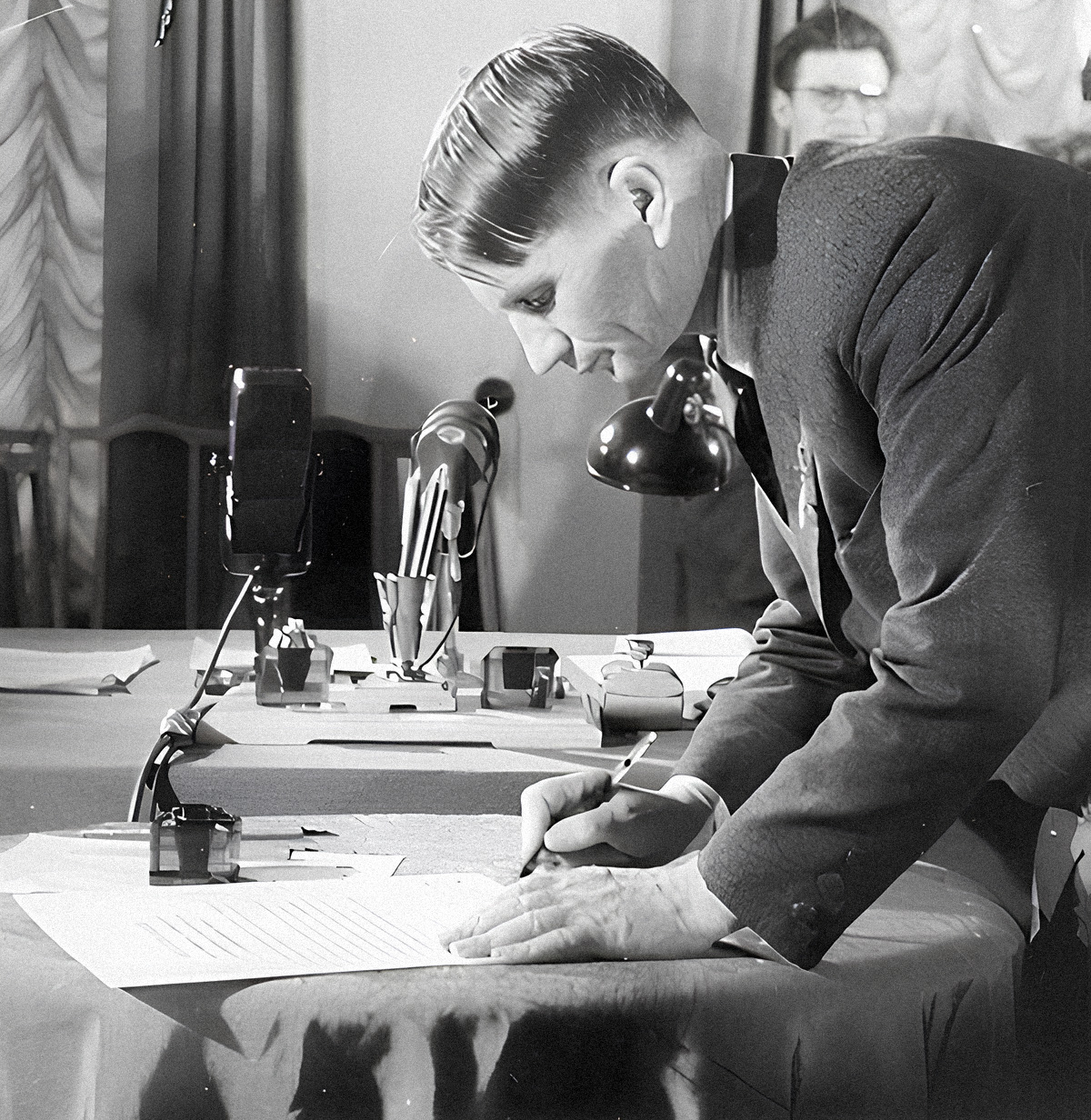
But there were still many scientists outraged by Lysenko’s pseudoscientific theories, which crudely contradicted established facts. They found access to Yuri Zhdanov, the son of Politburo member Andrei Zhdanov and head of the Science Sector of the Central Committee’s Department of Propaganda and Agitation. On April 18, 1948, he delivered a lecture at the Polytechnic Museum in which he questioned Lysenko’s achievements. For Lysenko, this posed a real danger, and he wrote detailed complaints to Stalin and to Yuri Zhdanov’s father, employing his principal talent — not that of a scientist, but of a publicist and propagandist. As early as May 31, Stalin spoke out in Lysenko’s defense and sharply rebuked both Zhdanovs. Lysenko decided that the time had come to deliver a decisive blow. In deep secrecy, without even informing the President of the USSR Academy of Sciences, Sergei Vavilov (Nikolai’s brother), he and his supporters began preparing a session of VASKhNIL. On July 15, the Council of Ministers resolved to add 35 new members to VASKhNIL — Lysenko’s supporters — in order to secure a solid majority in the vote.
From July 31 to August 7, this VASKhNIL session took place, turning into a pogrom of genetics. The entire course of the discussion was determined by a phrase in Lysenko’s report stating that the Party had approved his line. After these words, many supporters of genetics, fully aware of where they lived, publicly repented; some refused to do so and paid the price. As early as August 23, the Minister of Higher Education issued an order to strengthen teaching with «agrobiologists-Michurinists», and Lysenko’s opponents began to be dismissed en masse (at least they were no longer shot, as in the late 1930s). Similar purges proved appealing and were carried out in geology, physiology, and the oil and gas industry as well. Physics, however, was spared — Kurchatov explained to Beria that if the «bourgeois scientist» Einstein were banned, one could forget about the atomic bomb altogether.
THE END OF A FALSE DOCTRINE
Time passed. Stalin died. Khrushchev continued to favor Lysenko, yet the opponents of the «people’s academician» grew less afraid. In 1955, a series of letters appeared addressed to the Presidium of the Central Committee of the CPSU and to several other institutions (they became known as the «Letter of the Three Hundred»), describing the enormous harm caused by Lysenko’s monopoly. At first, Khrushchev called the letter «outrageous», but the Minister of Higher and Secondary Specialized Education, Stoletov, persuaded him to initiate a broad discussion based on it. The results of this discussion proved catastrophic for Lysenko. He was removed from his post as President of VASKhNIL and sent to head the scientific base of the USSR Academy of Sciences at Gorki Leninskiye. He continued to enjoy Khrushchev’s respect, promising him unprecedented achievements — increased yields from sowing branched wheat and higher milk fat content by feeding cows cocoa-bean waste from chocolate production. None of his work produced any real results, and in 1976, he died peacefully — neither exiled, nor repressed, nor executed. Not all of his opponents could boast the same… The main lesson to be drawn from this sad story is the old warning of the fabulist Krylov: «Trouble comes when the baker begins to cobble boots, and the cobbler to bake pies». When a politician intrudes into science without being a scientist, damage is inevitable. Brilliant publicists like Lysenko — but not true scholars — know how to wait and will leap out of the darkness as soon as they sense such an opportunity. And that is entirely possible. Remain vigilant!
LITERATURE
- Zh. A. Medvedev. The Rise and Fall of Lysenko. Moscow: Kniga, 1993. 348 p.
- A. F. Lyubishchev. On the Monopoly of T. D. Lysenko in Biology. Moscow: Pamyatniki istoricheskoy mysli, 2006. 520 p.
When copying materials, please place an active link to www.huxley.media
Select the text and press Ctrl + Enter