THE ANATOMY OF SYMBOLIC ALIENATION: What Is This Place Called?

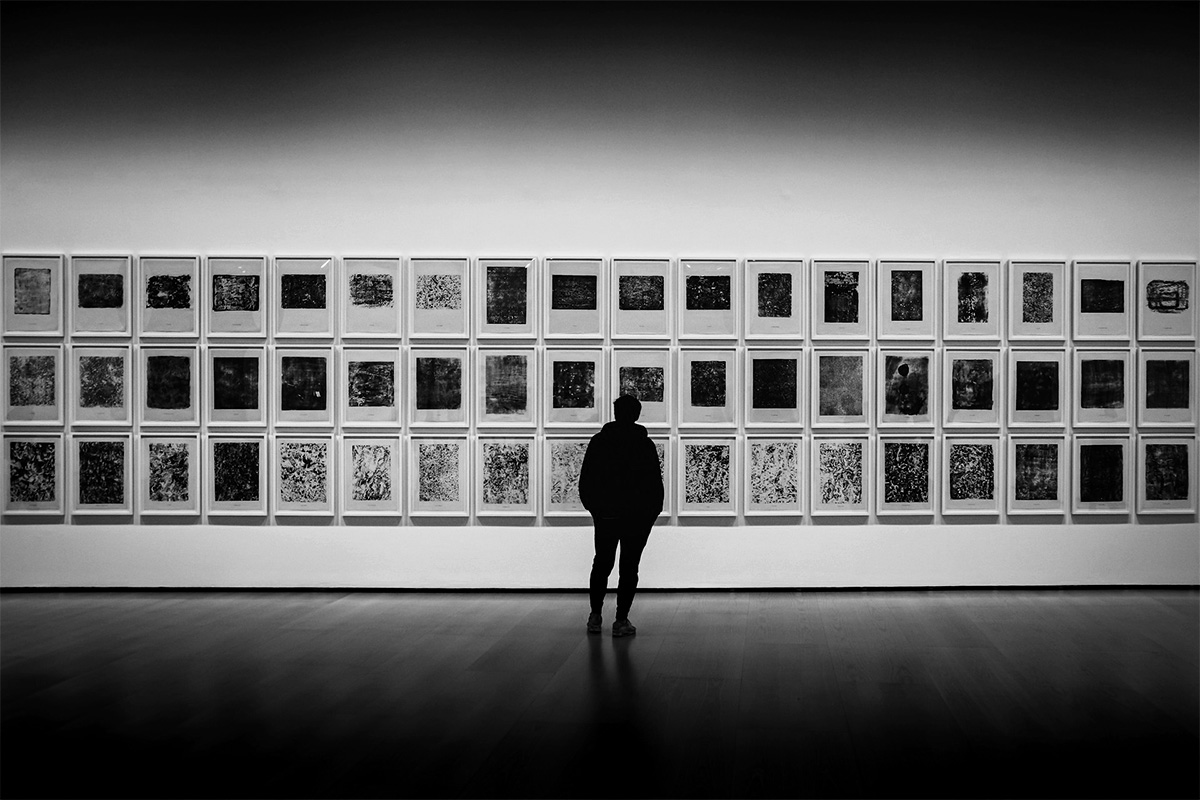
Photo by Godefroy Chabanas on Unsplash
This is a study of why populism and simple solutions so easily resonate within the ghetto. If high culture fails to provide people with a language for expressing their pain, they will follow those who offer them a primitive yet comprehensible language of hatred or submission. All too often, simple solutions seem obvious to us: all we need to do is stop doing something bad and start doing something good, and — bingo! — everything around us will change for the better, people will become prosperous, and the country will flourish. Who could possibly argue against such a formula?
Culture is not entertainment for the wealthy but a system of public security. When elites withdraw into themselves and ignore everyone around them, random figures from social media take the stage — apostles of quick and simple solutions to problems that have accumulated over years, sometimes even decades. They get their fifteen seconds of fame, enter a dopamine paradise, but quickly vanish into nowhere, like the flare of a match. And it is precisely this speed of combustion that makes the gulf between worlds even more visible. Sometimes they receive a political mandate, only to dissolve into history just as quickly. Yet before they do, they manage to give the inhabitant of the ghetto a primitive language, often a language of hatred, because any language, even the worst one, seems better than the mute pain tearing a person apart from within. Once, cultural trends and fashions could last for centuries; today, they last for weeks, sometimes only a few days. In the past, inequality meant a lack of access to money, power, and resources. Today, it also means a lack of access to transforming experience into meaning.
This is an attempt, by following the text, to understand why we so often learn about people we would rather never know about — those who loudly proclaim their own importance. At the same time, there are those the world will never hear of. They remain unseen; they do not post on social media, attend protests, or give interviews. Their lives unfold offstage: without symbolic capital, in the shadow of discourse, politics, and history. If we imagine human culture as an enormous library containing every heroic epic, scientific discovery, and biography of an outstanding person, then in this text I will describe the space between the bookshelves. The shadow that occupies most of the room, yet will certainly be ignored by social media algorithms because it cannot be “read” — it simply exists.
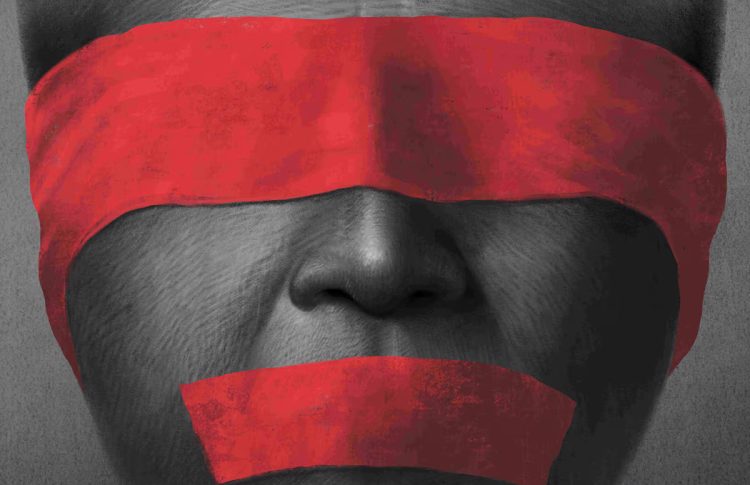
What remains of a person when their name, place, and language for expressing their own experience are taken away? A few fundamental things: a severed connection with identity, mute pain, and existence outside the realm of greater meanings. Let us speak about one such person. Suppose this person is neither a great nor even a moderately significant thinker, writer, artist, musician, or at least a footballer — the state has no need of them, and media and social media audiences are indifferent to them. They are an ordinary resident of a small industrial ghetto that has no name, only a serial number. What will he say about his home if he finds himself abroad? “How good it is back home at 10th, 11-11, 4/21-bis” — it is difficult even to pronounce — that is probably what he will say. But this is not merely the absence of a name; it is the absence of identity. When a place has a name, a person unconsciously connects to the entire national narrative. “10, 11-11, 4/21-bis” is no longer a name but an index, the language not of memory but of bureaucracy, which services reality without creating meaning.
The state that invented such names is a cynical accountant who needs nothing more than a serial number on a register. This is a consequence of life among ruins: an industrial ghetto without a name produces people without names. They are not the subjects of history but its material. It would be pointless to expect an ode or an exposé of this state’s social order from such a resident, yet he will grieve for his nameless home if he loses it, for example, because of war. A poet writes verses about duty to the homeland; an artist paints a picture about the aesthetics of war. They transform tragedy into a symbolic product, endowing it with meaning. Our person, however, feels pain — dull and aching — somewhere deep inside a being long hardened by life, and this suffering will remain mute. He will scream from this pain within himself. Standing near the front line, barely twelve kilometers from his home on the other side, he will understand perfectly well: he could walk there — indeed, he could run. But it is impossible.
Culture, education, and literature are all instruments that allow us to take raw, unbearable pain and melt it down into something that can be expressed, shared with others, and therefore endured. An artist will express pain in a work of art; an intellectual, in a theory or concept. A person from the “ghetto without a name” is left alone with raw pain. It will probably not become a poem or a painting, but rather psychosomatic illness, alcoholism, domestic aggression, or total apathy. Their pain is no less intense; it simply cannot be converted into the currency of culture. How will he justify the necessity of the state exactly as it is? “Those who laid the foundations of our statehood established a Republic, that is, a ‘common cause.’ A state in which people are endowed with equal rights and are equal before the law, where justice is freely accessible” — is this really how he sees his state and how he will describe it to others? Hardly. In a state where you reach an agreement with someone and they bargain with you, where you help them and they think they have outsmarted you, no one thinks about a republican form of government.
Ordinary people live in the rift between normative descriptions and reality, beyond the reach of any state institution. They are preoccupied with survival and will immortalize their way of life and thought not in monuments or paintings, but in production quotas exceeded. Meaning is not sought there, not because people are incapable of finding it, but because the very category of “meaning” is stripped of intellectual pathos. Meaning is not sought in texts; it is lived through the daily routine of survival, where action matters more than its verbal explanation. There is a heroic epic of its own there, but you will not find it on the shelves of bookshops. For this person, the state is not a “common cause” but an external, often hostile force, like the weather, from which one must seek protection or which one must deceive in order to survive.
Their cynicism is not a moral failing but an adaptive mechanism. They do not believe in grand ideas because grand ideas have never benefited them and have often been used to exploit them instead. This produces a specific kind of alienation: they are physically located within the state, but mentally and socially they live outside its civic space. The structure of their inequality is not a lack of “talent” or “ambition,” but unequal access to the instruments of symbolically converting experience — to language, education, and cultural fields in which pain and life can become meaning, a work of art, or a political position. This person is unlikely to present his life goals to a group of existentialists in a French café in the following terms: “I am frightened that nothing will remain after me, that I have done, written, or said nothing that could outlive me, that I have raised no one. And I do not mean some notion of ‘greatness’; no, this is not vanity speaking in me now. What concerns me is reproducing myself outwardly, creating some kind of projection that is unmistakably mine. Something with a unique style, handwriting, accent, texture — something that emphasizes authorship. Something anyone who wishes can become part of.” Certainly not.
He is unlikely to understand the world around him and his place within it in precisely these terms. What he does know, however, is what shop-floor solidarity means, why the work “shift” is a second family — and, for some, the only one — and what it means to go to a job from which there is every chance you may not return. And if someone else does not return, he knows how to look that person’s loved ones straight in the eye. These are severe people, not because they are cruel, but because where are they supposed to find enough emotion for every day? Most likely, he will never formulate or express anything of significance to many people that will live on after him. We are accustomed to thinking of life as a story with a plot, development, climax, and legacy — as a biography that can be written. But this person’s life is not a book. It is a series of entries in an accounting register, eventually consigned to an archive and destroyed once the retention period expires. It is an anti-narrative: a person’s life exists, and then it simply does not. Whatever generates no clicks, clickbait, or hype simply becomes invisible.
The inhabitant of the ghetto is isolated twice over: first by the state’s dry bureaucracy, and now by algorithmic deafness. Here a contrast emerges between two temporal dimensions: one accelerating at a frantic pace, where trends change within days, and another completely frozen, a static space in which nothing changes for decades except the numbers on the registers. This disparity in speed creates tension: the dynamism of social media offers the illusion of escape from the closed circle. The formula “stop doing bad things and start doing good things” appears, at first glance, to be precisely the language for expressing deep pain that can easily be sold to someone starving for the ability to create. A person lived, worked on the boundary between life and death in the workshop, possessed his own mute heroism, and then his entry was simply written off to the archive.
This void of meaning does not remain empty — it is instantly swallowed by the black hole of algorithms and cheap populism. And perhaps this is the ghetto’s greatest victory over the individual: not that it can make a person poor, hard, or cynical, but that it teaches them to live without the right to leave a trace. Without a name in an address, without a language for pain, without a form in which one’s life could be passed on to someone else. Simple solutions and loud slogans then arrive because, for at least a moment, they give this person what neither the state, nor culture, nor history has given them: the feeling that their inner scream has words. But words borrowed from hatred never restore dignity; they merely provide a cheap, poisonous imitation of it. The question is not why the inhabitant of the ghetto believes a populist, but who ever spoke to him — and when — in a language that would allow him not merely to survive, but to remain human.
When copying materials, please place an active link to www.huxley.media
Select the text and press Ctrl + Enter