TRAITOR AND HERO: “Lacombe Lucien” and “First Man”

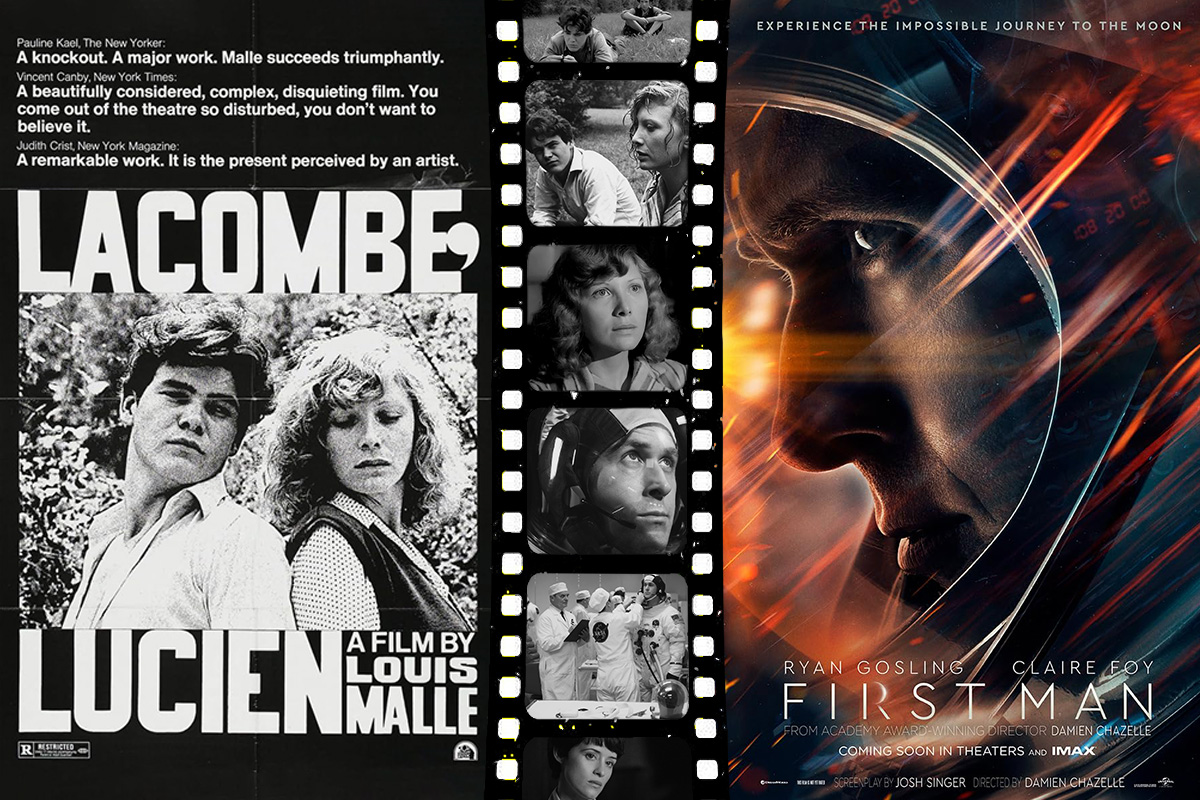
Art design: huxley.media via Photoshop
The Cinemasophy column in April offers two more unobvious masterpieces about what truly matters. One tells the story of a holy traitor — a rough-edged French collaborationist who senselessly went to serve the Nazis when they were already doomed, and died just as senselessly. Another, through the biography of Neil Armstrong — the first American astronaut to set foot on the Moon — comes to the conclusion that personal success is paid for exclusively with personal bitterness. And the composure and cold-bloodedness for which Armstrong was nicknamed the Ice Commander are nothing more than prolonged shock from pain.
Both films are auteur statements. The first belongs to the great French director Louis Malle — a loner within the camp of the New Wave, a comrade of Jacques-Yves Cousteau, a boy from a good family who used his parents’ money to make the debut masterpiece Elevator to the Gallows (1958), and who, indeed, seemed to make nothing but masterpieces.
The second film was also made by a Frenchman, though only ethnically. The 33-year-old American prodigy, director Damien Chazelle, who nearly seized the top Oscar in 2017 for La La Land (had it not been for Moonlight), with First Man definitively broke free from the independent back road onto Hollywood’s main highway, transforming into a major master — heir to all the greats, from Clint Eastwood to Steven Spielberg.
LACOMBE LUCIEN (FRANCE, WEST GERMANY, ITALY, 1974)
Director: Louis Malle
Cast: Pierre Blaise, Aurore Clément, Therese Giehse
1
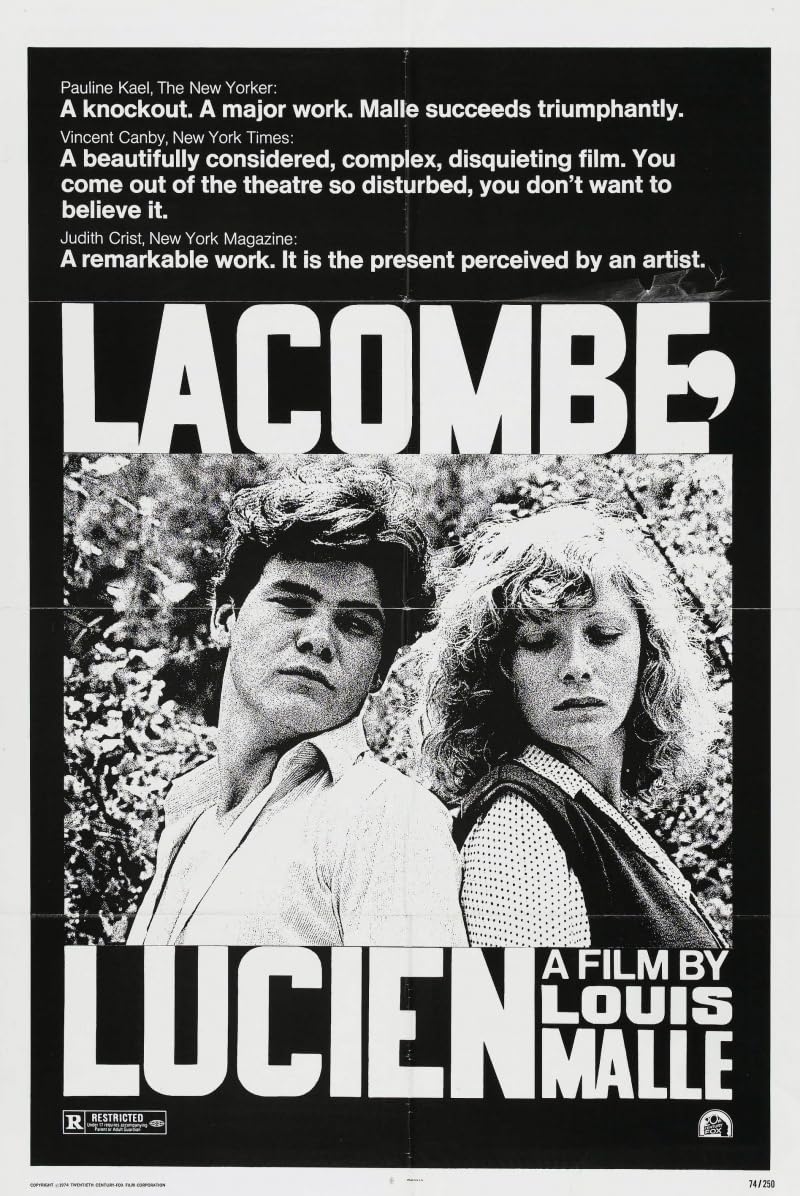
944. Nazi-occupied France. Seventeen-year-old rural lumpen Lucien Lacombe (Pierre Blaise), who works part-time as a hospital janitor, dreams of joining the French Resistance. But, finding himself in the city for the first time in his life, he instead enlists in a unit of the French occupation police, which proves to be even more brutal than the German Gestapo. On his very first day, to his own misfortune, Lucien falls in love with a Jewish girl (Aurore Clément) doomed to deportation…
Louis Malle was a loner within the camp of the French New Wave, a comrade of Jacques-Yves Cousteau in underwater filming, and an enthralled listener to the friends of the legendary captain — condemned to death, later amnestied, and utterly unrepentant French Nazis. A boy from a good family who used inherited money to make his debut masterpiece Elevator to the Gallows (1958) — and, indeed, seemed to make nothing but masterpieces — Malle was perhaps the most humane director in cinema history. And it was precisely because of that humanity that he turned to the most extremist, inhuman subjects, often placing frankly repellent characters at the center of his films.
Yet he empathized with his protagonists and therefore forgave them. He never judged them. Neither the suicide of The Fire Within (1963), nor the mother who gives herself to her schoolboy son in the shocking drama Murmur of the Heart (1971), nor the lovers of a child’s body in Pretty Baby (1978), nor this “village thug” Lucien Lacombe, who senselessly went to serve the Nazis when they were already doomed, and died just as senselessly. Louis Malle simply loved people too deeply and understood them too well. He was a humanist without quotation marks.
The inversion of first and last name in the title — Lacombe Lucien — is far from accidental. It evokes the dry lists of traitors executed by fighters of the French Resistance during the republic’s liberation. After the film’s release, Malle himself was branded a “collaborationist” for his alleged sympathy toward his screen Judas. Yet Lacombe Lucien, despite everything, is a deeply sunlit film, full of adolescent sensuality. The mosaic of whitewashed walls and red-tiled roofs of southern France rhymes here with assured gestures and strong young bodies. In general, Louis Malle’s cinema cannot be tested against simple, one-syllable truths. Everything in his artistic universe is more complicated.
Lacombe is innocent because he is equally indifferent both to the abstract notions of good and evil and to suffering itself. We are presented with a model representative of humanity who possesses everything necessary, yet has no reflection whatsoever about it. That is simply what he is. Lucien Lacombe’s actions, like the actions of nature itself, are utterly meaningless. Everything in him is governed by some inner adolescent ferment, a beautiful and ugly animal instinct. Yet although nature is always right, it nevertheless loses. The beast that seemed to stand firmly on all four paws upon the earth turns out to be an infinitely vulnerable moth, consumed in the fire of merciless history. Such is the hidden irony of this great film in every sense, outwardly so calm and imperturbable.
FIRST MAN (USA, 2018)
Director: Damien Chazelle
Cast: Ryan Gosling, Claire Foy, Corey Stoll, Kyle Chandler
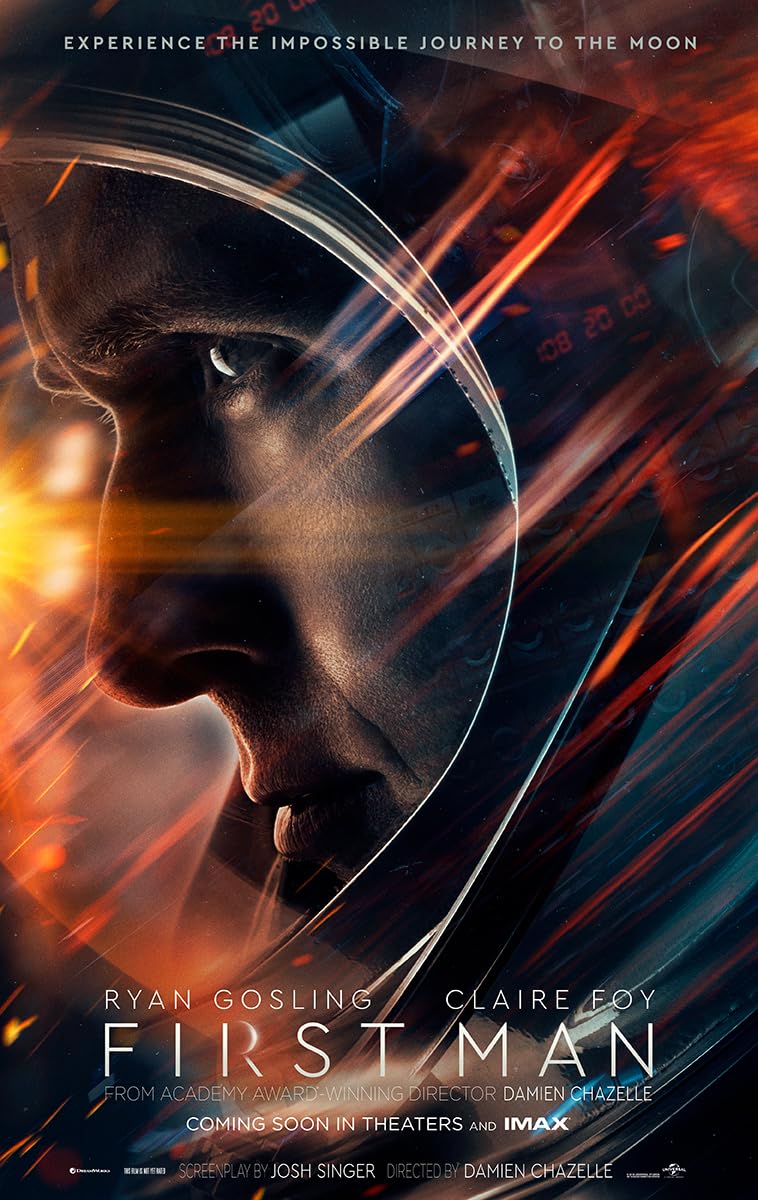
In July 1969, a human foot first steps onto the surface of the Moon. More precisely, four feet touched down in the western part of the Sea of Tranquility — those of pilot Edwin “Buzz” Aldrin and Apollo 11 commander Neil Armstrong. The astronauts would remain on the Moon for about two hours, plant the American flag, take many photographs, collect more than 30 kilograms of lunar soil, and leave behind a plaque reading: “Here men from the planet Earth first set foot upon the Moon. We came in peace for all mankind”. Armstrong would utter his famous line about “one small step for man, one giant leap for mankind”. All of this entered the public sphere and spread across the world, becoming part of history. But no one learned of one inconspicuous episode: approaching the edge of a lunar crater, Armstrong opened his palm and tossed into it a funny child’s bracelet. Why? That would remain a mystery.
This film, made by one of the most controversial American auteurs who gave the world Whiplash (2014) and the Oscar-winning La La Land (2016), is formally about the conqueror of the lunar surface — the legendary American astronaut who adored the sky. From the age of seventeen, Armstrong studied aeronautics, served, flew, tested aircraft, and was eventually selected for a special group of NASA astronauts. But more than the sky, Armstrong loved his little daughter, for whom the sky became a final resting place. And in essence, First Man is about that.
Already in its opening frames, director Damien Chazelle rhymes the terrifying clatter of cosmic machinery with the equally gigantic medical equipment beneath which lies Armstrong’s fragile, tiny, terminally ill daughter. The central turning point of First Man is not the deaths of fellow astronauts during tests, nor Gagarin’s flight that challenged the Americans, but the girl’s funeral. Everything that follows is merely the grieving father’s attempt to find his lost child in extraterrestrial spaces, to which only a spacecraft can carry him. To that place where, perhaps, the afterlife resides — on the Moon.
First Man made it clear that the 33-year-old American prodigy — who had nearly grasped the top Oscar for La La Land (had it not been for Moonlight), and who ten years earlier had opened the Venice International Film Festival — had definitively left the independent back road for Hollywood’s main highway. First Man, a project begun and later abandoned by Clint Eastwood, was produced by the giants Universal Pictures and DreamWorks Pictures under the vigilant artistic supervision of Steven Spielberg. Ryan Gosling, who in La La Land dreamed of Charlie Parker, was chosen here to play Neil Armstrong. He hid away his biceps, unearthed a Disney smile, learned to clean a swimming pool, wear a suit in the manner of Alain Delon, and gaze dreamily into the sky to the melancholy music of Justin Hurwitz (Chazelle’s постоянный composer). His Armstrong is an ordinary, approachable guy to the core, suffering in silence while beside him his wife drones on (Claire Foy, longing for bourgeois stability), and striking straight through with his lingering stare. Yet within that silence lies the cosmos: beautiful, but alas, lifeless space.
Sincerely enchanted by grand Hollywood, Chazelle sends greetings to those who nurtured him — from Stanley Kubrick to Christopher Nolan and Alfonso Cuarón — yet moves along his own road, continuing the theme begun in his earlier films: personal success and the price at which that success is sold retail. First Man is precisely about that: personal success is paid for with personal bitterness. And the composure and cool-headedness for which Armstrong was nicknamed the Ice Commander are nothing more than prolonged shock from pain. Choosing the most spectacular and complex set in existence — outer space with its infinite depth — Chazelle created a human drama of galactic scale within a technological setting.
Deprived of all the scientific romanticism of Interstellar, First Man plays on Cuarón’s idea of space as a metaphor for black, cold depression (Gravity), into which a person sinks after tragedy. And, posing uncomfortable questions, it demonstratively leaves the viewer without answers. But why need answers when there are such questions? One watches this film with the eyes with which one usually looks at someone dear after a long separation. And the lump somehow rises to the throat on its own.
When copying materials, please place an active link to www.huxley.media
Select the text and press Ctrl + Enter