THE NEW WESTERN TOTALITARIANISM: Onto-Anthropo-Bio-Cide

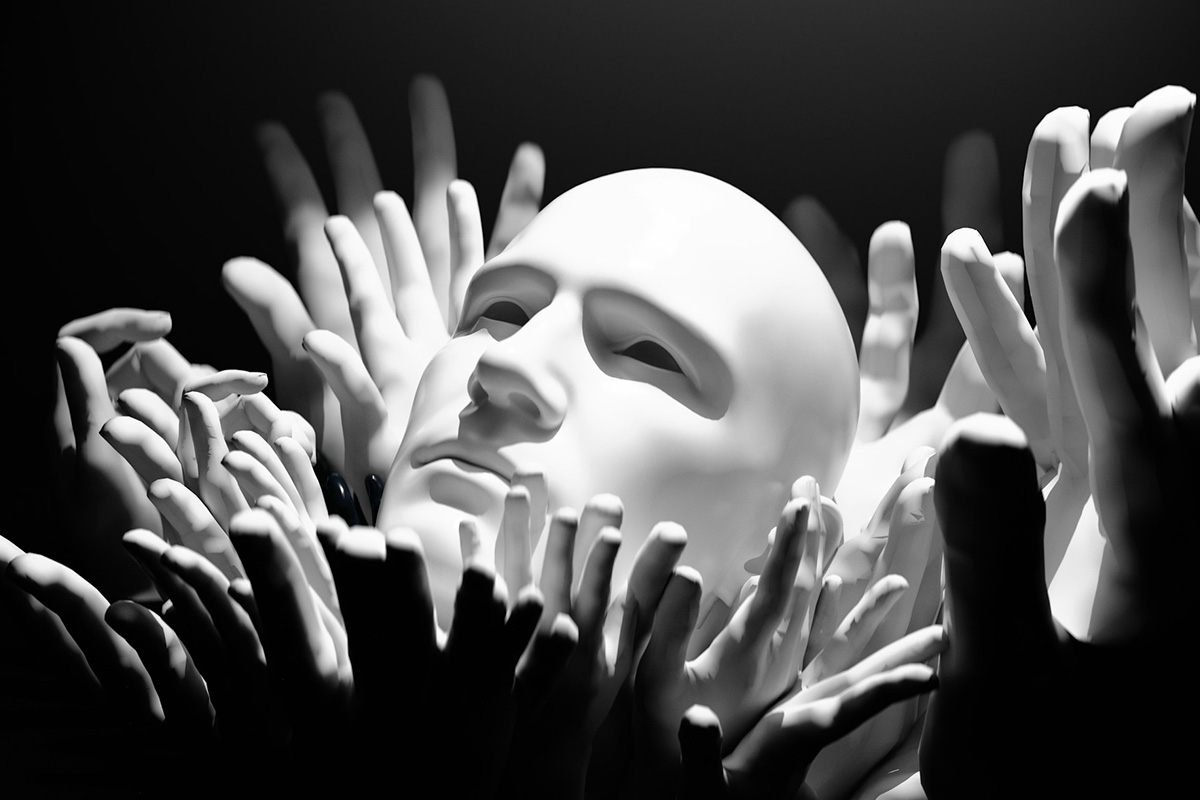
Photo by Marek Pavlík on Unsplash
Here, no one can harm anyone else — and that is the worst thing imaginable.
Inspired by Stanisław Lem’s “Observation on the Spot”
TOTALITARIANISM UNDER THE BANNER OF SAFETY
T
he twentieth century gave birth to totalitarianism. At first, it appeared in its brutal, repulsive forms — Stalinism, Nazism, and Fascism — in the guise of concentration camps, mass graves, and gas chambers, amid the thunder of military marches and the rasp of loudspeakers. This form of totalitarianism never concealed its true nature: it killed openly and demanded that its victims publicly acknowledge the righteousness of their executioners. Ultimately, it was precisely this frankness that led to its downfall: evil that reveals its face inevitably provokes resistance, while the memory of trenches and crematoria becomes a kind of inoculation passed down from generation to generation. It was this classical form of totalitarianism that George Orwell portrayed in Nineteen Eighty-Four. Aldous Huxley, meanwhile, envisioned a different trajectory in Brave New World — a system founded on unrestrained hedonism.
Today’s Western totalitarianism, however, is immeasurably more insidious than either of those earlier forms. It builds no concentration camps and burns no books in public squares. It has no supreme leader, no ruling party, no barbed wire. It does not even have a name of its own, because it presents itself as care itself, as humanity, as progress, and as health. In this respect, it differs markedly even from Huxley’s hedonistic totalitarianism. This new form of totalitarianism was described by Stanisław Lem — long before it fully took shape — in his 1982 novel Observation on the Spot. Its central slogan is “safety,” yet in reality it offers safety from meaning itself — and from life itself.
On the planet of Entia, in the country of Luzania, Lem describes the ethicosphere — an environment permeated by myriads of molecular automatons called shustrs, a kind of “viruses of goodness” diffused through the air, water, and everyday objects. They make evil physically impossible: raise your fist to strike, and the air solidifies to stop the blow; the floor beneath an assailant turns slippery; an object twists itself out of the aggressor’s hand. Disease is eliminated before it can develop, aging has been abolished, and the Luzanians are virtually immortal. It is a world in which crime and suffering have become technically impossible. And that is precisely why it is unbearable: together with danger, freedom itself — and ultimately the thinking individual — has been removed from existence.
It is no accident that Lem’s novel features an underground movement whose members flee beyond the boundaries of the ethicosphere simply to experience danger again, if only for a moment — in other words, to be alive. His diagnosis is remarkably prophetic: total safety is total guardianship, and total guardianship is a new, gentle form of unfreedom, the rule of a power that is “invisible, impersonal, subordinate to no one, and accountable to no one.”
This essay proceeds from the premise that Western civilization over the past several decades has been moving toward precisely this Lemian horizon — and that it has done so through three successive stages, which I propose to unite under the concept of “onto-anthropo-bio-cide”: the killing of Being, the human person, and life itself. First, philosophy abolishes Being (ontocide); then culture abolishes the human person (anthropocide); finally, medicine and industrial agriculture abolish the living body (biocide). Three blows aimed at a single target: the integral human being, rooted in the transcendent. And at every stage, the instrument is the same promise — safety.
ONTOCIDE: THE ABOLITION OF TRANSCENDENCE
Every totalitarianism begins not with the police but with ontology — with what it permits and forbids one to think about Being. Classical European culture rested upon a vertical axis: above the plane of the immediate, the empirical, of “what is,” there extended the dimension of what ought to be, of the ideal, the sacred — what may be called transcendence, the capacity to reach beyond the given. It was precisely this vertical gap between what is and what ought to be that made ethics possible (the ability to judge reality by the measure of the good), religion (the aspiration toward the Absolute), and human dignity itself (the conviction that a person is “greater” than his or her circumstances).
The first blow against this vertical dimension was struck by nineteenth-century philosophy. Through the voice of Zarathustra, Nietzsche proclaimed the “death of God” and called for “faithfulness to the earth,” rejecting every “otherworldly realm” as a slander against life. Yet for Nietzsche, the abolition of the transcendent was still a tragic undertaking: in place of the abolished heaven he set the Übermensch — a new vertical, a new imperative of self-transcendence.
True ontocide came later — when not only heaven disappeared, but the very aspiration upward vanished with it. The defining formulation was offered by Herbert Marcuse in One-Dimensional Man (1964). Advanced industrial society, he argues, eliminates the “second dimension” — the dimension of critique, negation, and transcendence of the given. A person who has forgotten how to think of anything other than what already exists, confined within a “universe of discourse” in which every alternative has been rendered meaningless in advance, becomes one-dimensional: he identifies completely with the existing order and is no longer capable of surpassing it.
The paradox is that Marcuse described one-dimensionality as a pathology of late capitalism, whereas postmodernism transformed this diagnosis into a program. What for Marcuse was a loss became, for his intellectual heirs, a form of liberation: the abolition of the vertical dimension, the “overthrow” of Being as a “repressive” illusion, was proclaimed a progressive achievement. Thus ontocide reaches its completion — the elimination of the very dimension in which the human person could become more than a mere collection of functions.
ANTHROPOCIDE: THE ABOLITION OF THE HUMAN PERSON
Once the vertical dimension is removed, the human being, suspended from it, loses all support. This is where the second stage begins: the dismantling not of Being itself, but of the very concept of the human person. This task was carried out by philosophical postmodernism — and with scarcely concealed triumph.
In The Order of Things (1966), Michel Foucault declares that “man” is a recent invention of European thought — a configuration that did not exist before the end of the eighteenth century and that will just as inevitably disappear, “like a face drawn in sand at the edge of the sea.” In The Postmodern Condition (1979), Jean-François Lyotard defines postmodernism as “incredulity toward metanarratives” — the collapse of the great narratives (Enlightenment, emancipation, the progressive unfolding of Spirit) that had previously endowed human history with meaning, direction, and unity.
Roland Barthes proclaims the “death of the author” (1968), eliminating the figure of the creative subject and, with it, the very idea of a personal and responsible source of meaning. As a result, the subject becomes fragmented, decentered, reduced to nothing more than an “effect” of language, desire, and power. The integral human person no longer exists; what remains is merely the intersection of impersonal structures.
Yet theoretical abolition alone is insufficient. A mechanism is needed to translate it into practice. That mechanism was provided by Herbert Marcuse in his essay Repressive Tolerance (1965). Here a decisive inversion of concepts takes place. Genuine, “liberating” tolerance, Marcuse argues, requires intolerance — “intolerance against movements from the Right and toleration of movements from the Left.” Tolerance toward the “wrong” ideas is redefined as complicity in oppression; the celebration of the minority, the avant-garde, the outsider, and the marginalized is elevated to a norm, while the marginalized person is cast as the bearer of truth. I present this line of reasoning as it was formulated by its own proponents: not “tolerance for everyone,” but the active suppression of the “repressive majority” in the name of liberating the oppressed.
The direct consequence is cancel culture and political correctness as the everyday techniques of “liberating intolerance.” What is canceled is no longer merely an argument, but the person: reputation, name, even the right to speak. At the same time, two autonomous dimensions of culture are destroyed. Ethics is replaced by the procedure of condemnation: what remains is not the good toward which one strives, but only prohibition and guilt as instruments of control — a morality without goodness, consisting entirely of surveillance. Aesthetics is replaced by ideological inspection: beauty, form, the canon, and hierarchies of mastery are denounced as “violence” and “privilege” to be deconstructed. Once goodness and beauty disappear as independent realities, only politics remains — that is, power in its pure form.
The circle is thus completed. The human being, already deprived of the vertical dimension through ontocide, is now stripped of the horizontal dimension of cultural form through anthropocide. In place of the person there remains only the naked, voiceless body — and toward it reaches the third hand.
BIOCIDE, PART ONE: SAFETY AGAINST FOOD
The dismantling of Being and of the human person reaches its logical conclusion in the dismantling of the human psyche and body. The integral human being — a unity of spirit, soul, and body — is fragmented into manageable, interchangeable components, each governed by its own industry. The first to take control is the food industry.
The agro-industrial system advances under the same banner of “safety.” This is not merely a metaphor but the literal motto of the new totalitarianism — the Lemian ethicosphere in action. Under the pretext of protecting consumers from bacteria, from the “unverified,” the “artisanal,” and the “non-standard,” precisely those foods that are truly alive are driven from the diet: raw, fermented, seasonal, local, and highly perishable products. In their place comes the “safe” product — sterile, standardized, fortified with synthetic additives, capable of remaining on the shelf indefinitely, yet stripped of its nutritional integrity. Protection from pathogens is transformed into protection from nourishment itself.
This concerns ultra-processed foods — a category introduced by the NOVA classification system developed by the Brazilian epidemiologist Carlos Monteiro. The scale of their harmful effects is no longer established by isolated studies but by an umbrella review of epidemiological meta-analyses published in The BMJ in 2024 (Lane et al.), encompassing approximately 10 million participants. The review associates high consumption of ultra-processed foods with 32 adverse health outcomes, including an approximately 21% increase in all-cause mortality, a 50% increase in cardiovascular mortality, a 12% higher risk of type 2 diabetes, a 48–53% increase in anxiety and common mental disorders, and a 22% increase in depression. In other words, “safe” food systematically erodes both the body and the mind — the very two dimensions whose integrity had already been abolished on the philosophical level.
The consequences are evident in population health statistics. According to Eurostat, a person born in the European Union can expect, on average, only 63.1 years of healthy life (2023), despite an overall life expectancy of about 81 years. Nearly two decades are therefore spent living with illness and disability. Healthy life expectancy has plateaued at around 63 years: civilization has become remarkably adept at prolonging the process of dying while forgetting how to preserve health. This is the first, still “soft,” form of biocide — a slow poisoning carried out under the banner of concern for consumer safety.
BIOCIDE, PART TWO: EVIDENCE-BASED MEDICINE AND THE DISMANTLING OF THE BODY
Once “safe” food has done its work and the individual falls ill, a second, far more aggressive agent enters the scene — medicine. It does so having already accepted the ontology of fragmentation prepared by the previous stages. The human being is no longer understood as an integral subject but as a combination of genes and biochemical reactions.
Richard Dawkins’ formulation in The Selfish Gene (1976) is illustrative: the organism is merely a “survival machine,” an awkward temporary vehicle constructed by genes solely for the purpose of their own replication. If that is so, then medicine should treat not the person but a parameter — a laboratory value, a marker, an indicator. The individual disappears from view as an unscientific abstraction.
Hence the inherent ambiguity of evidence-based medicine. As a methodological tool, it appears almost impeccable and is widely credited with having saved millions of lives. But has it? The issue is not merely that, for example, the widespread use of antibiotics has produced antibiotic-resistant microorganisms. It is also that an entire class of diseases has emerged precisely as a consequence of evidence-based medical practice itself — iatrogenic disorders.
When evidence-based medicine is elevated into a totalizing principle, it displaces both the clinician with his holistic judgment and the patient as a person. What is treated is an average statistical abstraction; the protocol becomes more important than the individual patient, while the body is reduced to a collection of measurable variables.
At that point, something remarkable becomes apparent: a system created to eliminate the symptoms of disease gradually begins to eliminate the organism that bears those symptoms. It is important to emphasize that the issue here is not medical negligence or malpractice, but the proper administration of correctly prescribed medications.
The classic meta-analysis by Lazarou, Pomeranz, and Corey, published in JAMA (1998), found that serious adverse drug reactions occurred in 6.7% of hospitalized patients, while fatal adverse reactions occurred in 0.32%. Extrapolated to U.S. hospitals using 1994 data, this corresponds to approximately 106,000 deaths annually, making correctly prescribed pharmacotherapy one of the leading causes of death in the United States.
In her landmark article, “Is US Health Really the Best in the World?” (JAMA, 2000), Barbara Starfield brought together the various categories of iatrogenic mortality, estimating approximately 225,000 deaths annually: about 106,000 from adverse drug reactions, 80,000 from hospital-acquired infections, 20,000 from other hospital errors, 12,000 from unnecessary surgery, and 7,000 from medication errors. Taken together, these figures placed iatrogenic causes as the third leading cause of death, after heart disease and cancer.
A decade and a half later, Martin Makary and Michael Daniel reaffirmed this conclusion in The BMJ (2016), estimating that medical error accounted for more than 250,000 deaths annually in the United States, making it the nation’s third leading cause of death. Finally, even the World Health Organization, when launching its “Medication Without Harm” initiative in 2017, acknowledged unsafe medication practices as “a leading cause of injury and avoidable harm” in healthcare systems worldwide, with an estimated annual cost of approximately US$42 billion.
Thus the logic of biocide reaches its conclusion. Medicine begins by eliminating the symptom, but ends by eliminating the one in whom the symptom appeared. The organism, fragmented into measurable indicators, is treated piece by piece — and perishes as an integrated whole.
This is not the product of malicious intent or conspiracy. It is a systemic property of care itself once care is carried to its logical extreme, where care becomes indistinguishable from destruction. It is precisely Lem’s shustrs: they protect against every individual danger, yet in doing so abolish life itself. For to live is to be exposed to risk, whereas to be absolutely protected is, in the end, no longer to live.
ONTO-ANTHROPO-BIO-CIDE AS A UNIFIED LOGIC
The three blows — ontocide, anthropocide, and biocide — are not separate phenomena but a single operation carried out on three levels of the same being. First, the vertical dimension is removed: without transcendence, there is no measure of the human, no dimension in which a person can become more than a mere fact. Next, form is dismantled: without the subject, the author, the canon, or hierarchy, the cultural framework of personhood disappears. Finally, the substrate itself is dismantled: the integral body gives way to nothing more than a combination of genes and biochemical processes managed by protocols. At every stage, the instrument is the same — “safety”: protection from dangerous ideas (through censorship and cancellation), from dangerous food (through sterilization and ultra-processing), and from dangerous disease (through aggressive pharmacology and surgery). And each time, the price of safety is precisely what safety claimed to preserve: thought, nourishment, and life. This is the defining characteristic of the new totalitarianism — one all the more perfect because it no longer requires terror.
The old totalitarianism destroyed the body, yet, against its own intentions, it left the spirit of its martyrs free, thereby generating resistance. The new totalitarianism destroys from within and therefore produces no martyrs. It does not forbid thought — it renders thought unnecessary. It does not starve people — it overfeeds them with emptiness. It does not execute — it “treats.” It has no enemy, because it presents itself as care itself; it has no boundary, because it defines the very horizon of what is possible. One can rebel against a gas chamber by calling it evil. It is far more difficult to rebel against a benevolent ethicosphere, because every act of resistance appears as a rejection of one’s own good, as irrationality, as a pathology requiring correction. And yet Lem leaves room for hope — in the figure of the underground dissident who escapes beyond the limits of the ethicosphere, choosing the risk of meaning over the safety of meaninglessness.
Resistance to onto-anthropo-bio-cide begins neither with politics nor with slogans, but with the restoration of the vertical dimension: with reclaiming the right to transcendence, to wholeness, and to Being itself. The human person begins where guaranteed safety ends — where one becomes mortal again, free again, and therefore truly alive. To surrender that right in exchange for the promise of security is to consent to the quietest and most complete of all totalitarianisms: the one in which there is no one left to notice that it has arrived.
REFERENCES
- Barthes, R. (1994). The Death of the Author. In Image–Music–Text (selected works on semiotics and poetics). Moscow: Progress. (Original work published 1968).
- Dawkins, R. (1976). The Selfish Gene. Oxford: Oxford University Press.
- (2023). Healthy Life Years Statistics. Available at: https://ec.europa.eu/eurostat
- Foucault, M. (1966). The Order of Things: An Archaeology of the Human Sciences. Paris: Gallimard.
- Lane, M. M., et al. (2024). Ultra-processed food exposure and adverse health outcomes: Umbrella review of epidemiological meta-analyses. The BMJ, 384, e077310.
- Lazarou, J., Pomeranz, B. H., & Corey, P. N. (1998). Incidence of adverse drug reactions in hospitalized patients: A meta-analysis of prospective studies. JAMA, 279(15), 1200–1205.
- Lem, S. (1982). Observation on the Spot. (K. Dushenko, Trans.). Moscow: AST. (Original Polish edition published 1982).
- Lyotard, J.-F. (1979). The Postmodern Condition: A Report on Knowledge. Paris: Éditions de Minuit.
- Makary, M. A., & Daniel, M. (2016). Medical error — the third leading cause of death in the US. The BMJ, 353, i2139.
- Marcuse, H. (1964). One-Dimensional Man. Boston: Beacon Press.
- Marcuse, H. (1965). Repressive Tolerance. In A Critique of Pure Tolerance. Boston: Beacon Press.
- Nietzsche, F. (1883–1885). Thus Spoke Zarathustra.
- Starfield, B. (2000). Is US health really the best in the world? JAMA, 284(4), 483–485.
- World Health Organization. (2017). Medication Without Harm: WHO Global Patient Safety Challenge. Geneva: World Health Organization.
When copying materials, please place an active link to www.huxley.media
Select the text and press Ctrl + Enter


