THE PAST PROPHESIES: The Dangers of “Mr. Veto”

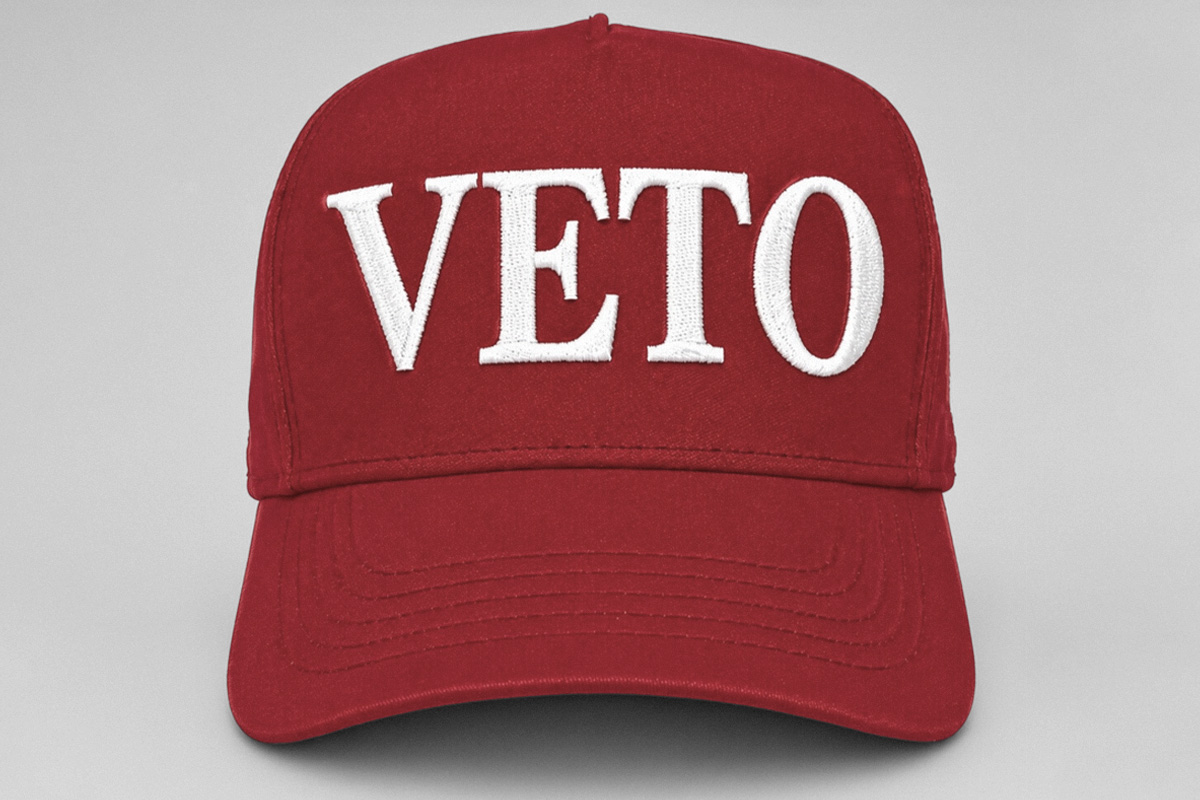
Photo source: x.com
HISTORY AND REALITY
H
istory is an extraordinarily fascinating subject, and there are plenty of people who believe that this is where its usefulness ends, regarding it as something akin to fiction — except that instead of being invented, it actually happened. Such a view is not merely mistaken — I even find it difficult to think of a word outside the realm of profanity that could adequately describe such a naïve and dangerous misconception. As far back as the nineteenth century, Herzen put it perfectly: “The past prophesies”. History does not merely remind us of what happened — it is also quite good at predicting what will happen. These predictions are not always pleasant, but they are very often correct. That, in fact, is why we need to know history: so that we can make the most accurate possible decisions about how to continue it.
Quite recently, U.S. President Donald Trump made an extremely interesting statement based on historical analogies. Asked what he intended to do if the Democrats gained control of both chambers of Congress after the midterm elections, Trump replied that he would become “Mr. Veto”, exercising this presidential power so intensively as to force the Democrats to strike a deal with him that he would find acceptable (I am already wary of saying “acceptable to the Republicans”, since even among them support for Trump is now by no means unconditional). So what can history tell us about precedents for such a situation? Has there ever been anyone in the past who was already known as “Mr. Veto”? Well, if not mister, then perhaps Herr, Pan, Boyar, Señor, or something of the sort. How successful was his policy? Did the use of the veto bring him the success he desired? And what exactly is the right of veto?
“I FORBID” IN LATIN
The word itself is Latin and means “I forbid”. The Roman Republic was governed by two consuls of equal standing, and either of them could overturn the other’s decision simply by saying, “I forbid”. Either find a solution that both are prepared to tolerate, or leave everything as it is. Under the emperors, this rule of the Roman Republic became considerably simpler: whatever the emperor forbade was forbidden, and no one could challenge it. Later, this came to be known as the absolute veto — a power possessed, for example, by the Russian and German emperors. How much good it did them is something we learned at school. Absolute veto power also exists outside the hands of monarchs — for instance, the permanent members of the UN Security Council possess an absolute veto over UN decisions. If just one of them objects, nothing will happen, even if all the others insist. In feudal monarchies, the right of veto was commonplace, specifically the absolute veto, to which there was no lawful means of objection.
The constitutional documents and other legislative acts of modern states more commonly provide for the more modest suspensive veto. If the French president dislikes a law passed by one of the chambers of parliament, he uses such a veto to send it back to that chamber: think again. However, if the deputies reaffirm their decision in a second vote, the law is adopted and the president’s will is disregarded. He can buy time, but the final decision is not his. The U.S. president’s veto is somewhat stronger. If he vetoes a decision passed by one chamber, simply voting on it again is not enough to override the veto. A two-thirds majority is required, and the other chamber must also approve the override by no less than a two-thirds majority. Only in this way can the president’s decision be overturned, but given the expected distribution of votes in the chambers of Congress, this is not always possible. So a president who makes use of the veto will, at the very least, make life more difficult for his opponents.
HOW IT WORKED
So, is becoming “Mr. Veto” a smart political move? American presidents, unlike British monarchs, who last exercised their veto in 1707 under the rather ineffectual Queen Anne, have used the veto quite frequently. Franklin Roosevelt did so 635 times, Grover Cleveland 584 times, mostly on economic rather than political issues. Vetoes have not always brought presidents success — Barack Obama’s veto of legislation allowing lawsuits against Saudi Arabia over the September 11 attacks, for example, was overridden by the Senate by a vote of 97–1 and by the House of Representatives by 348–77 — what you might call an absolute rout. Of President Andrew Johnson’s 29 vetoes, Congress overrode 15 — a majority! And what happened? Nothing particularly remarkable…

THE FIRST “MR. VETO”
“Mr. Veto” was well known in history long before Trump. Since he was French rather than American, practically the entire country called him not “Mr. Veto” but “Monsieur Veto”. And if I were in Trump’s shoes, I would probably break out in a cold sweat at the thought of who this man was and what fate awaited him, not to mention his wife, who acquired the nickname “Madame Veto” at the same time. Yes, it was none other than Louis-Auguste de Bourbon, known as Louis Capet after being stripped of his throne, and as Louis XVI in our history textbooks. Far from the worst of the French kings — for one thing, practically the only faithful husband among the Bourbons (unfortunately, no one would dare make the same claim about his wife, Marie Antoinette). A skilled craftsman who, with his own royal hands, made numerous intricate mechanisms, such as locks for his caskets and writing desks. Relatively good-natured, fairly mild-mannered, and at times even excessively accommodating. And yet — there you have it — he ended his life on the guillotine! Could the nickname “Monsieur Veto” really have played any part in this? I am afraid it did. It was precisely the vetoes he imposed, exercising the power granted to him by the new French Constitution of 1791, which had demoted him from “King of France” to “King of the French”, that played such a tragic and perhaps even fatal role in his destiny.
Interestingly, unlike American presidents, Louis XVI exercised his veto power only a handful of times, but on extremely sensitive issues — and after attempting to flee the country, no less. The circumstances of his escape were practically operatic (traveling in the enormous coach of the Russian Baroness Korff, a conspicuous berline visible from miles away, with Marie Antoinette’s favorite, Count Fersen, acting as coachman, Louis thought nothing of stepping out and strolling among people who knew his face from coins — and one of them duly recognized him, the bloody fool of a conspirator). The king was brought back to Versailles and had to pledge to abide by the new constitution, which included this right of veto. In theory, the veto was suspensive, but it was extremely powerful.
It could only be overridden in the next two successive parliamentary sessions, meaning that three successive parliamentary assemblies had to approve the measure — otherwise, there was no chance. And Louis began using it on extremely sensitive and important matters. He vetoed the withdrawal of financial support from priests who refused to take the oath, the establishment of a volunteer camp to defend Paris against foreign intervention, and an order requiring émigrés to return under threat of property confiscation — the public was absolutely furious. His final veto, concerning the formation of a Girondin government, demonstrated that further discussion would no longer resolve anything. For “Monsieur Veto”, the outcome could hardly have been worse. He was overthrown, tried, and sent to the guillotine.
A SONG ABOUT “MONSIEUR VETO”
Surely everyone has heard the folk song “La Carmagnole” performed by Édith Piaf? Its lyrics are simply merciless toward “Monsieur and Madame Veto”.
And “Veto” swore with all his might
That France would never face his spite,
But he broke his solemn vow —
No mercy for him now!
“Madame Veto” swore one day
She’d wipe all Paris clean away,
But damn her wicked schemes —
The gunners are awake!
Come, dance the Carmagnole!
Let cannons roar, let cannons roar!
Come, dance the Carmagnole!
Let thunder sound from shore to shore!
Did the roar of cannons celebrated in “La Carmagnole” mean that good had triumphed? No. It simply meant that another form of evil had seized the reins — one dreadful extreme had prevailed over another. The Montagnards, the Thermidorians, Napoleon I — all in all, things only began to return to something resembling normality after the Paris Commune. This was the result of “Monsieur Veto’s” policy — senseless, ill-calculated, confrontational, and doomed from the outset.
This raises an interesting and important question: did Trump realize what he was associating himself with when he spoke of becoming “Mr. Veto”? If his knowledge of history is that poor, it is extremely dangerous — recall Herzen’s words quoted at the beginning. But the question concerns not only Trump himself, but also the people with whom he has surrounded himself. If there was no one to point out what he was identifying himself with, does this not suggest that power has been seized by a group of arrogant ignoramuses? And the timing for such a development could hardly be worse…
When copying materials, please place an active link to www.huxley.media
Select the text and press Ctrl + Enter


