THE WIND OF VADER: Utopia and Dystopia as Visions of the Future

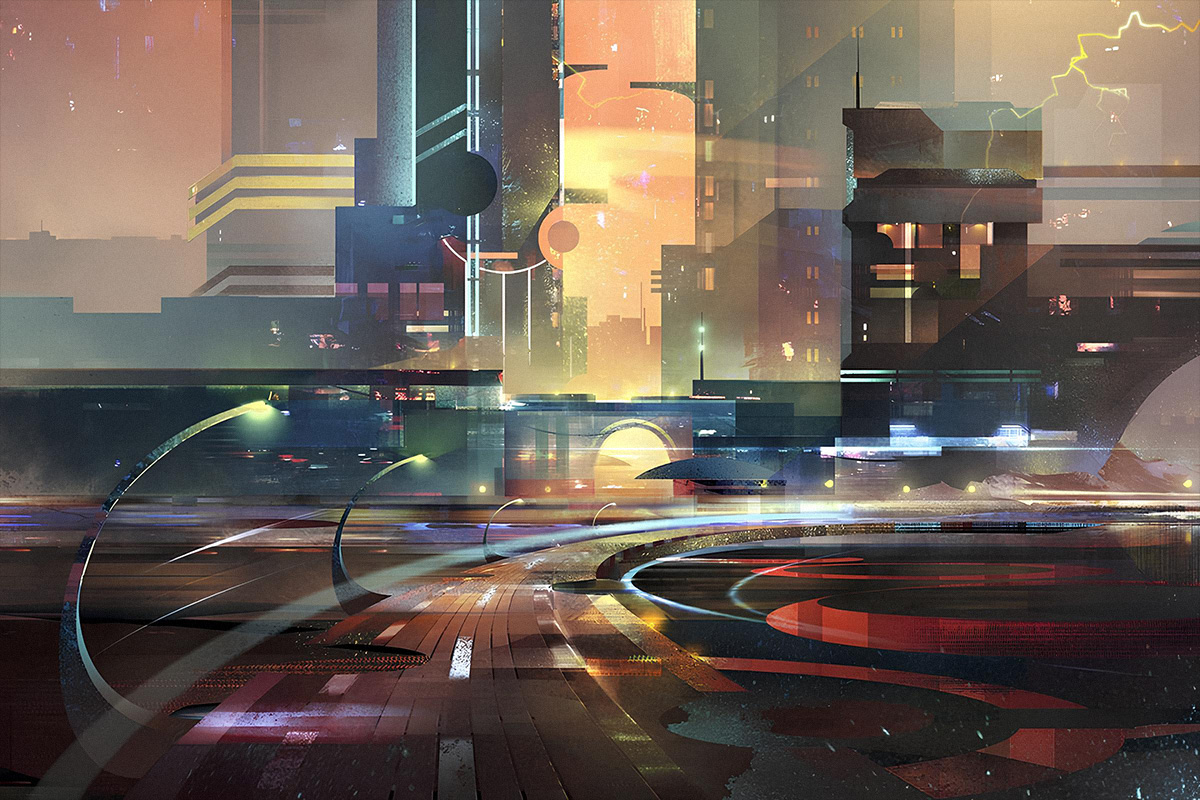
Photo source: depositphotos.com
Dystopias are extremely popular. Every other science-fiction book seems to present a future in which human freedom is suppressed. Series such as Black Mirror and The Handmaid’s Tale attract audiences in the millions. They are hugely popular not only with adults but also with teenagers. At the same time, after the upheavals of the twentieth century, utopian projects tend to inspire apprehension: their associations with attempts to build communism or fascism are too strong. As a result, writers have become not only idealistic but also critical of their own most cherished ideas.
It is no coincidence that Ursula K. Le Guin’s novel The Dispossessed, about a just and egalitarian society, bears the subtitle An Ambiguous Utopia. We asked Vlad Mikheev, an expert in strategic communications with a PhD in Philology, to explain the genre’s origins and what has driven people for centuries to turn to utopias and dystopias. We invite you to read his essay thoughtfully.
Let us run a small thought experiment. “What are your plans for the future? What would you like it to look like?” If you begin answering these questions, your imagination will conjure an image of a successful person who is healthy, happy in their personal life, and able to realize their talents fully. You will create a picture that is illusory in relation to the present, yet quite real as a “life project” — a goal you would very much like to achieve. In that moment, your thinking becomes utopian.
HUMANITY THE DREAMER
The eminent thinker Ernst Bloch, in developing his “philosophy of hope”, argued that utopia was not merely fiction or a dream of the unattainable, but a fundamental characteristic of Homo sapiens as a “dreaming human being”. For his attempt to vindicate utopia, Bloch was even called a modern-day Thomas More, who first used the word in 1516 in his work A Little, True Book, Both Beneficial and Enjoyable, about How Things Should Be in a State and about the New Island Utopia.
The word “utopia” can be interpreted in two ways: as “no-place” and as “good place”. The attempts of “dreaming humanity” to conceive and bring to life a perfectly organized society free from every social ill and defect are far older than the word “utopia” itself. It is therefore no coincidence that today the term has at least a dozen and a half basic definitions, and by no means all of them are confined to a literary genre.
Faith in a better future is archetypal. It is a Platonic “recollection”, present in the cultures of different peoples and eras, of the eternal dream of a “lost paradise” and a “City of God on Earth”. This cultural experience is undoubtedly far older than the first written utopian project known to us — Plato’s Republic. Yet with Plato begins the idea of total control and management of society on exclusively rational principles. In the twentieth century, this idea was discredited by fascist and communist regimes, as well as by countless literary and cinematic dystopias.
UTOPIA AND THE “CLOSED SOCIETY”
Karl Popper’s The Open Society and Its Enemies presents a neoliberal philosophical interpretation of human history. Beginning with Plato, Popper sees history as a dualistic struggle between the “open society” — free, democratic, and conducive to individual development — and the “closed society” — totalitarian, unfree, and suppressive of the individual. The latter is the absolute domain of utopia turned inside out, where humanity’s dream of creating paradise on Earth has become a totalitarian hell.
Of course, such constructions are schematic and can be seen as ideological instruments of the Cold War era. In this connection, it is worth recalling what was probably the last major Soviet utopia: Ivan Yefremov’s science-fiction novel Andromeda Nebula. It is no secret that George Lucas, creator of the Hollywood Star Wars saga, drew inspiration from screen adaptations of Soviet science fiction, including Andromeda Nebula.
The name of the terrifying space dictator Darth Vader, who builds the totalitarian Galactic Empire, resembles that of a character in Yefremov’s novel. It is difficult not to recall US President Ronald Reagan’s description of the USSR as an “evil empire”. In Yefremov’s own work, however, Dar Veter is the ideal hero of an ideal communist future in which globalization has overcome the world’s material, social, racial, and cultural inequalities in pursuit of a great common purpose.
Neither utopias nor dystopias have ever been innocent “mere fiction”. One might say that they have always stood at the very center of struggles for power, resources, and ideological control
This example demonstrates that neither utopias nor dystopias have ever been innocent “mere fiction”. One might say that they have always stood at the very center of struggles for power, resources, and ideological control. The lives of great utopian thinkers provide ample evidence: many were subjected to torture, execution, public condemnation, and persecution by those in power.
UTOPIA AS PROPHECY
Utopia always opposes the present and represents a value-oriented social forecast. Such are the “classical utopias”: Francis Bacon’s New Atlantis, Tommaso Campanella’s The City of the Sun, Cyrano de Bergerac’s The States and Empires of the Moon, Denis Vairasse’s History of the Sevarambians, and others. All of them engage with an image of the future — and the future is always the realm of prophecy.
When Tommaso Campanella was forced to flee Rome for France, he made a prediction that helped secure the fate of Anne of Austria and the Bourbon dynasty. After 23 years of marriage, Anne had still not given Louis XIII the long-awaited heir.
To avoid jeopardizing the future of the dynasty, the king was strongly advised to divorce. The author of The City of the Sun then predicted that Anne would soon give birth to the greatest and most powerful king in Europe — a prophecy that could hardly have come at a better time. Everyone believed him, including the king, the queen, and the hardly sentimental Cardinal Richelieu. The prophecy came true: in 1638, the future Louis XIV was born, later to become known as the “Sun King”.
Of course, this prediction can be interpreted as an intriguing isolated incident. Campanella, who was later proclaimed one of the forerunners of scientific communism, was no stranger to mysticism and even worked as a personal astrologer to the pope. Predictions, one might say, were his bread and butter. Yet it is impossible to deny that utopian thought possesses the projective capacity of the human mind and establishes coordinates for what might be possible.
Today, Bacon’s predictions about aviation, submarines, cinema, radio and television, cryogenics, genetic engineering, and thermonuclear fusion look remarkably prophetic. And Bacon was far from alone in making such forecasts. Yet the utopians were primarily interested in social progress; technological development was more a prerequisite and an instrument for building an ideal society governed by its finest representatives — philosophers and scientists. The utopians’ works contain numerous ideas that remain relevant today, including gender equality, the abolition of the death penalty, and the scientific organization of labor.
More, for example, advocated reducing the working day to six hours, while Campanella proposed four. In this respect, they were even more radical than Engels and Marx, who in 1866 first proposed limiting the working day to eight hours, which later became familiar to us. In the nineteenth century, factory owners regarded this idea as absurd and harmful. After all, it seemed logical to assume that the more an employee worked and the less they were paid, the more productive the enterprise would be.
More advocated reducing the working day to six hours, while Campanella proposed four
Henry Ford dramatically challenged this belief in 1914, when he introduced an eight-hour working day at his factories and doubled wages. The business community thought Ford had lost his mind — until his company doubled in size within a short period of time. In the twenty-first century, flexible schedules and flexible working conditions surprise no one. Some contemporary data appear to support the utopians’ ideas, suggesting that a six-hour working day can make employees considerably more effective than an eight-hour one.

SOCIETY AS A PERFECT MECHANISM
Utopian thinkers tend to take an extremely regulated and rational approach to human and social capital. In particular, their works contain prototypes of modern personnel assessment and recruitment systems based on personality typologies. Charles Fourier is regarded as a pillar of “utopian socialism”, alongside Robert Owen and Henri de Saint-Simon. In his book The Theory of the Four Movements and the General Destinies, he discusses the peculiarities of human nature at great length. His classification of human types is even more detailed than those used in modern HR systems. Fourier identifies no fewer than 810 types, distinguished by their psychophysical characteristics. According to these differences, the members of his utopian “phalanstery” are naturally and harmoniously assigned their respective forms of work and leisure.
Overall, Fourier lamented that the affective side of human personality posed the greatest obstacle to building a harmonious society. Many later dystopias would rebel against precisely this—the prohibition of uncontrolled emotional responses toward other members of society, animals, members of the opposite sex, food, and clothing. In the dystopian world, the ideal society is a perfect assembly line, a society-machine in which the human being is merely a cog performing a strictly assigned function in accordance with their natural inclinations. Dystopia rebels against this supposedly perfect world.
The ideas and insights of technocratic socialism underpinned Henry Ford’s attempt to build socialism within a single company. His famous assembly line was a triumph of technocratic rationality. That same rationality also drove the enormous attention Ford paid to social capital. He sincerely believed that in his ideal world “the culture of machine production should become the culture of life”. This mechanistic view of the world, human nature, and society has its roots in the Enlightenment and its cult of rationality. Ford’s genius demonstrated that high standards of corporate socialism could improve workers’ quality of life and, far from contradicting greater production efficiency, could actually become a condition for achieving it.
THE DARK SIDE OF SOCIAL CAPITAL
“Fordist socialism” is only one example of utopian thinking about the world having a positive impact on real life. Yet things are not quite so straightforward. The distinguished sociologist Alejandro Portes demonstrated that social capital has its own “dark side”: tendencies towards the self-isolation of social groups — inevitably recalling Karl Popper’s reflections on the “closed society” — the standardization of behavioral patterns at the expense of individuality, sometimes amounting to psychological coercion, and a high degree of social control that substantially restricts human freedom.
Interestingly, even in Henry Ford’s case we find a high degree of control over employees’ private lives, without which, perhaps, such high social standards could not have been achieved. In the nineteenth century, Ford’s predecessor, the industrialist and socialist Robert Owen, achieved impressive results in Britain through his experiments with social capital. Yet his “ideal company”, like Ford’s, was still not the ideal society envisioned by Plato or Campanella and populated by the “best people”. Owen decided to create just such a society — a “community of shared interests” — on the other side of the Atlantic, in America.
At his invitation, writers, artists, musicians, and other creative people joined the experiment. Ultimately, Owen’s project ended in crushing failure: when highly passionate individuals are concentrated together in large numbers, they proved incapable of effective self-organization and self-restraint. How can we define the delicate boundary between individual freedom and the necessity of social control? The great dystopias of the twentieth century attempted to locate precisely this boundary.
DYSTOPIA — A REVOLT AGAINST RATIONALISM
Utopia insisted on universal equality to eliminate competition, which it believed led to social injustice, the concentration of power and luxury at one pole of society, and poverty and disenfranchisement at the other. Dystopia, by contrast, rehabilitates inequality as something natural, inherent in nature itself and necessary for development. In dystopian fiction, technological and social progress poses global threats and risks to humanity rather than bringing us closer to the harmony and tranquillity of a new “golden age”. The progressor — a type of superhuman protagonist portrayed by Arkady and Boris Strugatsky in their novel Hard to Be a God — turns into a totalitarian monster, just as Dar Veter turns into Darth Vader. By contrast, the positive hero is the lone rebel who resists either the system itself or its apocalyptic consequences.
Dystopian writers deprived human reason of its presumption of being the sole criterion of truth. The English liberal philosopher John Stuart Mill, who coined the term “dystopia”, argued that “the interests of truth require a diversity of opinions” because the human mind is imperfect. Against unlimited state control, he set the natural right to individual liberty. Mill insisted that “the only purpose for which power can be rightfully exercised over any member of a civilized community, against his will, is to prevent harm to others”. The paradox is that utopias often invoked very similar arguments to justify precisely such control.
ON THE THRESHOLD OF A NEW BRAVE WORLD
Utopia and dystopia approach images of the future differently—the former works with projects; the latter, with models. For utopia, the future appears as a continuation of the dreadful present if the utopian project is not realized. For dystopia, the future becomes dreadful precisely when someone attempts to realize the utopian project. From the dystopian perspective, the social illusion comes from “nowhere”: it is the product of collective or individual imagination. Its adequate embodiment in real historical space and time is therefore impossible.
Although dystopias approach the image of the future differently, the author’s imagination performs the same predictive function as it does in utopia. Contemporary interpreters of Ray Bradbury’s 1953 dystopian novel Fahrenheit 451 argue that he anticipated the emergence of ATMs, headphones and portable music players, Bluetooth, flat-screen televisions, social networks, and smart cars, which are already appearing on American roads.
Utopia and dystopia approach images of the future in different ways. The former works with projects; the latter, with models
Dystopian fiction tends to regard not only technological but also social progress with considerable suspicion. George Orwell, the author of 1984, believed that “the totalitarian idea lives in the minds of intellectuals everywhere” — the very sages and philosophers who created the ideal states imagined by Plato and the utopian thinkers. The intellectuals of classic dystopias created Aldous Huxley’s Brave New World, which prophetically anticipated the threat posed by genetic engineering experiments. The same is true of comprehensive digitalization, which has become a reality but was prophetically anticipated as early as 1920 in Yevgeny Zamyatin’s science-fiction novel We.
HISTORY AS A MYTH-LIKE PHENOMENON
The sages of the Talmud believed that everything we know about the world is a story someone told. If we regard history as a phenomenon resembling both myth and text, much will depend on the “author’s” interpretation — on their assessment of the past, present, and future. This means that both the utopian and the dystopian will always be present in human history as possible scenarios. Utopia and dystopia go hand in hand throughout human history. They are a kind of “light” and “shadow” — reflections of the eternal myth of the struggle between good and evil in individual destiny and in the history of humankind. But myth has its own ambivalent logic, distinct from that of everyday life.
And this logic, to borrow Friedrich Nietzsche’s phrase, lies “beyond good and evil”. What appears to be “absolute” good today may therefore turn into its “absolute” opposite tomorrow. Interestingly, cyberpunk, as a modern form of dystopia, draws on the “superhuman” ideas of transhumanism developed by the great dystopian writer’s own brother, Julian Huxley. Aldous Huxley himself, recognizing that dystopia rejects a terrifying future without offering anything in its place, eventually turned to utopian experimentation in his works Island and Brave New World Revisited.
BETWEEN DREAM AND FEAR: HUMANITY IN SEARCH OF MEANING
The dream of an ideal society remains as powerful as the fear of an unknown future. Utopia lives on in the modern American city of Philadelphia, designed according to the ideas in Thomas More’s book. It lives in national constitutions, Israeli kibbutzim, Christian and Buddhist communities, social networks, Copenhagen’s Christiania district, social innovation, and new economic ideas.
In the same way, we recognize in the modern world signs of manipulation of mass consciousness — of our beliefs, emotions, and consumer preferences — and attempt to resist it. We will never rid ourselves of either hope or doubt, both of which give meaning to our existence on the road to happiness. For wherever we may be going, happiness is ultimately what we seek. The most important thing along the way is to remember the warning Aldous Huxley left us:
Happiness in its natural form always looks rather shabby beside the colorful trappings of unhappiness. And, of course, stability is far less spectacular than instability. Contentment has none of the romance of battling against an evil fate, none of the dramatic struggle with temptation, none of the aura of fatal doubts and passions. Happiness has no grand effects
Recommended Reading List: Utopia and Dystopia
- 1984 — George Orwell
- Fahrenheit 451 — Ray Bradbury
- Annihilation — Jeff VanderMeer
- The City of the Sun — Tommaso Campanella
- The States and Empires of the Moon — Cyrano de Bergerac
- The Republic — Plato
- Delirium — Lauren Oliver
- A Clockwork Orange — Anthony Burgess
- History of the Sevarambians — Denis Vairasse
- Kallocain — Karin Boye
- The Slynx — Tatyana Tolstaya
- The Martian Chronicles — Ray Bradbury
- We — Yevgeny Zamyatin
- Never Let Me Go — Kazuo Ishiguro
- New Atlantis — Francis Bacon
- Brave New World — Aldous Huxley
- Island — Aldous Huxley
- Lord of the Flies — William Golding
- Noon: 22nd Century — Arkady and Boris Strugatsky
- Animal Farm — George Orwell
- Andromeda Nebula — Ivan Yefremov
- Utopia — Thomas More
When copying materials, please place an active link to www.huxley.media
Select the text and press Ctrl + Enter


