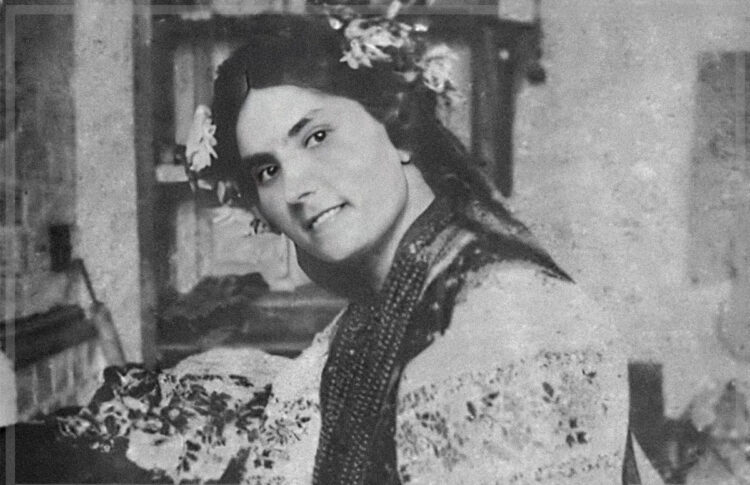
THE MYTH OF MAZEPA: How the Ukrainian Hetman “Played a Part” in the Birth of the Circus, the Yellow Press, the Western, and Homoerotic Art

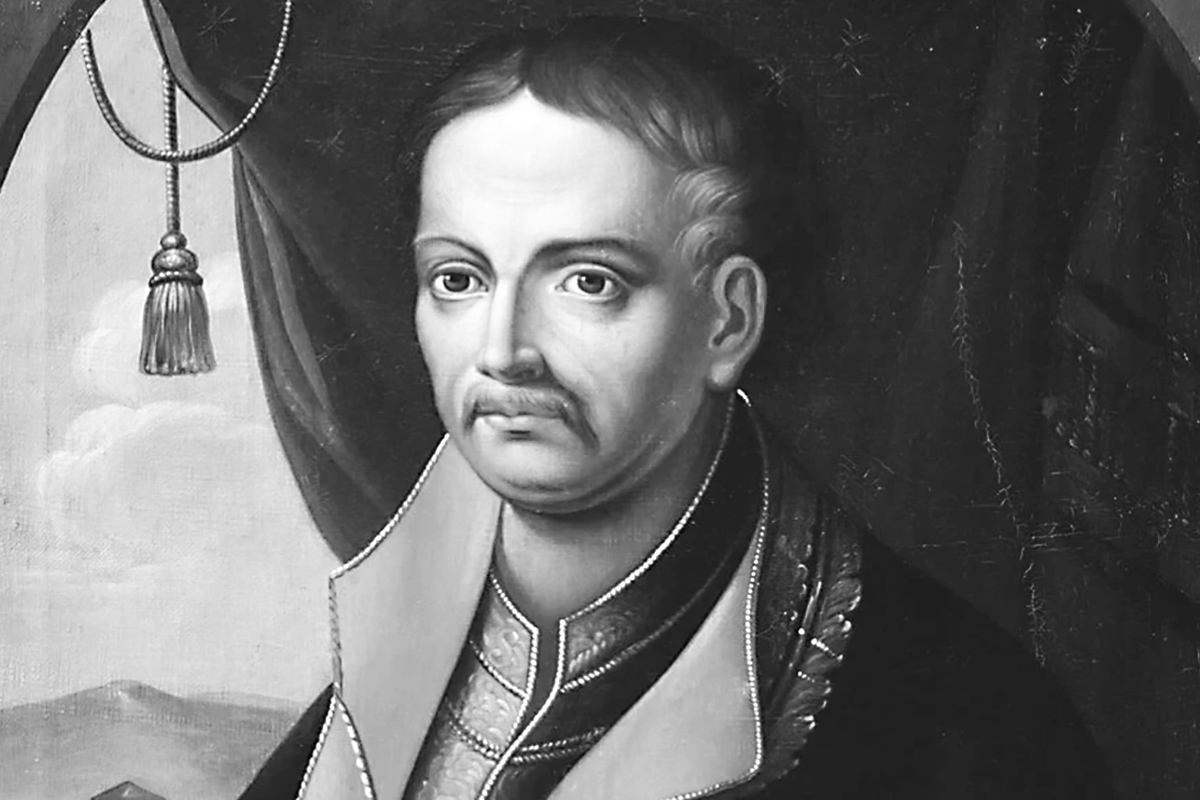
Portrait of Hetman Ivan Mazepa (1639–1709), painted in the 1840s by the serf artist Stepan Zemlyukov / gettyimages.com
The “war of monuments” is one of the oldest political rituals in human history. A monument embodies not only the “idea of memory” but also the “idea of power”; it is a marker of control over space, including cultural space. In this sense, the appearance of a bust of Ivan Mazepa on the grounds of the Kyiv-Pechersk Lavra is an extraordinary event. Mazepa’s story represents a unique point of Ukraine’s entry into the realm of European and world culture. Transforming from one era to another, the myth of Mazepa played an extraordinary role in that culture, one that had little in common with historical reality. The Ukrainian hetman would surely have been shocked to learn what phenomena of modern culture he had, quite unintentionally, become associated with.
MAZEPA IN MARBLE AND BRONZE
There are disappointingly few monuments to Ivan Mazepa. The first Ukrainian monument to the hetman appeared in 1994 in his ancestral village of Mazepyntsi, in the Chernihiv region. It was funded by a Ukrainian philanthropist from the United States. Later, monuments appeared in the village of Dehtiarivka and in Chernihiv itself. The people of Poltava honored the hetman with a full-length monument — so far the only one of its kind in the world. Outside Ukraine, Mazepa has fared somewhat better. As early as 1963, the world’s first monument to the hetman was erected through the efforts of the Ukrainian diaspora in Kerhonkson, New York. In the Romanian city of Galați, where Ivan Stepanovych’s remains were transferred in 1710 from Bender, Moldova, a half-length bronze monument has stood since 2004. The city even has neighborhoods called Mazepa 1 and Mazepa 2. There is also a memorial stele in Bender and another in the Viennese suburb of Perchtoldsdorf. And that, essentially, is all. Not very impressive, is it?
But we should not rush to conclusions about the hetman’s role in history and culture… In Ukraine, monuments to Mazepa exist mainly because of a direct historical connection to the place. In Europe, meanwhile, perhaps only professional historians understand the intricacies of the historical narrative whose principal figures were King Charles XII of Sweden and Tsar Peter I of Russia. Even in Romania, Mazepa is remembered not as a rebellious hetman but as a great Orthodox patron who donated enormous sums to churches throughout the Balkan region, including monasteries on Mount Athos and in Romania. Moreover, he financed the printing of an Arabic-language Gospel for Syrian Christians.
MYTH VERSUS HISTORY
Mazepa indeed did a great deal for Orthodoxy, and not only for Ukrainian Orthodoxy. He was one of the most highly educated rulers of his time: he knew Latin, Italian, German, and French and conducted diplomatic correspondence throughout Europe. He sought to wrest Ukraine from the firm grip of Russian autocracy and reorient it toward the West. Yet Mazepa’s name entered the history of world culture not because of these achievements. What proved extraordinarily productive for world art, theater, and literature was the cultural myth of Mazepa, born from a mere trifle — an unreliable historical anecdote. This myth has almost nothing in common with the real historical figure and differs radically both from the Ukrainian national narrative, in which Mazepa is a heroic statesman, and from the Russian one, in which he is portrayed as a Judas-like traitor. For European culture, Mazepa is above all a Romantic archetype, a symbol of mad passion, noble rebellion, tragic destiny, and a titanic struggle against fate.
VOLTAIRE RETOLD THE “ANECDOTE”
It was Voltaire who brought the Mazepa myth into cultural existence by recounting, in The History of Charles XII, King of Sweden, a society tale about an affair between the wife of a certain Polish nobleman and Ivan Mazepa, then a young page at the Polish royal court. The offended husband ordered Mazepa to be stripped naked, tied to the back of a wild horse, and released into the Ukrainian steppe, where the Cossacks later found him barely alive. Thus, by the will of fate, a brutal punishment made him the ruler of a country of freedom-loving people. Voltaire already reveals the defining trait of Mazepa’s literary image — his extreme sensitivity to matters of honor. The hetman accepts Peter I’s favors until, at one of the feasts, the tsar threatens to have him impaled for an imprudent remark. Ivan did not forgive the humiliation. Watching the military successes of Charles XII, he saw in the young Swedish king the ideal opportunity to free himself from the tyrant’s rule.
Yet fate, which had elevated him in his youth, dealt him a devastating blow in old age. Voltaire portrays Mazepa after the crushing defeat at Poltava as a tragic figure — an aging, broken ruler in exile who has lost everything. Voltaire was a brilliant storyteller, instinctively drawn to dramatic plots. He therefore treated Mazepa not as a real historical figure but as the hero of an adventure novel. The story of the horse is entirely legendary and was most likely invented by Jan Pasek, one of the hetman’s detractors. Mazepa’s rise to power had nothing to do with the romantic myth of the “fateful horse”. It was the result of deliberate choices, powerful family roots, and skillful diplomacy.
WHAT REALLY HAPPENED
His family was deeply integrated into the life of the Ukrainian Cossacks. Mazepa’s father was an associate of Bohdan Khmelnytsky and served as otaman of Bila Tserkva. His mother came from a prominent family of Cossack officers. After becoming abbess of the Kyiv-Pechersk Ascension Convent, she wielded enormous spiritual and political influence in Ukraine. Mazepa’s return to his homeland was neither an escape nor a disgraceful exile, although there really had been a minor conflict with the Polish nobleman Stanisław Falbowski, who suspected Mazepa of having an affair with his wife. It should also be noted that Mazepa entered the highest ranks of the Cossack elite not only because of his origins but also thanks to his remarkable diplomatic talents.
But Voltaire, and after him the European Romantics, needed the image of a “savage” whom fate and the forces of nature had condemned to suffering so that he might become a “Cossack king”. For the same reasons, their semi-mythical “land of the Cossacks” was a territory of absolute anarchy and freedom, where people lived without recognizing any laws other than their own will. In reality, by the beginning of the eighteenth century, the Hetmanate was a well-structured state with a clear hierarchy, courts, a tax system, and a highly developed culture. Voltaire distorted reality, largely projecting onto Ukraine and the hetman his own ideas about the “natural man”, free from the shackles of civilization. Nevertheless, it was Voltaire’s text that introduced Mazepa to Western European culture. The French Enlightenment thinker was the first to proclaim to all of Europe: “Ukraine has always aspired to freedom!”
THE TRANSFORMATION OF REBELLION
Before Mazepa was sent on his turbulent journey through world culture by the Age of Enlightenment, seventeenth-century Europe was already well acquainted with the myth of the “Ukrainian Cromwell” — Bohdan Khmelnytsky. Its origins can be traced to Samuel Twardowski’s poem Civil War. It was a classic Baroque epic in which Bohdan appeared as a terrifying destroyer, a demonic instrument of God’s wrath, someone akin to Goethe’s Mephistopheles: “I am part of that power which eternally wills evil and eternally works good”. Yet the Romantic images of Khmelnytsky and Mazepa already tell the story of the personal drama of a solitary individual confronting fate.
The Romantics of the nineteenth century borrowed the figure of the “rebel” from the Baroque but removed God from the formula. The demonic quality of the solitary genius consumed by titanic passions fascinated them rather than horrified them. The Baroque world, divided into sinners and the righteous, subjects and rebels, ceased to exist. The mental revolution of Romanticism introduced new markers of identity: nation and national spirit replaced social estate and religious affiliation. It was Romantic nationalism that invented the lens through which we still view the world today. It transformed Mazepa from an ill-fated lover into a titan of national revival. And here the distinction belongs not to Voltaire but to George Gordon Byron, who reinterpreted Voltaire’s myth.
“THE UKRAINIAN PROMETHEUS”
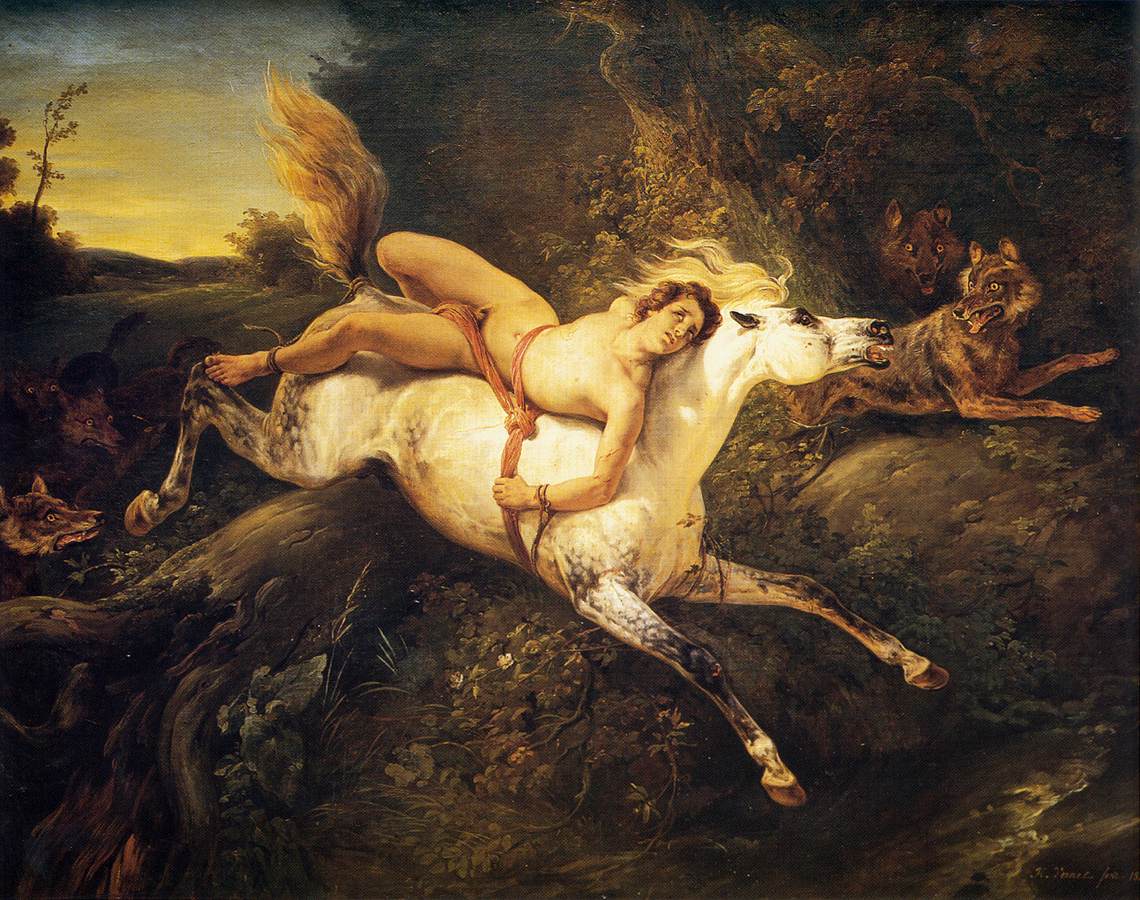
Byron completed his poem Mazeppa in 1818. Under his pen, the frenzied ride on a wild stallion became a metaphor for the vicissitudes of human fate, unbridled passion, and transformation. Mazepa becomes a leader of his people after passing through deadly trials. Even defeat in war fails to break his titanic will. It is precisely this image of Mazepa that Pushkin challenges in Poltava. He demythologizes the hetman, stripping him of his Romantic nobility. Outside Russia, Pushkin’s interpretation never took hold. Byron’s myth, by contrast, sparked a genuine boom in nineteenth-century art. It was visualized by Théodore Géricault, Eugène Delacroix, Horace Vernet, and Gustave Doré. Franz Liszt offered a musical version of it. Victor Hugo celebrated Mazepa in verse. But what was the source of such popularity?
The point is that the Mazepa of Voltaire and Byron fit perfectly into the cultural trend of the time. The Romantics eagerly embraced the image of a young and passionate rebel who defied fate. And they ignored the Mazepa who became part of European history — a highly experienced, extremely pragmatic 70-year-old politician. To them, Ukraine seemed like a distant exotic land, something akin to the American Wild West. A well-built, naked young man, a horse at a furious gallop, the wind of the wild steppes, and passions just as wild… If you did not know that the painting depicted Mazepa, you would have to guess which figure from ancient mythology it represented. The analogy suggested itself: Mazepa was the “Ukrainian Prometheus”. Formally, he lost. But spiritually, he triumphed, becoming a symbol of defiance and freedom. In the nineteenth century, against the backdrop of the “Springtime of Nations”, which shook the foundations of empires, the myth of Mazepa became a political symbol of a small nation’s struggle against a vast empire.
“COSSACK-MANIA” AND THE “TATAR” HORSE
The theatrical fate of the myth proved no less successful than its fortunes in literature and painting. The fashion for Mazepa made the genre of hippodrama wildly popular. Its pioneer, and at the same time one of the founders of the modern circus spectacle, was the brilliant producer and actor John Astley. In 1807, the adventure melodrama The Brave Cossack, or Treachery Punished enjoyed great success at London’s Astley’s Amphitheatre. At the height of the Napoleonic Wars, England was swept by “Cossack-mania”. The British press enthusiastically circulated the image of the fearless Cossack crushing Bonaparte’s army. Astley simply transferred this newspaper narrative to the arena. The result was something like a Hollywood blockbuster in which special effects mattered more than the plot. The audience erupted with excitement as riders in baggy trousers and tall hats performed astonishing feats of trick riding, brandished lances, and fought with sabers. The spectacle was intensified by pyrotechnics and ramps designed so that a horse at full gallop could leap from the ring onto the theatrical stage.
Byron’s poem became an inexhaustible source of visual material for hippodrama, while the “Mazepa craze” became an absolute hit of the genre. The horse, both in these productions and in the myth as a whole, was a hero equal in stature to the hetman — something reflected even in the titles. One example was the Parisian hippodrama of 1825, Mazepa, or the Tatar Horse. Why Tatar? Because the creators of the production considered Oriental exoticism commercially more promising than the horses’ actual “nationality”. The central attraction driving the plot was the wild ride, so dangerous that the live actor was often replaced by a dummy. The Mazepa puppet was tied to the horse, which then raced across moving platforms amid special effects imitating the roar of water, lightning, and the thunder of wild hoofbeats. The animal was often fatally injured, and in such cases, to end its suffering, it was put down backstage and a new horse was brought onto the stage.

THE SEX SYMBOL OF THE AGE
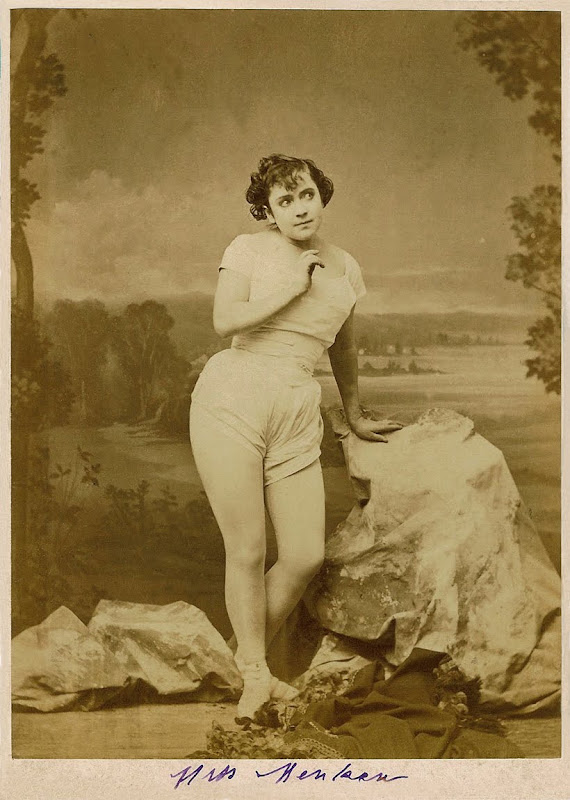
Gradually, “Mazepa mania” grew into a genuine theatrical revolution on both sides of the Atlantic. It was closely associated with the name of Adah Isaacs Menken. By turning the Ukrainian hetman into the era’s leading sex symbol, she became one of the highest-paid and most iconic actresses of the nineteenth century. In 1861, in a New York equestrian drama based on Byron’s poem, Mazepa was played for the first time not by a man or a dummy, but by a woman. In the Victorian era, when even the exposure of an ankle was considered indecent, Menken displayed an androgynous, sensual sexuality, skillfully creating the illusion of the hero’s nudity — flesh-colored tights made the actress appear completely naked. “Naked Mazepa” became a gold mine. Touring San Francisco, London, Paris, and Vienna, the scandalous show generated unprecedented box-office revenues.
Adah performed all the stunts herself. Strapped to the back of a stallion, she raced at breakneck speed along narrow platforms high beneath the theater dome. The audience, fully aware of the danger involved, experienced much the same emotions as the ancient Romans at gladiatorial combats. Whenever theater management tried to reduce the risk by widening the ramps, the public reacted with hostility. And so the “wild ride” was restored. Menken also cultivated her androgynous image offstage. At the time, short hair on a woman was considered acceptable in only three circumstances: typhus, imprisonment, or public disgrace. Adah became the first actress to commit an act of social extremism by cutting her hair “like a boy”. The poses “Mazepa” adopted onstage caused outrage as well. Victorian morality permitted such a “Kama Sutra” only in the privacy of the bedroom. And when “naked Mazepa” also began smoking in public, the Church denounced the show as a “theater of the devil”, a mockery of Byron’s genius, and interpreted accidents during the tour as manifestations of God’s wrath.
PERFECT PR
Menken kept raising the bar of provocation ever higher. She learned Hebrew, wrote articles in defense of Jews, and openly professed Judaism — a rarity on the stage at the time. “Mazepa in tights” was married four times and changed men like gloves. She maintained varying degrees of friendship with Charles Dickens, Algernon Swinburne, and Alexandre Dumas père. When the author of The Three Musketeers was 64 and Adah was 31, they began a passionate affair. Neither of them tried to hide the relationship. Photographs of the couple, in which the short-haired “Mazepa” sits on Dumas’s lap, shocked French society, yet became so popular that they were sold as postcards.
Church denunciations worked as perfect publicity — the lines of people eager to see the wild ride of the naked “hetman” grew ever longer. At the same time, the show could not be banned: legally, “Mazepa” was not naked at all. The resourceful Adah wore flesh-colored tights over other clothing. Critics were infuriated when Menken, a woman of great intelligence and considerable poetic talent, mocked in the newspapers the “eunuchs who guard the harem of art”. Alas, Adah’s fame was short-lived. Like her stage hero, she had played with fate for years. But her luck did not last forever. In 1868, during a tour in Paris, she suddenly fell ill — an old injury had taken its toll. The actress died at the age of 33 in complete poverty. Yet theatrical “Mazepa mania” did not end there.
GLOBAL “MAZEPA MANIA”
Dozens of actresses tried to repeat the success of “Mazepa in tights”, competing in the daring of their costumes and the steepness of their ramps. Leo Hudson came closest to Adah’s fame. Her publicity campaign was built around the claim that she was a “real horsewoman”, while Menken was not. Crowds across America and Britain flocked to admire Leo’s magnificently built, athletic figure. Kate Vance’s Mazepa tried to surpass Adah in both nudity and the quality of the pyrotechnics. Fanny Louise Buckingham brought the “naked Mazepa” to Australia and New Zealand. In the late Victorian era, however, Maud Forrester’s “hetman” lost his androgyny and became more academic in order to avoid censorship. Even so, none of these “copies” ever achieved the cult status of the original.
Adah was not merely the first — she became a major cultural phenomenon. Thanks to her, Mazepa became connected not only with the history of the circus and women’s emancipation, but also with other, quite unexpected cultural phenomena. Equestrian dramas had a major influence on the staging of the earliest stunts in silent films and Westerns. In a sense, Mazepa can be regarded as one of the first “cowboys”, and Menken as the first pop-culture star, a cult sex symbol of the Hollywood type. Before her, celebrities were monarchs, generals, and writers. “Mazepa mania” created a new kind of fame, one built on voyeuristic interest in private life: how many husbands Adah had, whom she dined with, what cigarette she smoked, what hairstyle she wore. Newspaper headlines anticipated the technology of clickbait: “A Naked Woman on a Mad Stallion: New York’s Shame or a New Art?” “Death-Defying Stunt at the Theater: Will Miss Menken Crash Tonight?” “Shocking Details: Whom Did Adah Menken Kiss Backstage?”
HYPOCRISY IS THE BEST-SELLING COMMODITY!
Nineteenth-century “Mazepa mania” anticipated the emergence of the modern yellow press and large-scale tabloid scandal. Previously, publications had been strictly divided between political analysis and literary almanacs. But the horsewoman playing a naked Mazepa helped editors realize that breaking taboos could be monetized. Newspapers deliberately kept the debate between Menken’s opponents and admirers at fever pitch, learning for the first time how to profit from hypocrisy. A volatile mixture of voyeurism, aesthetic admiration, and moral condemnation sold exceptionally well. Calls to ban the show were deliberately accompanied by detailed images of the naked body. Menken rightly asked her critics: “If my nudity wounds your morals so deeply, why do your husbands fill the stalls to capacity every night?” And she added: “The morality of those who condemn me by day but buy tickets by night is worth exactly what they pay for a front-row seat”. Cartoons in satirical publications mocked respectable gentlemen sitting in the stalls with enormous opera glasses. The captions claimed that these gentlemen had come to the theater “solely for the sake of Lord Byron’s sublime poetry”. The “Tatar” horses also received their share of fame: in cartoons, they were shown backstage reading Byron and complaining that they now had to carry half-naked actresses instead of the carriages of noble gentlemen.
AN ICON OF HOMOEROTICISM
The myth of Mazepa also became associated with the emergence of homoerotic art. Once again, it all began with Byron, whose bisexuality is well documented by literary historians. In his work, the metaphor of a wild horse carrying a naked young man is charged with turbulent, ecstatic energy. Psychoanalysts interpret this plot as a subconscious expression of male desire. Following the Byronic tradition, French Romantic painting depicted Mazepa completely or almost completely naked. Whereas in Classicism the object of the “male gaze” was almost always the naked female body, for the Romantics the man becomes a vulnerable and passive object. Queer theory scholars discern in this display of male helplessness elements of sadomasochistic aesthetics and covert homoerotic admiration. And in the case of Adah Menken, who surpassed everyone here as well, we see a double gender shift that creates a powerful androgynous and ambiguous subtext.
Balancing between pain and ecstasy, nineteenth-century artists transformed the Mazepa myth into a legitimate means of depicting and contemplating naked male sexuality. This eroticism was often given zoomorphic features as well — Mazepa’s bare skin pressed closely against the horse’s sweaty coat, their poses mirroring one another. In some paintings devoted to this subject, one can see a striking detail: the horse turns its head back and looks at the young man bound to its body. In its enormous wild eyes, one reads not rage but a frightening, almost human tenderness. This transformed the painting from a historical illustration into a mystical tale about the fateful bond between captor and victim. Similar hidden codes can be found in depictions of other “naked captives” in European art — Prometheus, Saint Sebastian, or Ganymede. They allowed viewers to experience voyeuristic pleasure in contemplating a naked, captive, suffering man within socially acceptable bounds. The only difference lay in the setting: Sebastian had arrows, Prometheus a rock, Ganymede an eagle, and Mazepa a horse. These codes would later influence the development of modern gay culture and twentieth-century fashion photography.
ANOTHER DUEL
In theater, which demanded visual shock, the image of the hetman became permanently associated with that of the “untamed horseman” and with stage stunts. In painting, it became linked to homoerotic aesthetics. Yet the political context never disappeared entirely from the myth. For example, in the works of German playwright Rudolf Gottschall, who emphasized resistance to tyranny, Mazepa is a fighter for the freedom of his people, an image that resonated with the revolutionary mood of the mid-nineteenth century. In Italy during the Risorgimento, Mazepa was extremely popular. Composer Fabio Campana created an opera in which Mazepa appeared as a leader of the people fighting against oppressors. Juliusz Słowacki’s drama Mazepa stands apart in this context. Pushkin saw in Mazepa’s story the geopolitical triumph of empire; the French saw abstract eroticism; the British saw material for visual shock and circus stunts. Słowacki, however, touched the very nerve of Polish identity. He created a mirror of national tragedy, caused by the vices of the Polish nobility — pride, selfishness, despotism, and paranoia. He radically rewrote the myth, turning the young Mazepa into an ideal embodiment of the Polish chivalric code. The hero goes to his execution not because he has committed a crime, but because he refuses to betray the woman he loves or break his word of honor. For nineteenth-century Polish youth, this Mazepa became a role model. Pushkin had once challenged Byron to an intellectual duel; now Słowacki challenged Pushkin. His Mazepa is not a treacherous old Judas, but a noble martyr and a victim of other people’s intrigues. Słowacki was born on the territory of present-day Ukraine, and this undoubtedly influenced both his assessment of historical figures and the overall atmosphere of the play.
SHOW THEM THE DOOR, AND THEY COME THROUGH THE WINDOW
The myth of Mazepa was associated with what was perhaps the peak of European cultural interest in the Ukrainian Cossacks. It definitively linked the image of the Cossack with absolute personal freedom, the exoticism of boundless steppes, and Romantic rebellion. But Mazepa, of course, was far from alone in this respect. Bohdan Khmelnytsky had already galloped full speed into European culture before him. Mazepa’s rival, Fastiv colonel Semen Paliy, was also extraordinarily popular in the West. He was perceived as a classic “noble outlaw”, a Ukrainian version of Robin Hood. The semi-legendary prophet and mystic Musiy Vernyhora, who predicted the fall of Poland, the revival of Ukraine, and great European wars, became a cult figure in Polish and French-language drama. Plays about Roxelana were also staged with great success across Europe. Audiences admired the image of an intelligent, strong-willed woman who had brought the East under her sway. Real history, adventure, and magic were intricately intertwined in the myth of Sadyk Pasha — Mykhailo Czajkowski, who converted to Islam.
For playwrights, these figures were ideal material for “Orientalism”. They made it possible to bring vivid costumes, saber fights, equestrian stunts, and fatal passions onto the stage — everything nineteenth-century audiences adored. They were captivated by “steppe Gothic”, a subgenre that had begun to take shape even before Gogol’s works were translated into French by Prosper Mérimée and Louis Viardot. The boundless Ukrainian steppes seemed the perfect setting for magic, witches, and Europe’s last “shamans” — the Cossack kharakternyky, who drank horilka by the bucket and were unafraid of bullets. This was precisely how Ukraine appeared to audiences of the Grand-Guignol, the Parisian theater of horror. Today, when the attention of the entire world is once again focused on Ukraine, the myth of Mazepa offers a reason to reflect: how does the integration of Ukrainians into the European cultural space actually take place? Evidently, not only through the “door” of historical fact, but also through the “window” of cultural myth and artistic fiction. Perhaps even predominantly through the latter.
When copying materials, please place an active link to www.huxley.media
Select the text and press Ctrl + Enter