10 LAWS OF TYRANNY: António de Salazar from Portugal


Hieronymus Bosch. The Vision of Tondal (fragment), 1520–30 / Art design: Olena Burdeina (FA_Photo) via Photoshop
He was a rather strange dictator. And quite an unusual tyrant. Despite being an autocrat, he did not build any palaces for himself, nor did he wage any wars. He came to power straight from the university where he taught and remained at the top for 36 years, becoming the longest-ruling dictator in Europe. He was a Portuguese man, the author and creator of the regime known as Estado Novo («New State») — António de Salazar.
10 RULES OF SALAZAR’S RULE

I do not believe in equality, I believe in hierarchy
António de Salazar
RULE 1. PERSISTENTLY DEMAND UNLIMITED POWER
S
alazar (1889–1970) was born into a family of small landowners and devout Catholics. He received his education at a seminary in Viseu and studied law at one of the oldest universities in Europe (founded in 1290 in the Portuguese city of Coimbra).
He went on to become a professor, headed the department of political economy and finance, and earned his doctoral degree.
In 1910, the monarchy was replaced by the First Portuguese Republic (1910–1926). Over the next 16 years, there were 17 coup attempts and 44 changes of government in the country.
After the military coup in May 1926, Salazar, then a professor of economics at the University of Coimbra, was offered the post of Minister of Finance. He demanded the authority to control the entire government, threatening to resign if this was not granted. Such control was not provided, and two weeks later, he kept his word and returned to the university.

In 1928, General António Carmona, then President, once again offered Salazar the position of Minister of Finance — this time granting him full control over the government’s revenues and expenditures. Salazar accepted. Having become Minister of Finance, he set out to change the centuries-old tradition of budget deficits in the country.
RULE 2. ESTABLISH A FINANCIAL DICTATORSHIP
Within a year, Salazar managed to stabilize the Portuguese economy, strengthen the national currency, and even create a budget surplus. This was a shocking event for Portugal at the time. The entire foreign debt was repaid, inflation was defeated, and within a few years, the country was exporting its own wheat, whereas previously it had been importing it.
Salazar achieved this effect in a simple way — by cutting certain budget expenditures. This policy proved highly effective and immediately raised the professor’s popularity not only among the elite but also among the people.
By 1932, with the support of the same President Carmona, Salazar became Prime Minister of Portugal, gaining direct control over the country. He had no ambitions to become President, while Carmona kept getting re-elected, remaining President of Portugal practically until his death in 1951. In reality, however, all power in the country was in Salazar’s hands.
RULE 3. SHAPE THE CONSTITUTION TO FIT YOURSELF
In 1933, he drafted a new constitution that completely restructured Portugal’s political system along authoritarian lines. Its foundation was corporatism, a concept that had originated in the Middle Ages and was revived in 1922 alongside Italian fascism.
Salazar presented corporatism as a means to harmoniously combine the interests of all social groups without any capitalist exploitation.
People worked for the common good and united in corporations; class conflicts were eliminated, and production was expected to show strong growth.
Salazar also introduced his people to three core values: family, homeland, and God. The Catholic Church, which had lost its influence after the 1910 revolution, regained its power under Salazar, as the dictator himself was deeply devout.
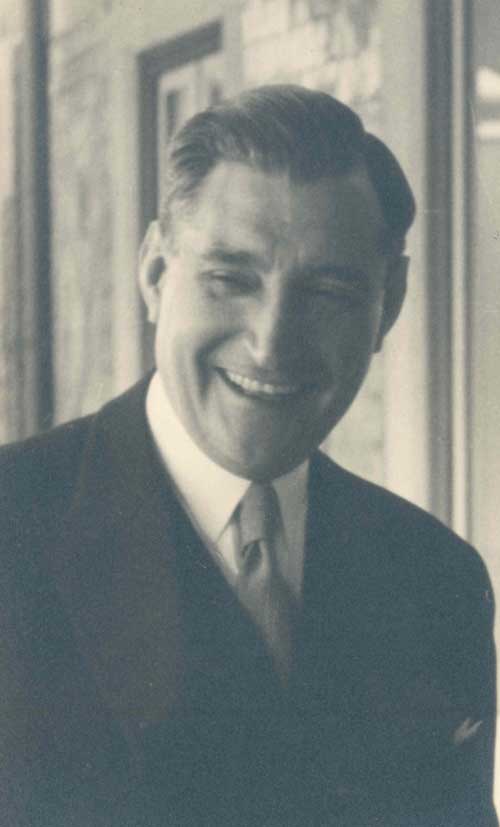
RULE 4. KEEP THE PARTIES ON A SHORT LEASH
Salazar turned the Portuguese parliament into a decorative appendage of his power. Only one party sat there — the National Union. Its members were exclusively government supporters, and Salazar himself selected the ministers and, naturally, controlled their work.
One article of the constitution stated that the government had the right to limit freedom of speech, assembly, and the press simply «for the common good». Salazar always believed that the country should be ruled by the elite, not the people.
Thus, political freedoms in Portugal were restricted, the military police suppressed dissent, and attention was focused on restoring the economy.
RULE 5. INVENT YOUR OWN ESTADO NOVO
Salazar named his new order in Portugal Estado Novo («New State»).
The Portuguese Legion, a state paramilitary organization, played a significant role in governance.
European politics in the 1930s were marked by a trend toward the establishment and development of authoritarian regimes. Salazar’s regime was one of them. However, unlike Italian or German fascism, it had neither nationalism nor racial discrimination.
Salazar satisfied many for quite a long time, and in this respect, he surpassed other tyrants. Among those favored by his rule were entrepreneurs, major figures in the agricultural sector, financial magnates, the church, top military commanders, and officials. The needs of ordinary people were also met. Despite relative poverty, the Estado Novo regime still provided minimal social guarantees to the population.
As for Salazar’s inner circle, everything was clear: key positions in parliament and government were held by his close acquaintances, mostly graduates of the University of Coimbra. One of Salazar’s university friends even became the Patriarch of Lisbon.

RULE 6. THE PEOPLE SHOULD NOT BE EDUCATED
The illiteracy of nearly 40% of the Portuguese population in the late 1950s was striking. For post-war Europe, this was, at the very least, unusual. Such were the realities of Salazar’s policies.
Coming from a modest family himself, he clearly harbored little affection for the common people. He believed that the people’s only role was to obey while governing the state was his responsibility and that of the elite under his control. Therefore, in the dictator’s view, educating and enlightening the population was simply unnecessary.
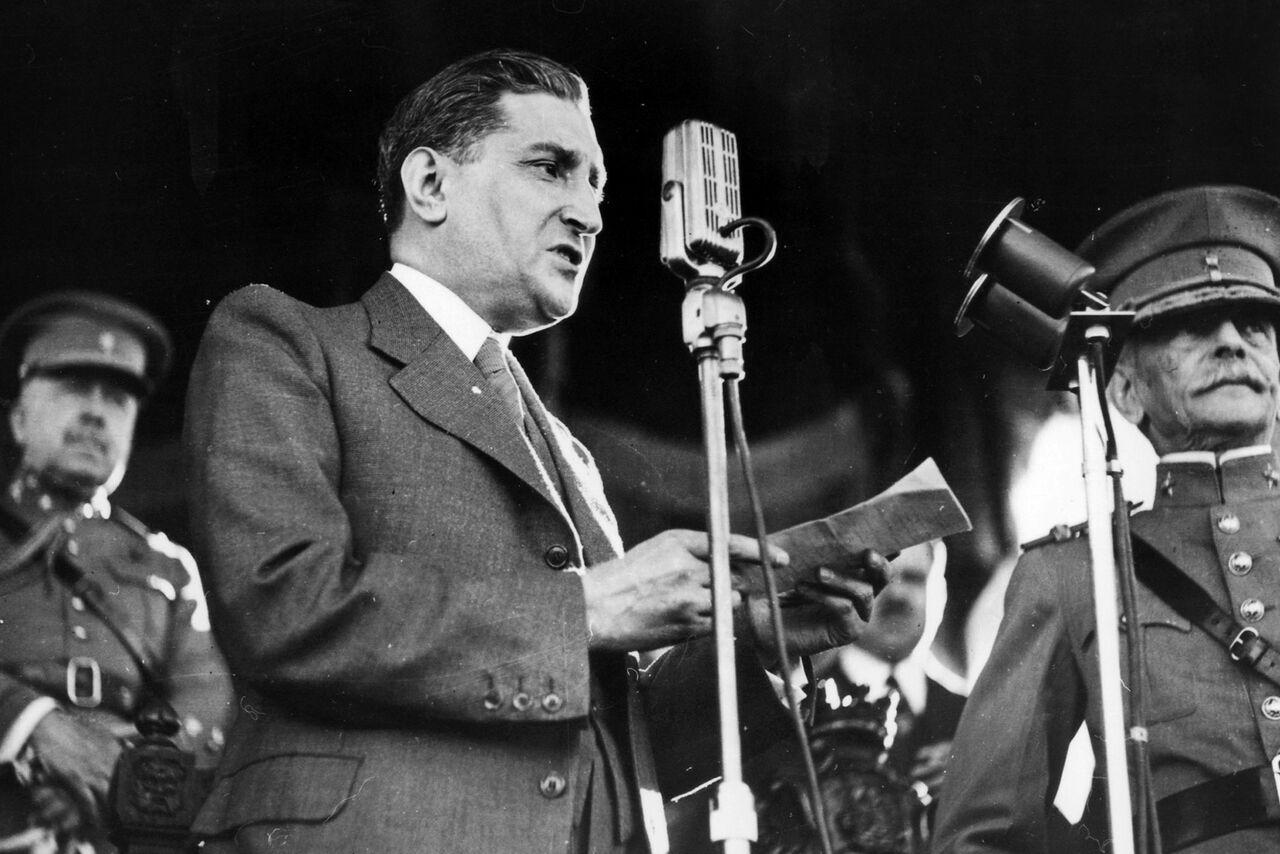
RULE 7. CREATE A PERSONAL SECRET POLICE
Salazar’s dictatorship relied on total censorship and repression. Although the International Police for State Defense (PIDE) — the secret police — had only about 300 employees, this repressive authority was highly effective thanks to a vast network of informants. They were present in the army, corporations, and even in local municipalities. The directors of PIDE were Salazar’s closest associates, key figures of his regime.
Formally, there was no death penalty in the country, but PIDE agents still eliminated dissidents without trial. The Tarrafal prison on the Cape Verde Islands turned into a concentration camp, where prisoners died from disease and torture.
According to the figures, around 30,000 people became victims of the repressive apparatus over Salazar’s roughly forty-year dictatorship. The human losses were much smaller than under right-wing regimes in Spain, Germany, and Italy, which is why Salazar’s regime is sometimes described as a mild dictatorship.
Salazar also acted preemptively: he anticipated hidden threats and found ways to neutralize potential opponents. This is one reason why his regime lasted so long. However, the system once failed. This happened during the 1958 elections, when General Humberto Delgado, Portugal’s representative to NATO, unexpectedly ran for President.
Despite Delgado’s actual victory, Salazar rigged the vote count in his favor. After this, the Portuguese dictator intensified repression, particularly against communists and other leftists. To prevent public discontent, he began implementing economic reforms.
Until the early 1960s, Portugal was a backward agrarian country. The government then sharply shifted its focus to road construction in an attempt to stimulate industrial development.
RULE 8. MAINTAIN NEUTRALITY IN WAR
Salazar kept Portugal neutral during World War II. During these years, the country’s financial position unexpectedly improved. Portugal always had an abundance of tungsten — a strategic metal used in the military industry. Demand for it skyrocketed, and Salazar took full advantage.
He sold tungsten not only to the British but also to the Germans, taking into account the country’s neutrality. As a result, Portugal’s gold and foreign currency reserves increased sevenfold. For the first time in many years, Lisbon ceased to be a perpetual debtor to London and became its creditor.
During the war, many European royal families sought refuge in Portugal along with their wealth. All guarantees were strictly observed. Investments grew, and so did the economy — the country was developing.
Portugal joined the Western bloc in the Cold War against communism after the end of World War II, becoming a NATO member in 1949.

RULE 9. AN EMPIRE AT ANY COST
While the great European powers were moving toward decolonization, losing their empires, Salazar maintained Portugal’s colonial presence in Asia and Africa at any cost. This forced the country to spend large sums on colonial wars.
Rebellions in the colonies began to break out in the early 1960s, and about 200,000 Portuguese soldiers were sent to suppress them. Up to 40% of the state budget was now being spent to maintain the army.
Thus, near the end of his life, Salazar developed a new obsession — preserving the colonial empire. Like a child who had been wronged, he suffered over the loss of Portuguese colonies, including those in India.
RULE 10. STAY UNASSUMING
Salazar had a reputation for being decisive, laconic, and modest. His personal traits stood in contrast to the characteristics typical of the Portuguese nation: he was an ascetic, never married, and detested publicity. In short, he was a man of action — and today, he would easily be called an effective manager.

THE END OF THE DICTATOR
In 1968, 79-year-old Salazar unexpectedly fell from a rocking chair and hit his head, which led to a stroke. He never fully recovered became partially incapacitated and was no longer able to govern the country. Surprisingly, they decided to prolong his pleasure of being a tyrant and never officially informed him of his dismissal.
Ministers would come to the now-former dictator with «reports» and bring him «documents» to sign.
Special editions of newspapers with «appropriate» news were printed exclusively for him. The news of the American moon landing was even kept from old Salazar.
Salazar died on July 27, 1970. His regime lasted a bit longer — until 1974.
In 2007, Salazar took first place in the national poll Greatest Portuguese. His compatriots named him the most outstanding Portuguese of all time.
10 LAWS OF TYRANNY: Pol Pot from Cambodia
When copying materials, please place an active link to www.huxley.media
Select the text and press Ctrl + Enter


