10 LAWS OF TYRANNY: Nicolae Ceaușescu of Romania


Hieronymus Bosch. Christ in Limbo (fragment), 1575 / Art design: Olena Burdeina (FA_Photo) via Photoshop
This was one of those rare cases when a dictator did not die a natural death. On December 25, 1989, the General Secretary of the Romanian Communist Party, Nicolae Ceaușescu, was executed by firing squad. For a man who had ruled Romania single-handedly and with an iron grip for nearly a quarter of a century, the military coup and tribunal came as a complete surprise.
After all, the Great Leader (Conducător, as he was called in Romanian) and Genius of the Carpathians had declared his rule a «Golden Era.» So why did a nation supposedly blessed with the «right» kind of dictator turn out to be so «wrong» and ungrateful?
You’ll find the answer in the following 10 rules.
10 RULES OF NICOLAE CEAUȘESCUУ
RULE 1. STEAL THE «WRONG» SUITCASE
N
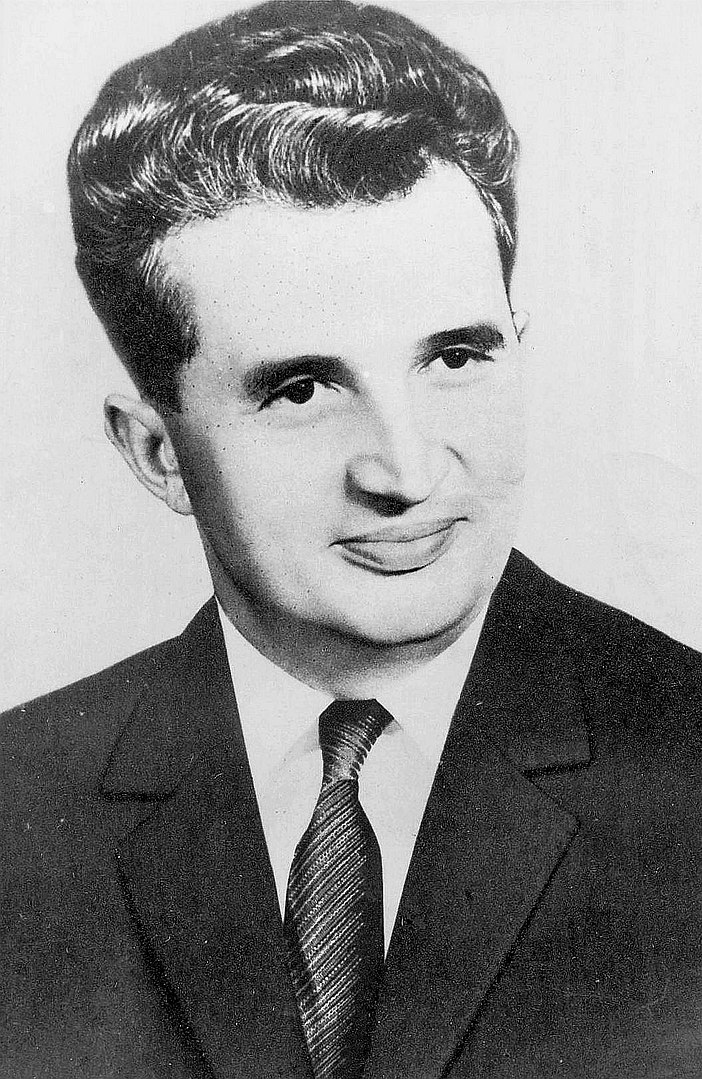
icolae Ceaușescu (1918–1989) was born into a peasant family. After completing just four years of elementary school, he moved to Bucharest at age 11 to work as a shoemaker’s apprentice. The income was modest, so young Nicolae also turned to petty theft.
According to one legend, while wandering near the train station, he stole a suitcase. When the police caught him, they discovered that it was filled with communist party leaflets. As a result, young Ceaușescu was arrested as a communist agitator and imprisoned alongside other party members in Doftana Prison — Romania’s own «Bastille.»
That arrest would mark the beginning of the future dictator’s political career.
RULE 2. FIND THE «RIGHT» PATRON
At the age of 15, Ceaușescu joined the Communist Party. He was arrested in 1933, again the following year, and again after 1936. Authorities labeled him a «dangerous communist agitator.» While imprisoned in Doftana, he began studying Marxism-Leninism. Conditions were harsh, and Ceaușescu, like other inmates, was subjected to torture — which allegedly left him with a lifelong stutter.
The young idealist found a powerful ally in Gheorghe Gheorghiu-Dej, the future head of the Workers’ Party and the Romanian state. Gheorghiu-Dej took Ceaușescu under his wing, making him his personal aide. Thanks to this mentorship, Ceaușescu held high positions in the Romanian Workers’ Party between 1944 and 1948 and eventually led the Ministry of Agriculture.
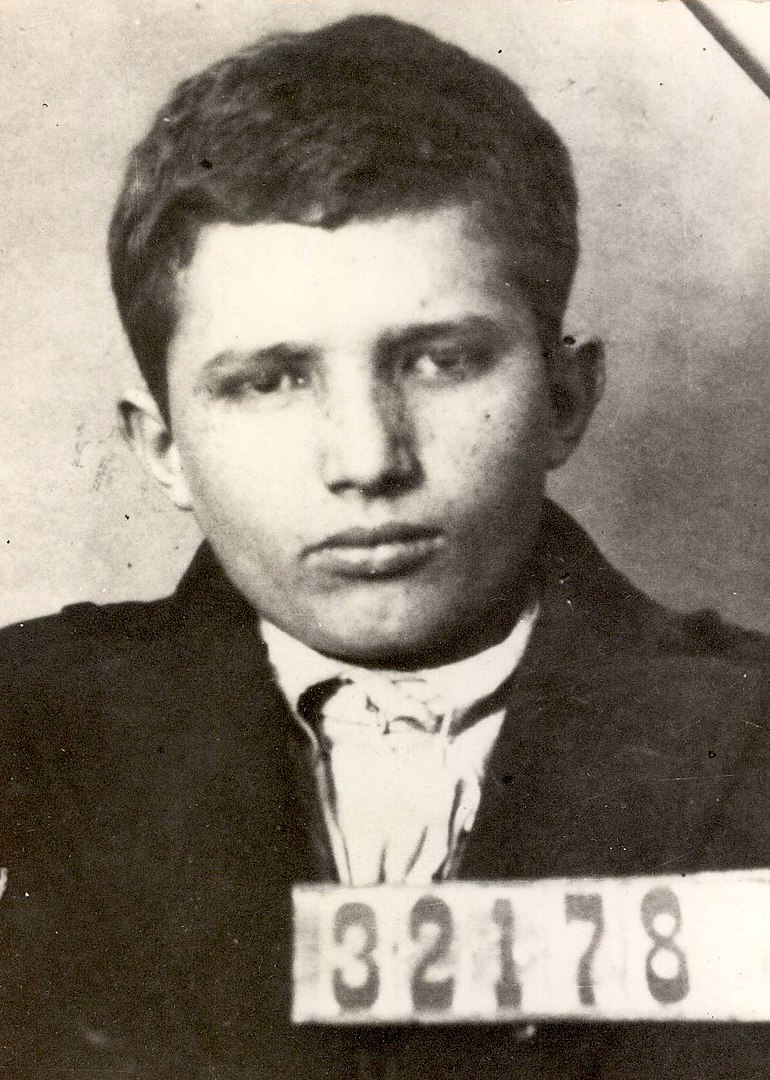
In 1945, Ceaușescu was appointed Deputy Minister of Defense and granted the rank of brigadier general — despite never having served in the military. World War II had just ended. Romania fell under Stalin’s sphere of influence but became the only country in Eastern Europe where «native communists» triumphed over the «Muscovites.» Ceaușescu’s party career quickly ascended to a new level.
By 1954, he had become Secretary of the Central Committee and, the following year, a member of the Politburo of the Romanian Workers’ Party. By the mid-1950s, Ceaușescu was already exerting significant influence over both party and state affairs, effectively becoming the second most powerful figure in the country. Within the Politburo, he first oversaw party personnel and later took charge of the secret services.
RULE 3. GET RID OF THE «WRONG» COMRADES
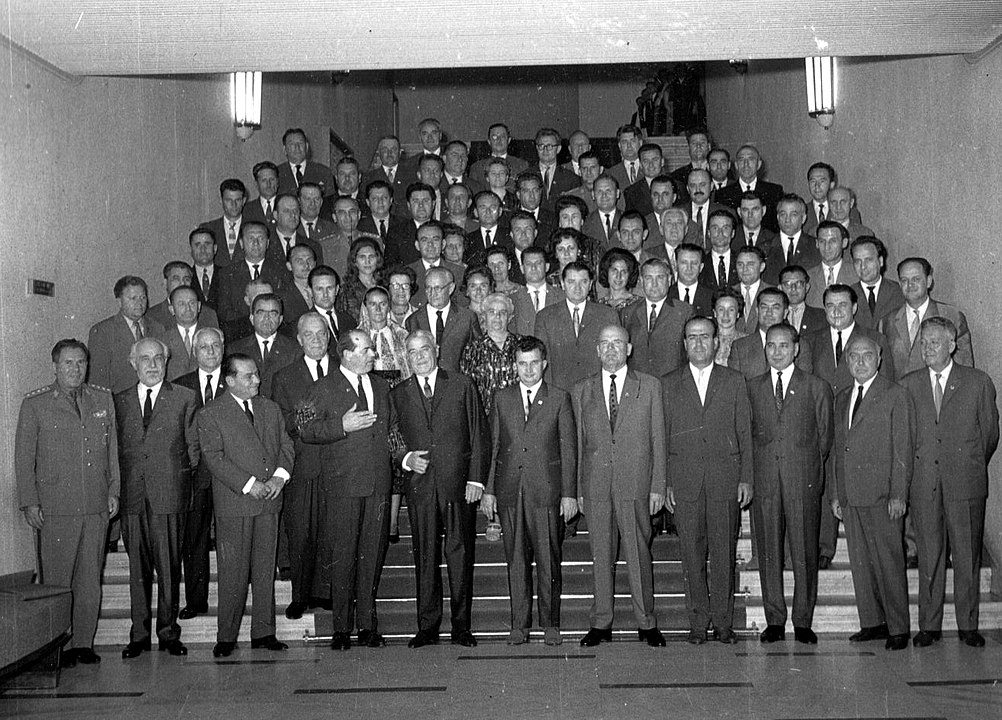
Ceaușescu came to power in March 1965, just three days after the death of Romania’s long-time leader, Gheorghe Gheorghiu-Dej. One of his first moves as the newly elected General Secretary of the Party was symbolic but telling: he changed the name of the Romanian Workers’ Party (RWP) to the Romanian Communist Party (RCP).
Second: comrades might be good people, but the most important thing is that they don’t interfere with absolute power — especially if they’re too influential. Ceaușescu eliminated such figures immediately. In their place, he appointed his wife, Elena, and other family members to high-ranking positions in the government and party.
In 1967, he took over the State Council, Romania’s highest executive body. By March 1969, he had secured the posts of General Secretary of the RCP and Supreme Commander of the Armed Forces.
In 1974, he transformed the presidency of the State Council into the official position of President. While Romania technically had presidential terms, they didn’t apply to Ceaușescu: he was re-elected every five years, effectively becoming President for life.
His totalitarian regime was considered the most repressive in the Eastern Bloc. Every individual in the country was watched by the Securitate — the secret police — which violated human rights, controlled the media and suppressed all dissent.
RULE 4. TELL THE MASSES THE «RIGHT» THINGS
Ceaușescu’s popularity grew when he briefly softened his regime. He granted factories partial self-management, foreign literature filled bookstore shelves, and people were no longer imprisoned for speaking with foreigners. He spoke beautifully about culture, which pleased the intelligentsia. He declared that Romania should belong to Romanians — an idea that resonated with the public, many of whom opposed Soviet influence.
Of course, Ceaușescu later reminded the nation that he was still a dictator. In 1966, he introduced a series of laws aimed at boosting the birth rate: abortions were banned, contraceptives were outlawed, and divorce was made much more difficult.
The biggest surprise came in 1968 when Soviet tanks rolled into Prague. Ceaușescu openly condemned the invasion, taking a bold stand against the Soviet Union.
At a rally in Bucharest, he proclaimed that «there is and can be no justification for military intervention in the internal affairs of a fraternal socialist state» and added, «no one has the right to dictate what path socialist construction should take in any given country.»
At the same time, Ceaușescu purged the government of the «old guard.» Thus began what would later be called «Ceaușescu’s Golden Age» in Romania.
RULE 5. COPY THE «RIGHT» TOTALITARIAN PRACTICES
In 1971, the dictator visited China and North Korea — and fell under the spell of their version of socialism. Jubilant crowds welcomed him in Beijing and Pyongyang, and at every turn, he was greeted by smiling portraits of Mao Zedong and Kim Il-sung. Ceaușescu was so impressed that upon returning home, he announced his own «Cultural Revolution.»
Though he offered no clear plan, the party’s propaganda machine immediately understood the message. Glorifying epithets emerged for the leader: Genius of the Carpathians, Danube of Thought, Source of Our Light, Creator of an Era of Unprecedented Renewal, and so on. Laughable yet tragic, Ceaușescu began to believe in his own myth. In a private conversation, he once declared, «People like me are born once every 500 years.»
The five-year plan adopted in 1971 predicted GDP growth surpassing that of other socialist countries. This ambitious leap was funded, somewhat ironically, by loans from the IMF. But where to find the labor force? From the countryside, of course — and by sheer coercion. Thus, in 1972, Ceaușescu launched the «systematization» program, forcing peasants into hastily built apartment blocks in underdeveloped rural towns.

RULE 6. REMEMBER: THERE ARE NO «RIGHT» OR «WRONG» PARTNERS
Ceaușescu’s policy of distancing Romania from the USSR allowed the country to develop relations with capitalist nations and secure loans not only from the IMF but also from the IBRD (International Bank for Reconstruction and Development).
A key factor was that Romania was one of the few Eastern Bloc countries without Soviet troops on its soil. It also had oil — Romania was second only to the Soviet Union in oil production in Europe.
Ceaușescu envisioned turning the country into a massive industrial complex: processing raw materials from the East and selling finished products to the West. With borrowed money, he imported equipment and built chemical, metallurgical, and oil-refining plants.
By the mid-1980s, Ceaușescu refused to support Gorbachev’s reforms. He remained the last Eastern European leader to keep his nation in the iron grip of communism.
RULE 7. FIND YOURSELF THE «RIGHT» LIFE PARTNER
Ceaușescu’s wife, Elena, became First Deputy Prime Minister, a member of the RCP Central Committee, and part of its Politburo. Ceaușescu also made her a world-renowned scientist. Despite having no higher education, she was awarded a doctorate in chemistry, appointed head of the Romanian Academy of Sciences, and placed in charge of the country’s largest chemical company, ICECHIM. In reality, Elena could barely write and spoke Romanian poorly.
On the rare occasions she was invited to scientific conferences, a «translator» always accompanied her — who was, in fact, a real scientist, giving accurate responses while ignoring her incoherent ramblings.
Elena Ceaușescu also held numerous honorary degrees (Doctor Honoris Causa) from various universities. At times, her cult of personality even surpassed that of her husband.

RULE 8. LOVE YOUR PETS THE «RIGHT» WAY
Ceaușescu occasionally indulged in eccentricities that bordered on cynical mockery of his own people. Once, Baron David Steel, leader of Britain’s Liberal Party, gifted him a Labrador puppy.
The dictator named the dog Corbu. From time to time, a government limousine accompanied by a full motorcycle escort would tear through the streets of Bucharest — this was, as people joked, «Comrade Corbu’s» personal transport.
That’s not all: the Labrador lived in its own private villa, complete with a television and telephone. Yet every night, the dictator’s beloved pet was chauffeured back to sleep in Ceaușescu’s bed. The cherry on top? As Supreme Commander of the Romanian military, Ceaușescu granted «Comrade Corbu» the rank of colonel.
RULE 9. BUILD THE «RIGHT» WAY — NO MATTER THE COST
Gigantomania is a hallmark of most totalitarian regimes — and the Ceaușescus were no exception. By their order, the colossal Palace of the People (now the Palace of Parliament) was constructed in Bucharest. It stood 86 meters tall, with eight underground levels reaching a depth of 92 meters, ready to serve as a nuclear or earthquake shelter.
It became the second-largest administrative building in the world after the Pentagon. Total costs exceeded €3 billion. Nearly 1 million square meters of marble, 3,500 tons of crystal, and 200,000 square meters of carpets were used in its construction.
To make way for this grandiose project, the historical center of Bucharest was demolished. Many churches, synagogues, and 18th–19th-century buildings were destroyed. In their place rose the Victory of Socialism Boulevard — supposedly meant to outshine even the Champs-Élysées.
Then there was the story of the metro. In 1978, construction began on a new station, requiring the removal of a city park. A giant excavation site was opened — until one morning, the chief engineer arrived and stood speechless: where the construction pit had been, there were now trees and lush grass.
As it turned out, Ceaușescu had suddenly decided he wanted to give a speech to Polytechnic students in that very park. Overnight, crews were brought in, the massive pit was filled, sod was laid, trees were planted — and everything was finished by 6 a.m., just thirty minutes before the engineer showed up for work.

RULE 10. SAVE «THE RIGHT WAY» — AT THE PEOPLE’S EXPENSE
Ceaușescu’s mismanagement of foreign loans led Romania into $10 billion of external debt by 1981. Determined to repay it in full, he imposed a brutal austerity regime on the country. The people were clearly told that achieving national independence meant «tightening their belts.»
This ended Romania’s brief prosperity of the 1970s. Everything that could be sold was exported, leading to severe shortages at home. In 1981, food rationing was introduced, and by the mid-1980s, national consumption had dropped by 25%.
Energy conservation became extreme. Television broadcasts were limited to two or three hours a day. In homes, no more than one 15-watt lightbulb was allowed per room — even though Romania produced more electricity per capita than Spain or Italy.
At night, the country was plunged into darkness — while every window in Ceaușescu’s palace blazed with light. And yet, by mid-1989, Romania had repaid its entire foreign debt.
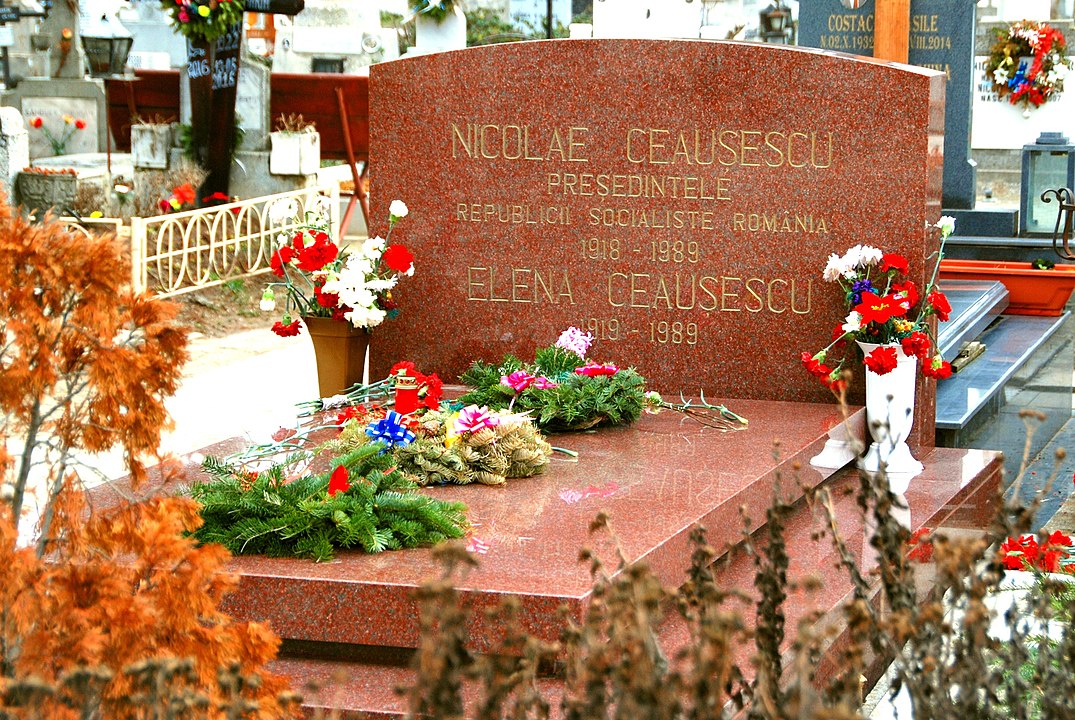
THE «WRONG» END OF THE «RIGHT» DICTATOR
Nicolae Ceaușescu wept in silence while his wife Elena pleaded for mercy as soldiers prepared them for execution… The end of Ceaușescu’s regime came suddenly.
On December 17, 1989, under his orders, the military and the Securitate opened fire on protesters in Timișoara. The uprising quickly spread to Bucharest. By December 22, the Romanian army had joined the demonstrators. Ceaușescu and his wife fled the capital by helicopter, but the pilot was forced to land.
The Ceaușescus were captured and taken into custody by the armed forces. On December 25, a military tribunal sentenced the couple to death by firing squad in the space of just one hour, convicting them of mass murder and other crimes, including genocide. They were executed in Târgoviște — beside the barracks’ latrine.
For 24 years, Romania had been a voiceless, impoverished nation under the rule of a single man — a shoemaker-turned-dictator, an undereducated leader who saw no value in education.
10 LAWS OF TYRANNY: Kim Il-sung of North Korea
When copying materials, please place an active link to www.huxley.media
Select the text and press Ctrl + Enter


