An interview with Andrii Stavnitser, co-owner of the TIS port — the largest private stevedoring operator in Ukraine


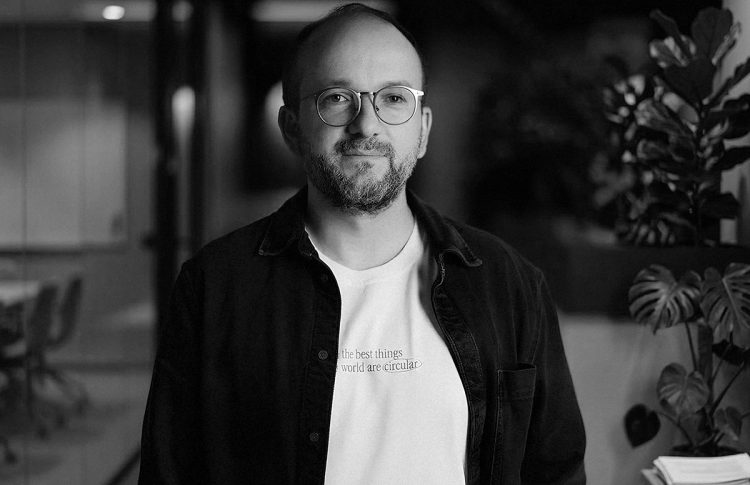
Andrii Stavnitser / Photo from personal archive
Five years, 5 million tons, and $150 million. That is all you need to know about the new project of Andrii Stavnitser, co-owner of the TIS port — the largest private stevedoring operator in Ukraine. The first figure is the time it took to build the new Neptune grain terminal. In this project, the owners of the stevedoring company MV Cargo (Andrii Stavnitser and his brother Yegor Grebennikov — shareholders of the company) and the corporation Cargill invested $150 million. Thousands of people attended the opening of the terminal, which will handle about 5 million tons of grain annually. How was it possible to reach an agreement with Cargill, the largest family-owned company in the world, and why is a successful business not only about economic calculation but also a philosophy of life? Andrii spoke about all this in an exclusive interview for Huxley.
 Big business, a beautiful wife, children, two countries where you live, and the recent opening of a giant terminal. All of this together seems to fit certain criteria of a Hollywood story. Is this a Hollywood story or something else?
Andrii Stavnitser: I would say this is a very Ukrainian story — with an outdoor toilet and a special device for cleaning shoes standing by the entrance. No one knows what it’s called — even experts from «What? Where? When?» couldn’t figure it out. My story is a very Ukrainian story.
On the other hand, you have several degrees, including in business education. That’s a good start. How do you feel about the idea that business cannot be learned, and that studying it — for example, graduating from a business school at a young age — can actually do harm?
A. S.: I can speak from personal experience. I went to study for an MBA right after university, and that was a big mistake. At the time, I didn’t realize it. I thought I was such a smart, bright Jewish boy that I would quickly learn everything. I enrolled in a full-time MBA program at a French institute and studied there for a year and a half. It was wasted time. I understood this only five years later. Looking back, I recall how a few times, out of curiosity, I attended not the daytime classes, where students like me studied, but the evening ones, where people who had already established themselves in business were present. The contrast was striking. In the evenings, the businessmen would literally «grill» the lecturer — who, by the way, was the Deputy Chairman of the National Bank — for an hour and a half, bombarding him with real-life questions rather than textbook ones. It was an entirely practical conversation. Unfortunately, I realized too late that first you need to work, and only then study. And with my children, I will not repeat this mistake, if they even choose to become businesspeople.
By the way, do your children have such a choice, not to become businesspeople? Because you didn’t have that option…
A. S.: I didn’t. And I regret that. I am preparing my children differently. Moreover, I encourage them not to pursue a business education. My son is 20 years old, and I strongly urge him to master some other profession. Let it be an architect, a mathematician, a marketer — anyone. It doesn’t matter. He likes archaeology. I tell him: please, get any solid profession that you truly enjoy. Business is a very practical thing. It’s not a science that needs to be studied for five years. Learn something that genuinely interests you, and you will always have a choice. The second thing I tell my children is: before joining the family business, you need to work «for someone else», in another company. Again, this is the kind of choice I didn’t have. And I regret that.
What does this give at a young age?
A. S.: Oh, it changes everything. I could talk about this for a long time. It’s a completely different approach. Especially if that «boss» is a good and competent person, someone you can learn from. And to learn in conditions where you have no privileges at all. You simply find yourself in a normal human, real-life environment where you have to struggle, make an effort, work, and learn. No indulgences, no discounts, bonuses, or perks. This is life, and it toughens you. I told my children that until the age of 30, I will not involve them in the family business. категорically. Let them build their careers, and then we’ll talk.
How did they react?
A. S.: Badly, of course. We’ll see. I hope I can hold my ground.
A film was made about your father, showing how the largest transport hub in the country was created. How easy or difficult was it for you to meet the standards set by your father after you took his place?
A. S.: It would be wrong to say that I took my father’s place in the company suddenly or unexpectedly. My father had been preparing me for the moment when, sooner or later, I would become the head of the company. And when he learned about his diagnosis, the work became even more intense. So the process of integration lasted for several years. It would be difficult to call my father a coach or a teacher. Rather, he demonstrated by his own example what and how things should be done. But, unfortunately, he did not often accompany this with any theoretical foundation, academic generalizations, or anything of that kind. I simply sat next to him and carried out certain work together with him.
It is noticeable that managers are becoming younger every year. Young people are running the largest enterprises and heading ministries. You are also quite young — are there many young people in your circle? What are the pros and cons?
A. S.: As for ministries, I’ll refrain from commenting. If we talk about business, then yes — we have many young men and women on our team. They work, for example, in finance, marketing, or legal fields. These areas require a sharp mind and quick reactions. As for the technical elite, unfortunately, it has not yet fully matured. For instance, somewhere in the middle of the Neptune terminal project, I had to replace the head of construction. In place of a young, very progressive construction specialist, we brought in two proven, seasoned, highly experienced engineers — the same ones we had worked with when building TIS. Yes, the young guy speaks excellent English and communicates with foreign contractors, but when it came to practical work, problems arose.
What is a sufficient reason for you to part ways in business?
A. S.: Values. If your values differ from those of your partner, nothing will work. You can, of course, keep dragging a dead horse, but not very far.
Many experts describe you as someone capable of reaching agreements with investors who had not previously planned to invest in Ukraine. What is the key to the negotiation process? Are there any special techniques?
A. S.: No, there are no techniques. It’s about something else. If they have a desire to invest in this country, they need a translator «from Russian into Russian». They need someone who can «package» local specifics into categories that are clear to them and take on the main local risks. For this, a local partner is essential. I believe that most attempts to attract investment here fail precisely because people think they can act as brokers or intermediaries without taking on any risks. No one needs that. But if you come and say: «I will build — that is, I will take on construction risks, country risks, risks of the judicial system, risks of law enforcement, and so on, and I want a certain premium for that» — that is a normal approach. Investors understand this.
In Ukraine, there is no such thing as a turnkey contractor. How would Cargill build a terminal, for example, in the United Kingdom? It would hire a large construction company that would guarantee completion of the project on a turnkey basis within a specified timeframe. There would be penalties предусмотрены, and all possible risks would be thoroughly outlined. If such a company began to delay deadlines, the client would simply receive a bank guarantee. In Ukraine, there is not even a close contractor willing to operate under this model. Not a single one — except us, as it turned out. That is why we act simultaneously as the general contractor, co-investor, and partner.
What are the reasons to invest in Ukrainian business today?
A. S.: They differ from person to person — from patriotic considerations to the fact that we currently have a number of market niches that remain unconsolidated, and there is room there for bold moves.
What are your reasons for investing in Ukrainian assets?
A. S.: I won’t talk about patriotism. It’s wonderful, but it cannot be a reason to risk such amounts of money. I confirm that there are untapped niches that can be developed with substantial margins. Moreover, if you do this work well, the niche expands. For example, the terminal we built is so attractive that clients who already have their own terminals elsewhere are now approaching us. The reason is very simple — at many terminals, clients are deceived: in quality, in quantity, in trading operations. Business is tired of this. Everyone wants to work properly. And we are not traders and do not trade grain, therefore, we are not competitors to our clients. This is important to them — they do not want anyone encroaching on their grain, its quality, and so on.
How are the values and mission that exist in the company applied in real life?
A. S.: Our mission is not written down anywhere. It was embedded by the founder of the company, my father, but on a non-verbal level. One could try to describe it, but that would only make things worse, since the creator of the Mission and Values has not been with us for eight years. You could say that the company is guided by the memory of the values and ideals he instilled in it. We do everything to support this. I will say right away that this is non-material motivation. Money matters to everyone — we understand that and pay good salaries. But for TIS’s top employees, money is not the main motivation to come to work and achieve results.

As for your involvement with the Aspen Institute, many say that participation in this organization’s seminar became a turning point for them. What did participation in this community mean for you? And was it a turning point?
A. S.: Not a turning point, but it is definitely an experience that is hard to forget. I fell in love with this organization from the moment I attended the basic seminar. No graduate of the Aspen Institute will be able to describe to you what happens at the basic seminar. It simply has to be experienced. There is a certain element of magic that arises through communication. But I think the most important distinctive feature of Aspen is the community you enter after completing the basic seminar. Those who have gone through the rigorous selection and become Aspen graduates are very interesting, diverse, progressive, and intellectually refined people. They can be artists, doctors, public figures, businesspeople — anyone. Everyone is different, but they all share fundamental values. So for me, Aspen is a community that today already includes more than 600 very interesting and multifaceted people. As a member of the board of the Aspen Institute, I strongly recommend applying to the basic seminar, even if you are rejected five times in a row — I have seen such cases. It is still worth it to get there. And to take part in the staging of Antigone (a tragedy by the ancient Greek playwright Sophocles) later in life.
Do you have a boundary between life and work? A balance between the two?
A. S.: I don’t have a schedule. I call people on Sundays, at night, during the day. I try to respect people, but I don’t have this division — family from Friday to Monday, and only work from Monday to Friday. Everything is so mixed together. There are many business trips, and I often travel together with my family and children. Everything is very blurred. The only exception is when I go to Africa, and it coincides with our holidays — then I more or less fully dedicate my time to my children. During that time, there is almost no work.
Who is an ideal employee for you? Someone who answers calls on Sundays and at night?
A. S.: Someone you don’t have to call on weekends or at night. Because they have thought things through in advance and structured all processes in such a way that no questions arise. Someone who understands the logic of the work and takes responsibility.
You spend part of your time living in South Africa. Why Africa? Yes, it’s very beautiful there, but it is known that good houses have to be surrounded by fences for security reasons.
A. S.: So far, I haven’t found anything better. The climate is very mild and dry. It’s not Asia. There is no time difference with Kyiv. There is no jet lag at all. Yes, there are some security concerns, but nowadays, even in London, on Piccadilly, you can lose your phone. Besides, I am from Ukraine. Africa has its own rules, and if you don’t break them, everything will be fine. Someone might snatch your bag, but overall, you’ll be okay. That is, unless you deliberately go to some remote and dangerous village.
You are stepping away from the operational management of your businesses. What control points do you have to monitor what is happening in your company?
A. S.: I have a specific person who has access to primary accounting and finances. They provide me with a weekly report on all key financial indicators. But I don’t have any special control points. In general, I believe that the main control point today is the attitude of a manager toward their employees. For me, this is a very important issue, and I always pay attention to it. For example, I was very surprised by the head of our tugboat business. He turned out to be a real father figure for the entire team. And the way he cares for employees sincerely and genuinely truly impressed me.
Who among the people you have met in the world of business impressed you the most?
A. S.: At one time, I was impressed by Richard Branson (a British entrepreneur, founder of the Virgin Group) and his life journey. And I was even more surprised when I met him in person. He turned out to be the complete opposite of how I had imagined him. He is a reserved person, dyslexic. A kind of «man in a case», yet his story still inspires me to this day. What I like about him is that he managed to successfully combine enjoyment of business and enjoyment of life, at the same time.
How did you meet him? Not by chance on a plane — after all, he once dressed up as a flight attendant?
A. S.: No, I haven’t had such charming flight attendants yet (laughs). We met at one of the business events in Europe where he was a speaker.
How were you introduced to him?
A. S.: I wasn’t introduced at all. How could I be introduced to Richard Branson? «This is Andrii from Ukraine, he has a family business, and this is Richard Branson»? His name speaks for itself.
What impresses you most about the future that has already arrived, even if unevenly distributed? How do you see your company in 2050? The year is not chosen by chance — by then, Elon Musk promises to build a city on Mars.
A. S.: What concerns me is that he is planning to go to Mars (laughs). Recently, Donald Trump allowed the use of nuclear weapons on Mars. Perhaps there is something they are not telling us? Perhaps by that time we will bring this planet to such a state that there will be no other choice but to leave? In reality, I think nothing fundamentally new will happen to the port business. Our projects are built for 50–60 years. That is exactly why we buy sheet piling in Luxembourg from ArcelorMittal. People who sit in barbershops with smoothies in their hands will, even in 50 years, still need to eat well, live in quality homes, and buy safe cars. Our business will remain in demand for a long time; it is unlikely to change quickly. The population is growing, and the issue of food security is becoming very important. I believe the port business is not under threat.
Yes, food is now becoming more important than oil, which is rapidly losing its position.
A. S.: Look at who is actively investing in ports and agricultural holdings today — the Middle East. They already want to guarantee their food security for years to come.
What value is the most important for you in business?
A. S.: Enjoyment. You can build a huge company that collects waste in the ocean, but if it doesn’t excite you, it will quickly shut down, or you yourself will stop doing it. But if it is truly your project, then everything else — money and influence — will follow. Yesterday, I congratulated Vasyl Khmelnytsky on his birthday and wrote to him: «I wish you more of your own projects. And it doesn’t matter whether it’s building a new district or creating paintings». A happy person is the one who has found themselves. And it is immediately visible. Working with such a person is a pleasure. I look for people like that. Have I found myself? I don’t know yet.
And the last question. How does the ocean there — in South Africa — differ from the sea here, in Ukraine?
A. S.: Good question. The sea here is like a lake, completely amorphous. The ocean changes every half hour. It is an element, a great living being. And it is very impressive. The sea is also great, but much smaller.
When copying materials, please place an active link to www.huxley.media
Select the text and press Ctrl + Enter