BETWEEN VARVARA AND YULIIA: Whom Did Oleksandr Dovzhenko Love?

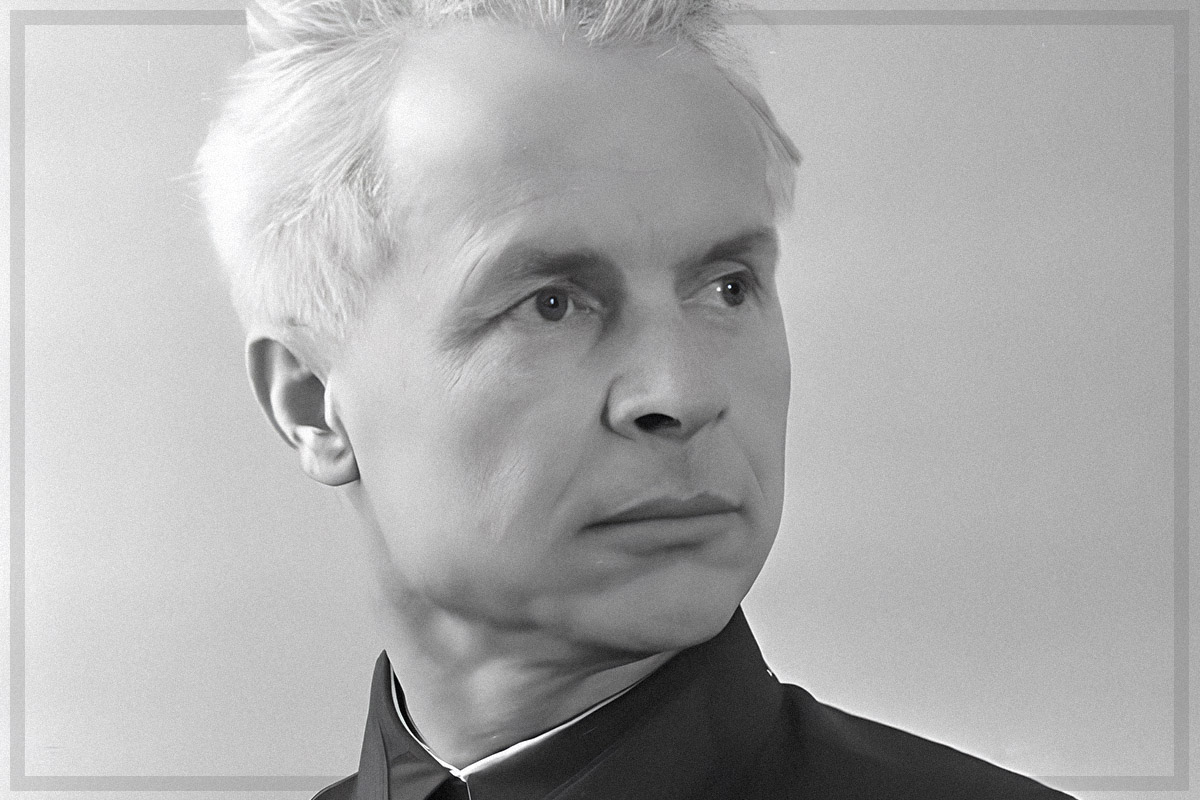
Oleksandr Dovzhenko / libr.dp.ua
Oleksandr Dovzhenko (August 29, 1894 — November 25, 1956) was called “the first poet in cinema”. He entered the history of cinematography as a genius director, and his film Earth still holds second place after Parajanov’s Shadows. He began as the author of comic and comedy films, then went on to shoot the legendary Zvenyhora, Arsenal, and a great deal of “manufactured” work commissioned by Stalin. He had no right to film what he truly wanted, nor to follow the call of his heart.
WARM HANDS AND A SHATTERED KNEE
I
t all began in the Zhytomyr region, where he taught natural science, geography, physics, history, drawing, and, as if that were not enough, gymnastics as well. One day, on the stairs, he met a striking young woman. The girl had a dancing gait, and the martyr’s name was Varvara. From that moment on, wherever he went, the beauty walked beside him in his thoughts. At last, he dared to speak to her and became even more captivated, for the girl was educated, knew several foreign languages, taught French, played the piano, and staged school performances. She herself was from Smila — the sugar capital — though she had been raised by relatives. Sashko, in turn, told her about his native Sosnytsia in the Chernihiv region and his mother, forever in tears. About the sweetest dreams “on the stove”, horses sick with mange, and his grandfather in silver-foil trousers.
Their conversations stretched endlessly long, their meetings felt painfully short, and eventually, the lovers were married. Never mind the turmoil all around them and the endless political ping-pong. The explosions of revolutions, shifting powers, and utter chaos. In the summer, Sashko visited his parents and wrote to his beloved: “You are still sleeping softly, my little girl, and perhaps dreaming of me. When you sleep, I love you most of all. At such moments, it seems to me that you are not my wife, but my dear, enchanting child. I kiss your warm little hand softly, very tenderly, in my thoughts… 5:30 in the morning. Your Oleksandryk”.
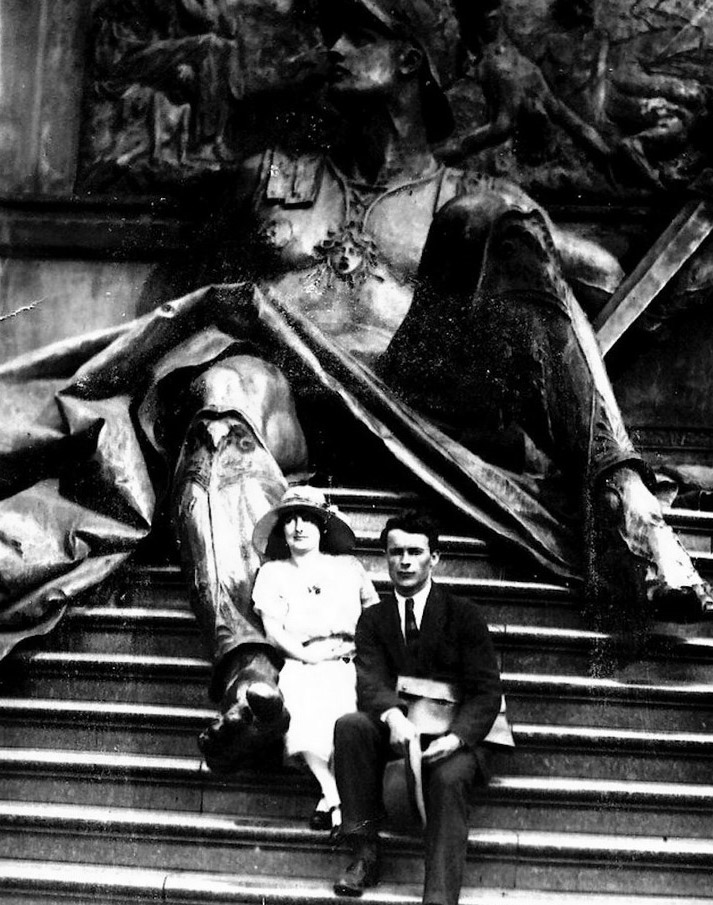
After that, everything became tangled, and it is no longer possible to tell where truth ends and fiction begins. Rumor had it that during their separation, Varia became involved with some brazen White Army officer, and that her husband caught the lovers in the act. The unfaithful wife left abroad with the “White Guard”: first to Prague, then to Berlin, where she fell ill with bone tuberculosis. The officer immediately lost heart and made only a hand-kiss gesture, for he had taken as a lover a beautiful dancer, not a “poor lame duckling”. Or perhaps there was no seducer at all — perhaps the couple had simply been rowing in a boat, and Varia accidentally struck her own knee with an oar. The spot instantly swelled and began to ache, while the doctors stunned her with the diagnosis. Be that as it may, a photograph from that time survives in which the lovers are cooling off beside the feet of the gigantic Kaiser Wilhelm in central Berlin, radiating harmony and bliss.
After Berlin came Kharkiv — the capital of the Ukrainian SSR — where Sashko illustrated a book by Petro Panch, stood close to HART, and, when the organization dissolved, headed VAPLITE. Varia dreamed of becoming an actress and auditioned for the Berezil Theater, but her legs failed her, and she was forced onto crutches. The woman left for treatment in Yalta, while Oleksandr discovered his talent for directing. In 1926, he arrived at the Odesa Film Factory, considered the main film-production center, and got a position as an intern. Everything amazed him: the studios, the sanitary-educational film Gonorrhea, and the feature Spiders and Flies, Kurbas’s films The Swedish Match and MacDonald, the high production pace (only a few weeks were spent on a single “picture”), and the competition with Europeans. At the time, he still had no idea that at the Odesa studio he would create five of his masterpieces and, at the same time, begin two romances. The first — with the ballerina Ida Penzo, the second — with the Moscow actress Olena Chernova.
AN EPISTOLARY BALLET
As for Ida, people gossiped about a love triangle, for the artistic editor Yurii Yanovskyi had also set his eyes on her. The dancer wore English blouses, cut her hair short like a boy’s, and smoked with striking elegance, displaying her long, slender legs for all to see. “With her, I wanted to stroll through the streets, holding her arm tightly against me. She carried herself as though pages were bearing her train”. With Olena Chernova, it turned into an epistolary romance. The actress, with a thin face, emerald eyes, and light hair tinged with gold, spent her days shuffling papers at a bank and, toward evening, playing the piano keys (she worked as a silent-film accompanist at the Baku cinema Red East). She adored music and cinema, and for that reason graduated from a theater studio and rushed into acting. And then there was the distinguished director, who had already filmed The Berry of Love, Vasia the Reformer, and had embarked upon Zvenyhora — one of his most fascinating works.
A correspondence began, in which he confessed that he went to sleep holding her photograph in his hands, called her a good, sweet girl, and at the same time, his beloved little boy. “Do you know, Olesia, why I can look at you for hours? Because you resemble my conscience”. He admitted that he did not drink vodka, but smoked until his mouth went numb, and during moments of creative crisis sewed buttons onto clothes. He recalled moments when he caressed her in her sleep and regretted that instead of kissing her, he spoke some sort of songs, tiresome things. He promised to come to Moscow if only for a single day and kept asking whether she truly needed someone exactly like him. In his thoughts, he caressed her hands and assured her that these were the first woman’s hands he had ever loved so sincerely. He dedicated Arsenal to her. Olena replied that he had invented her, because in truth she carried an evil and unpleasant soul within her chest, but the man in love rejected such insinuations. In his imagination, he seated her on the bed while he settled below and touched her slender knees with his lips. Soon, he noticed a tiny hole in her stocking and kissed that vulnerable spot. In his imagination, Olena smelled of an abandoned steppe, and so he constantly longed to kiss sorrel and thyme.
VARIA AND HER BLESSING
That romance lasted five months. Chernova returned to Moscow, where she had plenty of troubles: her husband (a Georgian director) had left her, her child was gravely ill, and her Odesa admirer was married and even signed his letters unseriously: “your absurd whimsical Sashko”. In one of them, he wrote about Varia’s arrival after half a year of silence and about her enormous crutches that painfully caught the eye. As a result, the room became cramped and life absurd. The woman looked exhausted and evoked nothing but pity. “Ah, Olesia, my dear, with what words and how can one speak of this, for love is not pity, duty, and obligation — is it? Love is life?” As it turned out, Varia had come to Odesa to see with her own eyes his lack of love. To heal together once and for all or place an irrevocable full stop upon their relationship. Oleksandr did not want to repair or mend anything. He grew angry, irritated, and slammed doors, while she endured everything patiently. Finally, she stood up, placed white roses in a vase, and wrote: “My dear, my beloved, my love. I am leaving you forever…” Below, she promised to visit him in his dreams, wished him goodness and happiness from the Earth, the Sky, and the Water, and asked permission to continue living under his surname. Yet the relationship did not end there, and passionate letters continued to travel between the former lovers. The director sent money, asked for forgiveness, from time to time returned and left again, because Arsenal, Earth, and Yuliia Solntseva were calling him.
THE CIGARETTE CASE GIRL FROM THE KGB
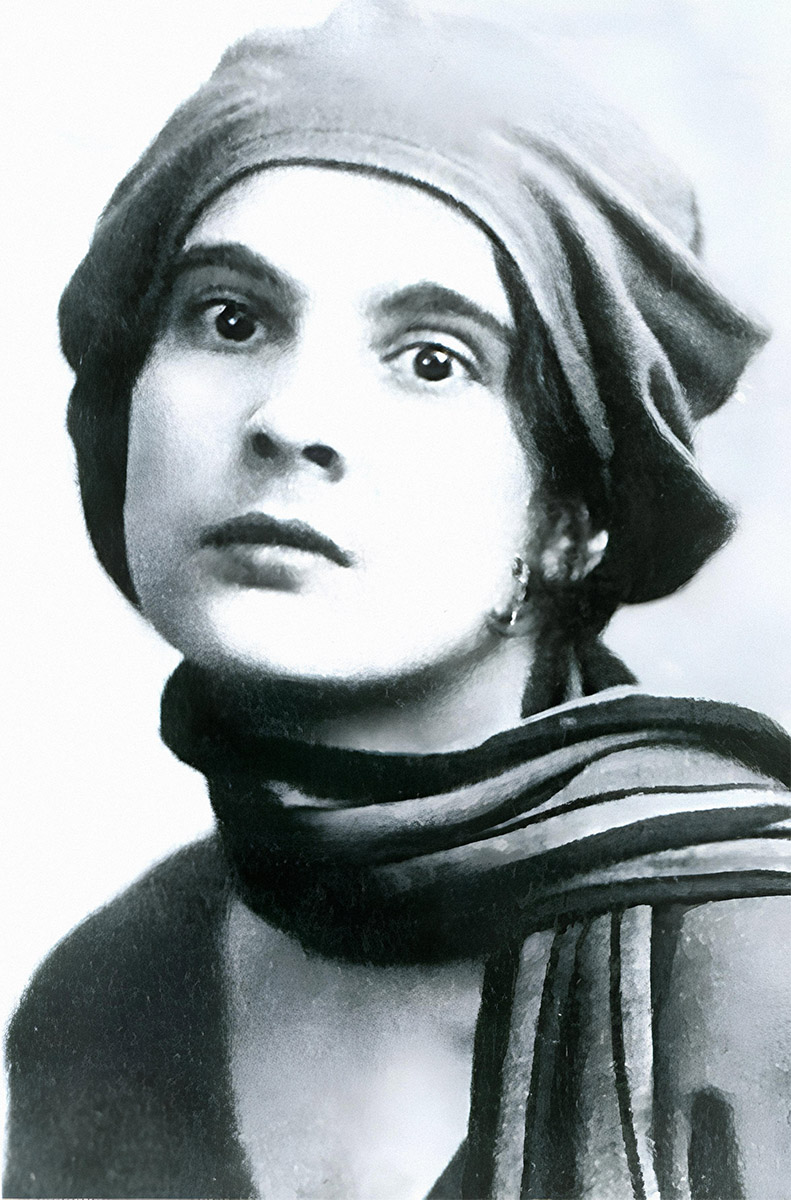
They met in Odesa, which all year round smelled of fried gobies, dried rapana, and sea breeze. The Moscow actress arrived for the filming of Jimmy Higgins already far from being a newcomer — she had previously appeared in Aelita and The Cigarette Girl from Mosselprom. In The Cigarette Girl, she played Zina Vesenina, who sold cigarettes in the middle of Moscow, while in Aelita, she portrayed the Queen of Mars. She radiated sexual freedom and ambition, concealing within herself something devilish and magnetic. For that reason, the most famous poets dedicated verses to the “Martian woman”, while Mayakovsky addressed her exclusively as Yulechka Ippolitivna. That day, Solntseva was visiting acquaintances. The director entered, politely greeted everyone, took oranges from his pocket, and began laying them out on the table. At the end, he turned to the “cigarette girl”: “I have come for you!” He decisively took her by the hand and led her to his room.
From then on, they never parted, despite the considerable differences in their characters, for the man was kind, intelligent, and even-tempered. He assured others, “I am such a good soul that birds could safely build nests on my head”, while his chosen one radiated obsession, a fiery temper, and malice. Because of this, his friends disliked her once and for all and nicknamed her the Cursed Yulka. She despised the Ukrainian language, culture, and songs, and mocked the locals as idiots. For that reason, he could not speak with her about The Enchanted Desna and the memories of childhood — how wonderful it had been to watch the fire, embrace a foal, run through warm puddles, and eat Easter bread and dyed eggs. The woman who became the director’s assistant did not accept his revelations. About sharpening a scythe and sleeping in a boat, he still spoke to Varia, who by then had given birth to a boy and named him Vadym. The surname she gave him, however, was Chazov. Together with her son, she struggled through hardship and rejoiced whenever neighbors brought them a treat — a bucket of potatoes.
LIFE ABOVE THE KUTUZOVSKY ABYSS
Commissions from Stalin began pouring down upon the artist. First came Ivan, after Ivan — the inventor of the city for the Chukchi in Aerograd, and later — Shchors. Wherever he went, Solntseva followed closely behind him, earning herself the nickname Yulia-Bullet. The couple addressed one another formally, yet this did not prevent her from writing denunciations against her husband, such as: “talks in his sleep in the Ukrainian language”. One actor recalled: “That Yulia-Bullet is a terrible bitch and constantly nags. She is interested in nothing, likes nothing in the world except Dovzhenko and Eisenstein. An uneducated, spiteful gossip — not a single good word can be said about her. Oleksandr Petrovych, of course, loves Yulia, and for that he has to forgive her a great deal”.
The couple lived in Moscow on Kutuzovsky Prospekt. Together with them lived her mother, his mother, and a housemaid. From the room’s window, there was an unattractive view of an underground overpass. The interior was simple and unpretentious: bookshelves, a divan covered with a rug in the Ukrainian style, and Lilac — a gift from the artist Petro Konchalovsky. People gossiped that he had more than once asked Solntseva to give birth to a child and received the categorical reply: “Pigs reproduce too”. Thus, in his diary, he confessed: “I have an unhappy home. In my youth, no children’s cries, tears, or laughter sounded within it. Now the walls of my home are filled with the wheezing of old people, groans, and the growling of dogs”. Yet at the dacha in Peredelkino, he created a little Ukrainian corner. On the grounds, he built a traditional whitewashed cottage, planted one part of the plot with pines (in honor of Sosnytsia, where he was born), and the other with apple and cherry trees. Among them spread broad burdocks with floppy leaves.
Things did not go well at work. The director was turned into a screenwriter, yet not a single script he wrote was accepted. Oleksandr Petrovych taught at VGIK and lamented that he had never made a single film exactly as he had wished, and that all his cinematic works had been mutilated. At the same time, he took pride in his pseudonyms Zaporozhets and Kyianyn. He called Kyiv a martyr city, a city of genius, afflicted with meningitis. All his life, he understood that Ukraine had been and remained a colony of Russia, and he suffered unbearably from this thought. After Stalin’s death, he conceived Poem of the Sea (a film about the Kakhovka Hydroelectric Station) and completed the novella The Enchanted Desna. He begged for permission to return home, yet never received an answer.
WITH SHEAVES OF WHEAT INTO THE NEXT WORLD
He lived only a short life, just sixty-two years. The genius was buried at the state’s expense in the only worn suit he owned, for there were merely thirty-two rubles left in his bank account. Upon his grave, they placed a sheaf of wheat brought from Ukraine, a small bundle of native soil, and apples. A bust was installed there, created by the sculptor Vera Mukhina while the playwright was still alive. Solntseva grieved sincerely, endlessly kissing that monument and the phrase “Died on Sunday”. She proposed naming the Kyiv film studio after him, filmed Poem of the Sea and The Enchanted Desna, yet the films did not succeed. They lacked Dovzhenko’s energy and love. The woman became a widow at fifty-five, never married again, and in old age confessed: “After Sashko, there was no one else for me”. Upon learning of her beloved’s death, Varvara ran out of the house and mourned in the forest until evening. In the spring, she flew to Moscow with a great armful of flowers to visit the dearest person in her life. She outlived him by three years, and before her death, left her only son a brief confession: “Vadyushka, you are Oleksandr Petrovych’s son…”
When copying materials, please place an active link to www.huxley.media
Select the text and press Ctrl + Enter