BEYOND THE EIGHT DIRECTIONS: How Instability and Fluidity Can Make You Invulnerable


Oles Maniuk / Photo from personal archive
“T
he world is changing”, I reflect as I begin writing this article. The world is changing — or rather, it has already changed. Just ten years ago, interest in traditional Chinese culture was largely confined to Sinologists, enthusiasts of Eastern exotica, and a handful of people who had devoted their entire lives to China. But today… Today, the Middle Kingdom’s astonishing economic growth — astonishing, that is, if you still retain the capacity to be astonished — and its rapidly increasing political influence have transformed interest in Chinese culture from an eccentric pastime into an almost indispensable component of any economic, political, or business strategy.
People write about China. They talk about China. They argue about China. Cultural theorists, political scientists, futurists, businesspeople, and journalists alike. All these conversations, discussions, and debates share one thing in common: Chinese culture is extraordinarily valuable to a modern civilization that has found itself living in a VUCA world. It is an unstable, turbulent world, and, most importantly, one that will never return to what it once was. In other words, we should bid farewell to stability and predictability. Forever.
It is telling that most experts in economics and business agree on several points: yes, from now on we all live in an unstable world; yes, this world bears a striking resemblance to the picture of reality created by traditional Chinese philosophy; yes, modern China’s economic and political success is due in no small part to a unique art of governance rooted in the philosophical insights of ancient Chinese sages. And experts don’t just agree — by now, numerous attempts have been made to adopt approaches from the Chinese art of management.
I will mention only a few examples: Nassim Taleb with his “black swans” and “antifragility”, the Agile approach, and “teal organizations”. These approaches emphasize flexibility and softness in management, moving away from rigid hierarchy toward self-organization and spontaneity. At first glance, these new Western business methods clearly resemble the principles of Chinese philosophy. But is that really the case?
To answer this question, let us examine the nature of Western and Chinese worldviews. In my view, the essence of the Western model is expressed with exceptional precision by Nobel Prize laureate Dennis Gabor in Inventing the Future: “The future cannot be predicted, but futures can be invented”. The Chinese model, by contrast, can be captured in Laozi’s words: “The Dao does nothing, yet nothing is left undone”. I should immediately forestall the skeptical reader’s objections: there is no trace of mysticism in Laozi’s words, nor are they a call to do nothing.
The Dao does nothing, yet nothing is left undone
Laozi
So how does the Western model of business — or economics and politics — create the future and achieve success? No one could put it more vividly or succinctly than Donald Trump: “The biggest success comes when you swim against the current”. These words are nothing less than a Western cultural creed. If we view Trump’s words through the lens of innovative business-management methods supposedly close to Chinese philosophy, we may discover that beneath the new exterior lies the same old directive, forceful, controlling mode of thought.
Taleb’s strategy of antifragility, for instance, ultimately comes down to the need to mobilize after a crisis. The Agile approach, meanwhile, turns out to be inseparable from strict control and from the belief that “in fact, in our volatile, uncertain, complex, and ambiguous world, much can still be calculated and anticipated” — in the words of Agile “evangelists” Nathan Bennett and G. James Lemoine. But what about China? Let us turn around, reader, and look at Chinese civilization, culture, and thought. The ancient name of China, Zhōngguó — the Middle Kingdom — carries the idea of dynamic balance, harmony that reconciles opposing forces and brings them together into a single whole.
According to the ancient Chinese thinker Zhuangzi, a mind capable of knowing the whole water reflects like a mirror and responds like an echo. How unlike the Western mind this is — and may the reader forgive me for this inevitably crude simplification, since Western culture too has its exceptions — with its rigid goal orientation, its drive to impose abstract and schematic ideas and concepts upon living reality, and ultimately its impulse to fragment the whole into separate parts.
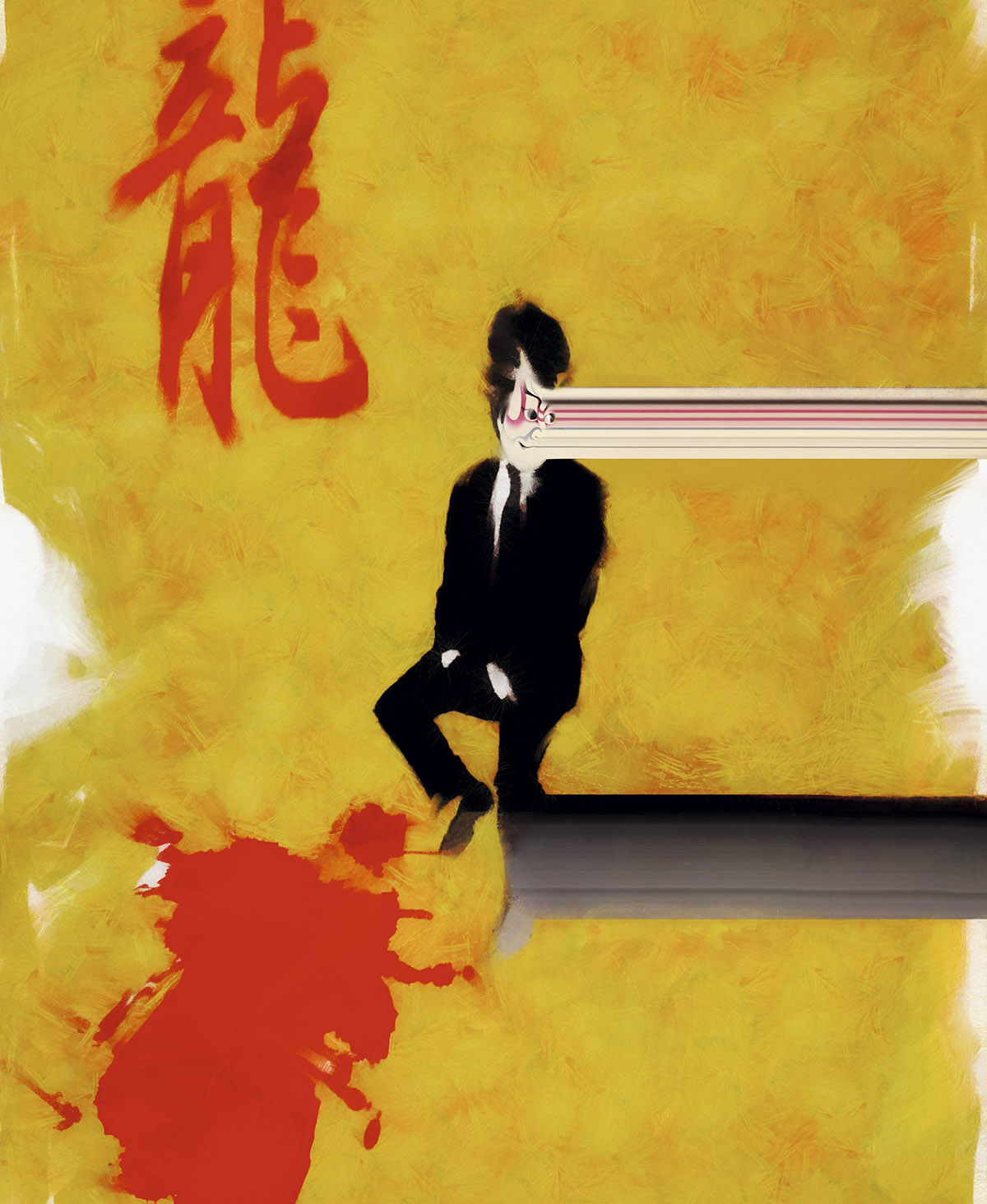
So, within the horizon of Chinese management, the future is not created but revealed. The future reveals itself only when a person relies not on abstract ideas, but on the potential inherent in the situation as a whole. In other words, when a person refrains from arbitrary action and, by recognizing the situation’s full potential, creates the conditions for it to unfold in the most favorable way possible.
This is precisely the “non-action” Laozi and other traditional Chinese philosophers wrote about. As you can see, it is not mystical. Moreover, non-action does not reject planning or control. But it allows them only at strictly defined moments — only when they are truly necessary. And the need for control arises only when eternally changing processes enter a brief phase of relative stability.
The medieval treatise Guiguzi, devoted to the art of governance, puts it this way: “The treatment of an illness should be discussed five years before it begins; a battle should be planned long before it starts; and affairs of state should be governed when everything in the state is calm, and matters proceed steadily, without disruption, one after another”. Let me give a concrete example: Chinese entrepreneur Zhong Boyang, co-owner of the DHL express delivery business, recommends systematizing the results of changes within a company only after the transformation phase has settled into calmer waters.
With this approach, the overall potential is transformed into a functioning system consisting of many elements; and this system can then be scaled, optimized, and so on. Otherwise, any attempt at control during an active period of transformation within a company — entering a new market, launching a fundamentally new product, and so forth — will block the potential of the situation and destroy a productive business perspective. But how can the Western management model, with its poorly concealed fear of confronting an uncontrollable reality, give up total control and planning — always and everywhere?
In business, the most important thing is “to be able to extend your intention far beyond the eight directions of the world”
It is difficult — I would say almost impossible. Yet nowhere can you hide from the realization that the VUCA world has arrived irreversibly. A cosmetic “repainting” of Western models in Chinese colors is bound to be ineffective. Only one conclusion suggests itself: thinking itself must change radically. Traditional Chinese philosophy proceeds from entirely different foundations. But before writing about them, let me give a real-life example. An acquaintance of mine, a friend of my Teacher, is a businessman from Hangzhou. Mr. Dai Junjun owns high-end restaurants serving traditional Chinese cuisine in Hangzhou and Shanghai. He once told me that his uncle, a Daoist master, while teaching him business skills, often reminded him that the most important thing in business was “to be able to extend your intention far beyond the eight directions of the world” — the traditional Chinese expression for the universe.
Now let us return to what the Chinese tradition itself says about this and how it understands it. In traditional Chinese humanistic culture, the world is not viewed as a collection of more or less stable things, but as a totality of processes in which transformation is the fundamental principle. Such a vision makes it possible not only to recognize and accept the world’s instability and fluidity, but also to arrange one’s priorities in an entirely different way. After all, what is most important in a world of things — or, in the words of one of the founders of synergetics, Nobel Prize-winning physical chemist Ilya Prigogine, a “museum-world”? It is the permanence of things. To clarify: things do, of course, change, but only in particulars; in their essence they remain the same. A world of unchanging things suggests a corresponding strategy for dealing with it: seize, possess, multiply.

Hence the constant tipping of the scales towards “having” — referring to Erich Fromm’s famous dilemma of “to have or to be”. Chinese thought, however, holds that placing faith in “having” ultimately collapses. Whatever is acquired will inevitably be lost, and if an entire life is built on possession, trouble is bound to follow. The perspective of Chinese philosophy therefore opens up a different world — one in which there are no isolated things, but rather changing interactions between them and the qualities of those interactions.
In other words, the world is understood as a play of countless combinations of two principles, yin and yang: empty and full, active and passive, and so on. Incidentally, thanks to the Chinese combinatorial worldview expressed in the famous Book of Changes, Leibniz developed the binary number system on which computers were later based. So let us imagine not things and their properties, but events and processes composed of things and governed by two opposing principles and their combinations.
From this perspective, the central question becomes: in what direction will events and processes of interaction develop? Chinese philosophy offers an unusual answer: there is no predetermined direction. Everything depends on the horizon of events. The broader that horizon is, and the freer it is from limitations, the more possibilities — multiple possibilities — events have for development. Here again we encounter the words of the Daoist master I mentioned earlier: “to extend one’s intention far beyond the eight directions of the world”. The highest horizon is emptiness, formlessness or, in Chinese terminology, Wuji — the Great Limitless.
In practice — so that I am not accused of pure theorizing — relying on the formless and the empty looks something like this. One of the wealthiest businessmen not only in China but in the world, Alibaba Group founder Jack Ma, has said: “My experience shows that I create my most successful business strategies only when I completely stop focusing on the market situation, competitors, innovations, and other things of that kind. My attention becomes empty and fluid — and that is precisely when I discover the most effective possibilities”.
There is no predetermined direction. Everything depends on the horizon of events. The broader it is, the freer it is from limitations, the more — and more varied — possibilities events have for development
So, there is a highest horizon, or limit: the formless and the empty. But a concrete mechanism must also enable an event poised for development to enter this formlessness and emptiness as optimally as possible. Laozi describes this mechanism as follows: “Excess helps deficiency”. In other words, the polar forces of yin and yang must exist in mutual support. In the broader context of the Chinese art of management, yang — the masculine principle — represents creativity and innovation, while yin — the feminine principle — represents implementation and adaptation.
Chen Yung-tai, founder of the Taiwanese Aurora Corporation, said that the main secret of successful management is to recognize two things at the right moment: 1) when the introduction of innovations begins to interfere with day-to-day management and a creative approach is needed to optimize management processes; and 2) when routine management processes begin to suffocate innovation and management must be redirected towards creating the most favorable possible conditions for innovation to develop. In this way, the Taiwanese businessman demonstrated his commitment to the principle that “excess helps deficiency”.
In fact, many similar examples exist in both Taiwanese and mainland Chinese business. In Western business, however, the situation is usually the opposite, with only rare exceptions. Dan Kennedy, an advocate of hard-line management, states openly: “Few of us are willing to admit that employer and employee are inevitably in conflict. You are in conflict because your interests clash with those of your employees, and you constantly stand in the way of their pursuing their own interests. To pursue your interests, you have to get the employees’ interests out of the way, replacing them with your own or destroying them”. Conflict is not merely acknowledged; it becomes a principle of successful management.
It is not competition — so highly praised by the Western standard — that leads to success, but cooperation, and more precisely, in Jack Ma’s words, “a balance between the corporate and the personal”
The Chinese art of management offers another lesson: wholeness. “Different management tasks are like beads strung on a single thread”. This is how the philosopher Chen Yinglüe describes its fundamental principle. Western management models, by contrast, still rely largely on narrow specialization. A holistic approach makes it possible to perceive the logic by which the future takes shape. Laozi expressed it this way: “What is visible is secondary; what is hidden is essential. What is now growing stronger will be weakened, while what now appears weak contains future strength”. In other words, future trends will be determined by hidden forces that are opposite in nature to those dominating the present moment. And once again, there is a real-life example. Ma Huateng, one of the founders of Tencent, proposed creating WeChat precisely at a time — in 2011 — when messengers of this kind were being predicted to decline. Time proved both Ma Huateng and Chinese strategic thinking right. Today, Facebook’s Messenger, among others, has adopted some of WeChat’s advantages. At the same time, WeChat is used not only for financial transactions but also for internal identification — and this is far from the limit of its capabilities.
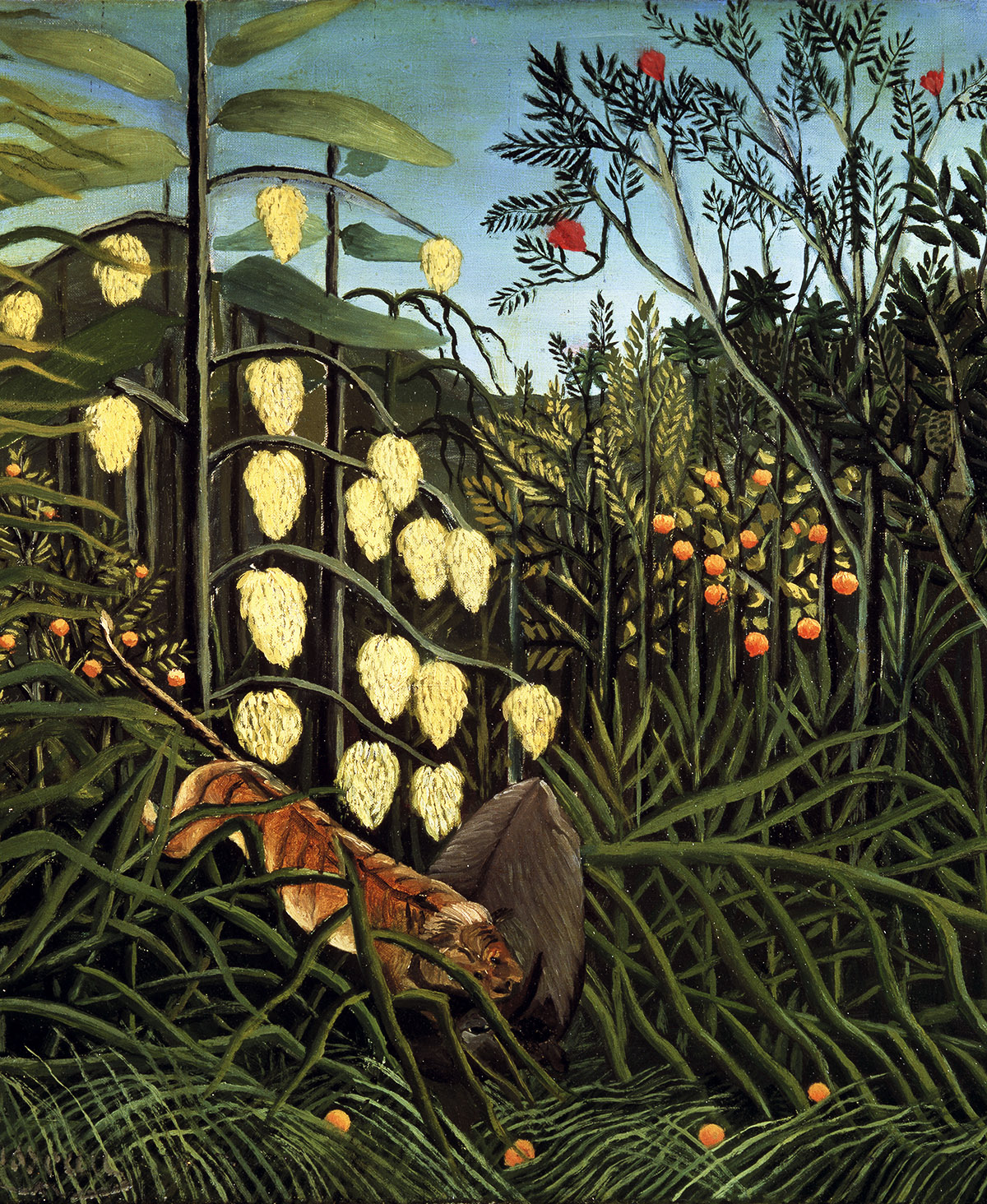
All change begins with people and ends with them, and so people form the final link in the Chinese art of management. The key principle is that shared values both unite people and encourage personal growth. It is not competition — so highly praised by the Western standard — that leads to success, but cooperation, or more precisely, in Jack Ma’s words, “a balance between the corporate and the personal”. And such a balance is possible only where there is room for development — a formless space rather than a rigid track. We seem to move along a Möbius strip, beginning with the fluid and formless and eventually returning to it. For those of us shaped by Western culture and mentality, the Chinese art of management presents a serious challenge: are we prepared to learn the lessons of Chinese tradition and move beyond the boundaries of our own identity for the sake of genuine rather than false success? Success is measured not by profit, but by living life to its fullest.
When copying materials, please place an active link to www.huxley.media
Select the text and press Ctrl + Enter