THE POWER OF BUSINESS: infrastructure and connectivity as the foundation of the economy of the future


Photo of the participants of the THE POWER OF BUSINESS panel at the Kyiv International Economic Forum 2025 / forumkyiv.org
How can we build an economy capable of withstanding the challenges of wartime and creating a foundation for future growth? This was the focus of the second panel of the Kyiv International Economic Forum 2025 — a discussion featuring leaders whose daily work shapes Ukraine’s infrastructure. Kyivstar CEO Oleksandr Komarov, whose company provides connectivity to 24 million subscribers and digital services to 13 million users, and KAN Development founder Ihor Nikonov, who has built more than 4 million m² of housing, schools, and commercial facilities in Kyiv, shared what today poses the greatest challenge for the economy, which solutions require immediate implementation, and how business can shape the country of the future already now.
Below are the key takeaways from the discussion.
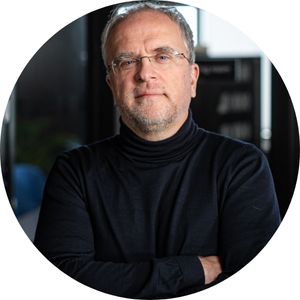
OLEKSANDR KOMAROV, CEO of Kyivstar
 REMOVE THE STATE AS AN INEFFICIENT OWNER
I
admit: despite everything, Ukraine is still moving forward in some incremental way. It may look like two steps forward, one step back — and sometimes one and a half steps back. There are even moments when it’s two steps back… When I look, for example, at the share of the «grey» production of tobacco products, it feels like a closed circle the country has been walking in for more than 30 years. But despite this, it still seems to me that some movement forward exists.
Let me state the obvious. The first thing we lack, in my opinion, is liberalization. And unfortunately, we are not moving in this direction. From my point of view, Ukraine’s happy future is not some stage on the way to joining the European Union. The future I envision is a European offshore zone, where everything is maximally liberalized. It’s easy to imagine what certification of a defence manufacturer or military technology looks like in the European Union. It can take 5–10 years — time Ukraine simply does not have.
The second thing, no less important than liberalization, is privatization. The state needs to be removed from everywhere as much as possible; its involvement in building the ecosystem for education, doing business, development, and people’s well-being must be minimized. It must be removed as an inefficient owner, perhaps with a few exceptions.
CHANGING THE STATE AS IF IT WERE A COMPANY IS EXTREMELY DIFFICULT
The task of the state is to create conditions — sometimes even a favourable arbitrage — for those industries that will become the drivers of the country’s development over the next 10 years. Naturally, liberalisation is tied to institutional reforms. Everyone understands what needs to be done in the tax, customs, and judicial sectors. But I will be honest: as a manager who has run various organisations, including very large ones, I simply do not understand how to even approach changes of such scale.
Because when you enter an organisation during a crisis, the first thing you do is fire everyone. Then you rewrite the rules and hire very expensive but very professional people, and they begin transforming everyone under them. Within 6–8 months, you have a new team, a new vision, and only then do you start moving forward.
But in a company, you deal with a completely different vertical than in the state. A CEO is not elected in a general vote — they are appointed by the owners. They have a mission, authority, alignment with stakeholders, and a time frame — for example, 2–3 years — within which they must implement changes. How to do all that in the state, I simply don’t know.
DIGITALISATION IS A QUIET DETONATION OF THE SYSTEM
However, recently I have found a sense of hope. And it is connected with the ideas expressed by our First Deputy Prime Minister. I have always searched for a way to detonate this system without destroying the country. And it seems to me that digitalization is the answer. When the human factor is minimized in all areas of public life, when arbitrage and subjectivity are removed, when the simplicity demanded by a digital approach emerges, this seems to partially answer the call for change in Ukraine.
This is a very good path, even better than what Saakashvili did in Georgia, because those were tough reforms that broke a part of society over the knee. It cost Saakashvili his position and cost Georgia, to some extent, progress along the vector of European identity. Digitalization, in my view, offers a more elegant route to fundamental transformation in Ukraine. It removes unnecessary bureaucracy, removes the person sitting on cash flows or regulating something, and simplifies the interpretation of any legislation. And of course, this is linked to liberalization and interpreting legislation in favour of business — the only true creator of added value in the country. Everything else exists, functions, and to some extent parasitizes on business.
WE ARE PART OF A GIANT ICEBERG
I cannot say that we have any fundamental conflicts with the state. But we must understand that we are built into a large system — we are the visible tip of a giant iceberg. Kyivstar is a transparent international business that would rather pay more taxes than take on additional risks. We are a public company, and for us, certain risks that may be small in terms of material impact but large in terms of reputation mean a great deal. In addition, we operate in a highly regulated, licensed industry.
We have a relevant ministry, regulators, and even our own analogue of a national bank — the National Commission. And like the state as a whole, the war constantly creates new challenges for us. For example, under wartime regulations, as part of critical infrastructure, we are partly subordinated to the National Security and Defence Council. They have their own orders, their own inspections. We also work closely with the NSDC. But there are also other examples, somewhat absurd…
A CHALLENGE OF UNBELIEVABLE SCALE
During mass blackouts, we are obliged to keep the network running on batteries for roughly 8 hours during the first outage, and then switch on generators and keep it running for another 25–30 hours. How well we can cope depends on the location, because density varies greatly. In my view, in Sumy, Shostka, and Chernihiv, we performed exceptionally well. Our overall network operability exceeded 50%. And yet we constantly face inspections because «people are dissatisfied». Which people? Dissatisfied with what? The fact that we maintain connectivity across 50% of the network during a war, when electricity may be out for days?
Naturally, the connection will not always be perfect. When any problem arises, something like panic begins, and then we are bombarded with orders and inspections. It would be good to have a more balanced approach. Of course, we will fulfil all obligations. I believe the requirements will even increase, as everyone expects a very hard winter. But overall, the number one priority is — survival. To achieve this, we need significant funding, additional sites, and another 3,500 generators, which are currently deployed on the network. This is an energy challenge of unbelievable scale for us!
GIVING PEOPLE HOPE IS ESSENTIAL
And during the war, another question must be solved — how to combine the need to survive with the need to develop? We cannot be focused solely on the negative. We need to give people hope. And business, I believe, is a platform that gives hope to all stakeholders. Hope to employees — that they will have stable work; hope to the state — that taxes will be paid; hope to clients — that our service will remain available even in the hardest conditions, even if imperfect at times. In my view, our IPO — listing 50% of the company — is an example that even during a war it is possible to achieve a very strong valuation, significantly higher than what our competitors were valued at in 100% acquisitions over the last five years. All this is incredibly important. And I believe that demonstrating how a business in a country at war can survive, develop, and give hope — this is the core mission of a company like Kyivstar.
THE BEST JOB IN UKRAINE
I am neither the founder nor a co-owner of the company. I have two key drivers that keep me moving forward. First: I must find it interesting — in the broadest sense: scale, industry, challenges… Second: a sense of responsibility. When I sign a contract, I take on the responsibility to do everything in the best possible way under any circumstances, because circumstances always change. I returned to Ukraine in 2018 and became CEO of Kyivstar. Then COVID came. Now a full-scale war. But under any circumstances, one must do their work in the best possible way. From time to time, I ask myself whether I am in the right place. And I think I am. Because the level of challenges we have at Kyivstar is incredibly exciting. In my view, this is the best place to work in Ukraine.
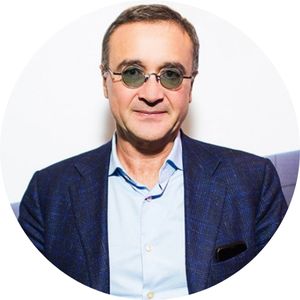
IHOR NIKONOV, founder of KAN Development
 POPULISM IS THE MAIN ENEMY OF DEVELOPMENT
I dream of the day when the construction industry finally reaches its full potential in Ukraine. It is said that industrial production accounts for 10% of GDP, while it should reach 20%. The construction industry is not very large, but it contributes around 3% to GDP. Analysts, however, claim that its potential is at least 10%. Moreover, construction has a strong multiplier effect on the economy — it involves dozens of professions and provides many people with jobs. So I dream that one day these 10% will become reality. What is needed for that? We have discussed this topic for many years. And the main thing that, in my opinion, slows down the development of our sector is populism. A vivid example of populism is the situation with mortgages. These issues are directly connected. The government and parliament have created a situation where people who stop paying their mortgage cannot be evicted from their apartments. Meanwhile, a banker who must issue that mortgage remembers the crisis of 2008, after which he spent the next ten years in and out of court. Do you think he will issue a mortgage under such conditions?
LACK OF PROJECT FINANCING
This is another major problem. There is no project financing because in Ukraine there is no single document issued by an authorised state institution, based on which a decision is made that cannot later be overturned. In this situation, whenever a banker considers opening project financing, a developer cannot provide solid guarantees through stable corporate rights. Today, a banker may easily refuse you — and be right. Why? Because tomorrow any activist may organise a protest at your construction site; the next day Facebook will erupt in imitation of public outrage; after that, law enforcement may open a criminal case based on all this and cancel your permits. At present, there is not a single document in Ukraine that cannot be revoked — even illegally.
UKRAINE HAS NO HIGH-QUALITY EDUCATION AFTER SCHOOL
The third problem — already emphasised many times — is education. But here the situation is somewhat better: even during the war we invest around 120–130 million dollars in education. We have built one huge school and are building two more. I consider the level of education we provide to be quite high. But unfortunately, we face a new issue: we raise a child until the age of 19, and then there is nowhere in the country for them to continue developing. We don’t have universities that provide education at a similarly high level. For years we’ve heard discussions that 180–190 universities is far too many for a country like ours, and that this number should be reduced — probably by a factor of ten. But every time, rectors bring their students out to protest, ignite social media, and the government backs down. Because of populism, we now have exactly the higher education system we deserve. And yet again, this is another reason to reflect on reducing the state’s influence in nearly all spheres. There is nothing in the world that business cannot do well — from weapons to paper — if the right conditions are created.
THE PEOPLE MUST BE TOLD THE TRUTH
Unfortunately, populism is what drags the country down. Populism is when people are told they will have everything tomorrow — and for free — and that nothing is required of them. I believe people must be told the truth: we will never have anything unless we roll up our sleeves and start working as hard as Papa Carlo. Then perhaps our grandchildren will live differently. Ukraine has all the opportunities for this — unlike many other countries. When our people try to do business in Spain or France, they don’t understand how to operate there. What kind of profitability must one have to pay 50–55% in taxes? So if we eliminate populism, stop fueling public hostility toward entrepreneurs, and cultivate a societal respect for business, we have everything needed for successful development. Everyone — law enforcement, the government, anyone — must understand that they have jobs and salaries only because business is operating.
WHY ARE THERE SO MANY UNFINISHED BUILDINGS IN KYIV?
One of the biggest issues in construction for years has been our relationship with the Ministry of Culture. For 30 years it did almost nothing, and its inaction created space for many NGOs that gained publicity by claiming to «protect cultural heritage». What is this if not cheap populism? Today anyone can declare almost anything a heritage site. That is exactly why Kyiv has so many abandoned construction projects. Take, for example, Hostynnyi Dvir, the river port building, or «Flowers of Ukraine»… Today I have hope that under the new Minister of Culture things have started to move forward. You see, heritage buildings also decay, but we have no rules, no criteria, and no incentives to invest in them. As a result, many buildings across Kyiv are in decline. Developers also have many questions for parliament, which can create laws that destroy the entire industry with a single stroke. But it is good that we are being heard. I see such willingness in the President’s Office.
I’M INTERESTED IN CREATING SOMETHING NEW
Ninety percent of my projects began simply because I wanted to create something new — to participate in design, to shape a concept. This interests me even during the war, although many believe that starting anything now is unwise. But even today I have projects of a million square metres — I simply cannot do nothing! I believe every entrepreneur is inspired when they can see the results of their work. Most of them, of course, do not work for money alone. It’s exciting to constantly create something. In fact, this is the motto of our company: creating together!
Prepared in partnership with KIEF. Huxley is the information partner of the Kyiv International Economic Forum
When copying materials, please place an active link to www.huxley.media
Select the text and press Ctrl + Enter


