BACK TO THE GARAGE: The Crisis of Leadership Spaces — and How to Overcome It


Elena Ryzhkova / Photo from the personal archive
Where are meaning and breakthrough innovations really born — in the quiet of a closed garage or amid the chaos of a public café? And why does the artificial imitation of these spaces in modern offices no longer work? Together with Elena Ryzhkova, an expert in business psychology and an MBA lecturer at MIB, we explore the spatial and temporal architecture of leadership. We will discuss the paradoxes of digital control and ways to overcome the crisis of the environment in which the decisions of tomorrow are born.
LEADERSHIP AS WORLD-BUILDING
L
eadership, like all phenomena of our everyday experience, exists in time and space. Yet the spatial and temporal architecture of leadership has its own distinctive features. It is no coincidence that great scientists, technological innovators, and entrepreneurs are likened to demiurges: they create entire “universes”, governed by laws that come to shape the lives of their teams and millions of other people. Time and space become a universal stage on which the events of corporate history unfold — much as God moderates the events of world history. Augustine once asked what God had been doing before the creation of the world. He concluded that there had been no “before” at all, because time and space themselves came into being together with the world.
Science would seem to have shaken the worldview foundations of the Middle Ages. Yet today, modern fundamental physics is no longer certain that space and time are primary. They may instead be the result of deeper processes taking place at a level where our familiar concepts of space and time no longer apply. But what if we look at the corporate space-time continuum through this lens? The temporal dimension of leadership includes the historical era, the pace of change, the stage of a company’s life cycle, and the timing of decisions. The spatial dimension encompasses geography, office architecture, the virtual and digital environment, and the sociocultural context. Let us try to answer the question: what came “before”? And we will see that leadership — managerial, technological, intellectual — is not born in spacious executive offices overlooking the city. Its source lies beyond the everyday spatial and temporal norm, in a kind of leadership “third dimension”.
LEADERSHIP AS AN ACT OF TRANSCENDENCE
According to Henri Lefebvre’s theory, space and time do not exist in and of themselves — they are brought into being, experienced, and constructed by human beings. Space and time are merely an external framework for the energy of meaning that emanates from the subject of volitional action. In Karl Weick’s concept of Sensemaking, the leader is precisely the person who gives meaning to space and time. Physical space and the present moment define “what already exists”. But the leader’s key function is entirely different: to see and draw into reality a pre-existing possibility — “what does not yet exist”. This means that the source from which a leader draws meaning, will, and energy is transcendental in nature; that is, it must lie somewhere beyond the boundaries of existing everyday reality.
Without this “third dimension,” a leader turns into a mere functionary or administrative operator who simply moves pieces around the spatial and temporal chessboard without creating anything fundamentally new. On this point, existentialist philosophers, psychologists, and contemporary business-school professors are in remarkable agreement. Space and time are the language and fabric upon which the leader writes the “text”, but the “ink” and the “idea” come from a transcendent source of meaning. If we view leadership as an act of transcendence, we can speak of charisma and vision, the noosphere, and Plato’s world of ideas. Or we can turn to two key figures in contemporary American and global management theory — Louis Fry and Otto Scharmer. Fry’s Spiritual Leadership theory directly derives the phenomenon of leadership from the ability to address the transcendent needs of the human being. Scharmer’s Theory U, meanwhile, derives it from the ability to connect with the “blind spot” — the invisible, potential space of the future that has not yet taken form in time.
THE THEORY OF THE “OTHER PLACE”
For Scharmer and Fry, this “blind spot” is located neither in geography nor in the daily schedule. It lies within the structure of our attention, in the breaks and pauses that arise amid everyday routine. It is a kind of ritual of “stepping out of the game”, when you cease to function as a product of your past experience and become a space in which new meaning can take shape. The cultural theorist Mircea Eliade brilliantly demonstrated how modern “non-religious” people, by ritualizing their behavior, unconsciously recreate sacred topoi in the most ordinary places. The philosopher Michel Foucault even introduced a term for this — the “other place”, or “heterotopia”. Unlike utopia, which is an imaginary place, heterotopia is entirely real. These are points embedded within everyday space where a ritual break with the social order occurs. In contemporary urban culture, for example, the garage is a direct continuation of the archaic “cave of the male fraternity” and the alchemist’s laboratory. It has its own hierarchy and liturgy — the arrangement of tools, the meditative process of assembling and disassembling, the “worship” of mechanics. In essence, the garage startup is a version of the myth of creating the world out of chaos within a sacred space sealed off from family, work, and the state.
Or consider the café, where a person pays not for a cup of coffee at all, but for the right to slow down time and reset space. Historically, the café emerged not as a place for eating and drinking, but as a space for the creation of meaning. This was the role played by the coffeehouses of Paris, Vienna, and London, which functioned as a kind of ancient Greek agora. Here, transcendence occurred through dialogue: a chance thought could become a philosophical manifesto and might even give rise to an entire philosophical or scientific school. The nightclub is a direct adaptation of archaic archetypes and mysteries, a modern version of the Dionysian festivals and the Eleusinian Mysteries. In a heterotopia, a person returns “to oneself”. Within the very fabric of everyday life, by opening oneself to the Other, a person reconstructs meanings that everyday existence lacks. Such “inward transcendence” entails existential risk, because it requires considerable effort, courage, and audacity. Yet it opens up the possibility of transforming reality. Everyday routine, which constrains the energy of being, is all-encompassing. Breaking this totality returns a person to the source of being, to the “beginning” — the point at which the creation of something new becomes possible. In modern culture, we constantly encounter “traces” of this transcendence. In the heterotopias mentioned above, for example, a person gains access to three fundamental things: Creation (the garage), Meaning (the café), and Ecstasy / Unity (the club).
THE THEORY OF THE “THIRD PLACE”
The idea of the “other place” was further developed by the American sociologist Ray Oldenburg. In his book The Great Good Place, he introduced the term “third place”. According to Oldenburg, every person has three principal spaces in life. The first is the private sphere: home and family. The second is the sphere of social roles, responsibilities, and hierarchies: work or study. And the third is a space of informal, voluntary, and egalitarian interaction. Unlike the first two, the primary activity in the third place is conversation — a shared search for meaning. The third place always unfolds in a dimension “invisible” to society — at the intersection of contexts: on the way to work, in the silence before opening a laptop, during a solitary walk…
Humanity has intuitively created such spaces throughout history, and in different cultures they have taken unique forms. The central square of the Athenian polis, the agora, was not merely a marketplace but the heart of civic life: philosophers, merchants, politicians, and ordinary craftsmen gathered there without class barriers to debate, exchange news, and shape the foundations of democracy. Roman thermae — public baths — were enormous social hubs with libraries, gardens, sports grounds, and food courts. In the baths, senators and plebeians sat in the same water, temporarily erasing class boundaries and creating an atmosphere conducive to informal discussion and political intrigue.
A similar function was performed in Finnish culture by the public sauna. It was a sacred, egalitarian space where discussing social status, rank, or wealth was forbidden. It was in saunas, in an atmosphere of absolute trust and equality, that the community made its most important decisions. In China, around the third century AD, chaguan — tea houses — appeared, cultivating an atmosphere of contemplation and mutual respect. Business disputes were settled there, poetic duels were held, political issues were debated, and games of chess were played. In nineteenth-century Bavaria, Biergärten — beer gardens — emerged. By sitting down at a long communal table, a person entered a typical third place and became an unwitting participant in conversation with strangers, where distinctions between professor and worker faded away.
Istanbul’s kahvehane radically transformed Turkish society in the sixteenth century. Since alcohol is prohibited in Islam, coffeehouses became an alternative to the European tavern. They even came to be called mekteb-i irfan — schools of wisdom. Men gathered there to listen to poets, play backgammon, read newspapers, and discuss the sultan’s politics. As a result, the coffeehouse became a center of free thought. The Middle Eastern souk was not merely a place for buying and selling, but a complex space of communication. Men would spend entire days moving from shop to shop, drinking tea and conversing freely. Eastern women had their own third place — the hammam — a space removed from family and domestic life, where they exchanged news and arranged meetings with prospective brides.
THE CRISIS OF LEADERSHIP SPACES
It is no coincidence that creative freedom and innovation still hide away in attics, garages, and cheap cafés around the corner, out of sight of the “Big Other”. This was the name Jacques Lacan, one of the “fathers” of modern psychoanalysis, gave to the internal projection of the supra-individual Symbolic law — the “watcher” dwelling in language and culture. Later, the concept moved far beyond the psychoanalyst’s couch and became a fundamental category in philosophy, sociology, and cultural theory. But whereas in Lacan’s time the “Big Other” was an abstract sum of cultural norms and prohibitions, in the digital age it observes the individual in a far from symbolic way — endlessly measuring clicks, likes, location, and heart rate. To the collective illusion embodied by the state, the nation, cultural tradition, scientific consensus, public opinion, and the market — all of which subject our desires to their dictates — there has now been added a very concrete digital incarnation of the “Big Other”: algorithms, Big Data, social networks, and AI-based management systems. That is why the problem of escaping this control — into neuroses, silence, privacy, heterotopias, carnivalization, cynicism, and humor — has become even more urgent for modern people than it was for previous generations. For the individual, this is a key way to preserve subjectivity and freedom; for modern corporations, it is a way to turn the production of ideas and discoveries into a continuous process.
And here a paradox emerges: technological progress is no longer possible without digital innovation; innovation expands the sphere of control; and that control, in turn, slows the innovation process. As a result, we see the modern corporate world spending decades and billions of dollars trying to buy what once emerged for free — an atmosphere of freedom, low stakes, and the right to make mistakes. But artificially reproduced freedom, into which corporations and markets invest vast sums, ceases to be genuine freedom. This is the crisis of leadership spaces: people are gradually losing the ability to create, naturally and organically, the kinds of environments in which bold decisions are born. Instead, they learn merely to imitate their outward appearance. To understand how we might overcome this crisis, let us trace the history of several heterotopias: from Hewlett and Packard’s garage to the Starbucks on the corner, from the Athenian agora to a Discord server. It is the history of two types of spaces that humanity has rediscovered in different eras — spaces of solitude and spaces of cross-pollination. Genuine leadership has always emerged at the intersection of these two modes. It is their living pulse that we seem to have lost.
SILICON VALLEY: THE GARAGE AS THE CRADLE OF IT
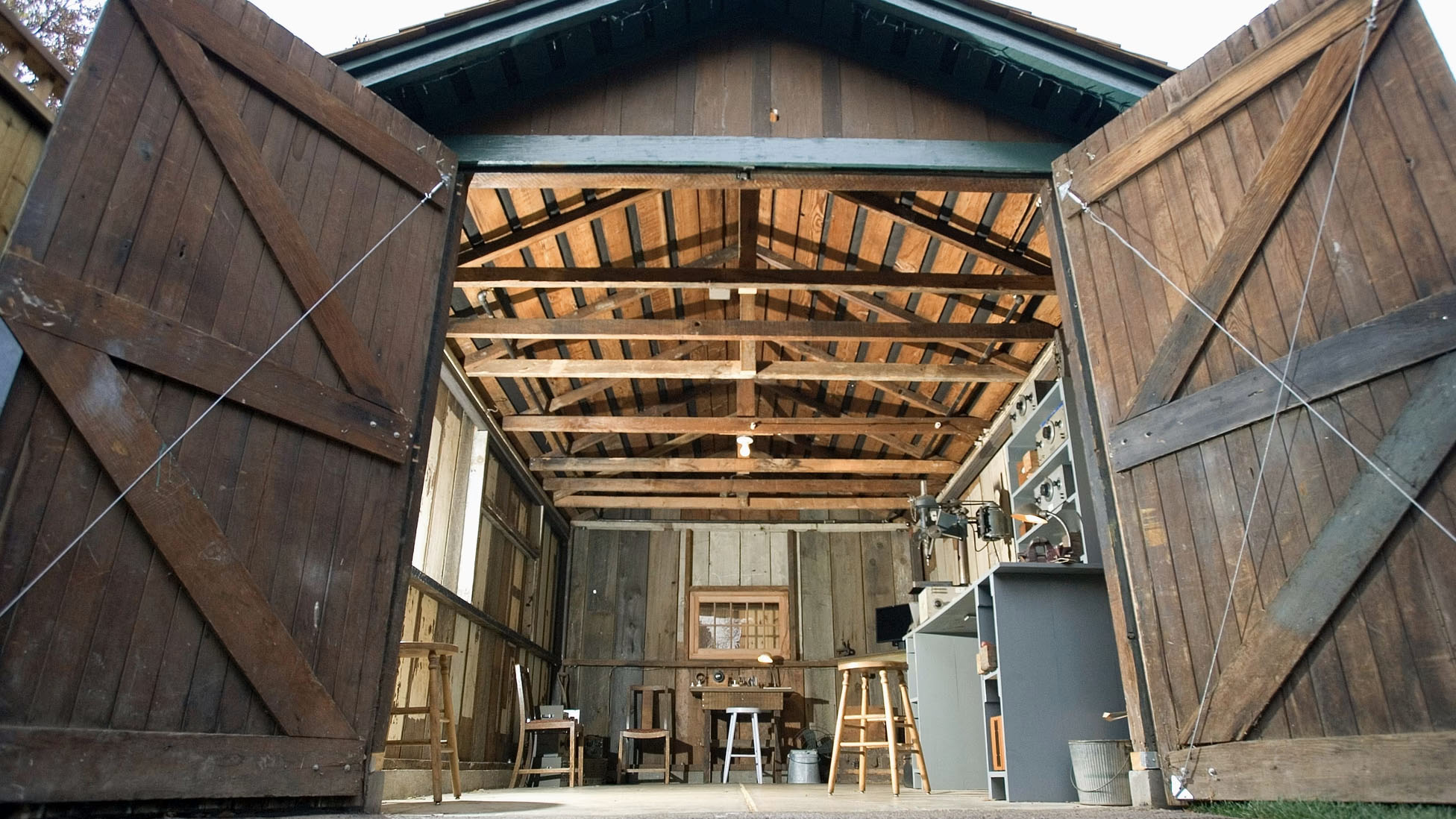
In American culture, the garage became a sacred birthplace of trillion-dollar corporations. The year 1939 and Bill Hewlett and Dave Packard’s garage in Palo Alto are regarded as the time and place of Silicon Valley’s birth. With just $538 in starting capital, Bill and Dave began manufacturing oscillators in a garage, an enterprise that would later come to symbolize the transition from artisanal invention to systematic business. In 1976, a garage in Los Altos became a heterotopia where Steve Jobs and Steve Wozniak assembled the first Apple boards. This third space outside work and home embodied a rebellious spirit, resistance to corporate giants such as IBM, and a belief that a handful of enthusiasts obsessed with an idea could change the world. In 1998, Google founders Larry Page and Sergey Brin rented a garage in Menlo Park. It became a model of the classic student startup that had outgrown the confines of a university laboratory.
One might even speak of a kind of “garage archetype”, because the same logic can be seen in any rough, unpolished space where an innovative environment has emerged. Jeff Bezos, for example, started out in a garage. But his real breakthrough came later, in a cheap warehouse in Seattle, where he succeeded in optimizing the logistics of book retail by focusing on efficiency and scalability. Another typical example of a third space is the three-by-four-meter shed in Milwaukee where, in 1903, William Harley and the Davidson brothers assembled their first motorcycle. There was nothing there of the “world as we know it” — only three fanatics, hard manual labor, and bare metal. Today’s coworking spaces and hackerspaces are modern imitations of such environments. And they had a precursor: Thomas Edison’s laboratory, a vast complex of barns and workshops where, in 1876, innovation was for the first time turned into a systematic process.

HOW CORPORATIONS IMITATE THE GARAGE ATMOSPHERE
In the United States, the garage became a sacred space because it aligned perfectly with the foundational myths of American culture. The myth of the self-made man suggests that success does not require connections or enormous startup capital — only an idea, a workbench, and hard work. In the 1960s, the cult of garage rock, which became a symbol of raw, unpolished creativity and rebellion against the rules, romanticized the outsider. A deep conviction took root in the public imagination that the creative, nonconformist David would always defeat the soulless and lumbering corporate Goliath. This myth is still actively cultivated by venture capital funds today as a way of attracting talent. Modern corporations spend millions trying to artificially recreate the same “garage” atmosphere that once cost next to nothing. Architects call this approach “designing for incompleteness”. The environment is meant to look as though it is still being worked on, supposedly stimulating creativity.
This is the logic, for example, behind the industrial loft style — exposed concrete walls, visible wiring, pipes running beneath the ceiling, rough wood… All of this is believed to eliminate the feeling of a sterile office and reduce the fear of making mistakes. For the same reason, Google, Meta, and Apple create flexible hackerspaces — workshops equipped with 3D printers, soldering stations, and laser cutters. Any employee can come there outside working hours to bring their own “prototype” to life. Tables on wheels and writable walls imitate the chaos of a garage, where everything is constantly changing and adapting to the task at hand. Partitions resembling roll-up garage doors or sliding barn doors make it possible to instantly transform an isolated room into an open hackathon space. Yet this is precisely where the first paradox of the crisis of leadership spaces emerges: authentic “garage freedom” was a product of poverty, not enormous budgets; of invisibility and the absence of an observer, not hyper-control over privacy. Corporate imitation can buy the scenery of a garage, but it cannot buy what matters most — anonymity, a spontaneous journey into the unknown, and the right to fail without consequences for one’s career.
THE FATE OF THE SOVIET AND WESTERN EUROPEAN GARAGE
On another continent, in a different cultural context, the garage also performed the function of an “other place”, though with its own distinctive features. In the USSR, it was a space of internal emigration beyond the control of the “Big Other”. Whereas the American garage was created with the aim of scaling outward to the entire world, the Soviet garage was primarily an instrument of local survival. Male garage clubs became centers of invention and, at the same time, of resistance to the pervasive scarcity of virtually everything. From a hobby, they evolved into a powerful parallel socioeconomic system that sociologists came to call the “garage economy”. It had its own laws, a system of mutual assistance, and mechanisms for distributing resources. In garages, people assembled cars, designed machine tools, manufactured scarce parts, and exchanged prohibited information. This technological “samizdat” often succeeded in surpassing mass-produced automobiles. Some garage projects proved so successful that their creators were invited to work in restricted secret laboratories.
If the United States idealized garages and the USSR developed a parallel economy around them, Western Europe historically failed to build a myth around this space. The reason lies in rigid structural, urban, and cultural barriers. The density of old European cities — London, Paris, Amsterdam — makes a private house with a spacious two-car garage an unaffordable luxury for a student or young engineer. In European cities, people live in dense apartment districts where garages are either absent or reduced to cramped underground parking spaces. Strict regulation makes it impossible in Germany or France to set up a workshop or laboratory in a residential area — using a garage for anything other than its intended purpose would quickly lead to fines from municipal authorities and complaints from neighbors.
The contrast with America is reinforced even further by a lower tolerance for risk. American culture forgives and even welcomes bankruptcy. In Europe, by contrast, the failure of a startup has historically been perceived as a social stigma, making it harder to obtain credit in the future. European talent is therefore more likely to seek careers in stable corporations or academic institutions. Finally, in Europe, breakthrough ideas have traditionally emerged within universities, technology parks, or state-subsidized incubators — such as, for example, the institutes of the Max Planck Society or the Fraunhofer Society in Germany. The European environment is far more sterile, orderly, and predictable, which is the direct opposite of the chaotic aesthetic of the American garage.
THE COFFEEHOUSE AND THE PHILOSOPHY OF OTHER ICONIC SPACES
The garage is a space of solitude, manual labor, and uncontrolled experimentation. But there are other iconic spaces that offer different forms of social and intellectual dynamics. New meanings are born there not through the insight of solitary individuals, but through the intense cross-pollination of ideas. University dormitories are spaces of forced synergy and extreme density of creative thought. Harvard’s Kirkland House, where Mark Zuckerberg created Facebook, or the dormitories of MIT are incubators of “chance encounters”. The philosophy of these spaces is the removal of barriers and the erasure of hierarchies. As in a Finnish sauna or a German beer garden, there are no professors or bosses here — everyone is equal, poor, and ambitious. At the same time, fifteen-square-meter rooms can produce the highest possible concentration of intellect. This is the territory of social networks, software, algorithms, and platform solutions. Ideas are tested instantly on roommates. Shared kitchens and corridors become sites of a continuous hackathon, where the physical proximity of a programmer and a sociologist gives rise to interdisciplinary hybrids.
In essence, alongside the garage, we are dealing with another archetype of leadership space. Let us call it the “coffeehouse archetype”. Parisian cafés of the early twentieth century were typical third places. Café de Flore and Les Deux Magots became birthplaces of existentialism, Surrealism, and modernist literature. Under one roof, they brought together Jean-Paul Sartre, Simone de Beauvoir, Ernest Hemingway, and Pablo Picasso. Breaking away from everyday life was astonishingly cheap there — for the price of a single cup of coffee, one could sit at a table beside artists, publishers, and critics. One could warm oneself by the stove and talk all day. The café became a kind of filter and exchange for ideas, where cross-pollination took place continuously through public debate.
English coffeehouses of the seventeenth and eighteenth centuries were called “penny universities” for a reason — that was the price of a cup of coffee. For a single penny, anyone could gain access to the latest newspapers and scientific debates. They were spaces of sobriety and critical reason, opposed to the drunken chaos of taverns. It was there that the famous Lloyd’s of London insurance market and stock exchanges were born. Isaac Newton and members of the Royal Society held scientific discussions there. Coffeehouses were divided by professional interest. Some were frequented by sailors, others by merchants, and still others by scholars. In essence, they were the first open coworking spaces, where distinctions between aristocrats, businessmen, and other social estates faded in the pursuit of common benefit or scientific truth.
THE CRISIS OF THIRD PLACES: SUBURBANIZATION AND THE DEATH OF PUBLIC LIFE
Oldenburg wrote his book about third places after World War II. He was alarmed by the destructive nature of the postwar American model of urban development. Third places were being deliberately eliminated. In their place came sterile suburbia — standardized suburban neighborhoods in which people found themselves in a peculiar form of isolation from “authentic being”. Life became car-centered. This was good for the automobile industry and the market, but it made suburban residents completely dependent on them. American suburbs were designed in such a way that without a car, a person could hardly move at all — the “Big Other” had once again reclaimed part of private space. That space became fundamentally different: familiar sidewalks and pedestrian zones disappeared, as did local corner shops where neighbors could meet by chance and talk. Life became enclosed within a routine everyday algorithm: home — car — work — car — home.
As an alternative to third places, the new urban model offered shopping and entertainment centers. But the malls that replaced traditional markets, small shops, and public squares were, in Oldenburg’s view, merely simulations of heterotopia — “pseudo-third places”. Their architecture is designed around endless consumption rather than social cohesion. The primary purpose of a mall is to make people spend money, not to create an environment for meaningful interaction. The result of the decline of third places is a sharp increase in loneliness, the atomization of society, the breakdown of neighborhood communities, and the decline of local grassroots democracy. Everyday life became even more homogenizing: identical houses, identical cars, identical desires, and identical standards of consumption. People lost the ability to talk to those unlike themselves.
Along with the “transcendent” garage, modern environments have also lost the places of chance encounter where bold ideas, social statuses, and different modes of thinking could collide and create synergy. This situation likewise produces a crisis of leadership spaces. Steve Jobs’s unremarkable garage could become the point of a “Big Bang” and the birth of a new corporate universe. Yet no expensive, technologically sophisticated corporate “garage” has ever produced a figure equal in scale to Jobs. The reason is simple: however much it may aspire to the effect of a “third place”, it still remains part of the “second”, work-related space and continues to operate according to its laws and rules. Corporations have learned to imitate the garage, although from the standpoint of major technological breakthroughs, this idea can hardly be called particularly successful. With spaces of chance encounter, the problem is even more difficult. Corporate hierarchies are not places where chance tends to thrive. Corporate culture is built around uniform values, structures, processes, and standards that may remain unchanged for decades.
HOW CORPORATIONS IMITATE THE COFFEEHOUSE ATMOSPHERE
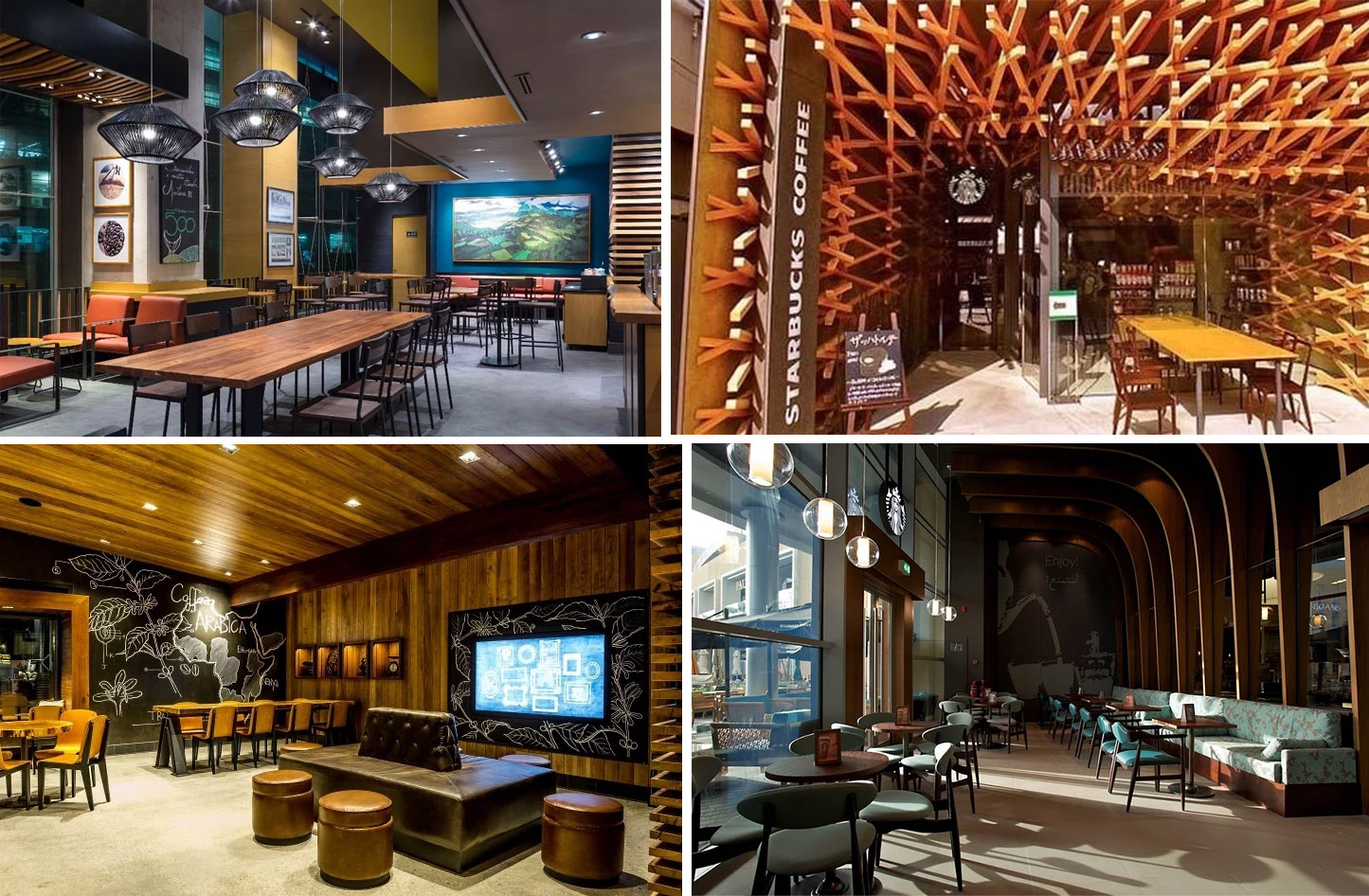
Still, while it is not easy to implant a third place into corporate culture, corporations have proved quite capable of turning the “coffeehouse effect” into a commodity. In the 1980s, American entrepreneur Howard Schultz visited Italy and was captivated by the culture of local espresso bars. For postwar America, which had virtually lost its tradition of third places, this seemed almost fantastical: an Italian barista knew every customer by name, while people gathered in cafés before and after work simply to… chat! Returning to the United States, Schultz decided to turn Starbucks into a mass-production machine for the third places Americans had been deprived of. The hypnotic effect Starbucks has on consumers is not based on selling coffee. The company sells atmosphere and specifically designed square footage. Its interiors imitate a cozy living room — soft armchairs, subdued warm lighting, wood, rugs, background jazz. Starbucks popularized the idea of “slowing down” the pace of life, creating a pause between work and home.
In American culture, where the rapid pace of life and business had become a foundational myth and a condition of survival, this amounted to a genuine revolution. Benjamin Franklin’s famous aphorism, “Time is money”, had virtually sacralized speed. For many people, therefore, Starbucks’ replicated third places seemed like a legitimization of idleness. The chain’s popularity was also reinforced by an unwritten rule: you could buy a single cup of the cheapest coffee and sit there with a laptop or a book for five hours if you wished — no one would ask you to leave. Free Wi-Fi and an abundance of power outlets only strengthened this status. Yet there is a significant difference between the American commercial third place and its Italian counterpart. Starbucks capitalizes on loneliness rather than serving as a gathering point for a community. People at Starbucks sit next to one another, but alone, separated from each other by laptop screens and headphones. Business has monetized the human need to be among other people without guaranteeing genuine social interaction.
Perhaps in the digital age, virtual platforms may succeed where Starbucks has not entirely succeeded. To a certain extent, the digital equivalent of a local bar or coffeehouse can compensate for the shortage of physical third places. Discord servers, for example, have regular “patrons” who can drop in without an invitation and find something difficult to come by in the physical world — an informal atmosphere and conversation for its own sake. In games such as World of Warcraft, Final Fantasy XIV, or EVE Online, players participate not only to complete quests. For millions of teenagers, these worlds have become their primary spaces of socialization — they spend hours sitting in virtual taverns or in the central squares of cities. Yet digital spaces also have a systemic flaw: echo chambers. In a real bar or on an agora, a person encounters, by chance, people who are very different from one another. They vary in age, profession, aesthetic tastes, and political views. In digital spaces, algorithms and moderation group people according to rigidly defined interests, erasing the defining feature of a third place — inclusivity and encounters with otherness.
GARAGE AND CAFÉ: THE DIALECTICS OF LEADERSHIP SPACES
The metaphors of the garage and the café are, of course, precisely that — metaphors concealing two modes of human consciousness at work: incubation in isolation and cross-pollination in chaos. Each space activates fundamentally different cognitive and existential mechanisms. The garage minimizes external stimuli, restores a connection with the transcendent, and creates something fundamentally new “from scratch”. Psychologists have identified a different neurobiological trigger behind the “coffeehouse effect”: not isolation from external influences, but moderate sensory stimulation — white noise. Studies have shown that at around 70 decibels, this noise reduces the brain’s executive control and frees abstract thinking. A diffuse focus makes it possible to notice unexpected mental connections. In the garage, ideas are vertical. In the café, they are horizontal but combinatorial, meaning that they emerge at the intersection of contexts. These two modes also differ in their patterns of thinking and their attitude toward the right to make mistakes. The garage removes the fear of social judgment, allowing a person to create in a state of absolute sincerity.
Steve Wozniak assembled non-functioning, ugly prototypes out of makeshift materials, without worrying about how those early circuit boards looked to others. In the public space of a café, creativity inevitably takes on the features of social performance. It becomes aesthetic and conventional because, when visible to others, a person unconsciously begins to “tidy up” their own thoughts. The status of the creator is also different in the garage and the café. In the garage, immense inner autonomy, resembling monastic asceticism, carries the risk of intellectual autism: you may spend years inventing something no one sees and no one needs except you. Yet the object of your labor is the world itself — a world worth changing. In a café, surrounded by people, a different kind of solitude emerges. Charles Baudelaire called it “attentive solitude”. For the attentive observer, other people provide the raw material for creativity: their conversations, ideas, insights, facial expressions, and tastes. Recall how Aristotle Onassis’s business empire began — with the conversations of wealthy people he overheard in clubs and restaurants. In a café there is no risk of intellectual autism, but there is another danger — the illusion of an intensely active intellectual life. Yet genuine creativity does not lie in opposing the garage to the café. True leadership is always unconventional and therefore rarely exists within the confines of just one kind of space.
Great cycles of innovation are built on a pulsation between these two modes. A person goes to a café or public square to absorb chaos, detect a trend, encounter otherness, and formulate a hypothesis. Then they retreat to the garage, where they turn that hypothesis into reality. The crisis of leadership spaces is a crisis of this pulsation between modes. Building the stage set of a corporate garage or imitating a café solves nothing. There is no point in creating a loft with exposed brick and writable walls if it does not give people the right to make mistakes anonymously — the right that a real garage once provided. Thousands of Starbucks locations cannot replace genuine interaction in a café or marketplace, just as virtual worlds cannot replace an encounter with a living person unlike ourselves. Overcoming the crisis of leadership spaces does not mean physically returning to a garage on the outskirts of Palo Alto or taking a seat at the long table of a Bavarian beer garden. It means restoring the very architecture of these two modes within organizations and cities: a space of genuine isolation, observed by no one, and a space of genuine encounter with the Other, filtered by nothing. The leadership of tomorrow will belong not to those who are best at imitating hypertopias, but to those who restore two things to the individual. The first is the right to completely uncontrolled creative solitude. And the second is the right to sit at the same table with a stranger — someone foreign and unlike oneself.
When copying materials, please place an active link to www.huxley.media
Select the text and press Ctrl + Enter


