BORIS BURDA: How to Decode an Ancient Inscription

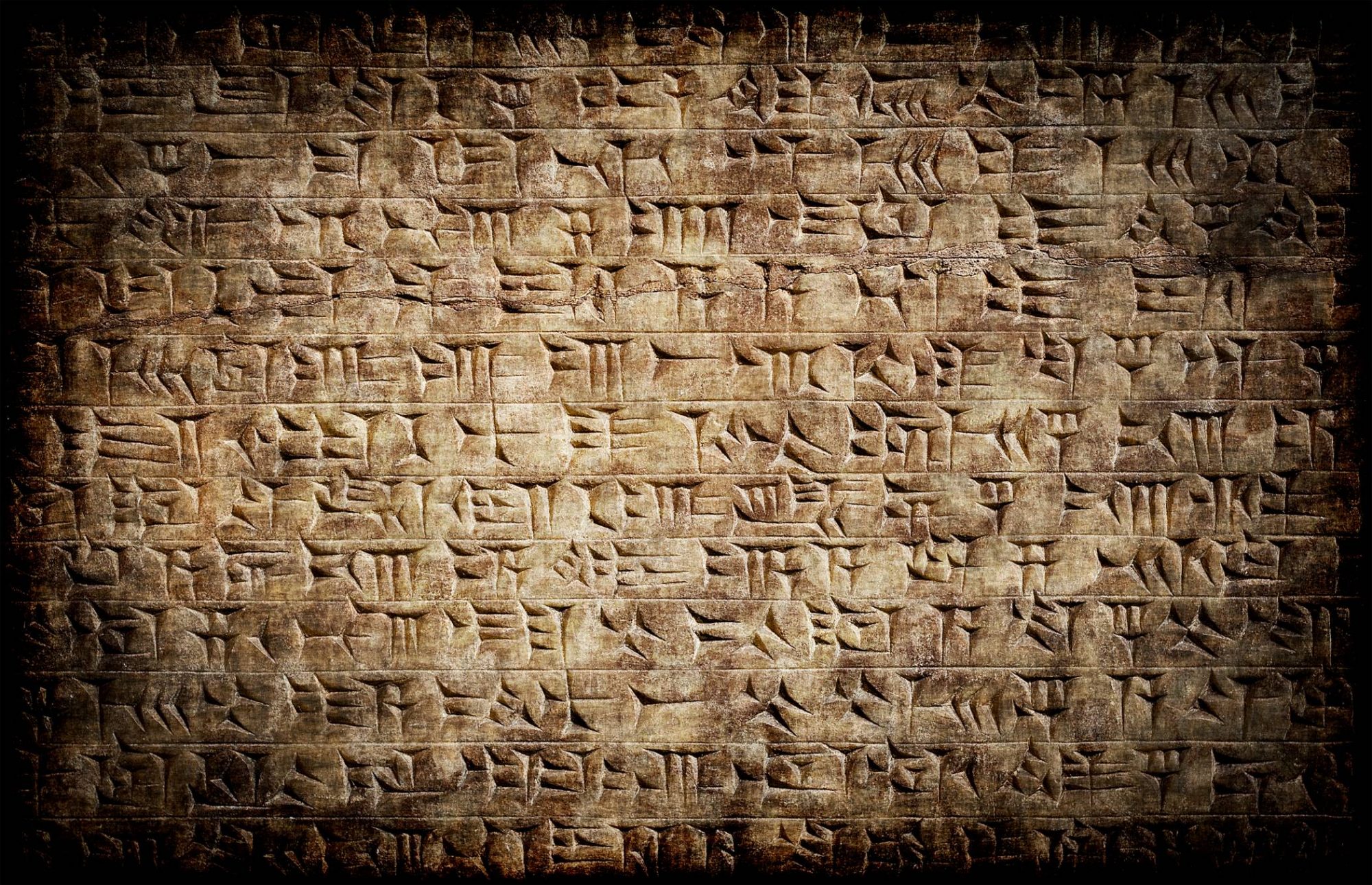
Photo source: shutterstock
ATTENTION — QUESTION!
A twenty-seven-year-old assistant teacher in a provincial German town drinks a bit too much at a party and makes a completely insane bet with an acquaintance. He vows to decipher an ancient Persian inscription without even knowing the letters it’s written in (not that anyone else in the world does, either). So… what is he supposed to do now?
ATTENTION — CORRECT ANSWER!
If you’re trying to understand what someone — not necessarily a king, but at least a high-ranking official — ordered to be written, keep in mind: above all, he loves to write about himself — the beloved, the radiant, the one who eclipses the sun itself! His name and title will be the main content of the inscription — whether in cuneiform, on papyrus, or laser-printed on Finnish paper. Remember that — and you’ll figure out the rest.
WHERE DID HE GET SO SHARP?
G
eorg Friedrich Grotefend was born in the small Brunswick town of Münden (not to be confused with Munich — some sources do make that mistake!). He finished the gymnasium in the same town. He must have been a good student since he soon went on to work as a teacher — not just anyone would have been accepted.
The Age of Enlightenment was drawing to a close, and a flood of new information was emerging — by our standards, a trickle, but for those times, more than enough. In particular, civilizations of the Ancient East, previously almost unknown, were beginning to reveal themselves to European scholarship.
Of course, the gymnasium taught according to the standards of its time (when it came to the exact sciences, things were not exactly impressive by our measures), but what they did teach, they hammered into students’ heads with all the German diligence and pedantry. And as for languages, the way they were taught back then was beyond anything we can imagine today.
Not just modern languages — their own and those of their neighbors, which life itself helped teach alongside the teachers — but also ancient ones, considered the foundation of all human culture (and rightly so). Latin and Ancient Greek were mandatory, and Biblical Hebrew was highly desirable. Without knowledge of the ancient languages, a person simply wasn’t considered cultured.

AND WHAT KIND OF INSCRIPTION IS THAT?
The inscription that Grotefend, to his own misfortune, made a bet on was introduced into academic circulation by the German scholar in Danish service Carsten Niebuhr — he brought it back from Persepolis, the ancient capital of the Persian Empire. The very same city that a thoroughly drunk Alexander the Great burned to the ground at the urging of an equally drunk hetaera, Thaïs. Grotefend might have taken that as a cautionary tale and at least made such wagers while sober, but it was too late — he had to decipher it now, and no complaining, it was his own doing.
François Champollion had it easier a bit later — he got his hands on the same text written in three languages, one of which was the quite familiar Ancient Greek, and that’s how he managed to decipher ancient Egyptian hieroglyphs. The text from the ancient city of Persian kings was also trilingual, but all three languages were incomprehensible — Old Persian, Elamite, and Akkadian.
We won’t even go into the latter two — they were not written with letters but with whole syllables or even words, and practically nothing was known about those languages at the time. But Old Persian, the language of the Avesta, the sacred book of the Zoroastrians — that one was at least somewhat familiar.
THE FIRST STEPS
Grotefend quickly figured out which part of the inscription was in Old Persian and which parts were in the other languages — since it was the language of the Persian kings, it had to be placed in the place of highest honor, at the center. The inscription contained only about forty distinct repeating symbols — perfect, that meant these were letters, not syllables or words, otherwise there would have been many more.
Even before him, Pietro della Valle had correctly determined in which direction the ancient Persians wrote — left to right or right to left (a question not so obvious since we write left to right, but Arabs and Hebrews do the opposite).
If the broad side of the wedge is on the left, then it’s more convenient for a right-handed writer to write from left to right — and nobody would believe all the ancient Persians were left-handed. That’s all well and good, but what was actually written?
Since the text was indeed written with letters, identical groups of letters must represent identical words. But how to guess which ones? One group of symbols repeated more than any other — several times. If only one could figure out what it meant — that would be the key to beginning the decipherment. But what word (or words) would appear most frequently in inscriptions of Persian kings?

A BRILLIANT GUESS
Being the ruler of the world’s first empire is no easy task — you have to constantly keep your subjects under pressure so they respect and fear you. If a king makes an inscription, it’s precisely for that purpose. And whom would he write about? About his favorite subject — himself. It’s both useful and flattering. But kings have different names, so what word would be the same in all their inscriptions?
It’s obvious — the word «king». Of course, not just «king» — this isn’t Ivan Vasilyevich Bunsha introducing himself with a simple «Very pleased, the king», unaware that even a Russian tsar, far more modest than a Persian one, bore a title packed with geographic designations — under Nicholas II, there were fifty-two of them.
So it’s not just some «king», but «the great king, king of kings, Achaemenid» — and nothing less! But that already gives us quite a few letters, which means the decipherment has truly begun. In our further reasoning, we’ll simply use the word «king» for all that royal fanfare — just to save some ink.
ROYAL NAMES
This brilliant assumption allowed Grotefend to spot another pattern. He noticed similar constructions involving the phrase he had identified and soon realized that two particular types of phrases occurred most frequently:
X — king, son of Y — the king.
Y — king, son of Z.
X, Y, and Z, of course, are groups of symbols representing names. And since we do know the names of the Persian kings if he could figure out which kings were being referred to, he’d have all the letters he needed — and maybe even win that hopeless bet.
The tricky part was pronouncing the Persian royal names correctly. With our naïve assumptions that their names were something like Darius and Xerxes, we wouldn’t have been much help. Those were the names used by their not-so-close friends — the ancient Greeks — for whom names like Dārayavahuš or, heaven forbid, Xšayārša just didn’t roll off the tongue, so they settled for Darius and Xerxes.
Anyone who’s attended a Purimspiel, the traditional Jewish festive play, may recall that one of its characters is the Persian king Ahasuerus — though not everyone realizes that this is simply Artaxerxes in familiar disguise. The Greeks didn’t have a letter for «sh», which is why we say «Jerusalem» instead of the more accurate «Yerushalayim». Grotefend knew this — but how to figure out which king was which?
AND WAS HIS FATHER A KING?
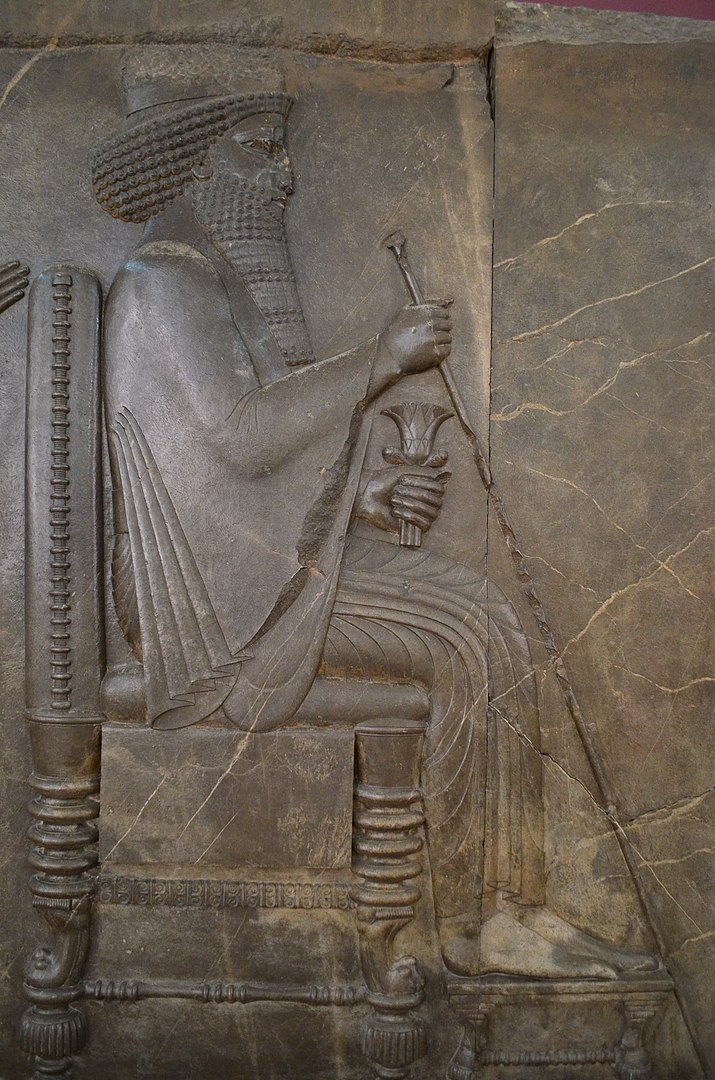
And here, Grotefend has a breakthrough. So, X is the king, Y is X’s father — also a king, and Z is Y’s father… but not a king! The founder of the dynasty? Well, not necessarily. The first Persian king with that kind of grand title was Cyrus the Great, father of Cambyses II, who was also a proper king. But Cyrus’s father, Cambyses I, held a lower-ranking title and didn’t bear that royal style. Could it be them? No, it doesn’t fit — the names in the inscription are longer, and the letter counts don’t match either.
So how could such a situation arise if not with the son and grandson of the dynasty’s founder? It turns out it could. After Cambyses II died, his throne was seized by a usurper — a certain Gaumata, who posed as Cambyses’s murdered brother Bardiya.
A representative of a junior Achaemenid branch, Darius, overthrew and killed Gaumata and then became king himself. But his father, Hystaspes, was not a king! And the letter counts match — if, of course, you refer to them as Xšayārša, Dārayavahuš, and Vištāspa rather than the more familiar Xerxes, Darius, and Hystaspes. By now, there were enough letters known to begin reading the inscription — and not just this one.
AND WHAT ABOUT GROTEFEND?
This brilliant decipherment helped Grotefend win his bet. After enjoying his prize — presumably beer (what else would one bet on in Germany, really?) — he continued his research, but the quality declined, his later work wasn’t recognized by the academic community, and he eventually gave it up. He moved up the career ladder, became the head of a gymnasium, then a university professor, and later the director of a lyceum in Hanover.
He worked until retirement and died at the relatively advanced age of seventy-eight — quite old for that time. Today, the gymnasium where he once studied bears his name. He never accomplished anything quite as brilliant again — just once in his life did he solve a difficult problem with such originality and flair. And sometimes, once is enough for lasting fame.
When copying materials, please place an active link to www.huxley.media
Select the text and press Ctrl + Enter


