BORIS BURDA: how to save mothers from dying


Tom Robert. Ignaz Semmelweis observing medical students at the Vienna General Hospital, Austria, 1847 / webinarscuola.airc.it
ATTENTION — QUESTION!
The decisive factor in the dramatic reduction of maternal mortality in a Vienna clinic turned out to be an action once performed under extraordinary circumstances by a certain biblical figure. Name him.
ATTENTION — CORRECT ANSWER!
Pontius Pilate — the doctors simply began washing their hands thoroughly.
DIFFICULTIES OF BEING BORN
L
ong ago, humans gave up walking on all fours and freed their hands. Moreover, their brains became significantly larger on average. How beneficial this was for humanity is now clear to everyone. But it also brought serious drawbacks. Most importantly, upright walking narrowed the birth canal for a baby with a large head.
As a result, childbirth in humans became significantly longer and more difficult than in animals of comparable size. The complications that arose sometimes led to the death of both mother and child. Specialists in childbirth — midwives and later obstetricians — tried to help.
Large hospitals introduced special maternity wards where qualified professionals assisted women in labor. Did that make things better right away? Not at all! The mortality rate in these progressive institutions was truly horrific. In the First Department of Vienna’s prestigious hospital, every fifth woman died!
The main cause of death was puerperal fever — a severe inflammatory disease. For some reason, the rate of infection during home births was significantly lower. Even in the hospital’s Second Department, where less qualified midwives worked instead of doctors, the death rate was five times lower. Why?
By the early 19th century, puerperal fever was deadlier than smallpox and cholera combined. In Prussia alone, over a span of 60 years, 363,624 women died from it — one could easily estimate that the number of victims across Europe exceeded a million! In some hospitals, the mortality rate reached 60% — two out of every three!
It’s hard to grasp how women still agreed to give birth in hospital maternity wards — such was the immense faith in the miraculous power of science! In Vienna, however, they began to catch on and would try to bring women to the hospital closer to midnight — that way they’d be admitted to the less dangerous Second Department rather than the dreadful First.
IT STARTED WITH FAILURES
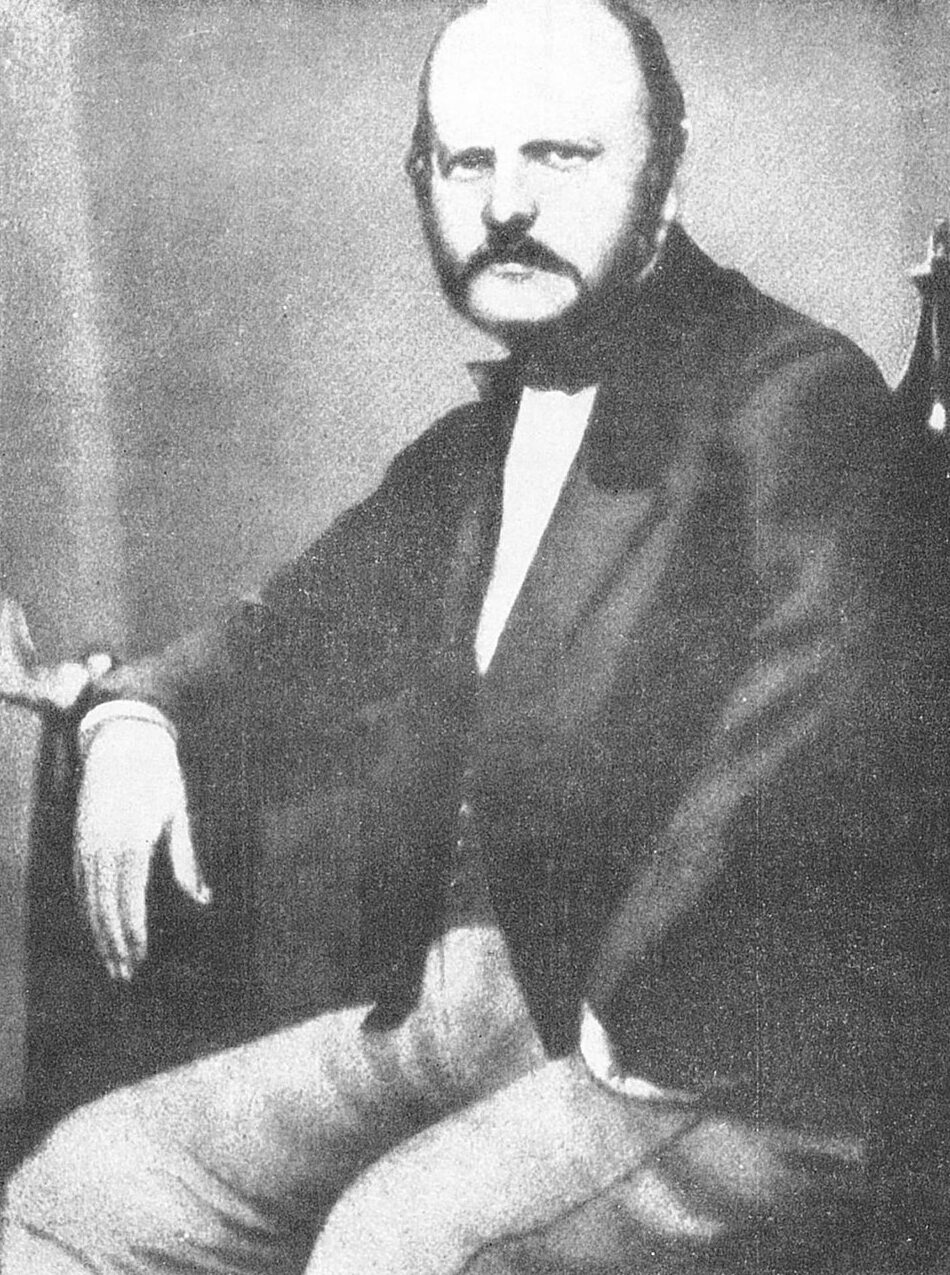
Ignaz Semmelweis was born in a suburb of Budapest. After graduating from high school with honors, he enrolled in the law faculty at the University of Vienna, but quickly realized he wasn’t cut out to be a lawyer and transferred to the medical faculty. After completing his studies, he failed to secure a position in the pathology department and had to settle for the less prestigious field of obstetrics.
The horrifying mortality rate among mothers in childbirth made him reflect deeply. Various explanations were proposed: divine will, harmful miasmas, the clinic’s geographic location, or the psychological strain on women in labor. What puzzled him most was that the highest death rates were observed in the most advanced hospitals — the ones with anatomical departments.
Semmelweis sought a solution, but didn’t yet know what it might be. He tried having women give birth lying on their sides and insisted they be carried to their rooms afterward instead of walking — nothing changed. He even explored psychological causes, ordering a priest to administer the last rites in front of the laboring women. They panicked, but the death rate remained the same.
Meanwhile, the clinic’s head, Dr. Klein, saw no need for action — this was how it had always been, what could be done? Eventually, foreign obstetric students were blamed and dismissed, but again, nothing changed. Semmelweis was fired too — supposedly to «calm the waters» since mortality didn’t decline, and the leadership simply found him troublesome.
AN UNEXPECTED SOLUTION
A vacancy for an obstetrician finally opened up for Semmelweis, but he was struck by personal tragedy — his friend and mentor, Professor Jakob Kolletschka, died after being cut by a scalpel during an autopsy. But wait — the medical students examining the mothers had also just come from dissecting corpses in the morgue… If that was so dangerous, could this be the cause of the high mortality rate?
There was another horrifying case: a woman with a severe infection was placed on the bed where examinations began, and the infection spread to all 12 patients examined afterward — 11 of them died. The students had washed their hands with soap between exams, yet it wasn’t enough. That much was clear — and so Semmelweis decided to strengthen hygiene measures.

Everyone was required to wash their hands in a solution of chlorinated lime for no less than 15 minutes, scrub under their nails with a brush, avoid working with maternity patients for at least 24 hours after visiting the morgue, and — crucially — the names of those who examined each woman were written above her bed to trace the source of infection. The result was almost immediate: mortality dropped from 18.27% to 1.27%!
But the Viennese medical community seemed blind to these numbers — Semmelweis’s theories continued to be rejected. He was denied the title of Privatdozent, and in 1849, his contract was not renewed. Eventually, he left Vienna and returned to Budapest, where he became head obstetrician at St. Rochus Hospital — initially without pay…
BUDAPEST
He arrived at a horrifying place: one in three women died during childbirth. He implemented his method, but at first, it didn’t work — until he discovered that the hospital was using a cheap laundry service that often returned linens unwashed. He personally bought new linens for the hospital, switched laundries, and mortality immediately dropped to 0.85%!
Gradually, his theories began to gain recognition worldwide. In 1855, he became a professor at the University of Pest, where he worked for ten years. Meanwhile, in Vienna, his adversary Klein appointed a certain Braun as his successor — Braun went on to list thirty causes of puerperal fever in his book without mentioning Semmelweis’s results at all.
Life moved on — Semmelweis married and had children. More and more clinics began adopting his methods, always with success. Yet many self-assured professors, unwilling to accept any arguments, clung stubbornly to their own theories. This only worsened Semmelweis’s already explosive temperament.
His polemical writings became increasingly aggressive. He wrote openly that the countless victims of puerperal fever were on the conscience of doctors who refused to observe strict hygiene, calling them «Neros of science» and declaring his rival, Dr. Hofrat, «a murderer before God and man.»

A HORRIFIC DEATH
Semmelweis’s condition began to worry his wife. At her suggestion, their family physician, János Bókay, examined him and noted alarming symptoms. Following the examination, Semmelweis agreed to go on a vacation. Meanwhile, Bókay and two other doctors — none of whom were psychiatrists — signed a statement declaring him mentally ill.
While en route to his vacation, the family passed through Vienna. His longtime friend, Ferdinand von Hebra, invited him to see his new clinic — but instead of that clinic, Hebra and Semmelweis’s wife took him to a psychiatric hospital, from which he never emerged. When Semmelweis tried to leave the institution, orderlies beat him and tied him to a bed.
He lived only 15 days in that hospital. Accounts of those days are contradictory and fragmentary. It was only in 1977 that his autopsy report was uncovered — and it’s horrifying to read: multiple fractures, soft tissue injuries, severe pleurisy, pericarditis… It is now evident that hospital staff had simply beaten him to death.
The behavior of his family raises questions — it seems they, at the very least, did not strongly object to what happened. His wife didn’t attend his funeral, citing illness. True, 26 years later, when his theories were fully vindicated, she had his remains transferred to the family crypt.
Today, his memory is honored properly: a monument in Budapest, the Budapest Medical University named after him, commemorative stamps in several countries, and a coin minted in his name… But what does any of that mean to Semmelweis? What truly matters is that countless mothers were saved — and that is far more important.
When copying materials, please place an active link to www.huxley.media
Select the text and press Ctrl + Enter


