BREATHING IS THE MIRROR OF THE SOUL: Tell Me How You Breathe, and I’ll Tell You Who You Are!

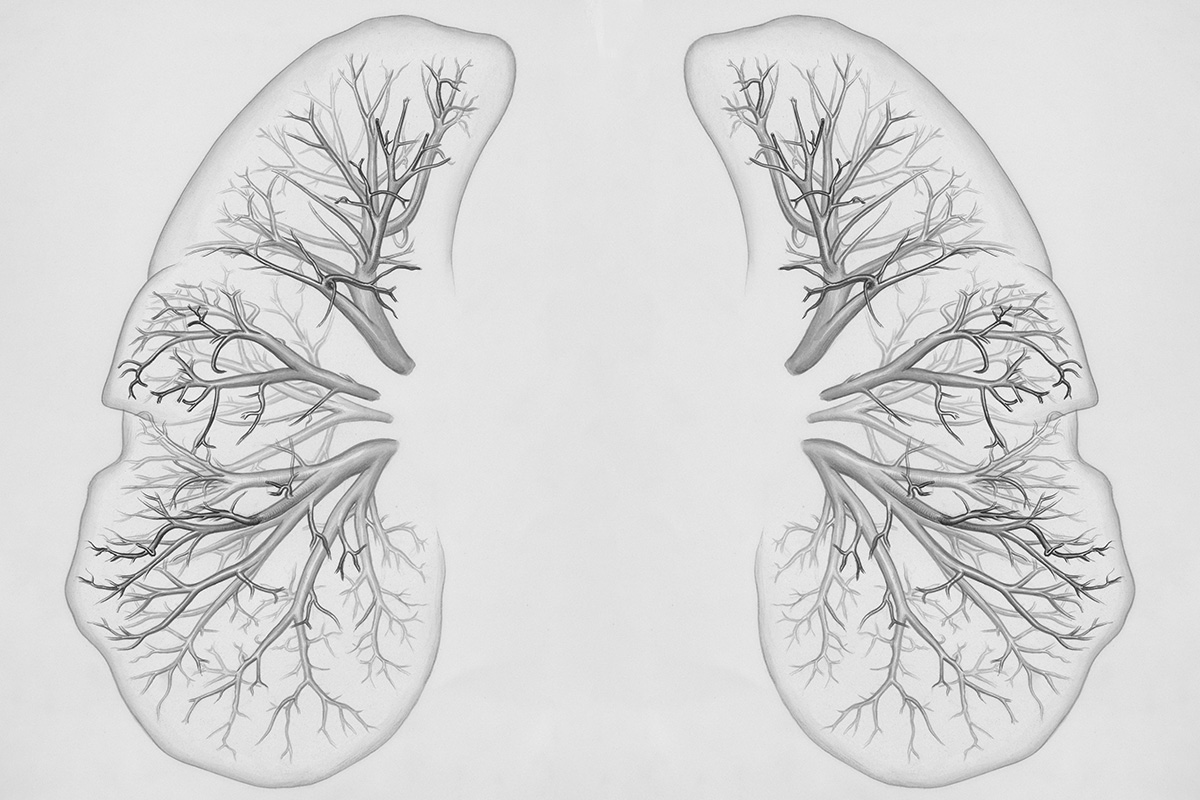
Photo by Europeana on Unsplash / Art design: Huxley.media via Photoshop
You often hear people say, “It’s as natural to me as breathing!” But how “natural” is our breathing itself? The latest research shows that each person’s pattern of inhaling and exhaling is unique. Moreover, it may serve as an indicator of both physical and mental condition.
“THE SECOND BREAD”
T
he human body is an extraordinarily complex “system of systems”. Which of them is more important, and which less so? The question may not seem so foolish if we think about something we usually take for granted — our breathing! Just a single breath brings life to the 100 trillion cells in our body. The air we breathe is, in essence, a “second bread”. Just as with food, we obtain nitrogen from it, which the microbes and bacteria living in our body process into amino acids — the building material of cells. At the same time, up to 90% of toxins are removed from our bodies through the lungs. Nature has gone to great lengths to organize within us such a complex, high-tech, yet remarkably compact system. If our lungs were spread out on a flat surface, their area would equal that of a tennis court! It is no coincidence that in the East, where breathing practices are highly developed, people say, “Whoever controls their breathing controls life”.
BREATHING AND CONSCIOUSNESS
The connection between our breathing and consciousness is truly inexhaustible as a subject. To begin with, breathing is the only autonomous system in our body that we are capable of consciously controlling. At times, a great deal depends on this control. For example, we know that under normal conditions, breathing through the nose undergoes four stages of filtration. By switching directly to the fourth stage — breathing through the mouth — we create the preconditions for various illnesses. By consciously practicing breathing techniques, we can lower the level of the “stress hormone” cortisol and improve brain function. Although the brain accounts for only 2% of body mass, it consumes 20% of the body’s oxygen — more than any other organ. It is, therefore, no surprise that breathing and the brain are interconnected. For instance, we can choose to breathe quickly and shallowly or slowly and deeply. In the first case, the excitability of the nervous centers increases; in the second, it decreases. Through deep breathing, we can regulate appetite, reduce not only nervous but also physical tension, and even alleviate pain, since it promotes the production of the body’s natural painkiller — endorphin.
BREATHING IS THE MIRROR OF THE SOUL!
People usually say this about the eyes. Yet in relation to breathing, the expression is not entirely inaccurate, since our pupils synchronize their size with it. Constantly responding to external and internal factors — such as light intensity — the pupils remain in perpetual motion. Moreover, they behave differently when we look at a distant tree versus when we read a book up close. During emotional excitement or intense mental activity, the pupils dilate. Scientists have long learned to use this property of the eye in psychological testing to assess a subject’s condition. Recent studies have shown that these are not the only reactions of our eyes — they seem to “breathe” continuously in rhythm with our respiration, dilating during exhalation and constricting at the beginning of inhalation. And this happens under all circumstances. Whether you breathe rapidly or slowly, through your nose or through your mouth, your pupils will invariably adapt to your breathing. Thus, given the close connection between breathing and the nervous system, one may say: the way a person breathes literally shapes how they perceive the world around them.
THE MIND CAN BE READ THROUGH THE NOSE
Breathing can serve as a marker not only of our visual perception and our physical and mental state, but also of our personality. Research conducted at the Weizmann Institute of Science has shown that, much like a fingerprint, a person’s breathing can be so unique that it may even be used to identify an individual. Moreover, analyzing the characteristics of breathing makes it possible to describe certain physical and psychological traits. This is partly because breathing patterns are linked to body mass index (BMI), as well as signs of depression and anxiety. Israeli scientists claim they are capable of “reading the mind through the nose”, since every inhalation and exhalation is coordinated with the central nervous system, which breathing supplies with vital oxygen. Of course, the brain controls the body’s systems — but the brain itself depends on breathing! After that, one is left wondering who is really in charge within the human body.
NOT BY FINGERPRINTS ALONE: ANOTHER KIND OF “IMPRINT”
Israeli scientists arrived at the conclusion that each person’s breathing is unique after conducting an experiment using machine-learning algorithms. The data for the study were obtained by measuring the breathing of 42 participants during both sleep and wakefulness. The researchers were able to identify individuals by their breathing patterns with an accuracy of 96.8%. In addition, the scientists discovered correlations between breathing models and previously collected data on the participants’ body mass index (BMI), as well as questionnaire results assessing levels of depression and anxiety. For example, the sleep-breathing profiles of people with a higher BMI differed from those of people with a lower body mass index. Likewise, those who scored higher on anxiety or depression questionnaires demonstrated distinct patterns in the way they inhaled and exhaled.
LEARN TO BREATHE “CORRECTLY”
Scientists believe that breathing signatures may signal health problems in much the same way that an electrocardiogram reveals abnormalities in heart function. Following the ideas of Eastern healers and sages, they argue that if people can be taught to “breathe correctly”, it may become a powerful tool for healing. Even now, therapeutic breathing practices are being applied in a wide range of fields. For example, certain units of the U.S. armed forces train personnel to control their breathing in order to cope with stress and maintain concentration during high-pressure situations.
Original research:
When copying materials, please place an active link to www.huxley.media
Select the text and press Ctrl + Enter


