THE LIGHT WITHIN US: We live as long as our biophotons are «alive»

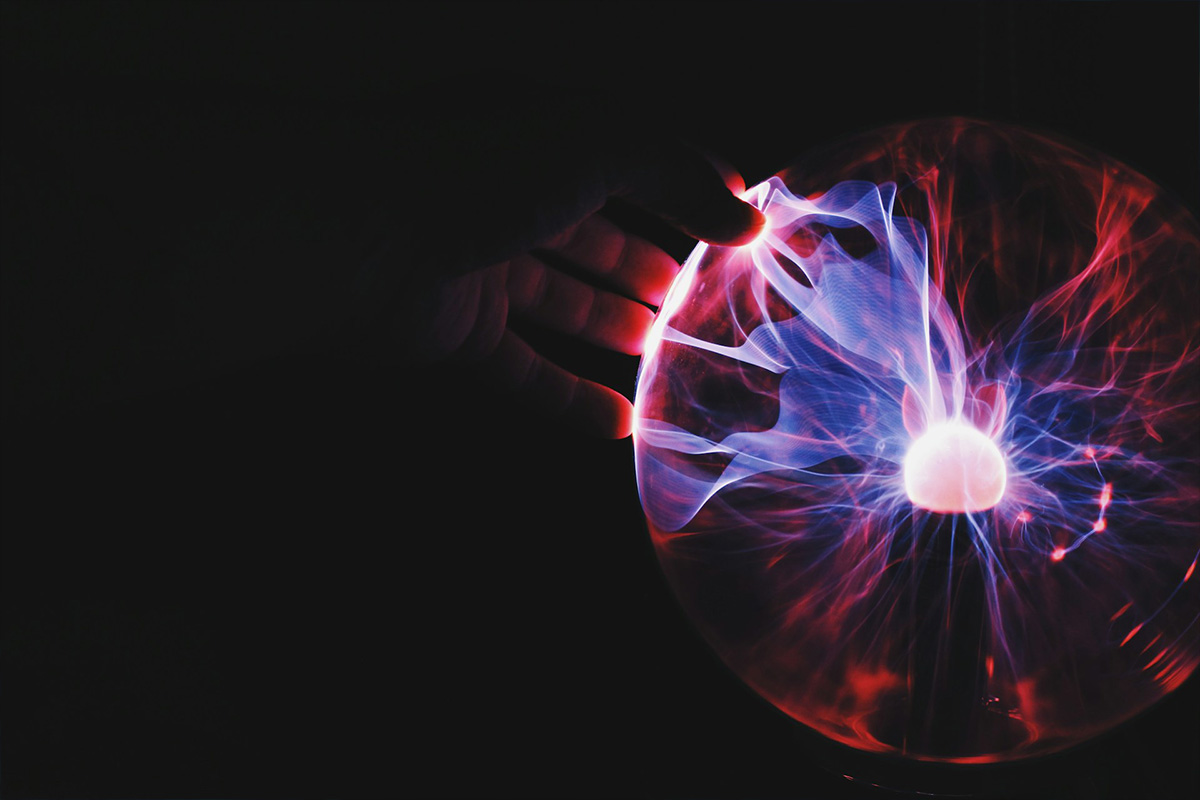
Photo by Ramón Salinero on Unsplash
A person can glow — from happiness, from joy, from love… One might think this is merely a beautiful metaphor; however, scientific research shows that not only humans, but all living things possess a «light of life». In the past, only religions spoke of the divine light permeating the entire created world. Now their truth is also confirmed by biophotonics — the science that studies the interaction between biological objects and photons.
THE LIGHT WITHIN THE CELL
A
revolution in our understanding of the nature of light was brought about by Albert Einstein. Let us recall that in 1921, the great scientist received the Nobel Prize in Physics for the theory of the photoelectric effect, and not at all for the theory of relativity. Although in the popular imagination, he is associated primarily with the latter. By predicting the quantum nature of light, Einstein discovered that it consists of particles — photons — which can exhibit the properties of both particles and waves of electromagnetic radiation. At the same time, in the 1920s, a new scientific term appeared — biophotons. It was proposed by the biophysicist Alexander Gurwitsch, who suggested the existence of a certain radiation in living cells that influences the processes of their growth and division. Subsequent research confirmed this hypothesis. Biophotons are ultra-weak photon emission (UPE). All living things on our planet are subject to it — humans, animals, plants, and microorganisms. Scientists are still debating the mechanisms that generate this glow, but it is assumed that it arises during various biochemical reactions within the cell and is then transported to the surface in the form of quasiparticles known as excitons.
HUMAN — THE RECORD HOLDER FOR WAVELENGTH
In 1974, the German biophysicist Fritz-Albert Popp demonstrated that our body not only emits light, but also interacts with the surrounding world through it. Living cells use light-based communication to interact with one another. There is evidence that its «flashes» represent a kind of quasiperiodic sequence of signals. For example, biophotons emitted by one plant can accelerate the rate of cell division in another plant. Moreover, the effect of this «biological» light turns out to be stronger than that of sunlight. Interestingly, the cells of different living beings communicate in different ways. It has been found that the wavelength of biophotons in animals is shorter than in humans. This feature may be linked to those properties of the brain that ensure the superiority of human intelligence over that of animals.
This idea is supported by data measuring the wavelength of biophotons along an «evolutionary scale». If such measurements are taken sequentially in a frog, mouse, chicken, pig, monkey, and human, we will see that it gradually increases. In the brain of Homo sapiens, it reaches approximately 865 nanometers — that is, within the near-infrared range. It follows that a longer wavelength may serve as the biophysical basis of our intellect, as it enables the most efficient transmission and processing of neural signals. Even at the level of cells communicating through light impulses, we gain advantages over the animal world.
WE GLOW ALL THE TIME, BUT IN DIFFERENT WAYS
We literally consist of light that is a thousand times weaker than what our eyes can perceive. Yet its electromagnetic spectrum is clearly detected by modern instruments. Moreover, according to the Boccone hypothesis, photons are emitted even during visual imagery. For example, if you are in a very dark room and imagine light, the emission will intensify. This once again supports the idea that our cells and DNA use biophotons to store and transmit information.
Experiments show that if light of different spectra — infrared, red, yellow, blue, green, and white — is applied at one end of a nerve, biophoton activity increases at the other end. Interestingly, the emission of biophotons can vary depending on many factors. For example, the time of day. In the morning, the intensity is minimal, and in the afternoon it begins to increase. The lowest emission intensity is recorded in the abdominal and chest areas, while the highest is observed in the upper limbs and head. In those who regularly practice meditation, lower biophoton emission is observed. It is also reduced by certain herbs used to alleviate stress.
HOW LIGHT «DIES»
Ancient Gnostic teachings claimed that a human being is a divine light imprisoned in the dark confines of materiality. Accordingly, death is seen as a blessing, since spiritual beings return to their divine source. Christianity regarded these heretical teachings as false spirituality, since the unconditional value of life was replaced in them by a «will to death». «If the light within you is darkness, how great is that darkness!» (Matthew 6:23). But be that as it may, recent studies suggest that we live as long as there is light within us. When the light goes out, we die. This was established by scientists from the University of Calgary and the National Research Council of Canada during an unusual and, frankly, rather unsettling experiment. Its results were published in the journal The Journal of Physical Chemistry Letters.
Immobilized mice were placed individually into isolated chambers equipped with an electron multiplier and a charge-coupled device. The scientists then recorded and compared the biophotons of the mice — first in living animals, and then after death. The latter were kept at body temperature to exclude heat as a variable. As you might expect, the intensity of ultra-weak emission in the mice dropped sharply over the course of an hour after death. An experiment with plant leaves also yielded striking results. Gradually «fading», the leaves continued to glow even after being cut from the tree. However, when the leaves were damaged without being detached, the glow became brighter. Apparently, it was activated by the natural repair systems.
QUANTUM ENTANGLEMENT OF BIOPHOTONS
Naturally, after such experiments, one is once again prompted to reflect on the problem of the soul’s immortality. Where does our «light» go when we die? Does it disappear forever? Or perhaps some form of «light communication» persists even after death? Unfortunately, science is still unable to provide a comprehensive explanation of the phenomenon of human consciousness — even during life, let alone after death. Nevertheless, in February of this year, Stuart Hameroff, an anesthesiologist and professor at the University of Arizona, reported on a study that recorded an anomalous surge of energy in the brains of seven chronically ill patients a few minutes before they were disconnected from life support. The scientist believes this may serve as evidence that the «soul leaves the body».
Stuart Hameroff, together with his colleague Roger Penrose, is one of the founders of a theory of how the human brain and consciousness function. Several decades ago, they argued that the current level of quantum physics is insufficient to describe the processes occurring in the brain — that some kind of «new physics» is required. If biophotons generated by brain neurons are characterized by quantum entanglement, then our brain may function as a kind of quantum computer, in which all processes are synchronized not only with each other but also with processes in the Universe. Does this synchronization disappear after death? For now, this remains a matter of belief.
Original research:
When copying materials, please place an active link to www.huxley.media
Select the text and press Ctrl + Enter


