COMPOSER IVO ANTOGNINI: reflections on the mystery of inspiration


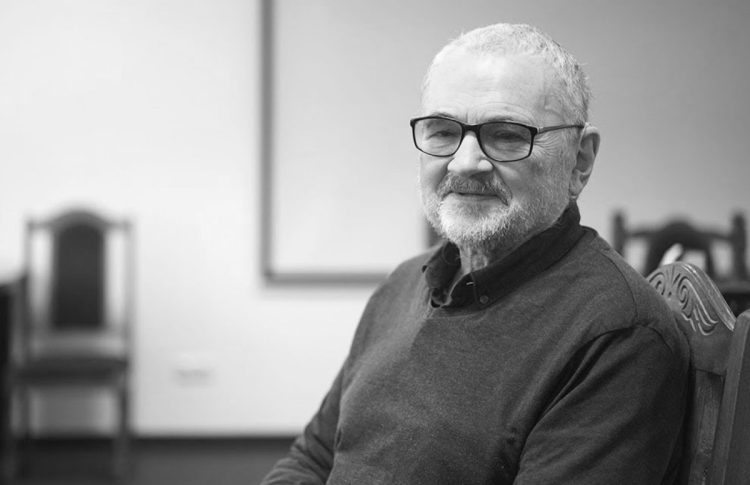
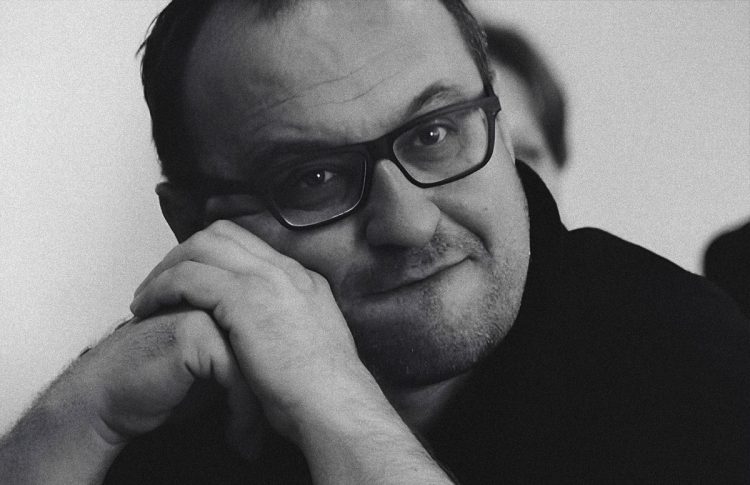
Ivo Antognini © Photo by Chiara Micci / schweizerkulturpreise.ch
SHORT PROFILE
Name: Ivo Antognini
Date of Birth: 1963
Place of Birth: Locarno, Switzerland
Profession: composer, teacher
To listen to the music of Ivo Antognini is to glimpse a world of beauty and harmony. A Swiss composer with roots in both classical piano and jazz, Antognini has become a leading voice of choral art, celebrated for music that uplifts, consoles, and inspires. Since embracing choral composition in 2006, his pieces have been sung by choirs across the world, establishing him as one of the most influential composers of contemporary choral music. In this interview with Narad and Leonid Shokh, Antognini reflects on the mystery of inspiration, his love of poetry, and the deeper mission of music in our time.
Leonid: Welcome, Ivo! First of all, I would like to introduce my singing mentor, who will be conducting most of this interview — Narad (Richard Eggenberger). Narad, now 87 years old, came to India in the early 1960s, where he met Mirra Alfassa — also known as The Mother — who entrusted him with the mission of dedicating his life to the pursuit of a higher spiritual music.
Some years ago, Narad published a book titled The Descent of a New Music, in which he identified several contemporary composers whose works he felt bore touches of a new kind of music — music imbued with spiritual inspiration and drawn from the heights of consciousness. In this book, he cited some of your compositions as prime examples of this «New Music».
Narad: My research has primarily been concerned with spiritual music — with the search for how such music descends from heaven, or from God, and the form in which it comes to a composer. Does music come to you as revelation?
Ivo: Although it is quite a simple question, the answer is very complex. Since childhood, I have relied almost entirely on inspiration that seems to come from a special, magical place. I cannot say what this place is, nor whether the music comes from my soul or as a revelation. I don’t think it’s possible to define it precisely, but I know when I am on the right path and when I am not. When I reach that dimension, the music flows, and I can write much more quickly. One thing is certain: the music does not come from me — it comes from elsewhere. It doesn’t happen every time, but when it does, the experience is truly profound.
Narad: Does it come through your mind first, or through your heart, or through your soul?
Ivo: Definitely not through the mind — not at all. The mind is important, of course, because at the end of the day it helps you put everything together, to «bake your bread». Otherwise, it’s like having flour, water, salt, and yeast all sitting separately. The mind combines these elements and organizes them into a coherent composition. But I don’t know where it comes from.
Narad: Can you describe a little about this dimension from which you feel the sounds come?
Ivo: That’s a very difficult question. It’s something that gives me goosebumps and joy… I see light, colors, and I sense smells. It’s like traveling to another planet. The experience is very powerful — but each time, it’s different.
Narad: Personally, I feel more than anything that your music is infused with beauty.
Ivo: That’s true. In my music, I try to bring out the best, most beautiful, and deepest part of myself. I know there are many other sides to me, but when I compose, it feels like a mission — a conscious effort to draw out the very best in me, leaving behind frustrations, anger, and resentments. My goal is to move listeners, to carry them into a spiritual dimension. It is deeply important to give them joy, light, and hope — that is the reason I compose. And the beautiful thing is that when I write music, I feel these same emotions of beauty myself. For me, it is like a form of therapy — a therapy of joy and light.
Narad: I wanted to talk to you a little about poets that you and I both love, such as Christina Rossetti. How do you approach combining poetry and music?
Ivo: For me, a poem must express something I believe in — that is the most important thing. The poems of Christina Rossetti , Sara Teasdale , and Emily Dickinson have a rhythm which, for reasons I can’t fully explain, fits naturally with my way of composing. When I read Rossetti’s poem Echo, I told myself that I absolutely had to do something with it. That is how Come to Me , a piece very dear to my heart, was born.
Narad: I’d like to ask you about your use of ancient music combined with the modern.
Ivo: I believe that, as composers, we are obliged to pay tribute to those who came before us — because we are all part of one big family. I think of Beethoven, Mozart, Bach, and Allegri as my relatives; they are part of my musical lineage. That’s also why I love setting sacred Latin texts to music. It is extraordinary to think that many centuries ago, someone wrote these words, and now I am adding my music to them. It’s like offering a tribute to the great family of music — to the sacred, and to the spiritual.
Narad: Could you talk a little about how you use rhythm in your music?
Ivo: I’m an ear training professor at the Conservatory in Lugano, and I work a great deal on rhythm with my students. I believe rhythm is incredibly important because, by changing it — even while keeping the same notes — you can have an enormous impact on the emotion the music conveys. But rhythm is also one of the most difficult aspects of music. If you get it wrong, the whole composition can fall apart, especially in slower pieces. At present, I’m composing a piece called Veni, Sancte Spiritus for an American choir. I’m changing only small things in the rhythm to have the final score — almost never the notes, but the rhythm, the time signatures, the placement of the right accent, the exact duration of a note. It’s quite a complicated business!
Narad: It is said that rhythm is also the heart of poetry.
Ivo: Yes — and that’s why I feel so comfortable with some poets and not with others.
Narad: I’d like to ask how your work in early jazz has affected your current way of composing.
Ivo: I began my musical journey with the study of classical music. Later, I switched to jazz — not because I disliked classical music, but because, whenever I performed, I always had the urge to change parts of the compositions I was playing… I remember one instance during my bachelor’s piano exam when I was performing a Beethoven sonata. In the middle of it, after having played wrong notes because I was distracted, I completely changed a section. The judges asked me, «This is interesting, but which edition of the sonata did you play?» I had to confess that it was my own improvisation. That’s why jazz, where the rules are less rigid, felt like a natural fit for me.
Leonid: Recently, we did an interview with a composer you know personally — Paweł Łukaszewski. I wanted to ask if you could name a few living composers whom you believe are truly special.
Ivo: Paweł Łukaszewski is, of course, a very special one. I would also name Ēriks Ešenvalds and Paul Mealor. In fact, I might end up repeating all the names Paweł mentioned in his interview! But I would also like to mention other composers who have written some pieces that I really like, some of whom are also my friends: Gabriel Jackson, David Briggs, Levente Gyöngyösy, Ko Matsushita, Pietro Ferrario, Matteo Magistrali, Eric Whitacre, Cecilia McDowall, Jaakko Mäntyjärvi, Vytautas Miskinis.
When copying materials, please place an active link to www.huxley.media
Select the text and press Ctrl + Enter