DANYLO YANEVSKY: Studying history is not a profession, but a way of life


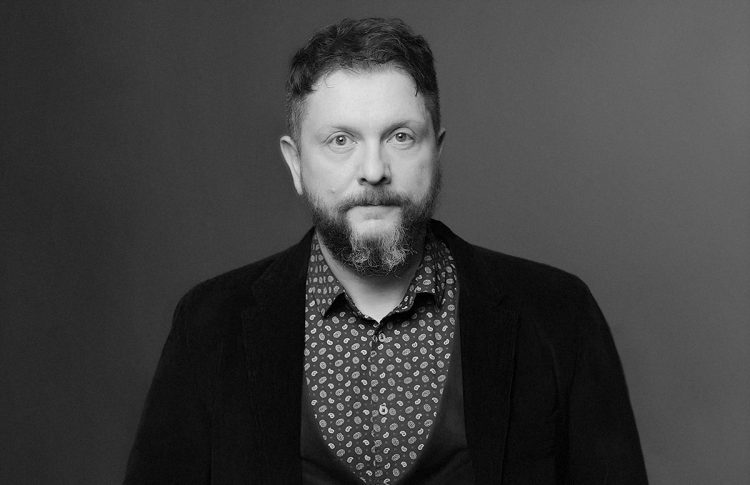
Danylo Yanevsky / Photo from personal archive
SHORT PROFILE
Name: Danylo Yanevsky
Date of Birth: June 21, 1956
Place of Birth: Chernivtsi, Ukraine
Profession: Historian, Editor, TV and Radio Host
Danylo Yanevsky — Doctor of Historical Sciences, who became a well-known journalist before returning once again to history.
An aristocrat whose ancestors had faithfully served Ukrainian science and culture since the 17th century , he is one of the most renowned Ukrainian TV hosts from the era of independent television’s formation, the creator of the program Breakfast with 1+1, and the author of numerous books. Over the past decade, Yanevsky has been deeply engaged in exploring the «real» history of Ukraine, which he interprets as the history of 40 civilizations and 30 states and unions.
But our conversation with him touches on the varieties of Ukrainian nationalism, the myth of the UPA, the extraordinary fate of Roman Shukhevych and his passion for Russian literature, as well as the «soft Ukrainization» carried out in the mid-1990s by the 1+1 channel, led by Oleksandr Rodnyansky and with Yanevsky’s direct involvement.
Andrii Alferov: History is the science of the human past. Can you recall the period in your life when you fell in love with this human past and chose such a field, such a path for yourself?
Danylo Yanevsky: At the age of five, I first read The Good Soldier Švejk — understanding little, mostly looking at the pictures. And I realized that the world was much broader, brighter, and deeper than the one we lived in at that time. It was the Soviet Union, filled with obsessive and repulsive communist propaganda. Švejk became my guide — how to live in such a world, interact with the system, survive in it without becoming a snitch, a scoundrel, or a bastard.
А. А.: You often recall the times of Ukraine’s declaration of independence, quoting Ivan Pliushch… For you, as a historian, how important was it to be a direct witness to those events, and moreover, to take part in them?
D. Y.: I was incredibly lucky. At that time, I was a journalist in the Verkhovna Rada. At the same time, I already had my Candidate of Sciences dissertation behind me on the socio-economic causes of the collapse of the Russian Empire in 1917. And what I witnessed from the late 1980s up until the adoption of the first Constitution in 1996 gave me a broad, three-dimensional perspective on the events of the turbulent year 1917.
On the one hand, I was a dry, absolutely dispassionate chronicler of those events because I did not support any political force. On the other hand, I continued doing academic work, simultaneously describing the constitutional process in Ukraine between 1917 and 1921. I calculated then that over those four years, as many as 45 versions of the Constitution were written, drafted by various political forces — from the far left to the right-wing conservatives.
That is why both journalism and historical research require a certain emotional detachment from the object of study. Otherwise, you cannot be interesting to readers, since each of them has their own point of view on the past. And your task is to give them facts. That is the essence of both journalism and science. To hope that people will draw the right conclusions from what they read is naïve. They won’t. And you need to be ready for that as well. Yet this does not relieve you of responsibility.
А. А.: I would like to return to the topic of emotions later, but for now, I want to ask you about the ethics of the historian’s profession. Does it exist?
D. Y.: I’ve never really thought about it. We are not doctors who have the Hippocratic oath. After all, medicine, priesthood, journalism, and historical research are not professions but ways of life. You cannot not read archival documents; you cannot not analyze them. Just as a doctor cannot avoid treating, or a priest cannot avoid serving God. You simply need to have respect for what happened before you and clearly acknowledge that you are merely a link in this endless chain.
In history, there is no such thing as absolute truth, because we are limited by the circumstances of time and the scholarly traditions to which we belong. And in the end, we depend on the documentary base, that is, the archives. What you uncover in the archives, you cannot predict. For surgeons, the measure of professionalism is the number of patients who survive an operation; for us, professionalism is measured by the quality of the work you produce. If they can be verified by researchers independent of you, then that is what matters.
А. А.: One of your recent works is a study of the life path of Roman Shukhevych. The book will be titled Roman Shukhevych: A Lone Fighter Against the System. And here I would like to return to the question of emotions. Because when you recounted certain episodes to me, you were extremely emotional. Almost as if you were a reader, not the author. So my question is: do emotions hinder your work or help it?
D. Y.: Both at once. The material itself demands it. Shukhevych was a man of an extraordinarily tough fate. Obviously, in his youth, he was a terrorist whose guilt was proven by two courts. That is one part of his life. The second was his service in the special operations regiment Brandenburg-800, which was part of the Wehrmacht. The Wehrmacht was never recognized as a criminal organization, not even by the Nuremberg Tribunal. That means they did not take part in anti-Jewish actions. Accordingly, there is no record of Shukhevych committing any war crimes up until 1943, when he went underground. This has been documented.
Even the documents of his fiercest enemies — the Ministry of State Security of the Ukrainian SSR, which hunted him for years (he was placed on the list of state criminals No. 1 and subject to liquidation upon capture) — contain no such information. On the contrary, the widely known story is that his wife hid a Jewish girl from the Nazis. In this sense, I found it fascinating how he managed to survive under such conditions. But while reading MGB reports, I had to take sedatives, because I could not restrain my emotions.
Those reports contained dry data on the mass, systematic extermination of the Ukrainian population. By then, there were no Poles — they had been resettled — and the Jews had been killed by the Nazis. Part of the Ukrainian population left with the German army to the West, and part stayed and went into the forests. They were exterminated without any logic, without any legal grounds or trials. Simply killed. Reading about this, it is difficult to remain calm.
But had I continued to give in to my emotions, I would not have been able to finish the work. I would not have been able to reach the conclusion: from 1944 to 1950, when Shukhevych was killed, there was a mass, unorganized armed resistance by the local Ukrainian population of the western territories of Ukraine against the second Soviet occupation. It was precisely mass, unorganized armed resistance. Not a national liberation war.
А. А.: So you are essentially dismantling one of the key myths of today — the myth of the UPA (Ukrainian Insurgent Army)…
D. Y.:UPA is a label , a dry abbreviation. The only organized Ukrainian insurgent army emerged in June 1941. It was commanded by Taras Bulba-Borovets, who is buried in a cemetery in New Jersey, USA. It was precisely his formation that was called the Ukrainian Insurgent Army and it was subordinate to the President of the Ukrainian People’s Republic in exile Levytskyi, who at that time was in Warsaw under German occupation.
The composition of this army numbered up to 10,000 people. Most of them were wiped out by the Germans. Another part — by Soviet partisans and supporters of Stepan Bandera, who also killed Bulba-Borovets’s wife. He himself was captured and imprisoned in the same Zellenbau block, the Nazi prison located near the Sachsenhausen concentration camp, where Bandera was also held. Their cells were even next to each other.
After his release, Bulba-Borovets abandoned political activity and emigrated to the United States. That was the first Ukrainian Insurgent Army. Later, after studying 100 volumes of the UPA chronicles, each consisting of about 300 pages, I discovered evidence of the existence of five more formations that also called themselves the Ukrainian Insurgent Army. And there was a sixth — the one that, according to legend, was led by Roman Shukhevych. Spoiler: all of this is untrue. There are only a few scraps of paper about this UPA, including the decision on its creation. But it was never an organized armed formation on the level of a company, battalion, regiment, or division — even up to 13,000 people. It is a myth.
And a separate story concerns Shukhevych himself, who sought to reach an agreement with the Soviet regime through the mediation of Metropolitan Andrey Sheptytsky’s brother, Kazimierz, who is recognized as Righteous Among the Nations because he created an entire network for rescuing Jewish children. Shukhevych tried to negotiate with the Soviet authorities to lay down arms on the condition that they would not force people into collective farms. The Communists refused. And this bloody massacre continued in some cases until 1960, when the last combat unit, consisting of three people, was eliminated — if I am not mistaken.
The last participant in this resistance — Ilya Oberyshyn — emerged from hiding after August 24, 1991. Just think about that! I was interested in finding where the truth lay. And the truth is that people did not want to be Russians or communists and went into the forests. They knew they would die. They had their own code of ethics. In cases where capture was inevitable, they would shoot themselves or blow themselves up with grenades.
А. А.: How did it happen that, despite the full scale of Shukhevych’s personality, he still remains public figure number two, essentially overshadowed by Bandera, around whom a true national cult has formed?
D. Y.: I think I know the answer, but I will continue to develop and deepen it. The figure of Stepan Bandera was inflated by Soviet propaganda. Its origins and roots lie in the 1960s. It began after the assassinations of Bandera and Lev Rebet (who was also engaged in terrorist activities) — an ethnic Jew who, incidentally, was one of the leaders of the Lviv Executive of the OUN, which organized terrorist acts. After World War II, two centers were formed in emigration.
The Bandera center, which was called the «Foreign Units of the OUN», and Lev Rebet’s groups, which represented Roman Shukhevych. The task of Soviet power was to set these two groups against each other, to split the Ukrainian political emigration. And when the trial of Bohdan Stashynsky — the assassin of Bandera and Rebet — took place, residents of the western regions of modern Ukraine secretly listened to the broadcasts of these trials on Radio Liberty and Voice of America. It was then that people began to form the idea of Bandera as a great figure whom the entire Soviet Union could not defeat, and who had to be killed. In my view, the roots of the Bandera myth lie there.
А. А.: And Shukhevych? What was known about him at that time?
D. Y.: He secretly visited Soviet Ukraine twice, spent several months receiving medical treatment in Odesa (in 1948–1949), and, upon seeing other Ukrainians for the first time, came to the conclusion that — this is close to the text — «we can build an independent Ukraine only on the condition that eastern Ukrainians take part in this process». He said this to his liaison, Halyna Didyk. «But these Ukrainians, for the most part, speak Russian. Therefore, we must learn Russian». And together with Didyk, he began reading Dostoevsky, Chekhov, and Tolstoy. I am not joking. This is in her memoirs.
His concept of a democratic Ukraine was embodied in the slogan: «Freedom to nations, freedom to the individual». He envisioned Ukraine as a state where various national groups would coexist with equal rights. This radically distinguishes him from Bandera, who dreamed of building a monoethnic corporatist Ukrainian state. I won’t say modeled on the Nazis, but certainly after the example of Benito Mussolini — that much is true. And this is not my invention.
There are many studies on this subject. In particular, by our colleague Heorhii Kasianov, professor at Lublin University. Or by the German historian Grzegorz Rossoliński-Liebe, titled The Life of Stepan Bandera. It contains more than 6,000 references to archival sources — and that is the hallmark of a very high-quality study, unlike propagandistic works that do not burden themselves with verified facts.
А. А.: Both Bandera and Shukhevych are considered the benchmarks of Ukrainian nationalism — the so-called gold standard. But what exactly is this phenomenon that still carries such notoriety, and when did it arise?
D. Y.: Ukrainian nationalism is a scarecrow created by the MGB. There were several types of it, two main ones.
The first chronological type was Ukrainian, Soviet, communist nationalism, which emerged in December 1917 in Kharkiv, where supporters of the Bolsheviks and leftist political parties proclaimed the Ukrainian Soviet Republic. They saw themselves as part of the worldwide communist liberation movement, which rejected any notions of nationality and operated solely with social categories (bourgeoisie, proletariat, peasantry). But they soon realized that 90% of the people who supported them were ethnic Ukrainians.
It was impossible to hold power with bayonets and terror alone. It was necessary to explain to these people that they were «more Ukrainian» than their predecessors — Hrushevsky and Vynnychenko. Thus, Ukrainian communist nationalism was born. This is confirmed by facts. I presented them all in my book Formation of the Ukrainian Soviet Elite: The 1920s–30s: there were 1,084 Ukrainian writers as of 1927. Is that a lot or a little? As of 1898, there had only been 20. I am not speaking here about the quality of their work, but I can say that at least two dozen of those writers formed the backbone of Ukrainian-Soviet literature that has survived to this day.
So this nationalism (its full name being «Ukrainian social communist nationalism») reached its peak in the late 1920s, during the first so-called Ukrainization carried out by the Bolsheviks, which demonstrated that Ukrainians had their own state. I once asked a very famous classic of Ukrainian literature, academician Borys Oliynyk: was he a communist or a Ukrainian? He looked at me and said: «Danylo, I am first and foremost a Ukrainian, and only then a communist».
They truly considered themselves Ukrainians. All Ukrainian Soviet writers saw themselves as Ukrainian Soviet communist writers, because they were shaping and fostering the development of the Ukrainian nation, the Ukrainian people… That was one type of nationalism. It was based on proletarian internationalism, according to which «all good people can live side by side».
The second nationalism was Galician in origin. It was born in Lviv — an academic center where young people radically opposed the extremist «national» policy of the Polish administration at the time, which discriminated against Ukrainians, Jews, and Germans alike. The Ukrainian community of the then Polish Republic split into two parts. One — the overwhelming majority — sought dialogue with the Polish authorities: they took part in political campaigns, were represented both nationally and at the level of individual voivodeships. They openly said that you cannot break through a wall with your forehead and that agreements had to be reached with the Polish authorities.
The second — religious nationalism — was the activity of the Ukrainian Greek Catholic Church, which was led for 40 years by Metropolitan Andrey Sheptytsky. It was he who, at his own expense, effectively from nothing, built up this Ukrainian people, investing enormous sums into art, literature, cooperative institutions, education, churches, and so on.
And there was a third type of Galician nationalism — embodied by Stepan Bandera. His supporters created the so-called Regional Executive, which operated under the close watch of the Polish political police. These were the radicals. They survived only until the mid-1930s, when they were almost wiped out by the Polish police after they organized the assassination of Polish Interior Minister Pieracki. That was the end of Ukrainian radical nationalism. And later, it was revived in the figure of Roman Shukhevych, who created yet another organization of Ukrainian nationalists (three or five people), the so-called «samostiinyky-derzhavnyky» (independent statists).
According to their program documents, this was social democracy in its pure form. Very moderate, I would say. And when they were destroyed, only those in emigration remained. They declared themselves «the only representatives of organized Ukrainian resistance to Soviet occupation». And everything might have been fine, if not for two circumstances.
The first is that all of them were already under the control of Soviet special services. It is enough to say that Myron Matviiko — the head of Stepan Bandera’s security service — was in fact an MGB (Ministry of State Security) agent.
The second factor bore the name Kim Philby, who oversaw the activities of these Munich-based Ukrainian émigrés. Bandera was financed by the British, and Lev Rebet by the Americans. Kim Philby was the intermediary between MI6 and the American CIA, and at the same time, he was an agent of the Soviet MGB. And it was he who betrayed all of these underground activists on an industrial scale.
А. А.: Meaning?
D. Y.: They were trained in special camps to carry out sabotage operations in Soviet Ukraine and then parachuted in. There, they were met by the MGB, who either re-recruited them or killed them immediately. This is a very bloody and contradictory page of history. A phenomenal five-volume study on the secret services by the Odesa historian Ihor Lander has just been published. It’s worth reading.
А. А.: Let’s move on to the modern history of Ukraine, to the place where the name of a media outlet you are directly connected with is inscribed. I mean 1+1, which has just celebrated its 30th anniversary. What place does this TV channel hold in your life?
D. Y.: A significant one. It was six wonderful years of my life, the era of Oleksandr Rodnyansky, who, in fact, created 1+1. He broke everything — in the positive sense; in the conditions of a failing post-communist Ukraine, he created a television product of world-class quality. Without looking back at Moscow. Simply a new Ukrainian national, Ukrainian-language (I emphasize!!!) product in which everyone could find something of their own.
For me, playing on Rodnyansky’s team was like playing for Dynamo Kyiv under Valeriy Lobanovskyi. 1+1 became a launching pad for dozens of people — editors, film experts, cameramen, screenwriters, and hosts. I think if Rodnyansky were to whistle for all of us who worked there back then, we would quickly come together again.
А. А.: Did you realize at the time that you were essentially carrying out a «soft Ukrainization» of the country?
D. Y.: Absolutely. I would radicalize that thought — we were conducting cultural aggression against Ukrainian society as it was then, which for the most part was not Ukrainian-speaking. Because Ukrainian was considered the language of the village. The channel set the standard of refined Ukrainian, into which the best world films shown on 1+1 were translated. In this way, Ukrainian identity, through the efforts of Oleksandr Rodnyansky, became fashionable. And as is well known, an idea will break through any concrete if it is fashionable.
When copying materials, please place an active link to www.huxley.media
Select the text and press Ctrl + Enter