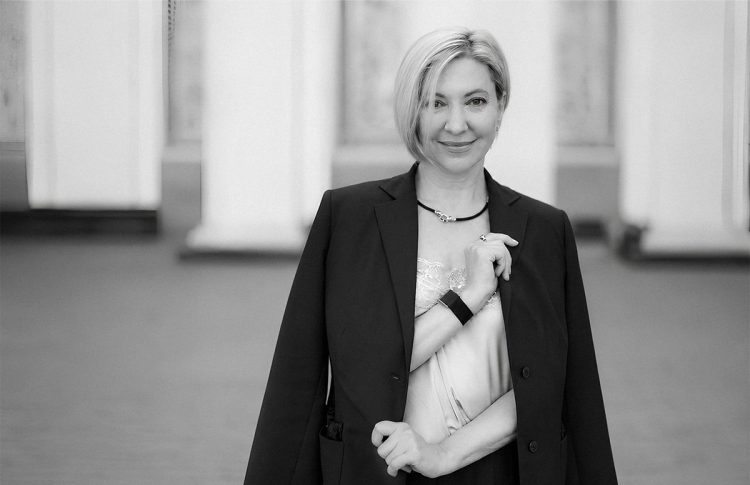
ANNA BOHACH: an opera voice of a new generation

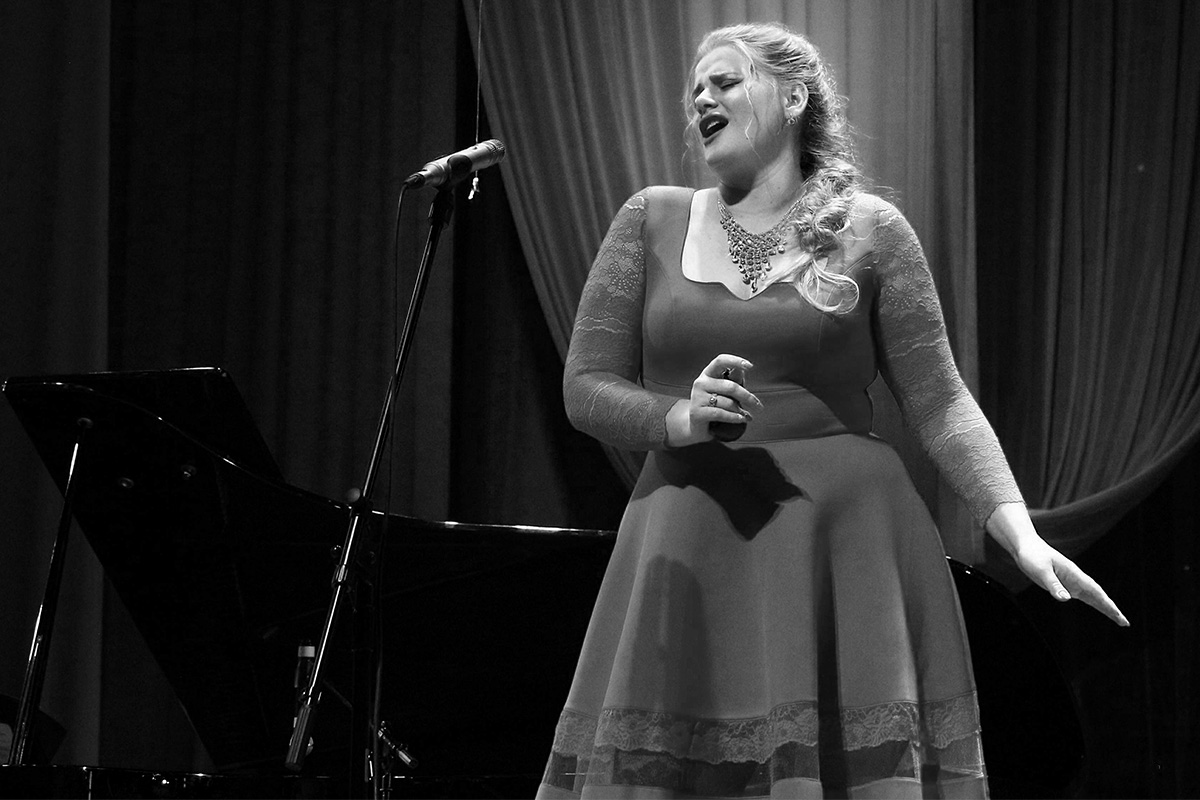
Anna Bohach / Photo from personal archive
SHORT PROFILE
Name: Anna Bohach
Date of Birth: November 25, 1996
Place of Birth: Malosolone village, Voznesenskyi district, Mykolaiv region, Ukraine
Profession: Opera singer
Anna Bohach is a Ukrainian opera singer (soprano) and a soloist of the Odesa National Academic Opera and Ballet Theatre. In 2025, she became the winner of the first international opera singers’ competition Recitar Cantando («Acting by Singing»), which took place in Odesa. She actively performs in opera productions as well as in chamber and organ concerts. The artistic universe of the singer is a harmonious fusion of the classical opera school and chamber music, carrying the imprint of a profound personal vision.
ROOTS THAT GIVE WINGS
Svitlana Pavlianchyna: Tell us where you were born not only geographically, but internally as well: what shaped you?
Anna Bohach: I come from a small village that will probably disappear from the map one day. It is called Malosolone — hardly anyone has heard of it. It’s in the Mykolaiv region, Voznesenskyi district. I know what rural life is, physical work, running a household. But along with that come sunsets, the cleanest air, green grass, the forest, and a sense of boundless freedom. I still remember that spirit of joy and simplicity. I have never been ashamed of my roots. People from the provinces can achieve a great deal if they have talent, the desire to develop it, and love for what they do.
S. P.: When you return in your thoughts to that carefree childhood, do you ever feel that a child already understands freedom in their own way?
A. B.: Of course. We were truly free. I don’t know if children feel anything like that today. We had no idea what phones or schedules were. We simply lived. In winter we went sledding, in summer we swam. My brightest memory is of May beetles, the sunset, green grass, and those buzzing insects we caught in our hands. Sincere children’s laughter, soft grass, the smell of evening — for me, that is the scent of freedom. The kind that is missing now.
I had no strict boundaries, but I always knew there were things that had to be done, and the rest of the time was mine. My mother insisted that I study, and that was non-negotiable. I think I still live by the same principle: first the work, and then everything else. Yet in our family there was no rigidity — no walls, no limits, no prohibitions.
S. P.: In your words one hears a sense of nature, of light… When did all of this turn into music, and when did you realize you would sing?
A. B.: My mother says that I was always humming something even when I had just begun to speak. In early childhood I knew all the TV shows with greetings, all musical programs — I sang along, guessed which song was coming next. And I never doubted who I would become. I was self-taught, but from the very beginning I knew I would sing, and I moved toward that.
My first competitions were in pop singing. My mother realized that I was doing well and she started helping me. I didn’t have a teacher until the sixth grade — I was a bit late in that regard. We moved to the city so I could attend music school — my mother did that for me.
Before that, I took part in and won district competitions. My mother worked with me, sewed costumes, searched for backing tracks, recorded them onto CDs — at the time it seemed incredible. She taught me movements, freed me from household chores so I could prepare. We even bought a microphone and a sound system. All of it was so that I could sing.
S. P.: Sometimes love for music is passed down in the blood — through family, through the songs that were heard at home. Did anyone sing in your home when you were a child?
A. B.: Not at all. My family is very simple, working-class. If anyone was connected to music, it was my great-grandmother. My grandmother used to say she sang very beautifully. My father often listened to different music, but no one sang, at least not in my memory. Still, I gravitated toward it, and when my mother saw my desire and determination, she did everything to help me develop it.
S. P.: What music did you hear in your childhood and youth? What did you listen to, what touched you, what shaped your taste?
A. B.: When I was little, I started singing by listening to recordings on a cassette player. I loved Kateryna Buzhynska. My mother would go to the city and ask, «Sweetheart, what should I buy for you?» And I would say, «Buy me Katia Buzhynska’s cassette. The new one is out!» Then I asked for Sofia Rotaru as well — that was a must. I listened to those cassettes until they wore out, mended them so they wouldn’t tear, so they would keep playing. In the village, there simply were no other ways to listen to music.
Later I entered the music school in Voznesensk, studying with the wonderful teacher Iryna Semenivna Kirsanova. She was the one who laid the foundations of academic singing in me. She would say, «Why only pop singing? You have good abilities, let’s try something else». Alongside pop songs we began exploring romances and more complex pieces in an academic manner.
She heard that another timbre was emerging in my voice, and we kept moving upward. When I applied to the Mykolaiv College and later to the Odesa Academy, everyone praised my foundation and training. This is above all the merit of a true master. I can say with certainty: all my music teachers were real mentors. I never doubted that beside me was someone I could trust. I was lucky — God sent me teachers I could rely on. And this, as I’ve come to understand, is the most important thing for anyone with talent — to meet their mentor.
A PLACE WHERE I LEARNED TO BE MYSELF
S. P.: For many people, music school means discipline, obligations, notes and scales. In your case, everything seemed different — easy, driven by love, built on acceptance…
A. B.: Not everything was that simple. When we moved from the village to the city, I became an outcast in regular school. Too simple, «not like the others». I wasn’t accepted. Some didn’t like that I sang; others — that I had awards and prizes they didn’t have. I often travelled to festivals and competitions and missed classes, though always for a valid reason.
But in music school I grew wings — the very wings that were clipped in regular school. I ran there with joy! Everyone there was «one of us». No one cared about appearances; we simply loved being there. Back then it wasn’t yet a trend to send children to piano or violin lessons just «because it’s necessary». Many came because they felt music within themselves. We had a choir — large and full of life. We came together, hugged, rejoiced in meeting each other and in our lessons. There was freedom.
S. P.: So the music school became a refuge for you — a place where you didn’t have to defend yourself?
A. B.: Yes, I went there to be saved. At school I sometimes had very heavy thoughts… But at the music school I was truly happy. I remember graduation — in every photo my face is tear-streaked. I couldn’t imagine how I would live without that school and without my teachers. I loved all of it madly — the music, the people, the atmosphere.
S. P.: How did the understanding that you are an opera singer come into being?
A. B.:
When I applied to study in Mykolaiv, there were almost no places left. I submitted my documents — and it turned out that just one state-funded place remained in the vocal department. They auditioned me and gave their verdict: «We must take this girl». My teacher was Olha Ivanivna Didusenko — the person who completely shaped me as a singer. She had excellent technique, was a performer herself, and shared her experience with incredible generosity.
Within a few years she taught us how to truly sing, and sometimes we even performed duets — our timbres were similar. She chose my repertoire so carefully that the direction became obvious. I think those years at the college were the brightest of my life. It was a big family — we celebrated together, grieved together, helped each other.
I was sixteen, and for the first time I felt that everything was right with me, that I was «normal». Before that, people constantly tried to prove the opposite. But there I simply lived — easily, freely, in my own element. It was an amazing feeling. I was an excellent student and graduated with honors. I studied diligently, did everything required, but also allowed myself to rest. I always tried to maintain a balance between study and life. I think that skill has stayed with me to this day.
S. P.: A theatre is a special world, and to many it seems unreachable. But you, on the contrary, knew from the very beginning that this was your path?
A. B.: We did our practical training at the Odesa National A. V. Nezhdanova Music Academy — a chance to see the theatre from the inside, to feel how everything works, to step on stage even in small roles. Already then, in my fourth and fifth years, I knew clearly: I would stay in the theatre. We took part in small auditions, and the administration watched us, guided us, showing what direction to take and what to develop so that when the moment of the official audition came, that decisive «yes» would be heard.
Those moments gave clarity, orientation, and most importantly — confidence. Yes, I believed. Not even just believed — I knew I would work at the Opera. This is my theatre. There simply were no other options. I knew I had to be here, that I was ready to do everything so I could sing on this very stage.
S. P.: Do you remember the moment when everything came together and you were accepted into the Odesa National Academic Opera and Ballet Theatre?
A. B.: It was the day of the audition. We were standing in the chief conductor’s office, and he read the names aloud. When he said mine, it felt like a stone fell from my heart. And still, the realization didn’t come immediately. Even now, sometimes I walk toward the theatre, see this magnificent building, and think: «Am I really here?» Every time my heart stops for a moment. August 2nd — a date I will never forget. That was the day I understood: I am home.
S. P.: Is there a special feeling when they introduce you, say your name, and you walk onto the stage?
A. B.: I think I silently tell myself «thank you» for not stepping back at a certain moment. The little girl inside me rejoices. I am very, very, very happy in those moments, because I was able to give my surname such meaning that it now resonates in an opera hall. That makes me incredibly happy.
S. P.: When did you first visit an opera theatre as an audience member?
A. B.: Quite late. It happened for the first time already during my studies. I don’t remember exactly which year it was, but I clearly remember the feeling — as if I had opened a door into another world. And since then, I have never left it.
EVERY NOTE HAS ITS OWN MODE OF SILENCE
S. P.: What does your voice feel first when you walk onto the stage? A note, a word, a breath — or the silence between them?
A. B.: Probably the pause. In that short moment before the sound, I feel the audience — their anticipation, their breath. When my name is announced, the listeners already know who is coming out, and this pause between the words feels like a shared tuning. Soft whispers, a sense of expectation, the view from the stage — all this gives an impulse. And it is in that silence that the first sound is born — the very reason we step onstage.
S. P.: The world of vocal performance seems very competitive, especially when strong voices and bright personalities gather around. How difficult is this path for a singer, particularly for a soprano — after all, such voices are rare?
A. B.: In reality, high sopranos are quite common, and the rare voices are mezzo-sopranos and dramatic sopranos. I have a lyric-dramatic voice — strong lower notes and powerful top notes, a wide range. This allows me to sing leading opera roles. It’s probably a combination of natural ability and proper training. It is very important to develop the voice at the right time and to handle it with care. Of course, you can try to take on something heavier than your range allows, but then you risk losing your voice within a few years.
I could sing like that for 3–5 years and completely wear out my voice. At the academy they teach us what a voice is and how to treat it. The main task of a teacher is not to ruin the student. They explain, polish, shape the voice like a diamond from all sides, leaving the core on which the right experience and repertoire will later grow. The repertoire allows a singer to sing longer and better. If everything is done correctly — choosing the right repertoire and avoiding overload — the voice can last a long time.
S. P.: Is it possible to teach someone to sing purely technically, without natural talent? People often say that anyone can be taught to sing. Do you agree?
A. B.: But how to sing? That is the whole answer. I believe that those who should sing are the ones who feel it, who can do it, and who are truly given this gift. I mean singing on big stages. Of course, no one can forbid a person to sing if they simply enjoy it. But we must distinguish: there is professional singing and there is amateur singing. And the difference is enormous.
S. P.: I’m curious — how do you feel your body before going on stage? As an instrument, as a temple, or as a battlefield?
A. B.:
Probably both an instrument and a battlefield. It is always a fight with yourself: with fear, doubt, insecurity. When you step on stage, there is no way back anymore: behind you is the stage, in front of you is the audience. Just an exhale — and forward. You have to keep everything under control — the nerves, the inner chaos — otherwise they will overpower the technique, and you can lose what you’ve been working on for so long.
But once you start singing, the voice no longer reveals your anxiety. It is trained, it knows its job. The only thing that betrays me while I sing is my hands. They tremble. Maybe that’s why I often keep them clasped. This goes back to music school: when we, as children, didn’t know what to do with our hands, we were taught to fold them in front of us. But there is something right about it too — it helps maintain balance.
S. P.: Movement on stage seems like a special form of freedom. When you perform arias, do you rely more on inner impulse or on the director’s instructions?
A. B.: We do have directors, of course. They set the basic points, the character, the logic of the role. But no one restricts us completely. Some directors are more strict, others allow you to bring your own character into the role. At this stage I still need support and guidance. After all, acting skills and freedom of gesture are not as developed in us as vocal technique. Singing has been with me for a long time, but plasticity, acting presence — these are things I am only beginning to discover.
Now, when I take part in major productions — for example, in Il trovatore — I feel how everything starts coming together. Maybe not as ideally as I would like yet, but it works. Directors help, advise, guide. The stage truly gives freedom; it unites body, voice, and character. It is far more difficult to simply stand still and sing. When singing is combined with movement, a mood appears, a state arises that transfers into the voice. And it sounds completely different — capturing the listener not just as a song, but as a story. That is why stage movement and, in general, productions with dance and motion enrich vocal performance and only enhance it.
S. P.: Which opera singers are close to you in spirit? Whose voices or destinies do you feel most connected to?
A. B.: Liudmyla Monastyrska, of course. As an example of strength, determination, and mastery. Among the world’s performers — Jessye Norman, Elīna Garanča, Nadine Sierra, Montserrat Caballé. In each of them I look for something for myself — similar shades in the voice, a shared timbre quality, technical approaches — and overall, I simply love these voices.
S. P.: For singers, the voice is almost like a separate personality. What is more important for you: to make it sound or to hear what it asks for?
A. B.: Yes, I talk to it. Always. Sometimes I praise it: «Well done, everything worked out». And sometimes I plead: «Why are you sick? Come on, pull yourself together, don’t let me down». It may sound funny, but we artists really do talk to our voices. Because the voice lives its own life. Sometimes it obeys, and sometimes it doesn’t. The main thing is to listen to it.
Sometimes I think: «It would be easier if I played the bayan — sit down, play, and that’s it». But with the voice everything is different: you never know what may affect it — a draft, fatigue, illness, a cold. It is a very delicate instrument, almost like a living being. The voice is both a risk and a responsibility. It requires care, attention, and inner balance. With time comes experience: your own rituals, habits, remedies, and prevention.
S. P.: To keep the voice flawless, singers often have to give things up. How do you limit yourself so that your voice is always in good shape?
A. B.: The most important thing is to sleep well and not get nervous. That truly is the foundation, because during sleep the whole body recovers — and the vocal cords as well. I do not restrict myself in food. I don’t starve, I don’t torture myself with diets. They say you shouldn’t eat spicy or sour foods — I do. Only if my throat is sore do I become more careful. Cold drinks? You can, if you know how to drink them without getting chilled. The main thing is to avoid serious overcooling and sudden temperature changes. Karaoke? Why not, if there are no concerts planned in the near future.
You can live an ordinary life — just know when you can allow yourself a bit more and when you need to take care. And eggs — that’s an absolute myth. I’ve never drunk them; I physically can’t stand them. Although my grandfather always insisted: «You must, you must!» But no — I can’t. Yet there is an alternative — a banana. It’s soft, it coats and moisturizes the throat. A little secret all vocalists know: if the egg is a myth, then the banana is the truth.
S. P.: Competition is inevitable in any creative environment. When did you first feel it yourself — and how does it show up among singers?
A. B.:
Speaking of competition, I was more often the one who became a competitor for others. But I never saw it as a battle. I was happy when a strong voice appeared next to me — for me, that was always a stimulus. By nature I am a little inclined to laziness, and to work at full strength, I sometimes need to shake myself up. When everything is calm, I relax. So having someone stronger nearby always helped me grow.
At the conservatory I was a prominent student, studying under the head of the department, Halyna Polivanova. I understood that I needed to live up to that — not out of fear, but out of respect for the craft. It wasn’t a burden; it was an inner sense of responsibility. And at the same time, singing never felt like labor to me. I was never afraid of tests or exams — I was always calm and confident, because I knew I was in the right place.
And competition… sometimes it reveals itself unexpectedly. I’ve already had such experiences, and I am grateful for them as well. People come into our lives for a reason — some stay, some leave — and all of it must be accepted with calmness.
S. P.: Your life has been full of stages, competitions, concerts. Which concert or moment comes to mind first if you close your eyes?
A. B.: Of course, I remember my very first performance. It took place on the simplest, even unremarkable stage, but for me it was decisive. It was my first step on this path, the first appearance from which everything began. And the most significant moment was the audition at the opera theatre.
I had always wanted to work there, but for a long time I didn’t believe it was possible. It was Carmen… When I first walked onto the stage in a production, I remembered those seconds forever: the curtain rises, the hall is bathed in light, people are watching. I tried to take in the whole hall with my eyes — and in that moment I felt that I was exactly where I was meant to be.
S. P.: You mentioned that creative people are free. What does it mean for you to be a free person in music?
A. B.: I have never met people more free and open than those in music. And it doesn’t matter what genre — folk, classical, contemporary. If a person is connected to creativity, they are already free. The main thing is sincerity. It gives you the ability to feel life differently and to share that with others. Some people might think: «I am an opera singer, I can’t allow myself this or that». But for me the most important thing is to remain a simple person, to remain myself. That allows me to feel life differently and pass it on to people through my art. Gradually I realized that this is my main task, my purpose: to give the audience what I feel. And when after a performance they say «thank you» — that is the highest reward.
S. P.: What brings you true happiness in your profession?
A. B.: The most delightful thing is the applause. Everything I do is for that moment. For the moment when someone leaves the performance and comes up to say: «I liked it». Then I know I have fulfilled my task. It is especially precious when my loved ones are in the audience. I remember that for A Cossack Beyond the Danube my whole family came. My grandmother, with tears in her eyes, said: «You are such a good girl!» It was the first time she saw me on a big stage. My mother used to come more often — she is always there, always supporting.
For them it is an enormous happiness: to walk into the hall of the Odesa Opera House — one of the best in Europe — and see their child singing on its stage. And I feel that with every cell of my body. Even though my mother was never professionally connected to music, she still listens and analyzes. I send her recordings — she already distinguishes where the sound is, where the breath is, where the phrase is. She understands, she learns along with me. And I know she is always by my side; at every crucial moment it was she who supported and believed. I am very grateful to her for everything.
S. P.: And whose praise — or perhaps advice — was particularly important for you on this path you’ve already traveled? Who became the voice that guided you — or, on the contrary, told you in time: «Don’t do it this way»?
A. B.: There have always been those who said, «This is not right». And I am just as grateful to them as to those who praised me. I was lucky with teachers — I always had strong, true mentors. I felt how they invested their time and soul in me. And perhaps that is why I tried so hard not to let them down. I listened only to my teachers, knowing that they would tell the truth — both the good and the bad. Their opinion was objective and the most important to me. I remember Halyna Anatoliivna Polivanova and Vasyl Vsevolodovych Navrotskyi with warmth. They are masters of their craft, who have dedicated their lives to theatre and music.
With Vasyl Vsevolodovych, I felt protected, as if behind a stone wall — he was like a father to me, and even now he lends his shoulder, supporting me in every performance. And my most important critic is myself. I record myself, listen, and think: «Terrible». Even when others say, «It’s good». «No», I tell myself, «it’s bad. It must be better». I record again. And again. I never had to prove anything to anyone. My family believed, my teachers supported me. With that support, I grew — step by step, higher and further. Now, probably, everyone expects me to take the next step — to sign a contract abroad, to appear on a major European stage. And I want that too. It is growth. It is a path that must continue.
GRAND PRIX, SUNG BY THE HEART
S. P.: The international opera singers’ competition Recitar Cantando is one of the most significant events for young performers. How important do you think participation in such competitions really is? What does it give an artist — besides recognition and awards?
A. B.: Competitions are necessary. Above all, for experience and inner testing. On stage you see your true self: without the protection of a teacher, without your familiar classroom, in the conditions of travel, fatigue, flights, lack of sleep. That is when resilience, strength, and the ability to gather yourself in any situation are truly tested. I hadn’t taken part in competitions for a long time. I submitted my application to Recitar Cantando literally on the last day — not for the victory or the prizes. I simply wanted to go out and sing again. To feel the stage, to hear what they would say, to understand how I sound now.
I wanted an honest response, even if it were critical. There were many strong performers in the competition. Among ours — Yuliia Subbotina, Maryna Naimytenko, Mykhailo Hazin, Daniil Ryndin, Illia Markiv. I remember Sofiia Soroka from Dnipro, and the tenor Oleksandr Nykyforov from Kyiv. But during those days I fell ill. My voice was not sounding. The phoniatrist saved me, treated me, encouraged me. I sat backstage repeating to myself: «Pull yourself together! Do everything you can». And when I went out — I sang at my limit. Everything I had, I gave to the stage. And even if I hadn’t won, I would still have been grateful — for that experience and for overcoming myself.
S. P.: Do you remember the moment when they announced the results? What did you feel when you heard your name?
A. B.: I didn’t believe it until the very end. When they started naming the laureates — second, third, first place — I was the only one left. I thought: «Could it really be me? It can’t be…» And suddenly — the Grand Prix. I was stunned and burst into tears right on stage. After the competition people wrote to me, congratulated me, and embraced me with their words. I was on my way home, and that day I felt absolute happiness. It was better than a birthday. So much support and warmth. And I understood: I am living my life correctly. Because the people around me are sincere. Those who rejoice for someone else, who write not out of politeness but from the heart. It is real energy — the energy of love. And with it — I won’t get lost.
The path to the Grand Prix is not measured by awards. It is measured by talent, by the warmth of support, by faith, and by the number of sincere «thank you’s». Anna’s voice is more than music. It is the memory of childhood, the foundation of her choices, the strength of belief and freedom… And freedom for her is both the right to be herself and her greatest support in life.
When copying materials, please place an active link to www.huxley.media
Select the text and press Ctrl + Enter