FEMINIST MASTERPIECES: the films “Cléo from 5 to 7” and “The Piano”

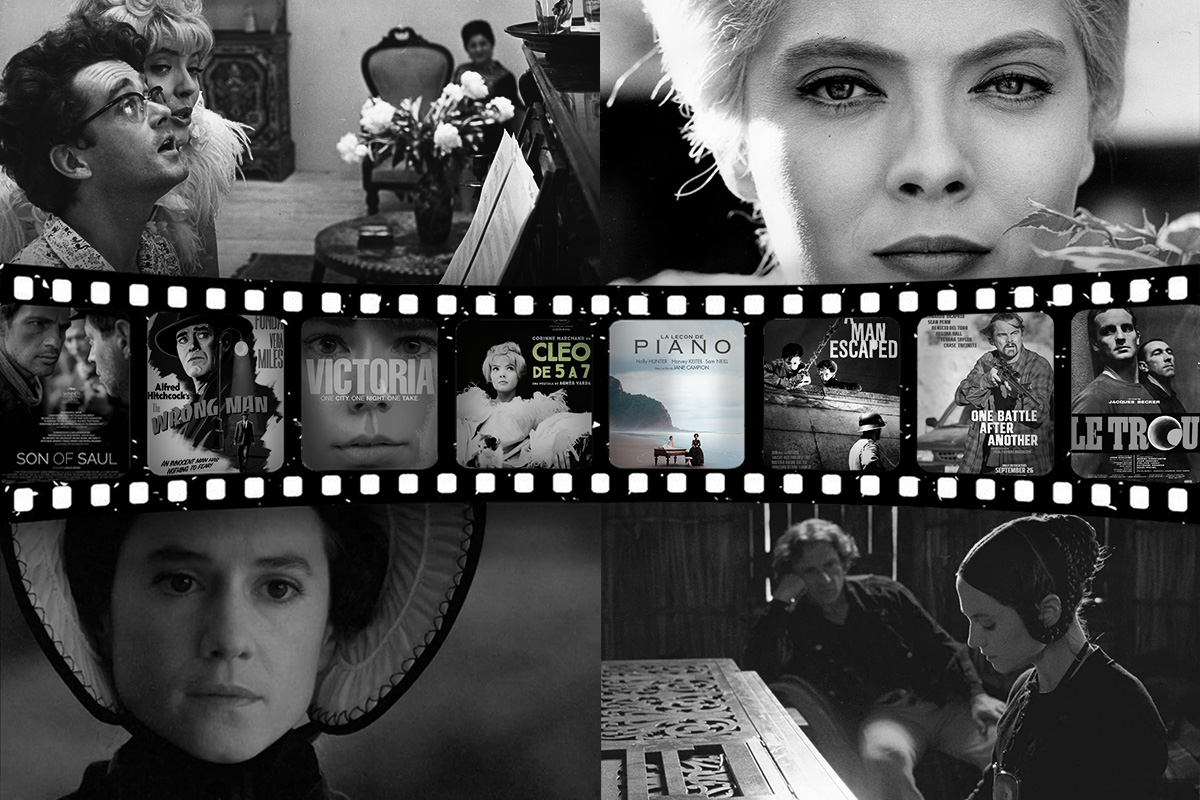
Art design: huxley.media via Photoshop
The Cinemasophy column in September is dedicated to feminism. But that is not the main point. Both films presented here are absolute masterpieces — reliably validated by time itself. Both were made by great women, and both are about… a sacred love for music. While working on this text, the author unexpectedly discovered that these two films occupy the first and second places (respectively) in a special poll conducted by the British BBC, dedicated to the best films in the world directed by women.
386 film critics from 84 countries ranked Cléo from 5 to 7 (1962) by the French filmmaker Agnès Varda and The Piano (1993) by the New Zealander Jane Campion at the very top. But what are these remarkable films about? The first tells the story of a young Parisian singer condemned to death by fate itself, who, by the end, comes to terms with her destiny and gains a chance to escape. Back into life. The second is the greatest love story of modern times — about sacred madness.
CLÉO FROM 5 TO 7 (CLÉO DE 5 À 7, FRANCE, ITALY, 1962)
Director: Agnès Varda
Starring: Corinne Marchand, Antoine Bourseiller, Dominique Davray
Y
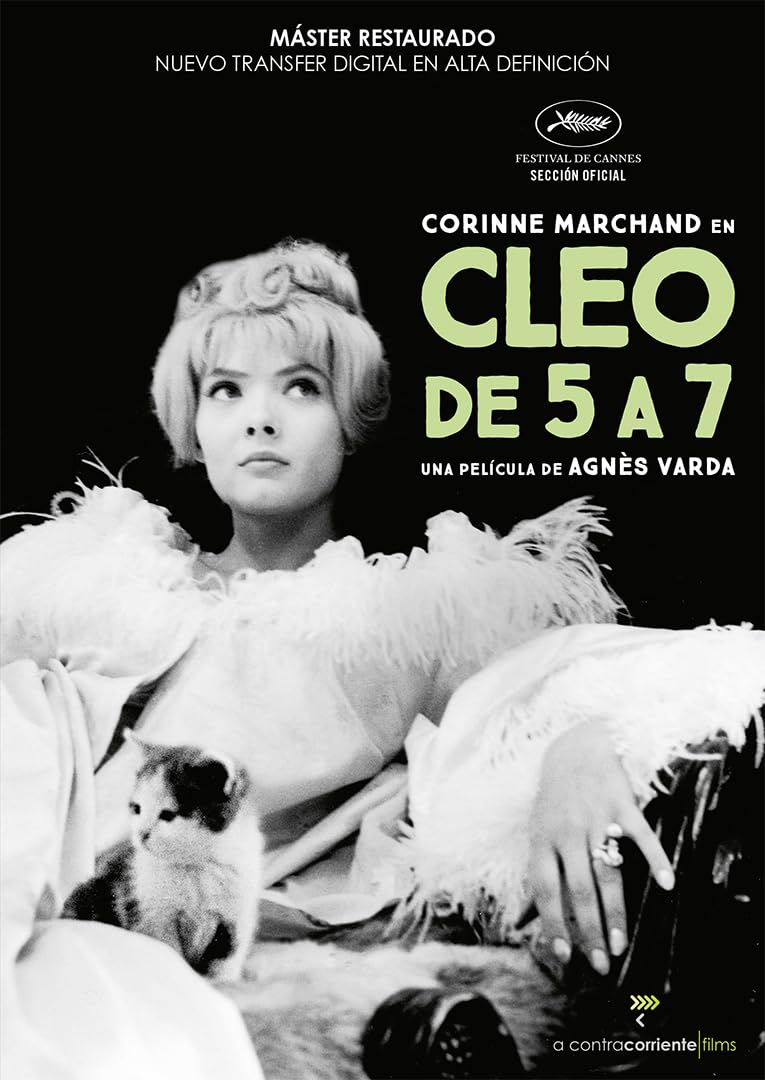
oung French singer Cléo (Marchand), sought after by concert agents and tour managers, while awaiting her medical test results, visits a fortune teller to have the cards read. The tarot predicts death, though the fortune teller tactfully withholds this, and Cléo, seemingly aware of it, loses her composure. Unable to stay home alone, she wanders through vast Paris, where life, as if mocking her, pulsates all around, while from the windows of passing taxis her own songs pour out. Thus, passing time from 5 to 7, Cléo encounters another outcast — practically sentenced to death like herself — a young soldier returning to the Algerian war.
It was this film that officially secured the great Agnès Varda the title of the “swallow” of the French New Wave. Unlike Godard and Truffaut, the male pioneers of that movement, she was not a “Cinemathèque rat” , had never worked as a film critic, nor belonged to any circle. Varda was always on her own, relying less on intellect or erudition than on her unique temperament.
Starting out as a photographer (she never let go of her camera until the end of her life), Varda made her first film in 1955 on modest funds from her friends. The film received encouraging reviews from French intellectuals, but contrary to expectations, she did not join the fashionable “New Wave” circle. She chose an individual path instead. A cult auteur and wife of Jacques Demy, creator of the legendary The Umbrellas of Cherbourg, it was Varda who introduced Catherine Deneuve to cinema (persuading her husband to cast the young starlet); who brought Jim Morrison to Paris (rumor has it she was present with Morrison’s partner Pamela Courson at the musician’s sudden death); and who stood at the origins of modern feminism, ironically portraying men as the bourgeois and women as the proletariat.
She was awarded the Golden Lion at the Venice Film Festival, prizes at the Berlinale, Cannes trophies, and an honorary American Oscar for her contribution to cinema. Yet her true triumph came precisely in 1962. Cléo from 5 to 7 became, once and for all, her true calling card, a paragon of new cinema (still to this day), where image dominates over words, dramaturgy feels improvised, and camera movement mirrors the rhythm of human breathing — the rhythm of time itself, revolutionary by nature.
While the protagonist spends an hour and a half of screen time wandering through Paris, awaiting a dreadful diagnosis and, as if saying goodbye to all that is alive, discovers anew the everyday life of the city, Agnès Varda reveals Paris as a living being engaged in a nonverbal dialogue with the unhappy woman. It would not be an exaggeration to say this is the ultimate film about Paris — the golden standard. In the scene where the heroine drifts along the Left Bank of the Seine, near Montparnasse, Varda, using narrative discontinuity, marries fiction with documentary on screen. And then she plunges us into a dazzling panorama of Paris.
Ever since, whenever filmmakers wish to turn the French capital into a character, they shoot it from the very vantage points Varda revealed 65 years ago. Of her innate cinematic instinct, people said, “She uses one hand to film the other”. In Cléo, Varda, perhaps for the first time, so vividly demonstrates her gift for capturing moments of sensitivity and for inscribing “landscapes of the human soul” onto film. Possessing the unique magic of perfect framing, she ventures into off-screen space, into the looking glass. And it is precisely this sense of a vast world beyond that fills her great film in every respect.

THE PIANO (FRANCE, AUSTRALIA, NEW ZEALAND, 1993)
Director: Jane Campion
Starring: Holly Hunter, Harvey Keitel, Sam Neill
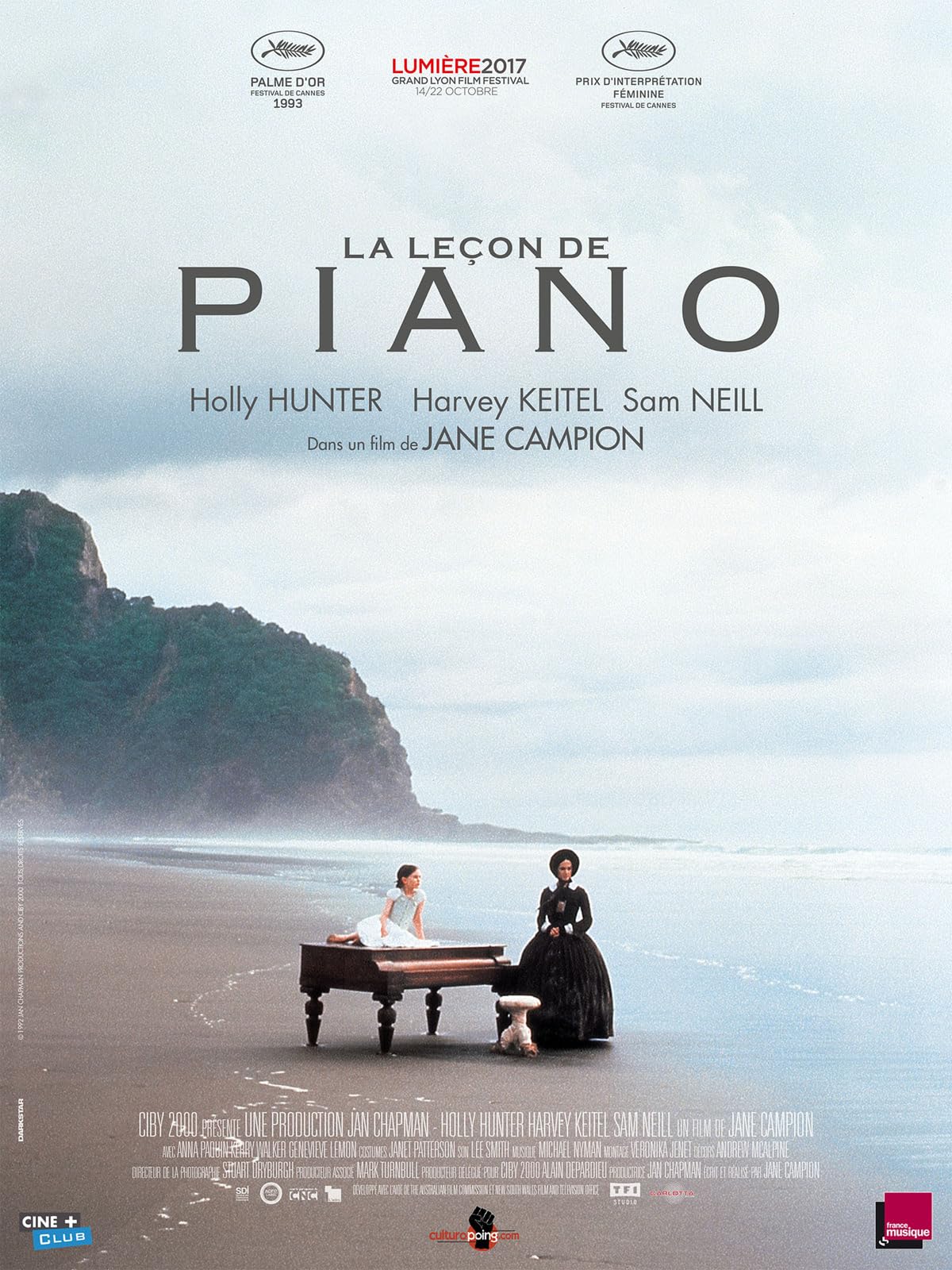
Filmed 32 years later, Jane Campion’s The Piano unfolds not in Paris but in 19th-century New Zealand, where a mute English widow, Ada (Hunter), a pianist by profession, marries a rough settler, Mr. Stewart (Neill), by correspondence, out of poverty. He brings her and her young daughter from the Old World to New Zealand. The husband does not love music and therefore refuses to move her piano into their home.
The instrument is purchased by the couple’s neighbor, Mr. Baines (Keitel), who is tattooed in the Māori style. Enchanted by the mute woman, he offers to “sell” the piano back to her in exchange for music lessons, which she will give him. These lessons soon grow into a passionate and dangerous affair between teacher and pupil, and in a fit of rage, the jealous husband chops off his unfaithful wife’s fingers — so that she may never again communicate, not only with her neighbor, but with the entire world.
The Piano, based on a short story by Campion herself, was not immediately recognized as a masterpiece: at Cannes, the film shared the Palme d’Or with the Chinese drama Farewell My Concubine, and at the Oscars it lost to that year’s sensation, Schindler’s List. Only in retrospect, filmed in a cool, detached manner, like the cold ocean waters, did it gain cult status as a masterpiece about sacred love for music.
While Sam Neill’s pragmatic Stewart chokes on his hatred of music, the mute pianist confesses her feelings both to her neighbor and to the world itself. Off-screen, breaking our hearts, we hear the plaintive chords of the great minimalist Michael Nyman. Unforgettable to hear. Impossible to look away.
When copying materials, please place an active link to www.huxley.media
Select the text and press Ctrl + Enter


