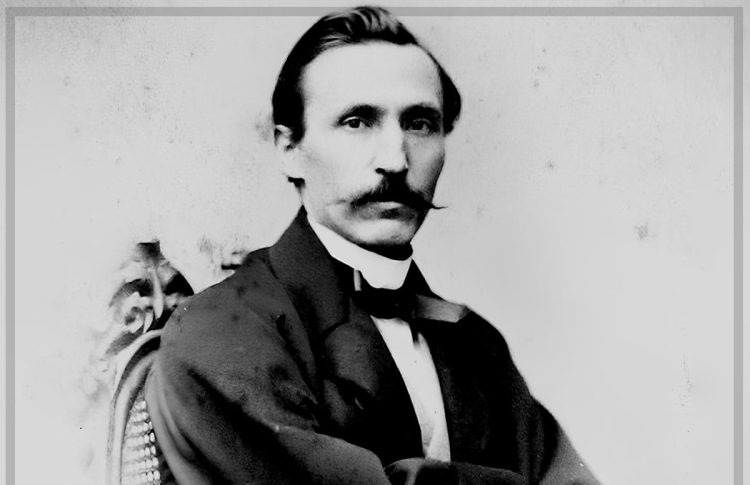
HNAT TANTSIURA: five thousand songs that will live forever


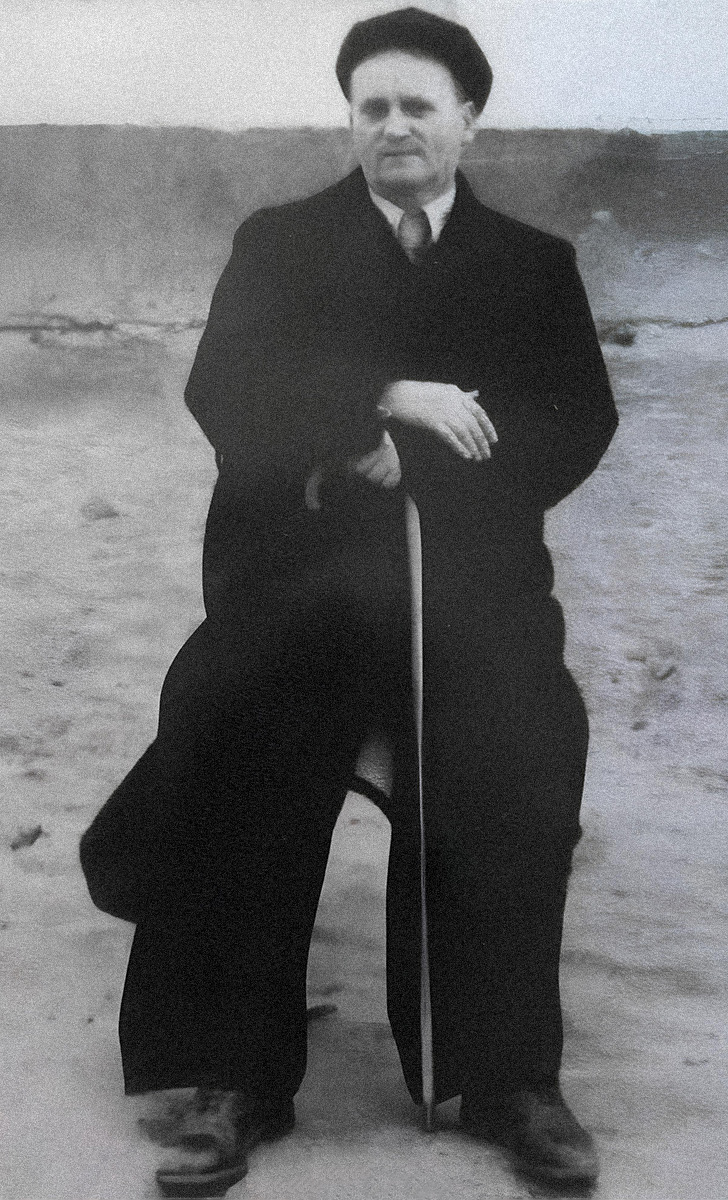
Hnat Tantsiura / Photo from the family archive of Hnat Tantsiura
More than a hundred years ago, one autumn evening, a 16-year-old village boy received an unusual task from his father — to go to the village and write down a song that their family didn’t yet know. That was the spark that ignited his talent — the young man would later become a renowned ethnographer, folklorist, and teacher. Today, the name of Hnat Trokhymovych Tantsiura is known far beyond Ukraine. He was born on June 10, 1901, in the village of Ziatkivtsi, Haisyn County, Kamianets-Podilskyi Governorate (now Haisyn District, Vinnytsia region). Throughout his life, he collected more than 5,000 Ukrainian songs with melodies, around a thousand fairy tales, legends, stories, humorous sketches, and anecdotes, 615 riddles, over a hundred samples of folk dances, and hundreds of spells, laments, omens, and folk beliefs.
THE VIOLIN OF DREAMS AND THE NEIGHBOR’S TREASURES
T
hus began the creative path of the future folklorist, nurtured within his singing family. The mother, aunt, and four sisters of young Hnat not only knew many songs but also had beautiful voices. They would often sing on autumn and winter evenings while working at their looms. Once, when all the songs known to the family had already been sung, Hnat’s father asked him to go to the village and write down a new one. He was sixteen at the time. Remarkably, the young man recorded not only the lyrics but also the melodies. It was the village teacher, Nesteruk, who taught Hnat musical notation. By the autumn of 1917, the boy had already written down 113 songs.
«I was going through that period when one wants to travel around the world, embrace all simple people, tell them something tender and kind, and do something unique for them. It was a time of my physical and spiritual growth», Hnat Tantsiura later recalled about his youth. And in 1918, his great dream came true — his sisters pooled their money so he could buy himself a violin. Of course, such an instrument had no value in the high art world, since it had belonged to a village musician who had passed away, but Hnat would carefully wrap it in his mother’s blackthorn kerchief and walk from village to village, collecting songs.
Moreover, for each song, he created a «passport»: noting the performer’s name and surname, age, and whether they were literate or not. However, one performer — his neighbor Yavdokha Mykytivna — refused to give her real surname. She didn’t want Hnat to record either her maiden name, Syvak, or her married name, Zhuk. «I’m already an old woman», she said, «and if people find out that I sing about love, they’ll start gossiping that I still think about it». So she chose the pseudonym Zuikha, after her late husband’s nickname, Zui.
It was from Yavdokha Zuikha, who was illiterate but had a phenomenal memory, that Tantsiura recorded the largest collection of folk treasures — 1,008 folk songs, over 400 proverbs and sayings, 156 fairy tales, and 45 riddles. In 1930, he published his first folkloristic work in Kharkiv titled «A Woman’s Fate in Folk Songs».
HARMONIUM: THE SOUND OF AN ORGAN FOR REPRODUCING FOLK SONGS
At the age of 20, Hnat Tantsiura completed teacher training courses in Haisyn and began working that September as a teacher in his native village of Ziatkivtsi. Later, he held positions as an educator at the Haisyn and Dashiv orphanages. In 1928, he entered the Kharkiv Music and Drama Institute, but due to hemophilia, he was forced to interrupt his studies and return to Ziatkivtsi.
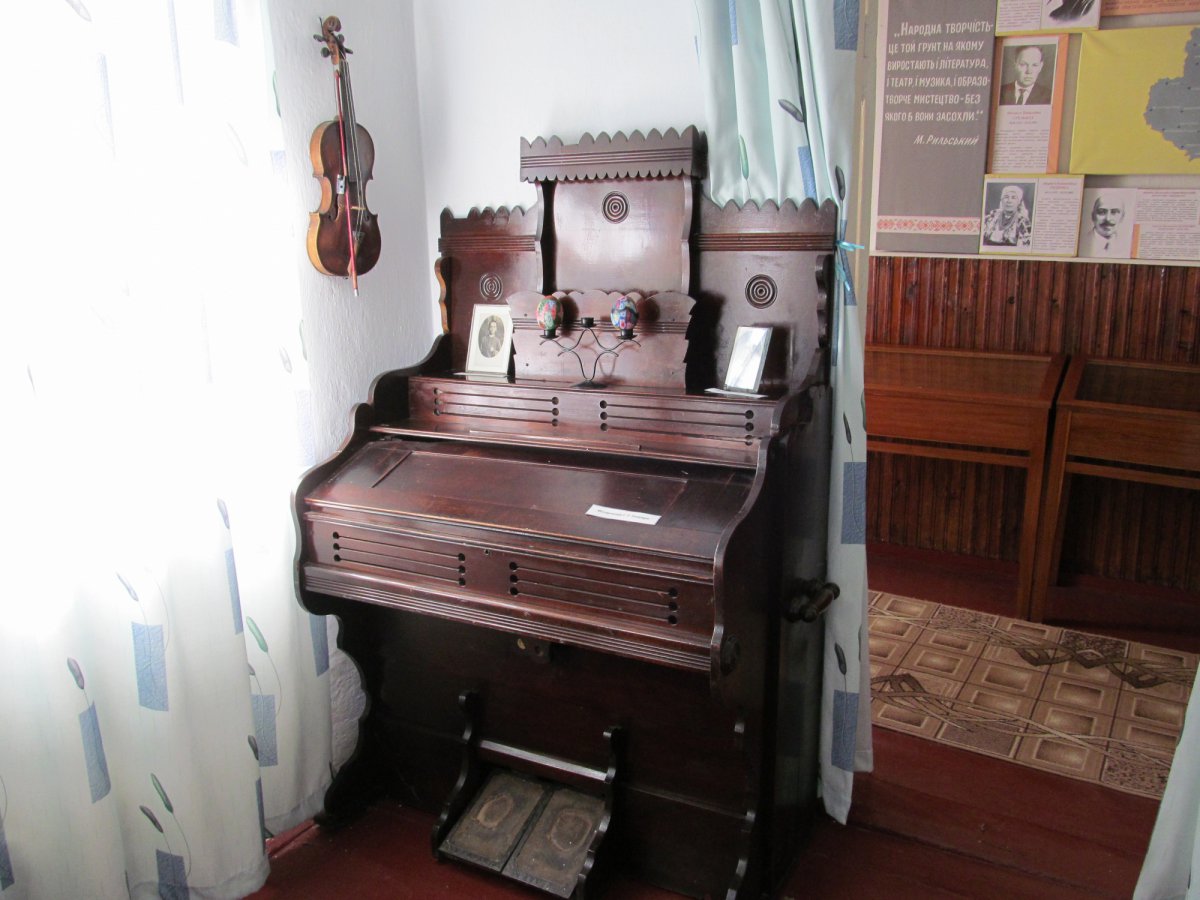
However, his love for music remained in his heart forever. When his father gave him a plot of land, Hnat rented it out and used the money in the 1930s to buy a harmonium—also called a clavichord—from a local church. This luxurious keyboard instrument was crafted in the 19th century in Germany. The sound of the harmonium resembles that of an organ, and on it, Tantsiura reproduced all the more than 5,000 songs he had collected throughout his life.
«My father would approach the clavichord, sit comfortably, place his fingers on the keys, and begin to play. You could tell from his expression what joy the music he created brought him», recalled Hnat Tantsiura’s only daughter, Nataliia Hromova (who passed away on December 29, 2020). Today, this antique instrument is preserved in the Hnat Tantsiura Museum-Estate in Haisyn.
A FATED ENCOUNTER: FROM A CORN COB TO WEDDING SONGS
Hnat Trokhymovych could not give up his teaching vocation. In 1932, he graduated in absentia from the language and literature faculty of the Vinnytsia Institute of Social Education. That same year, Tantsiura was assigned to work as a teacher at the Klebanska School in the neighboring Tulchyn district. It was there that he met his future wife, Tamara Bryl. The story of their love is quite remarkable: once, when the teachers were sent to sort the collective farm’s corn harvest, Tamara, embarrassed by the gaze of the new teacher, shyly threw a corn cob at him.
The refined and courteous Hnat Trokhymovych gently explained to the young woman that she mustn’t hit him, as he suffered from hemophilia and his bleeding would be impossible to stop. Tamara apologized, and Hnat asked for permission to walk her home. The walk turned out to be a long one — the girl lived on a farmstead three kilometers from the school. Soon after, the two fell in love and got married. Because of their limited means, they held only a small celebration, though the groom himself had authored a major folkloristic and ethnographic work titled «The Wedding in the Village of Ziatkivtsi», which consists of 13 parts. In it, he described in great detail the marriage ceremony accompanied by wedding songs — 800 of them — as well as around 150 dance tunes and numerous folk games.
DARK DAYS: LIFE UNDER OCCUPATION
Hnat Tantsiura’s teaching at the Klebanska school did not last long. In 1941, the village was occupied by the Nazis. To preserve his collected folklore heritage, Hnat carefully wrapped his manuscripts, coated them with resin to protect them from moisture, and buried them in the school garden. Because of his hemophilia, he could not fight in the war but remained active on the home front. Wanting to stay informed about news from the front lines, Tantsiura built a homemade radio receiver. However, someone informed the occupation authorities about it, and Hnat was arrested and sent to prison. He was tried in Tiraspol but was eventually acquitted. This dramatic period of his life, he later described in his autobiographical story «Dark Days», where he vividly recounted his experiences under occupation.
«NO ENTRY WITHOUT A SONG»
In 1944, Haisyn was liberated from German occupation. Hnat Trokhymovych and his wife moved there to continue teaching. They were given a quarter of a house — two small rooms and a shared hallway. They cooked meals on a veranda shared with their neighbors. Despite the cramped conditions, the Tantsiuras often had guests, especially former students. Whenever someone came to visit, Hnat Trokhymovych would stand in the doorway and say, «No entry without a song».
For the ethnographer, the greatest advantage was that his house stood next to a park. Every morning, Tantsiura would wander the paths among the trees, listening to birdsong before heading to his lessons. Such walks brought him great joy.
In the winter of 1957, Hnat Tantsiura was invited to a conference of collectors of oral folk art in Kyiv. The journey was difficult for him, and after the meeting, he fell ill. He passed away prematurely on November 12, 1962. Since 1990, the house where Hnat Trokhymovych lived with his family has been home to the Museum of Folklore.
When copying materials, please place an active link to www.huxley.media
Select the text and press Ctrl + Enter