FOR THE DAY OF REMEMBRANCE OF THE VICTIMS OF THE HOLOCAUST: excerpts from the diary of the Jewish girl Anne Frank


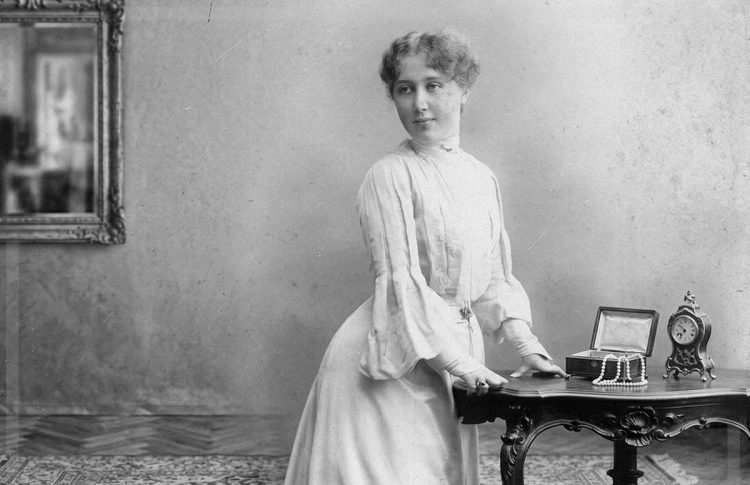
Anne Frank / annefrank.org
January 27 is observed worldwide as the Day of Remembrance of the Victims of the Holocaust. It was on this day in 1945 that prisoners of the largest Nazi death camp, Auschwitz-Birkenau, in Oświęcim, were liberated. Annelies Marie (Anne) Frank was a Jewish girl born in Germany who, after Hitler came to power, went into hiding with her family from Nazi terror in the Netherlands. In May 1940, Germany occupied the Netherlands, and the occupation authorities began persecuting Jews. From 1942 to 1944, Anne kept a diary while hiding from the Nazis in a secret annex on the second floor of a house, but in 1944 the entire family was sent to the Auschwitz concentration camp following a denunciation. From there, Anne and her sister Margot were transferred to the Bergen-Belsen concentration camp, where Anne died of typhus in 1945.
A
nne received the diary as a gift from her father, Otto, on her 13th birthday, June 12, 1942, and made her first entry in it on the very same day. Anne kept the diary in the form of letters addressed to an imaginary friend named Kitty. In them, she described everything that was happening to her and to the other inhabitants of the hiding place. In the spring of 1944, she heard a speech on the Dutch Radio Oranje (the station’s editorial office had been evacuated to England, from where it broadcast until the end of the war) by the Dutch Minister of Education, Gerrit Bolkestein.
In his speech, the minister urged citizens to preserve any documents that could serve as evidence of the suffering of the people during the years of German occupation. Diaries were named among the most important such documents. Impressed by this address, Anne decided to write a novel based on her diary. She immediately began rewriting and editing it, while at the same time continuing to add new entries to the original diary. The last entry in the diary is dated August 1, 1944. Three days later, the Gestapo arrested everyone who had been hiding in the annex.
WE PUBLISH EXCERPTS FROM THE DIARY OF ANNE FRANK
They were forbidden to go to theaters, cinemas, and similar venues, as well as to swimming pools, gymnasiums, rowing clubs, and, in general, to engage in any kind of sport in public places. From eight in the evening, Jews were not allowed to sit in their own gardens or in the gardens of acquaintances. Visiting Christians was forbidden. Studying was permitted only in Jewish schools. And so we lived, waiting for new prohibitions. Jackie used to say: «I’m afraid to start anything at all — what if that, too, isn’t allowed?»
Wednesday, 29 March 1944
Dear Kitty,
Yesterday, in his address on Dutch radio, Minister Bolkestein said that wartime memories, diaries, and letters would later acquire great value. After that, of course, everyone started talking about my diary.
How interesting it would be to publish a novel about life in the Secret Annex. From the title alone, people would think it was a gripping detective story. But seriously — what if, ten years after the war, one were to tell how we Jews lived here, how we ate and talked?
Although I tell you a great deal, it is only a small part of our lives. For example, you don’t know that our ladies are terribly afraid of air raids, and that on Sunday 350 English planes dropped half a million kilograms of explosives on IJmuiden; the houses trembled then like grass in the wind.
And that an epidemic is raging everywhere. To tell everything, one would have to write all day long. People stand in queues for vegetables and other goods; doctors cannot visit the sick because their cars would be stolen at once. There are so many break-ins and robberies that you can’t help asking yourself, what has happened to the Dutch? Children from eight to eleven years old smash windows in houses and take whatever comes to hand. No one dares to leave their apartment even for five minutes, because in that time everything can be stolen.
Every day the newspapers publish notices asking for stolen typewriters, Persian rugs, electric clocks, and fabrics to be returned for a reward. City carillons are being dismantled piece by piece, and the same is happening to the public telephones in their booths.
But how can there be good spirits among the people when everyone is starving, when a week’s ration barely lasts two days, and only the coffee substitute is plentiful? The Allied landing keeps being postponed.
Meanwhile, men are being taken to Germany, children are undernourished and ill, and everyone’s clothes and shoes are worn out. A new sole costs seven and a half guilders on the black market, and shoemakers either refuse to take shoes at all or promise to repair them only after four months, and in that time the shoes often disappear.
One thing is good: hunger and discrimination strengthen resistance against the occupiers. The food distribution service, the police, and civil servants have split into two groups. Some do everything possible to help their fellow citizens; others betray their compatriots, causing them to end up in prison. Fortunately, there are very few of the latter among the Dutch.
Anne
When copying materials, please place an active link to www.huxley.media
Select the text and press Ctrl + Enter