HOW TO LISTEN TO CLASSICAL MUSIC: Bach’s «Goldberg Variations» — The Choice of European Intellectuals

Art design: Olena Burdeina (FA_Photo) via Midjourney
In many quizzes, a popular question goes: «If you could take only one music album to a desert island, what would it be?» I’ve often heard European intellectuals answer: «Bach’s Goldberg Variations». To me, this choice is obvious. This work is not only the pinnacle of Bach’s creativity — a kind of encyclopedia of all facets of his talent — but also a unique musical prophecy, an incredible Bachian experiment, the most refined «glass bead game» in his entire legacy.
T
he structure of the piece consists of an aria and 30 variations, followed by a return to the aria. In fact, Bach’s original title was «Aria with 30 Different Variations». The nickname «Goldberg Variations», much like Beethoven’s «Moonlight Sonata», appeared later — thanks to literary enthusiasts who popularized classical music through historical legends that were not always accurate but certainly beautiful.
Goldberg was not the composer of the aria upon which Bach based his variations, as the title might suggest. Rather, he was the presumed first performer of the work: the young virtuoso Johann Gottlieb Goldberg, the personal musician of Count Keyserlingk, the Russian envoy to Saxony.
According to legend, Count Keyserlingk, a patron of Bach’s, suffered from insomnia and commissioned a composition that his personal harpsichordist Goldberg could play to soothe him to sleep — an aria and 30 variations, one for each day of the month. A lovely story, though one open to doubt.
At the time the Variations were composed, young Goldberg was only 14 years old, while the technical demands of the piece are so great that even today only a handful of pianists in the world are capable of performing the entire cycle.
Nevertheless, people love legends. The pinnacle of Bach’s artistry thus shed its original, modest title and was reborn as a striking and memorable name — immortalizing the pianist Goldberg in the process. It’s worth noting that many of the variations are so dazzling and virtuosic that, rather than calming an insomniac, they would likely have had quite the opposite effect.

But let’s talk about the music itself. More than any other of Bach’s works, this masterpiece offers an almost infinite field for interpretation. A quick look on YouTube reveals the first striking detail — the dramatic variation in performance length.
In most classical masterpieces, the difference in timing between performers rarely exceeds 5–10%, depending on their individual phrasing and tempo choices. But here, the range is astonishing — from Glenn Gould’s iconic 40-minute interpretation to over 90 minutes in other pianists’ renditions.
Each variation Bach wrote allows for a repeat (which Gould, for instance, entirely discards, playing without repeats). And the tempo of each variation is so open to interpretation that it can be performed nearly twice as fast or slow, depending on the artist’s vision. The result is radically different interpretations — in both length and emotional impression.
Paradoxically, all of these versions are entirely valid. Bach’s musical text, like a digital matrix, contains within its simple notes an infinite number of potential meanings.
Here, I offer you my own conceptual reading of this Bachian masterpiece. To me, the Variations clearly divide into two symmetrical halves: Variations 1 through 15, and then 16 through 30. The 16th variation bears the title Overture. But how can an overture — typically the beginning of a large-scale work such as an opera, ballet, or oratorio — appear exactly in the middle of a 30-variation cycle?With Bach, nothing is accidental. His scores are staggeringly, superhumanly mathematical in their construction.
His command of polyphony reaches beyond comprehension. When listening to his most brilliant masterpieces, we are struck by their emotion, beauty, and harmony — yet at the core of each lies a set of musical-mathematical challenges of transcendental complexity. Take, for instance, the great C-sharp minor fugue from the first volume of The Well-Tempered Clavier — written on the theme of Christ’s crucifixion. It is essentially an unsolvable riddle: a five-voice fugue built on three subjects.
Even for a trained composer, writing a three-voice fugue is a daunting task — one must adhere to the strict laws of counterpoint while creating something musically coherent and formally elegant. The more voices, the harder it gets. Five-voice fugues are a rare feat in music history; and here Bach builds one on three simultaneous themes. To top it off, the entire piece is constructed with cosmic precision, placing the emotional climax exactly at the moment that corresponds to the golden ratio.
When performing the Goldberg Variations, the pianist becomes a kind of «glass bead game master» from Hermann Hesse’s novel — a co-creator entering into a living dialogue with Bach’s text
But let us return to the Goldberg Variations, where, notably, the dramatic climax of the entire monumental cycle also falls at the point of the golden ratio. Structurally, in accordance with the strict laws of polyphony, the 30 variations are constructed with the meticulousness of a medieval clockmaker — or a mathematician. Each variation follows the 32-bar bass line of the aria, and every third variation is a canon, with the interval between the voices increasing step by step: from unison (a single pitch) to the ninth (an interval of nine scale degrees).
But why, then, an Overture in the middle of the cycle — in the 16th variation?
Here is what I believe. Bach’s original intention — to explore all the possibilities of variation on a given theme and to demonstrate the breadth of his polyphonic mastery — was brilliantly realized in the first 15 variations. They form an encyclopedia of Bach’s characteristic musical language and style.
They are magnificent, pure perfection. After the dazzling brilliance of Variation 14 comes the unexpectedly and infinitely beautiful 15th — the first minor-key variation in the cycle. In this surprising and sublime moment, Bach could well have concluded the entire work, offering the world yet another timeless masterpiece.
But then, something miraculous happens.
Bach creates the second half of the cycle, striving to transcend not only his own style but also his era and his time. And the unbelievable occurs — he crafts a musical prophecy that foretells the development of music for the next 200 years!
The second half of the Variations is an unprecedented experiment in the history of music — a moment when a genius dares to peer into the future. I invite you to listen to it with this perspective in mind — if you will, through a postmodern lens.
And you will hear, in Variation 16 — the forerunner of Haydn’s Viennese classicism and early Beethoven. In the indescribably beautiful, nocturne-like Variation 25 — the essence of Chopinesque romanticism. The Brahmsian surge of emotion and passion in Variation 21. Rachmaninoff-like virtuosity and bravado in the cascading runs of Variation 29.
Prokofiev’s biting humor in Variations 17 and 23. The voices and birdsong of Messiaen in Variation 28. The dry linearity and melodic disintegration of the Second Viennese School — Schoenberg and Berg — in the curious Variation 27. And the Lisztian frenzy of pianistic virtuosity in Variation 26.
After this expansion of the boundaries of time and space, Bach gathers all the sounds of the world back into the final return of the aria — through the famous 30th variation, the Quodlibet. It deserves special attention. How can one return to Earth in a single variation after glimpsing an entire universe of future musical styles and forms?
The descent must be swift — in just a minute and a half, maybe two — the listener must be gently brought down back to the original aria. Quodlibet is an old compositional technique, a humorous piece built by combining well-known melodies either sequentially («horizontally») or simultaneously («vertically»), with or without lyrics.
In addition to the aria’s theme, Bach weaves in two humorous folk tunes — their meaning clear from their titles. The first: Ich bin solang nicht bei dir g’west — «I’ve been away from you so long, come here to me quickly!» The second, even more risqué: Kraut und Rüben haben mich vertrieben — «Cabbage and beets drove me from your home. If my mother had cooked me meat, I would’ve stayed longer».
This Brueghelian blend of the divine and the every day creates a stunning philosophical and emotional effect…
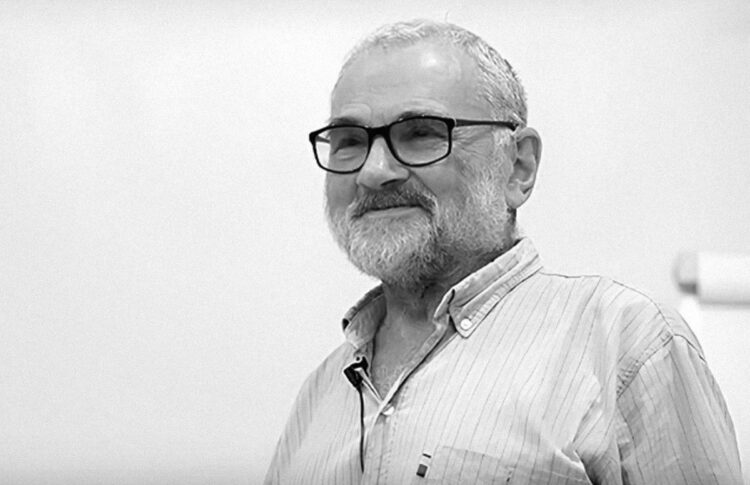
I have been incredibly fortunate in life. At this moment, I am the pianist who has had the privilege of performing Bach’s Goldberg Variations live on stage more times than any of my colleagues — 314 performances to date.
Each concert was a journey. And each journey was unique. The final aria never sounded the same as it did at the beginning — because what separated them was not just 80 minutes (my performance duration of the Variations), but several centuries of human evolution.
When copying materials, please place an active link to www.huxley.media
Select the text and press Ctrl + Enter