PHILOSOPHER INNA HOLUBOVYCH: on Yakov Golosovker’s “Myth of Life”


Inna Holubovych / Photo from personal archive
SHORT PROFILE
Name: Inna Holubovych
Date of Birth: September 10, 1966
Place of Birth: Shymkent, Kazakhstan
Profession: Doctor of Philosophy, Professor, Head of the Department of Philosophy
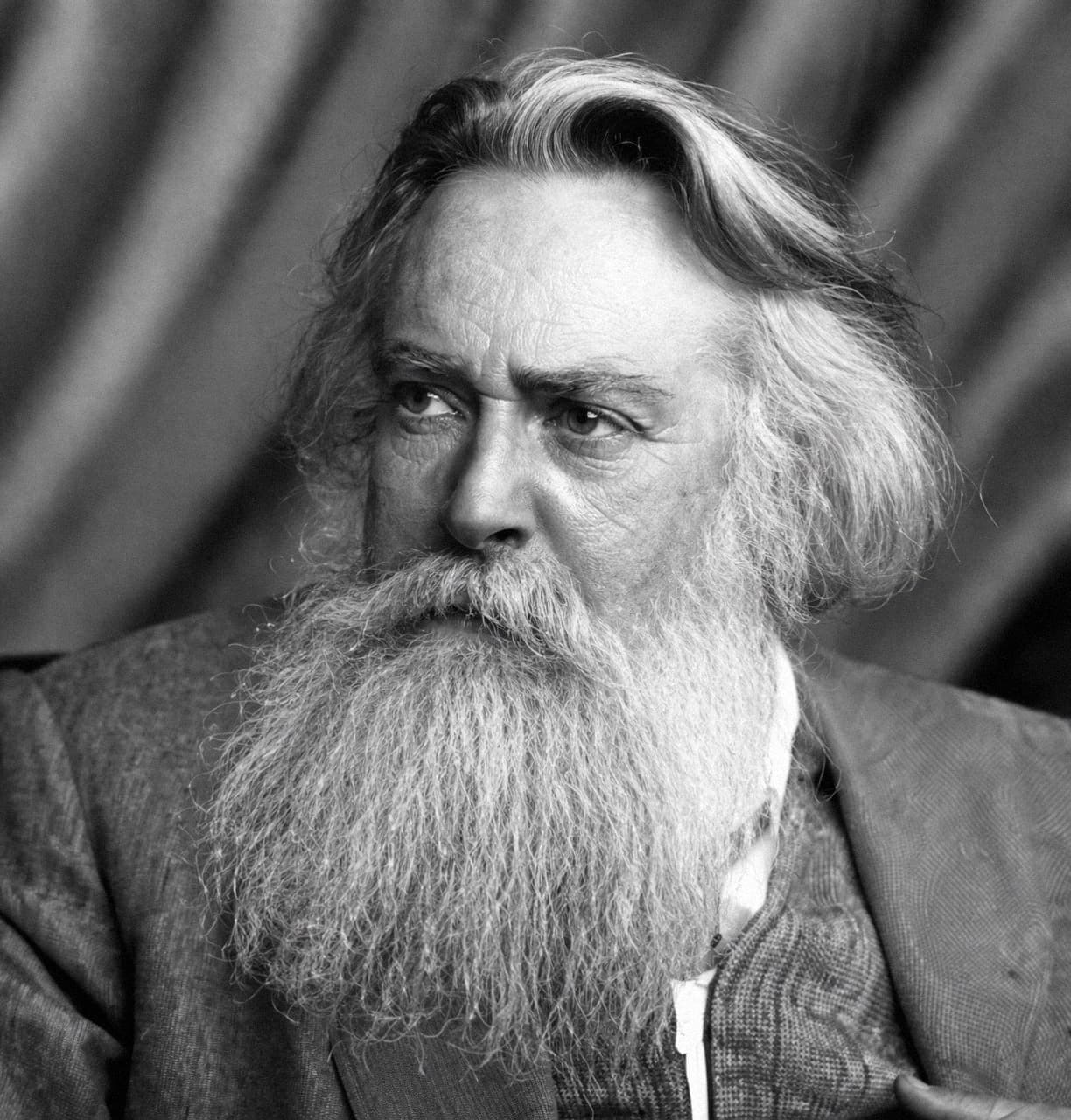
Is it possible to live a life as a myth? Our conversation about Yakov Golosovker began with this question — a native of Kyiv, a vivid and original thinker who placed imagination above logic and sought to restore to thought its figurative, mythological depth. For philosopher Inna Holubovych, Golosovker’s figure becomes for reflecting on the very nature of biography — as text, destiny, and a cultural form.
THINKING OF LIMIT STATES
T
he autobiographical myth is one of the most important themes for me. Here, of course, I must first mention Yakov Golosovker’s Myth of My Life. He was an outstanding philologist, philosopher, and translator whose talent flourished on Ukrainian soil. His early intellectual biography begins in the territory of modern Ukraine; it was precisely the Kyiv environment that became his first cultural and educational context. In a broader cultural and historical perspective, Golosovker can be seen as part of the shared intellectual milieu of early twentieth-century Eastern Europe, where Kyiv played a significant role as a major center of education and culture. This region produced a number of thinkers whose identity cannot be confined to a single national tradition. Golosovker was born in 1890 in Kyiv. Here, he graduated from the Faculty of History and Philology, defending his theses simultaneously in both philology and philosophy.
The first was devoted to the poetry of Sappho, the second to the philosophy of Rickert. Translations from Ancient Greek fascinated him already during his studies. His own early poetic experiments also belong to the Kyiv period. In particular, the collection of poems The Garden of the Soul, was published in 1916. Later, an extraordinary circle of translators of ancient lyric poetry formed around Golosovker, including Boris Pasternak, Arseny Tarkovsky, Ilya Selvinsky, and others. It was a biography in which an entire was reflected. Behind Golosovker were three years in Stalinist camps in Vorkuta, four years of exile, and many years of isolation from academic life. Yet none of these trials could interrupt the titanic cultural work that he regarded as his mission. His life and thought always unfolded at the boundary of limit states — intellectual, existential, and historical.
RETURN TO MYTH
The figure of Yakov Golosovker itself appears almost mythological — not only because of his ideas, but also because of his fate. He belongs to those rare thinkers whose life and philosophy seem to mirror one another. At the center of his reflections lies not logic, but imagination. Golosovker constructs a philosophy based on what he calls the imaginative absolute — a kind of deep creative force that generates meanings, images, and culture itself. It is a sort of dimension from which a person receives their myth. This concept unites philosophy and poetry, the rational and the intuitive, making his thought difficult to classify, yet precisely for this reason, strikingly modern. In contrast to the rationalist traditions of the twentieth century, he affirms imagination and inner experience, rather than strict logic, as the true source of thinking. Alas, this position left him almost alone in the intellectual landscape of his time. His texts cannot be definitively attributed either to philosophy or to literature — they form a unique hybrid in which philosophical reflection merges with poetics and mythology.
BIOGRAPHY AS MYTH
One of his key works is Tales of the Titans. This is not merely a retelling of ancient plots, but their philosophical reconstruction. For Golosovker, the Titans are not characters of ancient legends, but symbols of human freedom, rebellion, and tragic existence. His own life, in turn, seemed to confirm his ideas. Golosovker’s manuscripts disappeared more than once — burned, lost, destroyed. Forced out of official cultural life, he spent many years writing “for the drawer”. And yet he continued to work, sometimes literally reconstructing texts from memory. This is a true embodiment of his idea that myth can “intervene” in human destiny, both destroying and shaping it at the same time. Golosovker sought to restore to thought its ancient dimension, connected with myth. And perhaps this is precisely why his own biography reads like a myth about a thinker going against his time.
SACRED CRAFT
For me, the encounter with this person’s lived experience is especially meaningful, since we share a mutual acquaintance — Father Vladimir Zelinsky, the son of a well-known Soviet writer and one of the finest theologians of our time. In the Soviet period, he was a researcher at the Institute of Philosophy, and today he serves as the rector of the Church of the Icon of the Mother of God Joy of All Who Sorrow in the Italian city of Brescia. Father Vladimir is a dear and kindred spirit to me. He knew Golosovker personally; they were friends and, for a time, even neighbors. Zelinsky dedicated a remarkable work to him — Sacred Craft. Between the Titan and the Boar. In my view, this is one of the finest biographical works in world culture. Golosovker was always interested in the nature of free creative thinking, which he regarded as the voice of a higher instinct in the human being. His life and work were an example of the embodiment of such thinking — an intense gaze into the hidden depths of being. Zelinsky says that Golosovker’s greatest work was not even his books, but his very life. If he wrote about Socrates, he was at the same time writing about himself. Golosovker thought of himself rather as a heroic character performing on the elevated stage of an enacted myth.
BETWEEN THE TITAN AND THE BOAR
The title of the book, or more precisely the formula “between the titan and the boar”, which Vladimir Zelinsky applies to Yakov Golosovker, carries a metaphorical and deeply philosophical meaning. It is not merely a vivid image, but an attempt to convey the inner drama of a personality and its existence in a state of extreme tension. The image of the titan in this context refers to the elevated, creative, almost superhuman principle. Golosovker appears as a thinker of titanic scale: his interest in myth, ancient culture, and philosophy, his striving to think in categories of spirit and cosmos, takes him far beyond ordinary experience. This is a figure oriented toward higher meanings, toward the creation of his own intellectual universe. By contrast, the boar symbolizes the opposite pole — the element of coarse reality, corporeality, and chaos. Here we encounter both the pressure of historical circumstances, the traumatic experience of the era, and the vulnerability of the individual. This is a force not elevated, but blind and destructive, associated with that which invades human life from the outside and undermines it from within.
BETWEEN INSPIRATION AND FRACTURE
The keyword here is “between”. Zelinsky emphasizes that Golosovker cannot be reduced to either of these poles. He exists in a space of tension between them — between spirit and matter, myth and history, creation and destruction. This position of “between” defines the tragic dynamic of his life and thinking, turning it into a constant balancing on the edge between inspiration and fracture, freedom and constraint. Thus, the formula “between the titan and the boar” becomes a way of describing the existential duality of a twentieth-century cultural figure. In Zelinsky’s interpretation, Golosovker appears as a figure in whom the “titan” of spirit and the “boar” of history coexist simultaneously, and his fate unfolds as a continuous confrontation between these forces. In Golosovker’s own texts — especially in his works on myth and tragedy — this motif of liminality is present, of an ultimate inner tension between reason and that which lies beyond its limits.
“HIDDEN CLASSIC”
It can perhaps be said that Golosovker’s scholarly biography, the history of his books and ideas, extends far beyond his lifetime. He is a philosopher of remarkable intellectual originality who deserves to be included in the canon of “global” twentieth-century thinkers, such as Martin Heidegger or Jean-Paul Sartre. And if he is less well known than they are, this is due more to historical and institutional circumstances than to the scale of his ideas. His central concept was ahead of its time: The Logic of Myth is an attempt to demonstrate that myth possesses its own form of rationality, one that cannot be reduced to scientific or formal logic. In this sense, Golosovker is close to those twentieth-century approaches that reexamined the status of myth — for example, the works of Claude Lévi-Strauss or Carl Jung — although he arrived at these ideas independently and within a different philosophical tradition.
At the same time, Golosovker, as a thinker who unites philosophy, philology, and artistic imagination, stands apart and does not fully fit into any single school. His texts — both philosophical and literary — are perceived as an example of a rare synthesis of thought and imagination. This is what makes him important, not so much for “systematic philosophy” as for the broader field of the humanities. He remains a kind of “hidden classic” — a figure whose significance becomes apparent through deeper engagement, yet is not by the mainstream academic canon. And this makes his legacy, including his biography, a hidden gem of Ukrainian and European culture, one that still awaits its full recognition.
When copying materials, please place an active link to www.huxley.media
Select the text and press Ctrl + Enter