JUSTIFIED CRUELTY

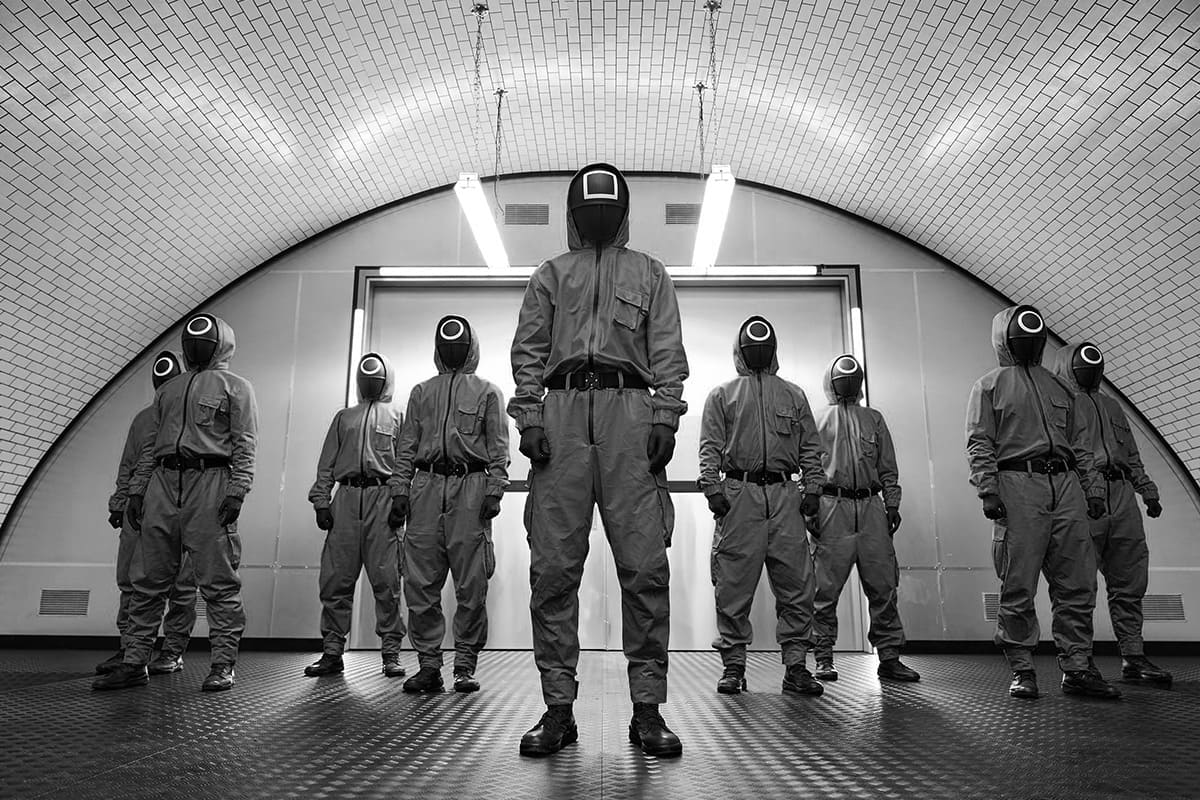
Still from the series «Squid Game» / imdb.com
For more than a century, violence has been an important component of cinema. It has been accused — and continues to be accused — of promoting cruelty, corrupting morals, and provoking the unfortunate viewer, while screen violence itself has often been seen as the root of violence in society. Defenders of the most important of the arts, on the contrary, never tire of repeating that cruelty and violence in film are the simplest way to elicit strong emotions, appeal to the viewer’s empathy, and throw them out of emotional balance. Moreover, violence is cinematic and therefore lends sensory persuasiveness to cinematic images. Is this true? Let us try to figure it out.
C
inema is capable of creating a special space in which people can risk their sense of comfort for the sake of a new experience, lived through without physical pain or suffering in just a couple of hours of screen time. To kill, to be killed, and to be resurrected the moment the lights come on in the auditorium. Something very similar was articulated by the ancient Greeks, who created theatre and believed that the more violence there was on stage, the less of it there would be in real life. It is precisely through violence that both theatre and cinema, which experiences its powerful influence, are able to evoke compassion and catharsis in the viewer — and thus, purification. Where, then, is the truth? And what should we do with that stream of cheap films that use violence as a tool for entertaining the audience?
From my point of view, it is not cinema as such that is the source of violence. It has only reflected and continues to reflect a world that today is literally saturated with violence, from domestic and psychological to political and interstate. One is reminded of the famous conversation between Picasso and German officers in occupied Paris. Bursting into his studio and seeing Guernica (the artist’s response to the barbaric bombing by the Luftwaffe of the Spanish city of the same name during the Civil War), one of them asked the artist: «Did you do this?» Picasso replied: «No, you did».
Fascists (as, indeed, communists) justified violence as a means of achieving progress and prosperity. Liberal society seems to reject violence, regarding it as an atavism displaced into the virtual sphere of social networks and psychoanalysis, yet it does not refrain from it. For it often exports its values with the help of military expansion. That is, through «good» violence. Cinema merely reflects what is happening, sometimes trying to explain that violence which remains unexplained and appears inexplicable.
Great masters often resort to violence not simply to state its existence, but as a form of expressing dramatic conflict. The most striking example is the great Alfred Hitchcock, who made his name through suspense and smuggled brutality (Rope, 1948; Psycho, 1960) onto still-conservative screens by every conceivable and inconceivable means. The director joked that «violence on screen can provoke an unhealthy reaction (in the sense of a desire to imitate) only in an unhealthy mind».
When police in Los Angeles arrested a serial killer who allegedly confessed that he had killed his third victim, inspired by watching Hitchcock’s Psycho (1960), reporters immediately descended on Hitchcock demanding comment. The director, famous for his exceptionally caustic sense of humour, merely asked in response: «And what film did he watch before committing the second murder?..»
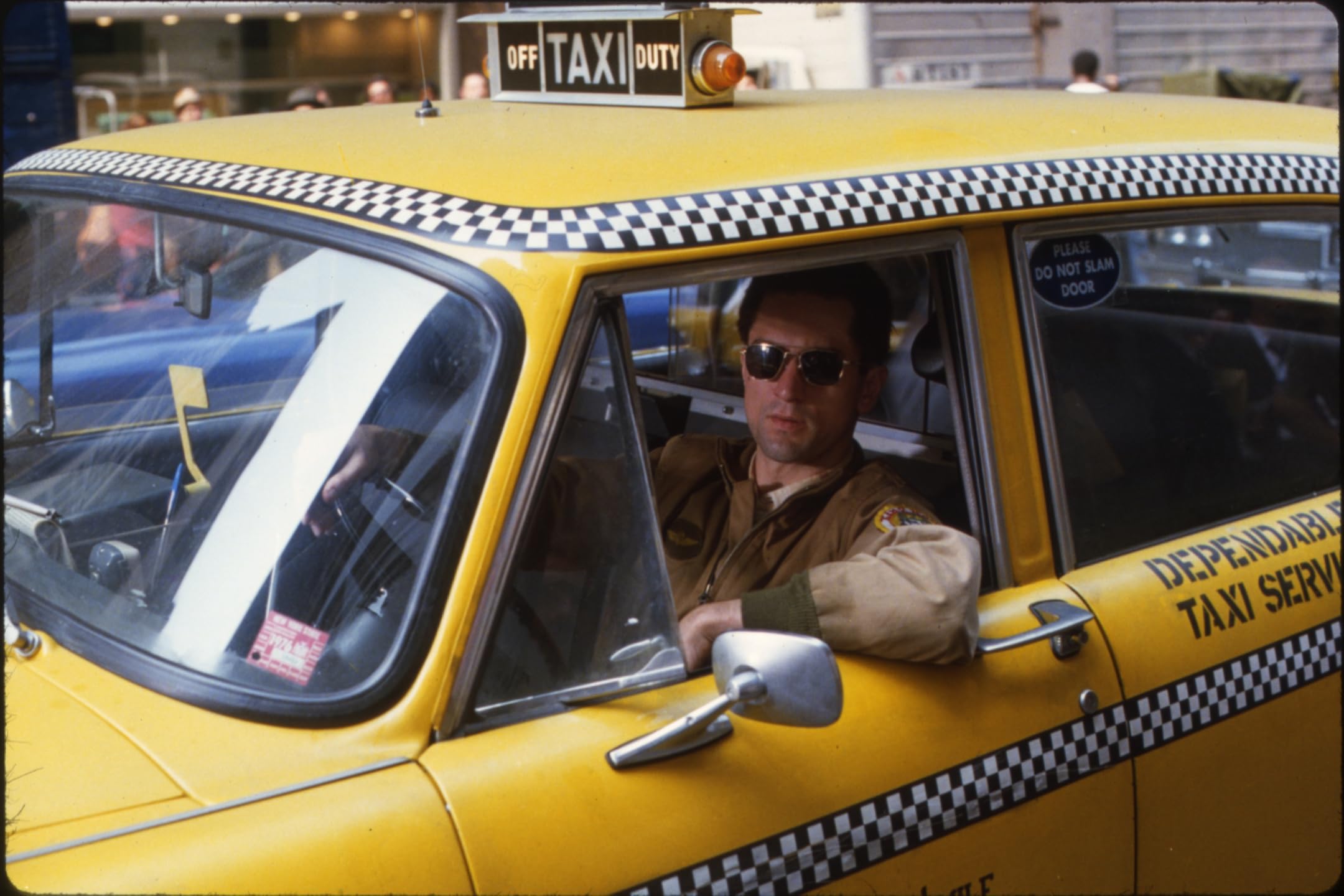
It was no laughing matter in March 1981 for another master of screen violence — Martin Scorsese. A certain John Warnock Hinckley, having watched Taxi Driver (1976) , fired six shots at the then-serving president Ronald Reagan. However, Hinckley had another motive as well: he wanted to draw the attention of 13-year-old Jodie Foster, who played the underage prostitute Iris in Scorsese’s film. Subsequently, the director would more than once be subjected to harsh criticism and even anathema — for the brutality of Raging Bull (1980), for the «blasphemy» of The Last Temptation of Christ (1988) — the boldest experiment with the New Testament — and for the brisk bloodiness of Goodfellas (1990)…
Screen violence, as a rule, is more a matter of artistic style or a challenge to society. Paradoxical as it may seem, the fact remains: the more tolerant, prosperous, and harmonious a society is, the more explicit the depiction of violence in the art it produces. All this looks like a form of subconscious substitution, a catalysing of complexes, a reaction of the mass consciousness to the harmonisation of social relations. Or perhaps the opposite. After all, at the height of the bloody Stalinist repressions in the USSR, the most uplifting, positivity-filled films were being made — from Dziga Vertov’s Lullaby to Grigory Alexandrov’s Circus and the musical comedy Volga-Volga.
Woven of good and evil, virtue and vice, the human being stands on an escalator that is constantly moving downward. And in order merely to remain in place, one must exert effort over oneself. To move upward against that downward motion, the effort must be of a higher order. An important support in this upward movement is culture. It is culture that teaches us what it means to be human, bringing into our lives not only beauty, but also virtue, the laws of morality and ethics.
Cinema plays a key role in this process — even when, instead of offering «good examples», it transmits monstrous, barbaric violence. This is done not so much for the sake of shock value (though there are plenty of such examples), but in order not to let society fall asleep: to expose evil and prevent it from taking root.

Still living with the label of a mafia researcher for their great gangster dramas, Martin Scorsese has never been a chronicler of everyday life in his films, but has always been a harsh moralist. Lavishly spilling violence onto the big screen, his cinema, in fact, does good, cultivating in the viewer a fierce revulsion toward evil. The experience of contemplating cruelty has a long history — from the crucifixion of Christ and gladiatorial combats to bullfighting, the public executions of war criminals after the Second World War, boxing, and modern computer games. Yet whereas in the past the struggle had a ritual character, today, for the spectator, it becomes a way to get a thrill from a safe distance, to let off steam.
Films, TV series, and video games that abound in violent scenes today offer the opportunity to find oneself virtually in extreme situations, risking absolutely nothing. Screen violence continues to both attract and repel us, and the same patterns are at work in this phenomenon as in past centuries. «An artist’s cruelty can be justified only when it results in compassion, purification, and choice,» says Martin Scorsese. He quotes Freud, who believed that «dreams and art serve to liberate us from obsessive ideas».
Such ideas abound, for example, in Squid Game — the most popular and seemingly the most brutal series of the past decade. The story of the poor, who take part in survival competitions for money, plays on the globally relevant theme of social inequality and literally scorches the viewer with its uncompromising cruelty. Similar stories have appeared before in mainstream cinema and mass culture (They Shoot Horses, Don’t They? (1969), Battle Royale (2000), The Hunger Games (2012)), but never before has all this been depicted so radically.
A satire of a capitalist society in which man is a wolf to man, Squid Game, through a series of bold dramaturgical decisions, shows that these unfortunate poor are driven into the game not so much by a police state or the evil will of sadistically inclined capitalists, as by the general unbearable conditions of life in contemporary society, consumer culture, and an entertainment industry ready to go to any lengths to turn real violence into a captivating show.

It is no coincidence that the main action unfolds in a deliberately artificial space of game halls, whose bright elements resemble computer worlds into which people escape from grey everyday life, subsequently falling into absolute dependence. Likewise, the characters of the series, once they enter the game, can no longer leave it. The possibility of choice here becomes an illusion, a parody of democracy, in which people with different political views, losing any ability to reach agreement, simply annihilate one another for the amusement of certain puppeteers who set the rules. It all looks like a sadistic version of the Olympic Games.
The creators of Squid Game present violence in the most mundane, domesticated way possible. In their series, not only does the sacrality of life disappear, but the sacrality of death as well. Brutal scenes stand side by side with gentle, quiet ones, when characters exhausted by this terrifying and cynical struggle engage in deeply human conversations on screen. In this way, the authors achieve a type of contrast that shows the viewer the struggle within a person between the spiritual and the corporeal, the lofty and the base. For the same purpose, classical music (by Joseph Haydn and Johann Strauss) accompanies scenes in which violence unfolds, making the on-screen cruelty even more stark. The same device was once used by the great Stanley Kubrick in A Clockwork Orange (1971).
Do the authors of Squid Game exploit cruelty? The answer is simple: no. However, by showing it, they quite successfully evoke in the viewer not only the very revulsion I mentioned above, but also provide an opportunity for self-reflection. For, in essence, the viewer is given the chance to feel like that well-fed observer who, from a safe place, watches with enjoyment the struggle of unfortunate poor people, inhumanely tearing at one another.
The phenomenon of Squid Game (to which one might also add, for example, Lars von Trier’s Antichrist (2009) and The House That Jack Built (2018)) lies, among other things, in the fact that despite its «harshness», it does not aestheticise violence, but criticises it, striking at the nerve of the times. This series is better than others, and more accessible, shows the cruelty of today’s life, hidden beneath a veneer of political correctness and gloss.
For it poses before all of us a whole series of difficult ethical and moral questions, to which, alas, no unambiguous answers can be found; it appeals to our empathy and even offers hope, showing how one can preserve the human within oneself even in the most inhumane conditions. By offering us — the viewers — strong emotions, directors are able to show events and things as they truly are. Art no longer seeks, through violence, to uncover social or psychological problems or to understand its causes; it simply shows it. And in doing so, it allows us to gain this experience from a safe distance.
Perhaps catharsis through screen violence has replaced an ordered and constructive catharsis due to a general change in worldview. For in the twentieth century, the long-awaited social order that humanity had pursued for many centuries itself became the cause of catastrophes: industrialisation fuelled wars, wars led to revolutions, changing the everyday landscape. Orderliness turned from a haven of calm into a prison, from which cinema is constantly seeking an escape, appealing to our feelings through cruelty.
When copying materials, please place an active link to www.huxley.media
Select the text and press Ctrl + Enter