OLEKSANDR TOKARCHUK: On the Imagery of Acting Art

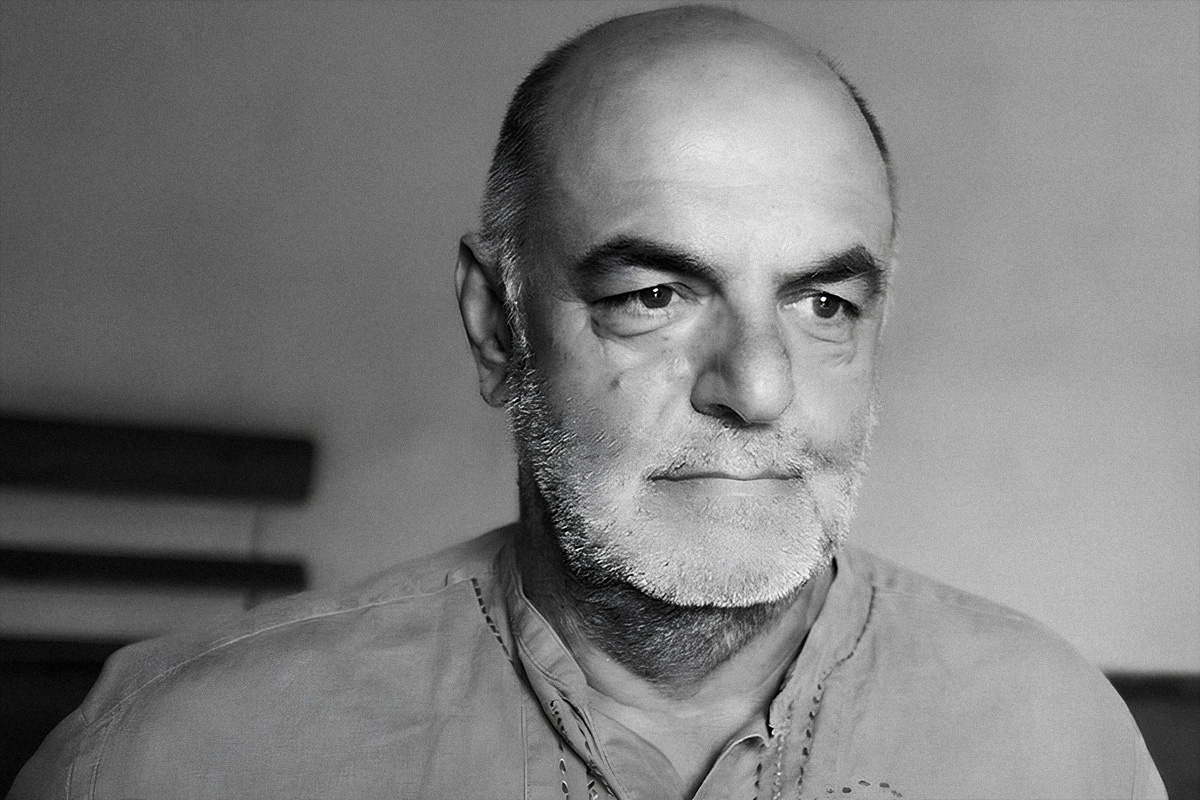
Oleksandr Tokarchuk / Photo from the personal archive
SHORT PROFILE
Name: Oleksandr Tokarchuk
Date of Birth: November 24, 1958
Place of Birth: Kyiv, Ukraine
Profession: developer and teacher of the subject Imagery of Acting Art
Oleksandr Tokarchuk is a practical researcher and developer of a unique system of actor education. He is the author-developer of the method «Factory of Theatrical Pilot Projects — Version Theater» and the corresponding educational program. He is also the developer of numerous applied trainings for education, business, art, and life in general. He has conducted master classes in Croatia, Germany, and Switzerland. He is the founder and head of the School of Imagery for actors. Author of the book School of Imagery (editions of 2011 and 2024) — about understanding the imagery of human behavior.
He performed one of the leading roles in the dramatic feature film Premonition (2019), directed by Viacheslav Kryshtofovych and written by Anatolii Krym. The international premiere of the film took place on December 10, 2019, in Berlin. He is also an actor in the film La Palisiada. The world premiere took place on January 29, 2023, at the 52nd Rotterdam International Film Festival, where the film received the award of the International Federation of Film Critics (FIPRESCI).
We talk with Oleksandr about his unique authorial methodology, about culture, about true narrative cinema and the leading roles within it, about imagery in life, and about life itself.
Andrii Kostiuchenko: Where did your fascination with theatre actually begin, and when did you develop the desire to do something innovative in this field?
Oleksandr Tokarchuk: My fascination with theatrical performance has always been with me, even since my school years. A serious attitude probably formed around 1982, when together with colleagues engaged in theatrical exploration, led by Anatolii Cherkov, we founded a theatre studio that within a few years became one of the most well-known and most popular in Kyiv at that time. Innovative aspirations arose precisely from the necessary and exciting prospect of teaching stage movement and acting skills to new studio participants.
A. K.: Your method works in everyday life. How do you perceive this, and in what way can the School of Imagery teach its students to become more creative people?
О. Т.: We do not teach our students in the classical sense of the word. Expressiveness, imagery, and acting in general can only be learned by a person themselves. Otherwise, these will be clichés, tricks, and other «attractions»… We use heuristic methods of self-exploration. We set creative tasks, formulate conditions, and establish context and direction. There is no predetermined «correct solution». The only correct one is the unique authorial solution of the student themselves. In this way, the development of the quality that we define as «creativity» is stimulated.
A. K.: We would like a bit more explanation. In what way does your own school differ advantageously from the theatrical methods of the schools of Stanislavsky or Mikhail Chekhov? Do you develop in students a creativity they were not even aware of?
О. Т.: Well, first of all, our school is not rehearsal-based, unlike those you mentioned. We position ourselves as a professional pre-rehearsal school. We do not begin working with students the way it is often done in amateur theatre: immediately with rehearsals, etudes, performances… But, on the other hand, we are not a purely technical school that develops plasticity, vocal skills, emotional intelligence… We are somewhere in the middle. Our main subject is self-directing, or, more precisely speaking, the administration of behavioral processes. What is this for? To harmonize expressiveness without unnecessary pathos and hysteria. Self-administration and self-directing are the only ways to achieve the quality of acting we strive for — namely, imagery. Without sensitive self-supervision, it is impossible to achieve a high-quality result here. In other words, having certain technical acting abilities, before entering the rehearsal process one must learn to organize and harmonize one’s behavior, one’s own conduct. If an actor is simultaneously both the instrument and the player of that instrument, then, in addition to developing the capabilities of the instrument, it is necessary to develop the ability to play it, and only then enter the rehearsal processes. This is our position. Acting craft is the foundation, and further, the path to the art of acting — through mastering imagery!
A. K.: By higher education you are a physicist-acoustician. How does such a purely technical education help in solving cultural tasks? I ask as a writer with a background in mathematics.
О. Т.: Mathematical and natural science education gave me valuable analytical and methodological research tools which, thanks to philosophical reflection, can be successfully used, as I believe, in the humanities, particularly in actor education. Especially now, in the current work of the School, we use research and heuristic methods that are formalized in the fact that the educational program consists not so much of lectures and seminars as of laboratory work that includes all the relevant attributes — hypotheses, observations, protocols, and conclusions.
A. K.: Who were your main inspirations and supporters in the difficult task of founding your own theatre school?
О. Т.: The first inspirer was Anatolii Cherkov. He was the person who instilled a love for the theatrical laboratory as a source of new insights, revelations, and practical achievements. Besides him, there were also many authors whose works I became familiar with in one way or another over many years. Inspirations certainly were and remain colleagues in teaching and students of the School from different periods. A significant impulse for creating the project School of Imagery was a series of presentations of my method in 2007 at the Les Kurbas Center, and especially the feedback and communication with invited experts. Among those who inspired the further development of this work, I can name the psychologists Svitlana Vaskovska and Iryna Grabska, specialists from the business environment, acting teachers from several Kyiv theatre studios, and Nataliia Shevchenko, a research fellow at the Les Kurbas Center. Among European researchers whose works once inspired me and with whom I had the opportunity to become acquainted, I would highlight Eugenio Barba and his The Paper Canoe. The «pre-expressive work of the actor» in Barba’s understanding, his theatrical anthropology, once seemed to me to be extremely interesting and fruitful insights.
A. K.: And now to the cinema. It is 2019. And you find yourself working with Kryshtofovych, a well-known Ukrainian film director. He immediately in one of the leading roles in his film Premonition, together with People’s Artists Kseniia Nikolaieva, Larysa Rusnak, and Stas Boklan. A wonderful company. What did you feel? How was it to work there?
О. Т.: It was lively, interesting, and, of course, a little exciting. They are highly accomplished professionals in their field, while I, despite my age, was still a debutant. But I felt very comfortable, joyful, and sometimes even very amused working in such a «company», as you say. I am very grateful to them! I saw their work «behind the scenes», meticulous and demanding. I saw how the preparatory path leads a professional actor «into the frame». It is an invaluable experience. The very delicate, even fragile work of the director on the set broke my previous imaginative idea of the director’s figure during filming. Viacheslav Sigizmundovych (on the set, long-time friends and close colleagues called him Vyachek) had great trust in and respect for the professionalism of the actors. The screenwriter, the well-known writer and playwright Anatolii Krym, was quite often present on the set and approached the necessary corrections to the text constructively, especially regarding the characters’ lines. In general, the work was very instructive for me in many ways.
A. K.: I have heard that you conducted master classes in Germany, Croatia, and Switzerland. What kind of lectures were these, and what kind of audience attended them?
О. Т.: In Croatia… it was a youth theatre festival whose program included master classes by teachers of acting disciplines and training facilitators whom the organizers considered interesting. I was invited as well — and I did not refuse. It was interesting to work with European youth. Young actors from different European universities were memorable for their shared qualities: discipline, attentiveness, and sincere, open curiosity. Later I was invited to teach at the Academy of Arts of the University of Osijek, but unfortunately the Erasmus+ program did not apply to me. Then there was a conference at the University of Zurich devoted to the applied aspects of performative art for society. We had something to offer, we were invited, and we met interesting colleagues from various European universities. We continue to maintain working contacts to this day. At the German Federal Academy of Arts we conducted a master class in actor’s yoga. This is also our own development. We received excellent feedback.
A. K.: And the book School of Imagery? Is it a textbook, or can one immediately begin with practical exercises?
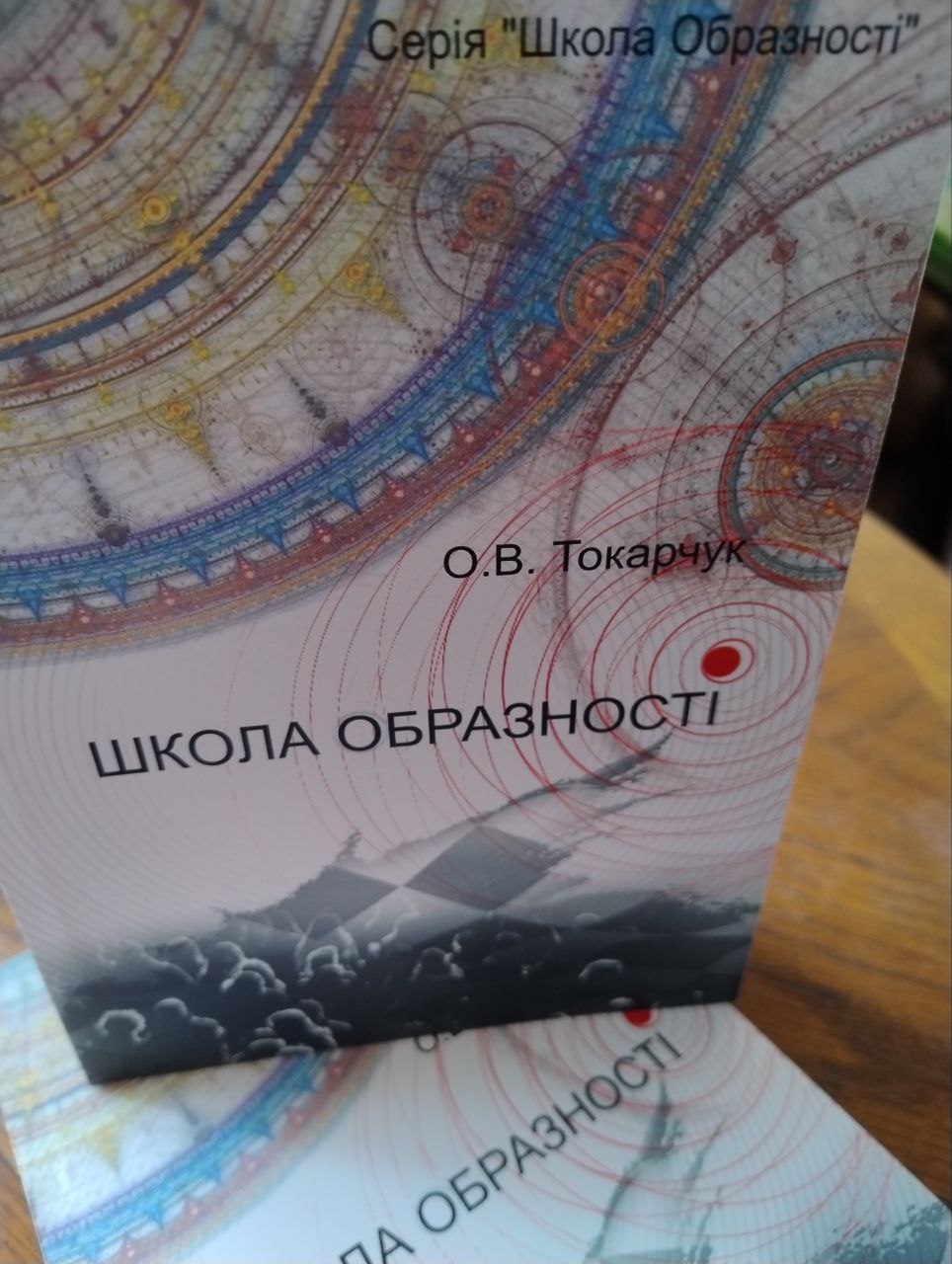
О. Т.: Both editions of this book — and soon an electronic version will appear in both Ukrainian and English — are rather an «introduction to the subject» of the «imagery of acting art». More broadly, it concerns the imagery of human behavior. By the way, these editions were published in a series with the same title. Next, I am preparing other books in this series. They will provide a more detailed and extensive presentation of the theory of imagery of human behavior as a special interdisciplinary direction of humanitarian research, as a proposal for a certain scholarly school. And further, in the future, there will be books about the program and methodology of the School.
A. K.: I also remember there was a great project with the striking title Carnival. Could you tell us a little about it?
О. Т.: Yes, today it is the first part of a trilogy called Transformation. This project is aimed at revising one’s own behavioral assets, both external and internal. It involves identifying and freeing oneself from clichés, unconscious behavioral habits, and even from the power of one’s own acting typecasting. Carnival is the legalization and estrangement of what we call the «behavioral parasite», bringing it into the light, onto the stage, arranging a kind of «celebration» for it — for the one that creates our behavioral «résumé». The second part — Renaissance — is devoted to returning to one’s energetic origins, to the true sources of strength. And Transformation, the third part of the trilogy, is the conversion of behavioral passivity into activity, a dramatic «meeting» of one’s «authentic self» with that challenge, with that «gift» which we once failed to accept in time and which eventually became a burden in the form of a «behavioral parasite». Transformation puts everything back into its proper place… The project was developed over six years before the full-scale barbaric invasion and continues to be reconsidered and developed now.
A. K.: And once again we return to the cinema. This is already the year 2023. You took part as a leading actor in the film La Palisiada, which unexpectedly (or perhaps expectedly) received many awards, including the FIPRESCI Prize at the Rotterdam International Film Festival (2023) and the award for Best Film at the Vilnius International Film Festival (2023). In addition, it received prizes in Poland, Italy, and elsewhere. What new experience did you gain after playing your role in this project?
О. Т.: It was also Ukraine’s submission for the Academy Awards, although it did not make the shortlist… The experience of working with a younger generation of film directors and producers turned out to be quite interesting. Although my role was not among the main ones, it was rather noticeable. I found this character quite familiar — he belongs to my generation and at the same time is rather irritating, so he evoked many unpleasant emotions in me. That made it even more interesting to work on the role. The events of the film take place in Ukraine in 1996, a few months before the abolition of the death penalty. The plot unfolds around the investigation of the murder of a police officer, combining the atmosphere of the post-Soviet 1990s, forensic psychiatry, and a detective storyline. My role is the head of the expert forensic psychiatric commission, on whom the legal responsibility of the suspect/defendant depended. In essence, the question of life or death of the main character was, so to speak, in the hands of this character. A heavy responsibility, which in Soviet times police officers and those who served them accepted lightly and even without compassion.
A. K.: What concerns you most today, Mr. Oleksandr? Your hopes and expectations…
О. Т.: I will not say anything original. First and foremost, I am concerned about the fate of Ukraine. And then, of course, the fate of the School of Imagery and of the direction in actor education, the research of which I have devoted most of my life to. Namely, actorly imagery as the quality that transforms acting mastery into art.
A. K.: What hobbies or interests do you have? What gives you strength and inspiration?
О. Т.: Nothing encourages one to live and create more than love! And, of course, nature — the forest, active water journeys, and fishing. Naturally — the river, the sea…
When copying materials, please place an active link to www.huxley.media
Select the text and press Ctrl + Enter


