PANTELEIMON KULISH: Panko’s Passions

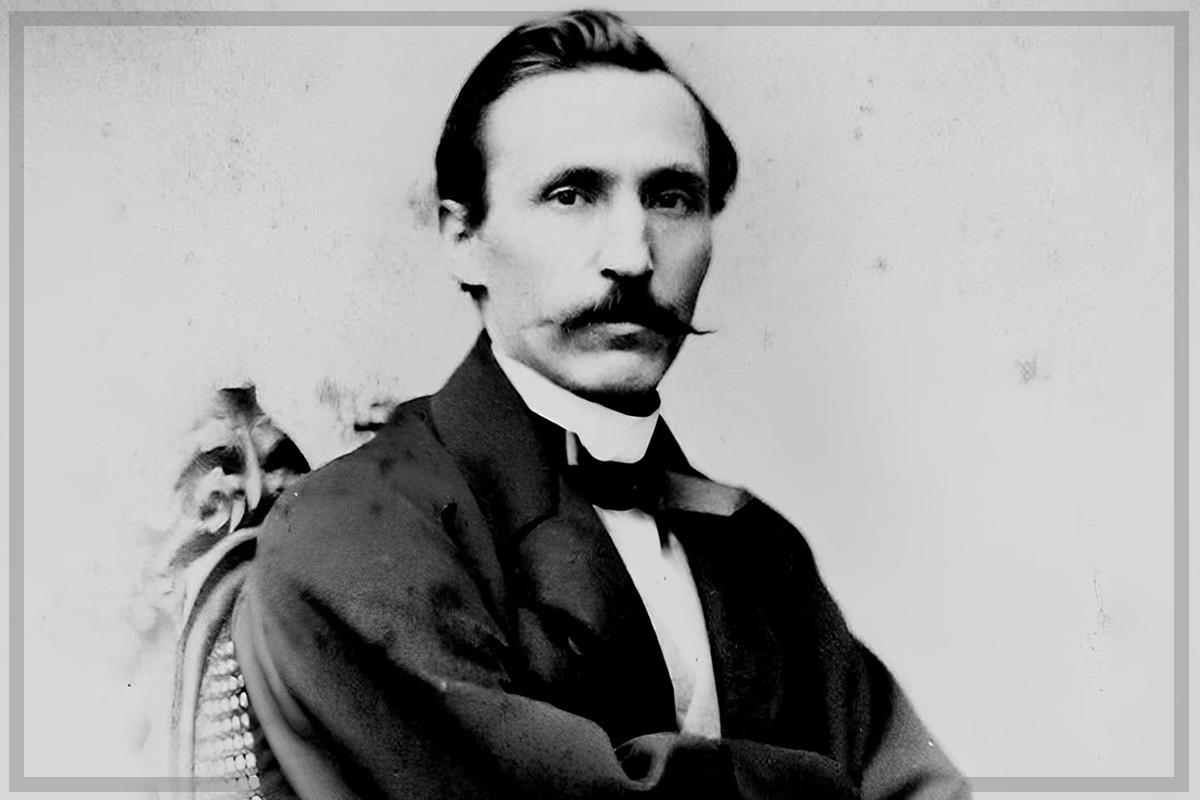
Panteleimon Kulish / library-poems.com
Panteleimon Kulish (1819–1897) went down in history as the author of the first Ukrainian historical novel, The Black Council, the creator of the Kulishivka alphabet and orthographic system, and the translator of the Bible (rendering both the Old and New Testaments into Ukrainian). He also translated the works of Shakespeare, Goethe, and Heine. He researched the history of the Cossacks, collected folklore (compiling the two-volume Notes on Southern Rus’), and worked as an editor and publisher. At the same time, he gained a reputation as a master of intrigues, romantic affairs, and erotic adventures.
COURTSHIP IN MOTRONIVKA
The Bilozersky family was known as the “Blessed Family,” and rightly so. The father had graduated from a theological academy, yet he lived and thought not strictly according to the Holy Scriptures but according to his own unconventional mind. In short, he was something of a freethinker: he played the gusli and read French fluently in the original. Out of love for his wife Motrona, he named their estate Motronivka after her. Together they had four children — two sons and two daughters.
One summer, the elder son, Vasyl, brought home a friend: a lean, self-confident young man. By then, Panteleimon was already teaching at the Lutsk Noble School, had written the historical adventure novel Mykhailo Charnyshenko, was developing The Black Council, and was constantly absorbed in his ambitious ideas and literary plans. Even so, this did not prevent him from setting his sights on Vasyl’s younger sister, Oleksandra. She had studied at private boarding schools, spoke German and French fluently, and was an accomplished housekeeper (years later, Mykola Kostomarov praised her mushrooms, while Taras Shevchenko admired her pickled smelt).
So he straightened himself up, polished his boots, twirled his mustache, and began wearing a path around the beauty. He did everything he could to display his erudition and promise. At one point he appeared carrying his own portrait, as if to say, “Look what a handsome fellow I am.” The young lady did not even glance at it. Deeply offended, the suitor tore the portrait to pieces and flung them into a ditch.
The next day he approached her mother, Motrona Vasylivna, declaring that he was in love and could not imagine a future without Oleksandra. The lady of the house listened to his confused speech, suggested he drink some spring water to cool down, and refused his proposal. The young man flushed crimson and turned into a quarrelsome rooster. He dashed to his room, locked the door behind him, and did not emerge until dusk. By morning he was already standing by the roadside with his suitcase, ready to leave the remote countryside and return to the bohemian, lively, ever-fashionable Saint Petersburg.
A year later he returned to propose again, only to be rejected for a second time. Six months later he made a third attempt. This time he arrived on a “white horse”: The Black Council had been accepted for publication by the journal Sovremennik. The wedding was finally agreed upon — and, as it turned out, Oleksandra had long been deeply in love with Kulish.
WEDDING FEVER
Taras Shevchenko served as the best man and, at the same time, the master of ceremonies at the wedding. The poet and painter, who had just reached the age of Christ, joked incessantly, performed magic tricks (turning a handkerchief into a squirrel), and wished the newlyweds love and many children. After a while, he sang My Evening Star, and everyone fell silent, for he sang with truly divine beauty. No opera singer could have reached such a high note. The guests hung on every word, drank champagne and red currant wine, and feasted on larded pork and gingerbread with caramel.
The romantic euphoria, however, did not last long. No sooner had the ritual songs, jokes, and festivities come to an end than the groom suddenly began to see his chosen one in a different light and changed his mind. Three weeks after the wedding, he scribbled in his diary: “I understand how much sense my wife must possess in order to preserve my affection forever…” Sasha, by contrast, wrote: “He possessed such magnetism that he won my heart forever. I gave up balls, social outings, and all worldly pleasures, and the finest concert for me became the rustle of his papers and the scratch of his pen…”
Then came the trials: exile, a miscarriage, and financial hardship. Sasha took full responsibility for the household, while he reproached her for not knowing how to dress and for ignoring the latest fashions. Her hands and fingers, he complained, were too plump, and she even wore her hair like a village woman. In the end, he set off on his travels, where he found himself another muse — or perhaps even two.
MANYA AND HER BLANCHE DRESS
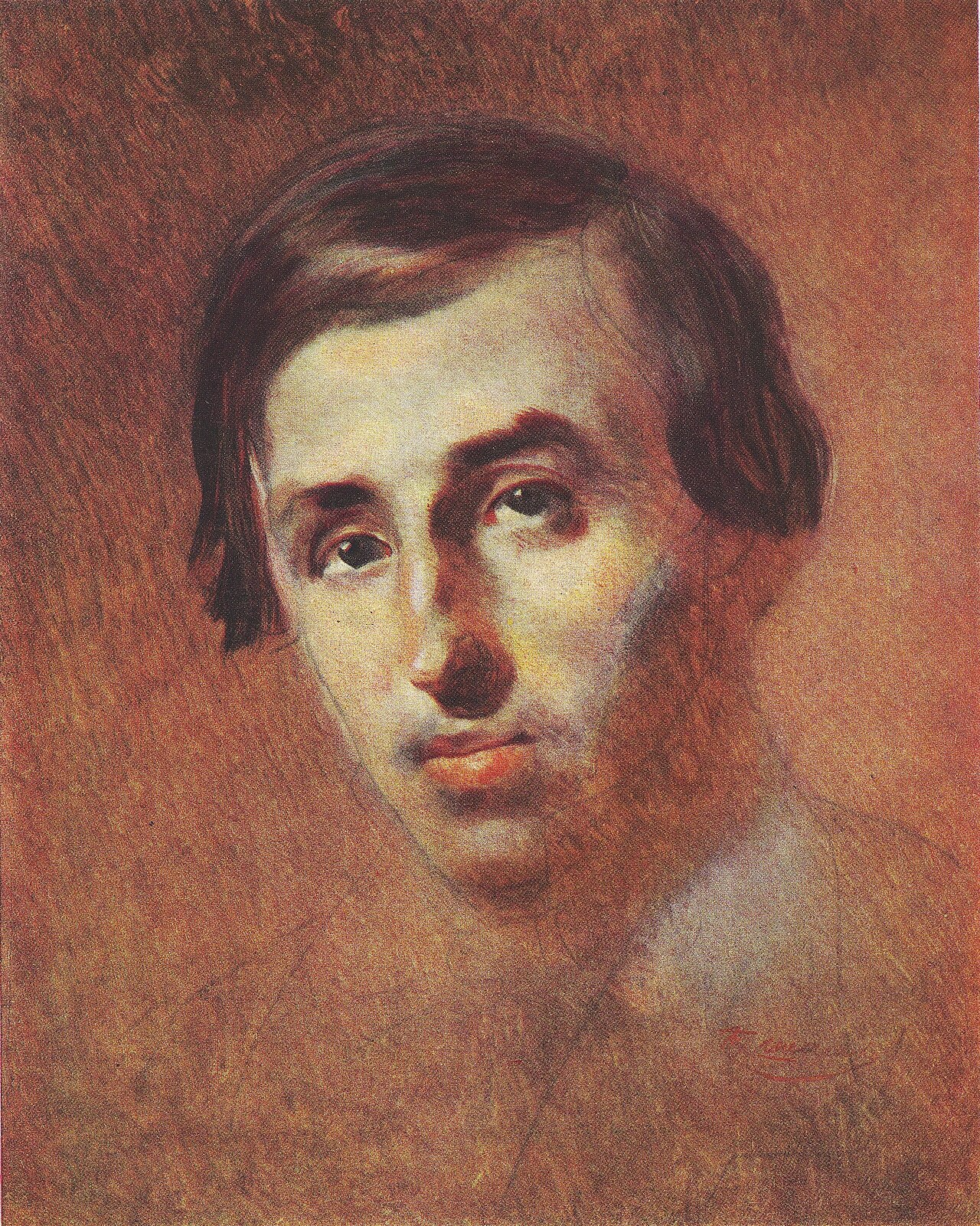
His first passion was Manya, the daughter of the Count of Lynovytsia. With her, he strolled through the garden, rowed a boat, visited the peasants, and attended church services. Together they pulled the oars, wandered among the cabbage patches, and gathered apples directly into the folds of the young girl’s apron. Never mind that she was sixteen and he was thirty-seven.
The folklorist thoroughly enjoyed himself, relished hearty meals, read, as he himself put it, “whatever came to hand,” and listened to the songs of the seamstresses. When alone, he never forgot to write letters to his wife, gladly sharing his admiration and affection for the young girl. He described her sincerity and lightheartedness. Not an ounce of excess around her waist, not a shadow or wrinkle beneath her eyes. She had not yet grown accustomed to wearing a simple blanche dress, but how infectious her laughter was, how delightfully she spoke about chickens, cows, and household trifles! She lovingly entertained her little brother, visited sick peasants, played the piano, hemmed handkerchiefs for him (Kulish), and could expertly distinguish fine linen from coarse.
She promised to sew her guest a Chumak shirt embroidered with silk, while he, in return, instructed her on how to behave before marriage and on her wedding night. He advised her never to rock a baby to sleep: if the child wanted to sleep, it would fall asleep without being rocked. Never mind that there was not a single diaper or motanka doll in his own home — he was, beyond question, convinced of his expertise in literature, household management, and child-rearing alike.
A SOPRANO CAPABLE OF DRIVING A MAN MAD
Then came another infatuation — with seventeen-year-old Oleksandra, half Ukrainian and half French. She played the harp and sang in a dramatic soprano, while the aging ladies’ man swore he would gladly give his soul for her singing. Instead of his soul, however, he presented her with two books: a novel by Walter Scott and a comedy by Molière.
From then on, he embarked on passionate correspondence with both young women at once. In his letters, he disdainfully emphasized the lofty heights on which he stood and the provincial mire in which they remained. He flaunted his intellect and philosophical mind, lectured them endlessly, found fault, and pointed out their shortcomings. Yet the correspondence thrilled the young women. They found it intoxicating simply because it was Kulish himself writing to them.
Sasha noticed everything, and her husband made little effort to conceal his romantic entanglements. Heartbroken, she might overturn the table on which she had just served Panko his porridge after he criticized the amount of salt or even the depth of the bowl. Then she would run barefoot into the street in tears.
Eventually, she fell seriously ill. She took to her bed, refused to eat, and spent day after day weeping with her face turned toward the wall. The renowned Kyiv physician Friedrich Mering diagnosed her with a nervous disorder bordering on insanity. Compared with Manya and the “French girl,” his lawful wife once again seemed second-rate in his eyes.
Divorce, however, was out of the question. After all, who else would wash his long johns, fry his smelt, organize his manuscripts, and serve as both his secretary and archivist?

HOW TO SURVIVE AN ENCOUNTER WITH A SHE-WOLF
Kulish’s affair with Marko Vovchok (Maria Vilinska) flared up unexpectedly, and before long, half of Saint Petersburg knew about it. It all began when the young writer sent him her manuscripts, and the publisher invited the beauty to dinner. From that moment on, the author became a literary sensation, eagerly welcomed at dinners, soirées, and social gatherings. Men lost their heads over her, while she remained reserved, cool, and taciturn. Taras Shevchenko dedicated an elegy to her, and the celebrated man about town Ivan Turgenev eagerly danced quadrilles around the beauty. Kulish was no less determined to impress and openly flaunted the intimate nature of their relationship. He boasted that they shared everything — his pen, his study, and his bed. He gloried in his sexual exploits, his editorial revisions, and the publication of Folk Stories.
To the provincial girls with whom he had corresponded, he wrote bluntly — each separately — telling them to disappear from his horizon and stop bothering him with their tiresome sentimentality, for he now had another woman. Hoping to secure his new passion once and for all, he devised a trip to Berlin, dreaming eventually of settling in Dresden and living the life he desired. To avoid gossip, they agreed to travel separately. But Maria set off with the connoisseur of awkward situations, Ivan Turgenev, while the publisher traveled alone. What else could soothe his wounded ego but to write the following spiteful poem?
And the wolf… no, it was a she-wolf,
Though she was called Vovchok!
And not a she-wolf, but a fox
With a venomous, groveling tongue…
Softly, like a shadow, she would tread,
Stealthily approaching not the hens,
But open, trusting hearts,
And minds both noble and sincere,
Destroying human souls among mankind.
In the end, the ladies’ man returned empty-handed, apologized to his former admirers, reconciled with his lawful wife, and took her on a journey along the Volga. A few months later, he had either recovered or reinvented himself — and promptly embarked on yet another romantic adventure.
GLIBOVA: A WHIRLING TOP
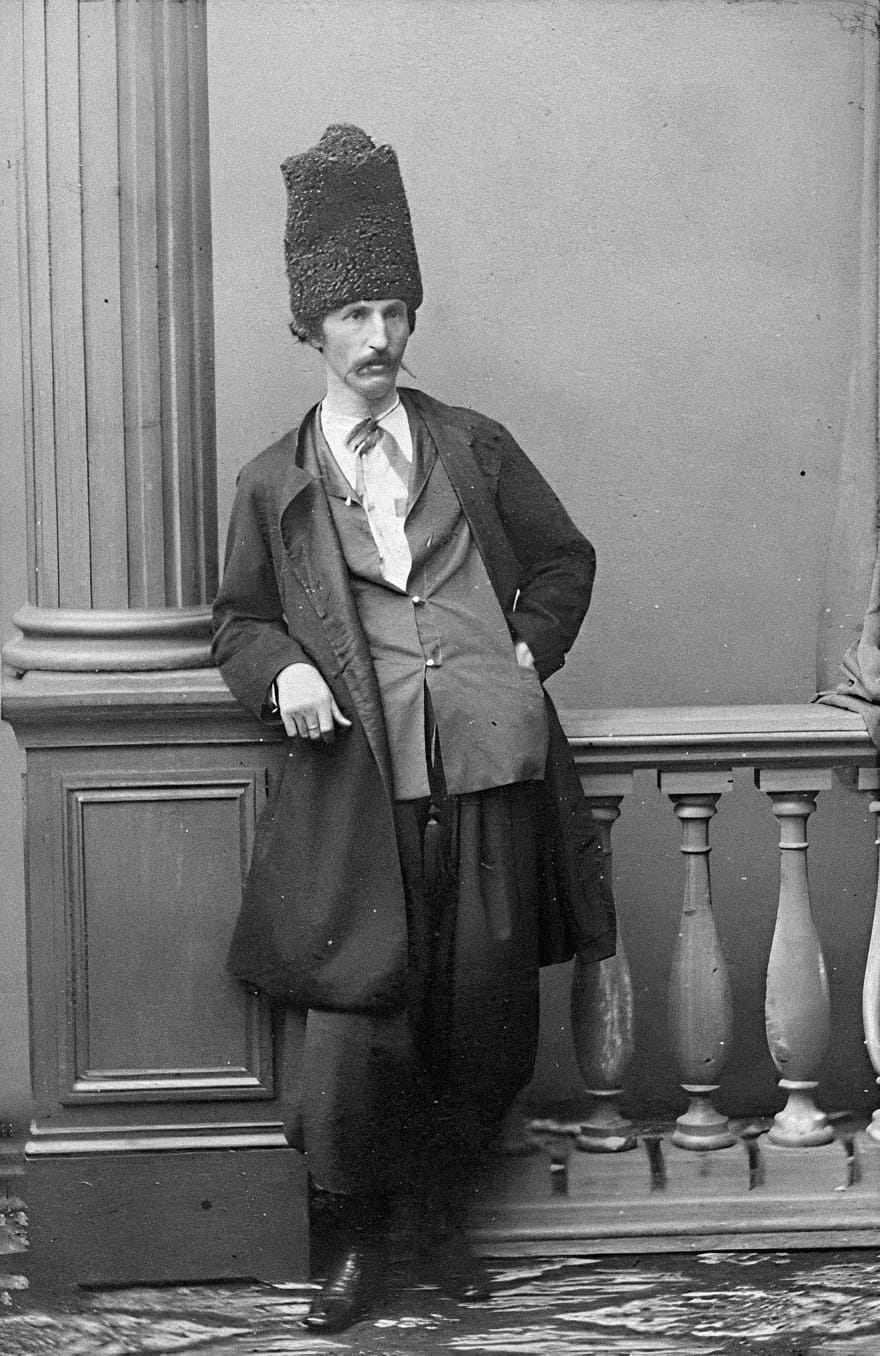
His next passion was Paraska Hlibova, the wife of the celebrated fabulist. She was lively and energetic, spinning like a top. Passionate by nature, she had a reputation for straying from her marriage vows. The playwright came to visit, shared an “erotic elixir” with the hostess, and lost all sense of caution. The lovers openly pursued their affair, making little effort to conceal their adultery.
Kulish seemed noticeably rejuvenated and never tired of telling his beloved: “You have made me young again! You have restored my youth! Life in Chernihiv keeps one wonderfully young!” Before long, the two traveled to Kyiv and checked into the Hotel Europe. There Paraska amused herself to her heart’s content, performed what one might call a hundred and one pirouettes in bed, strolled through the Tsar’s Garden, sampled crayfish soup and chestnuts in syrup — and then abruptly withdrew. Apparently, she had come to know Panko and his headstrong character well enough and decided to remain with the dependable, understandable, and wholeheartedly devoted Leonid.
THE “LITTLE BUG” AND HER “STABLE”
One day in Poltava, a ceremonial banquet — or perhaps a theatrical performance — was held in honor of the renowned writer. Those wishing to attend had to pay an admission fee of three silver rubles. Registration lasted for three days and was closed on the fourth because two hundred people had already signed up, and the hall was in danger of bursting at the seams.
It was there that Kulish met Hanna Rentel, who immediately fell under his spell. Imagine it — a man of such stature, almost a “saint,” had noticed her. Her family and friends affectionately called her “little bug,” while she gazed at the genius in admiration and constantly asked for his advice. For the writer and linguist, this was sweeter than honey, for lecturing, instructing, and cautioning others remained his favorite pastime.
He also found discussions of intimate matters with innocent young women extraordinarily exciting. He would speak at length about the wedding night, separate bedrooms, tickling, and even the best way to “lead the horse into the stable”:
“You should never let your husband see you at your toilet, nor should he see you putting on your skirts, combing your hair, or anything of the sort… Under no circumstances should you allow your husband to spend the entire night with you. From the very first days, accustom him to this…”
This pattern continued for nearly six years. The linguist wandered from one young woman to another, built emotional fortresses, lectured, kept his distance, and surrounded himself with an air of mystery and cold reserve. At the same time, he regularly wrote to his lawful wife, signing his letters, as always, “Forever yours.”
At last, he grew weary — or perhaps simply old and no longer possessed the vigor of his youth. At the age of sixty-four, he returned to Motronivka for good and embraced the quiet life of a country gentleman. He dedicated his Ukrainian translation of the Holy Scriptures to his faithful Oleksandra:
“To my most holy mother… to my most faithful wife…”
As a final testament to her unconditional love, she erected a seven-meter cross over his grave. True, the cross collapsed three times—but that is another story. She renamed the estate Kulishivka and later sold it so that his unpublished works could finally be printed. She herself died in a stranger’s house, surrounded by other people’s embroidered towels, having given everything she owned to her beloved Panko.
When copying materials, please place an active link to www.huxley.media
Select the text and press Ctrl + Enter


