RESURRECTION OF THE DEAD: Dire Wolves and Woolly Mammoths Are Returning

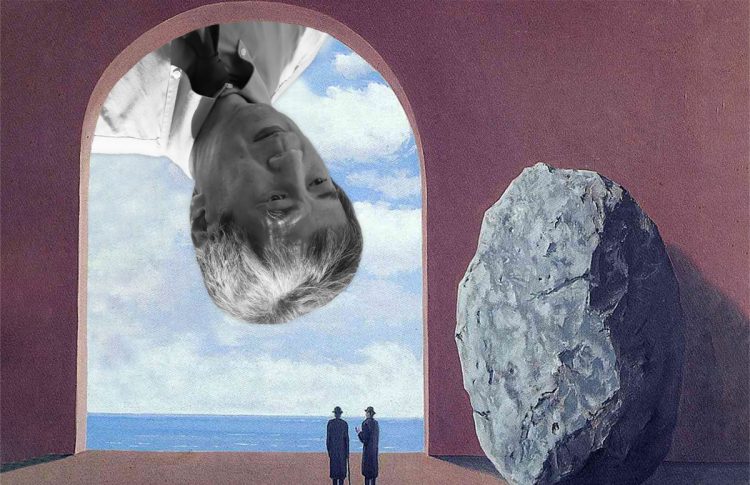
Art Direction: huxley.media via Nano Banana 2
Modern biotechnology is working wonders. Before our eyes, a new industry is being born — the resurrection of extinct animals. It has the potential to reshape the face of our planet by repopulating it with mammoths, Tasmanian tigers, and the dodo bird. Scientists involved in these projects claim that bringing back to life those whom humans once drove to extinction is not only ethical but also economically beneficial. Yet not everyone shares their optimism.
SECRETIVE ROMULUS, REMUS, AND KHALEESI
T
hese experiments were kept under the strictest secrecy by the Texas company Colossal Biosciences. For several years, employees at the Dallas-based laboratory worked on blood cells taken from gray wolves, introducing 20 changes into their DNA. The scientists then extracted the nuclei of the “edited” cells and used them to fertilize egg cells from an ordinary domestic dog. In 2024, a surrogate canine mother delivered the offspring by cesarean section. Three animals of a previously unseen kind and size were born. Two males were named Romulus and Remus by the employees of Colossal Biosciences. The female was named Khaleesi after a heroine from the popular TV series Game of Thrones. To observe the animals in a natural environment, they were placed behind a 3-meter wall in a secret 800-hectare reserve owned by the company. Colossal Biosciences plans to gradually increase its numbers, though it does not yet intend to release them into the wild.
RETURN OF THE DIRE WOLF
The cloned animals are not ordinary gray wolves, but Aenocyon dirus — the so-called dire wolves. This now-extinct species of wolf inhabited North America during the Ice Age, which ended around 11,500 years ago. The genetic material needed for the resurrection was extracted by scientists from the tooth and bone of two Aenocyon dirus specimens preserved in museum collections. One sample is 13,000 years old, the other 72,000. Texas geneticists stated that their clones share 15 genomic sequences with the extinct dire wolf. Thanks to them, the resurrected animals differ greatly from their gray relatives, from whom they diverged evolutionarily at least 2.5 million years ago. First of all, they are about 25 percent larger. Everything about them is bigger than in gray wolves — skulls, jaws, legs, and shoulders. They are fed a specially developed mixture based on beef, horse meat, and venison. On this meat diet, the dire wolves are growing rapidly. Scientists claim that once the pups mature, they will weigh 60–70 kilograms.
IS THE DIREWOLF NOT REAL?
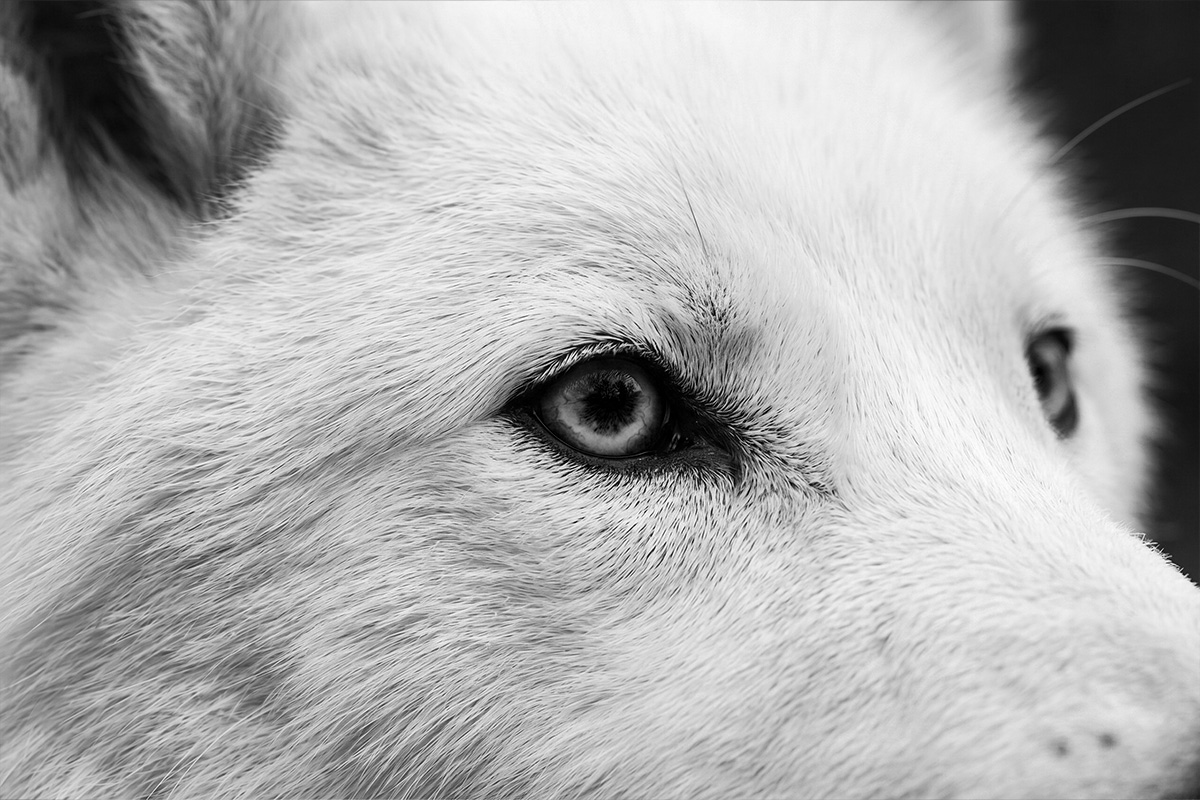
But the main difference between the cloned wolves and gray wolves is their snow-white fur. It is believed that it was from Aenocyon dirus that George R. R. Martin modeled his direwolves in the epic saga A Song of Ice and Fire, which was adapted into the television series Game of Thrones. Yet while fans of the series and Martin’s novels surely welcomed the return of the dire wolf, the scientific community was far less enthusiastic. Some accused Colossal Biosciences geneticists of irresponsibility, warning that the experiments could spiral out of control. If that happened, events might unfold far worse than in Jurassic Park by Steven Spielberg. Other scientists pointed out that the dire wolf still represents a different creature from the true dire wolf, since their genomes are far from a 100 percent match. Which means that in this whole story, there is far more PR and hype than any genuine resurrection of an extinct species.
ALLIANCE OF POP CULTURE AND TECHNOLOGY
Be that as it may, the biotech startup valued at more than $10 billion managed to attract both public attention and an additional $435 million in investment. And cinema undoubtedly helped with that. Among its investors are iconic figures such as Peter Jackson, director of The Lord of the Rings, and Paris Hilton. George R. R. Martin himself gladly poses for photographs holding a resurrected dire wolf. From a marketing perspective, the object of resurrection was chosen perfectly. Direwolves are true stars of pop culture. Films are made about them, rock bands write songs about them, and they appear in popular video games. The story of Colossal Biosciences is an example of how business, in alliance with science and pop culture, can drive technological progress forward.
EXTINCTION: ANOMALY OR THE NORM?
In any case, the company categorically rejects the criticism directed at it and positions itself as being systematically committed to protecting endangered species and restoring populations of extinct ones. Its plans are ambitious, considering that, according to statistics, 99.9% of all creatures that have ever lived on our planet disappeared from the face of the Earth long ago. In numerical terms, that is around 5 billion species. The Devonian extinction wiped out jawless fish, the Triassic–Jurassic extinction eliminated crocodile-like phytosaurs, and during the Cretaceous period, tyrannosaurs and velociraptors vanished. It is hard to shake the thought that extinction may be less an unfortunate anomaly than the norm itself. Yet mass extinctions were caused not only by asteroids striking Earth and natural cataclysms. Around 300,000 years ago, humans took up the spear and began hunting animals on an industrial scale.
THE PEOPLE WHO ATE EVERYTHING!
The first to be eliminated were those who posed a danger to human life. Then came the most desirable prey, which humans competed for with large predators of various kinds — such as saber-toothed cats or the same dire wolves. The latter simply could not withstand competition with humans and died out after losing their food base of horses, bison, giant sloths, and mammoth calves. Along with them, woolly mammoths, dodos, passenger pigeons, Steller’s sea cow, and marsupial thylacines — with whom Tasmanian farmers were unwilling to share their livestock — disappeared forever into oblivion. And many, many others. Yet the process did not stop there — extinction continues today at catastrophic speed. Only recently, the last Slender-billed curlew was officially declared gone across Eurasia. And only two Northern white rhinoceros remain on Earth, but they cannot be bred by traditional means: both rhinos are female.
SCIENCE FICTION PROVIDED THE IDEA
However, for that part of humanity tormented by guilt over innocently slain creatures, hope has finally appeared. Today, the resurrection of extinct species is a rapidly developing field at the intersection of several groundbreaking biotechnologies. The idea traces its origins to science fiction. The term de-extinction apparently first appeared in the 1978 novel Source of Magic by Piers Anthony. After the success of Jurassic Park by Michael Crichton, the concept truly entered popular culture. Inspired by science fiction, geneticists in the 1990s and 2000s learned to extract DNA with remarkable efficiency even from microscopic samples. In 2000, the first resurrection experiment was carried out. Unfortunately, the cloned bucardo mountain goat lived only a few hours. In 2003, the human genome was sequenced, followed by the genomes of many different animals. Then, in 2012, the CRISPR technology appeared, allowing sections of genetic code to be cut from a cell nucleus and replaced with others.
THE GOAL IS THE RESTORATION OF ECOSYSTEMS!
Since then, scientists have repeatedly faced failures in cloning, technological limitations, and ethical objections. Yet over time, scientific debate gave rise to the following argument in favor of reviving extinct species: all of them once played an important role in ecosystems, and after their disappearance, an irreplaceable gap was left behind. Colossal Biosciences keenly recognized this new trend in scientific discussions and placed its bet on species reintroduction. The company now employs 132 scientists — more than the biology faculties of most universities in the world. Dire wolves are not the first such project of Colossal Biosciences. In the secret Texas reserve, alongside Aenocyon dirus, four more cloned creatures are running about — red wolves named Hope, Blaze, Cinder, and Ash, belonging to one of the fastest-disappearing species in the world.
NEXT IN LINE: MAMMOTHS, THYLACINES, AND DODOS
The company continues the work it began in 2021 on projects to return to our planet such animals as the passenger pigeon (Ectopistes migratorius) and the woolly mammoth (Mammuthus primigenius). After all, the dire wolf must eventually be given worthy prey! If, in the case of the dire wolf, the surrogate mother was a domestic dog, then elephants will be used to help resurrect the mammoth. The first mammoth calves are expected to appear as early as 2028. One resurrected mammoth will cost approximately $2 million and, according to its creators, will bring considerable economic benefits to the countries willing to host its population. Despite skeptical assessments and accusations of unethical conduct, the Dodo, Tasmanian tigers (thylacines), and giant flightless moa that once inhabited New Zealand are also awaiting their chance for revival. But the real-life realization of Jurassic Park will have to wait. Unfortunately, the DNA of dinosaurs, which became extinct more than 65 million years ago, has not survived in sufficient quantity or quality for cloning.
Original research:
When copying materials, please place an active link to www.huxley.media
Select the text and press Ctrl + Enter