REVELATIONS IN SCIENCE: John Keely, Etheric Technologies, and Hidden Tubes


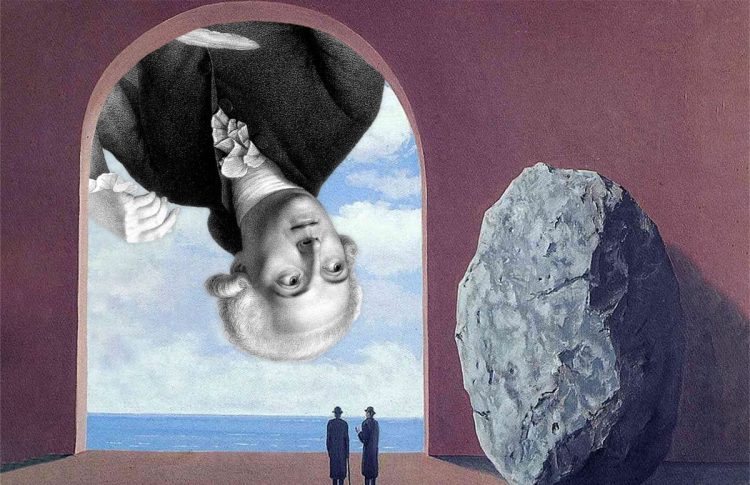
Art design: huxley.media via Photoshop, inspired by René Magritte’s painting Portrait of Stephy Langui, 1961
MORE DANGEROUS THAN IT SEEMS
F
or several decades now, relatively educated people have believed that the era of outright deception, clever trickery, and the complete disregard of obvious facts has left science behind and retreated to circuses and fairgrounds. I fear it is too early to rejoice. The general state of mind in our cheerfully chaotic times is inflamed, disoriented, and craving a miracle. The point is not even that numerous media outlets write about a singer who has lost popularity and, in order to attract at least some attention, declares that the Earth is flat. The point is that people read it. There seem to be fairly clear rules for determining whether a given theory is true, but for those who like to fish in troubled waters, even thinking about this is unpleasant, and they make dubious «discoveries» while ignoring obvious facts.
The results of John Worrell Keely’s (1837–1898) work have been described in the most detailed manner. The assessments by scientists, who drew unequivocally negative conclusions regarding his discoveries, have also been documented. There is no room for doubt. And yet any internet search will present you with a whole series of publications claiming that Keely’s theories are a mystery to modern science, one that is preparing to shake its foundations. How do the authors of these articles deal with critical and directly exposé publications about Keely? Quite simply, they do not mention them at all — hoping they will not be found… At the same time, they neither want nor are able to argue with the evidence devastating for Keely, which accuses him of outright fraud; instead, they simply pretend that none of this exists… Let us try to sort this out.

SYMPATHETIC ETHERIC VIBRATIONS
In 1873, as his adherents later wrote about him, Keely «accidentally made a discovery of a terrifying and mysterious energy, which he subsequently defined as the force of the Ether. For about a year, various experiments continued before he was able, already consciously and under the control of his own will, to reproduce the generation of this energy». In his view, the fundamental principle of nature is vibrations of different frequencies. There are harmonious combinations of vibrations that create, and disharmonious ones that destroy. Vibrations, of course, are known to and studied by modern science. But in his teaching, Keely assigns vibrations a special meaning. Let us see what that is. Naturally, sound as a form of vibration plays an enormous role in Keely’s theory. The first example he cites is harmonic combinations of sounds: the third, the fifth, the octave. The second is the «music of the celestial spheres», created by the Sun, the Moon, and the planets. It is rather interesting to ask the adherents of this theory who has heard it — or hears it…
However, for the followers of Keely’s theories, the answer is obvious — they hear it, and whoever does not hear it is either deaf to it or says so deliberately. In fact, Keely himself writes: «Only a perceptive, finely sensitive soul can understand when these favorable opportunities appear and disappear. This ability can be won only through many victories, when the soul yields to the commands of the heavenly forces». Is that clearer now? If not, then you have an unperceptive and coarsely sensitive soul.
Let us continue. Keely called his science the «physics of sympathetic vibrations». He reduced its foundations to forty laws. The most important characteristic of a vibration is frequency, since, depending on the combination of frequencies, vibrations can interact with one another. Keely’s laws link electricity, magnetism, and gravitation, since all of them are generated by vibrations and therefore are merely particular cases of a single law. Very beautiful and solid — those who recalled Keely said that he knew how to make an impression. His speech abounded in pseudotechnical terms such as «hydropneumatically pulsating vacuum machine», «responsive equilibrium», «etheric dissociation», and even «quadruple negative harmonics», and in general, the most ordinary words in his mouth acquired meanings completely alien to them.
THE EMBODIMENT OF KEELY’S IDEAS
All right, let us step away from theory and see how Keely embodied his ideas in glass and metal. His first successful experiment was the «musical dynosphere». In a cylinder filled with glycerin, a special weight — a diver — floats, along with a zither and a device mounted on its soundboard that sets the soundboard’s vibration in motion. Through a wire connected to the vessel, the «etheric» current generated by the vibration is transmitted, and it is this current that makes the diver rise in the glycerin. At your will, it will rise and fall — isn’t a miraculous force required for that?
«Yes», schoolteachers will say, «the device works, but it is simply the so-called ‘Cartesian diver’!» (which has nothing to do with Cartesius, i.e., Descartes — this is just what it is called). It was first described by the Italian Raffaello Magiotti back in 1648. With the advent of plastic bottles, making such a diver became extremely easy — the role is played by a small plastic vial with very slight positive buoyancy. If you tightly screw the cap of a large bottle, then when you press on it, the pressure inside increases, the volume of air decreases, and the diver sinks; if you stop pressing, it rises. One can, of course, say that this is how etheric vibrations are transmitted — but not for very long.
THE WEALTHY WIDOW
However, fine speeches and obscure constructions did their job: rumors spread that the crafty John Keely had indeed learned how to pump energy out of nothing. The «Keely Motor Company» was organized with a capital of $5,000,000, and there were plenty of shareholders willing to invest. But even the most naive stock market player’s patience is finite. Keely lived lavishly, made donations, bought diamonds — but where were the engines? Interest in Keely’s company began to wane, and the number of people willing to bring in money in anticipation of future profits sharply declined. And then Keely got lucky. A certain journalist wrote an article about him, portraying him as a brilliant scientist who had fallen into poverty because of human indifference.
This article was read by Clara Bloomfield-Moore, the widow of a wealthy industrialist, who was so moved by compassion for the inventor that she supported him financially for the rest of his life. It has been calculated that she invested $100,000 in his business and provided him with a monthly pension of $250 (in today’s terms, approximately $2,200,000 and $5,400) — agree, these are quite substantial sums. In addition, she actively promoted his work in books and articles. Keely greatly appreciated this help — so much so that he immediately announced the discovery of a new energy source, «vibrational force».
This was done because the shareholders of the Keely Motor Company, who had received no compensation for their expenses, could lay claim to income generated by his work, to the detriment of Clara. The shareholders sued Keely, and he even spent a short time behind bars «for contempt of court», as he refused to disclose his «secrets» to the court. Prison is no picnic, and Keely allowed an expert mechanic to examine his apparatuses, who acknowledged that the devices were different. That was enough to secure his release (but not enough to prove that they worked).
HOLLOW TUBES
Clara Bloomfield-Moore wished to prove Keely’s rightness almost more fervently than Keely himself. She began inviting prominent scientists to offer their opinions. This tended to do more harm than good — Keely demonstrated his experiments to them, but did not allow them to inspect the equipment. However, in November 1895, the physicist Addison Burke and the electrician Alexander Scott were granted three slightly more detailed audiences with Keely. During the first of these, they skillfully played the role of enthusiastic admirers, expressing particular amazement at the levitation tricks, when heavy loads rose into the air by themselves and then, under the influence of sounds, fell into water. As a result, they were allowed to see more in the following days. Their observations were fully explained by the fact that the loads that rose upward and then flew downward were, in fact, hollow spheres and disks.
The system was balanced so precisely that, depending on whether the pressure inside them decreased or increased, these objects would sink or float. The pressure differentials required for this were created either by pumping air out of the space inside the spheres and disks or, conversely, by forcing it in through a thin tube. Burke and Scott decided to clarify this point. Since thin tubes led to all parts of Keely’s apparatus, and Keely insisted that they were solid, without openings, Scott quietly tore off the end of one such tube and confirmed that it was hollow! Everything became clear — Keely’s tricks operated on compressed air.
Mrs. Bloomfield-Moore then turned to another professor of physics, Lepelletier-Scott. After observing Keely’s experiments, he acknowledged the presence of a force previously unknown to science, and Keely was already celebrating. But all three scientists, having discussed each visit, decided that the experiments should be repeated in such a way that the thin tube that had aroused suspicion would be cut in their presence. Keely categorically refused! After this, much became clear even to Clara, who immediately ceased financing Keely’s activities (though she retained his personal pension of $250 — a kind soul!).
THE IDEA DID NOT OUTLIVE ITS CREATOR
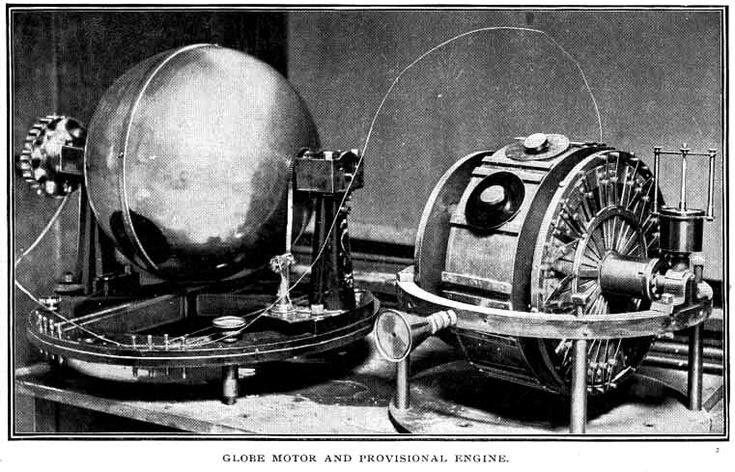
In 1898, Keely died, and the «Keely Motor Company» immediately took possession of his laboratory in order to dispose of all valuables found there, above all, the secret of his experiments, if it was indeed a secret and not a clever trick. They discovered numerous double ceilings and floors riddled with hollow copper tubes, and in the foundation, a compressed-air reservoir (a sphere weighing three tons). All movements depended on the supply of compressed air through these tubes. For the especially skeptical, Keely would even demonstratively saw through one of these tubes — he knew which one he could. And in the attic of the house, there was a compressed-air cylinder that powered the entire show. A motor controlled by rubber bulbs, which were pressed with the foot when necessary, was used as a compressor. At that point, discussions about Keely’s great invention could be closed.
Even Clara Bloomfield-Moore could not withstand these revelations. When her grandson, Count Eugene von Rosen, an attaché of the diplomatic mission of the King of Sweden and Norway in England, conveyed this news to his grandmother, she did not stir. «I hope», she then said, «that he passed his secret on to someone before his death». Two years after Keely, she too died. Over the course of their collaboration, her fortune had been reduced fivefold. And the press, which had previously listened with reverent attention to Keely’s reflections on his great achievements, now trampled his reputation with the enthusiasm of those recently deceived. «Keely — the grand deception of the century», «The secret of the Keely motor no longer exists» — these were typical newspaper headlines of the time. Later, one of Keely’s close friends recounted that he had asked Keely what epitaph he would like to see on his grave and heard the reply: «Keely — the greatest fraudster of the nineteenth century». He might have had rivals, but he could have competed…
Nevertheless, Keely has not been forgotten. No, in scientific circles, no one discusses his «discoveries» — everything about them is clear: it was fraud, careful, well thought out, beautifully presented, but fraud without the slightest distortion of the meaning of that word. Yet among popular and semi-scientific publications, you will easily find highly complimentary assessments of his «teachings», even though more than a century has passed, and there is no difficulty in finding convincing materials in which this charlatan is caught in outright falsifications. Perhaps the reason lies in the foundations of his «doctrine» as he described them — with great skill — vague, not immediately falsifiable, and at the same time meaningless. But the fact that there are many such publications is a very bad symptom. It means that a quite noticeable part of society believes in ghosts, wants to believe in ghosts, and, for the sake of that belief, will close its eyes to anything.
LITERATURE
- KEELY’S SECRET DISCLOSED; Scientists Examine His Laboratory and Discover Hidden Tubes in Proof of His Deception. (PDF), New York Times, January 20, 1899. Archived July 1, 2017.
- Z. K. Silagadze. Perpetuum Mobile. Archived copy from April 15, 2009 at Wayback Machine // Scientific.ru, 30.04.2004
When copying materials, please place an active link to www.huxley.media
Select the text and press Ctrl + Enter