TELEPATHY INSTEAD OF PRAYER: who will own your thoughts


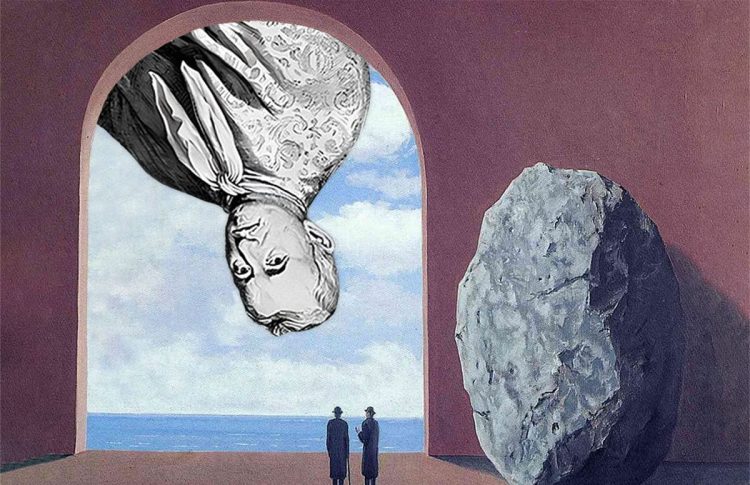
Photo by Andrej Lišakov on Unsplash / gizmodo.com.br
The origins of science can easily be traced back to mysticism and magic. But if alchemy and astrology were the forerunners of modern chemistry and astronomy, what can we say, for example, about telepathy? Do cutting-edge technologies, seeking to «see a person through», compete with the spiritual practices of the past? And is it possible that they not only define a utopian horizon for contemporary communication, but also turn your thoughts into a commodity?
IT ALL BEGAN WITH «INTELLIGENT SHIPS»…
T
elepathy is commonly understood as the transmission and reading of thoughts at a distance. This highly seductive idea has a long history. First, knowing what another person truly thinks of you is an extremely useful skill. Second, when we think, we clearly hear a voice in our head. It seems logical to assume that someone other than ourselves might be able to hear it. For example, God — or another person in a certain proximity to the divine: a saint, a seer, a priest.
After all, even a simple prayer is nothing more than an attempt to establish mental contact with a divine person. Some Homer scholars are inclined to see the first written hint of telepathy already in the Odyssey. It contains a story about the Phaeacians, inhabitants of the island of Scheria, which is usually identified with present-day Corfu. The Phaeacians apparently had something akin to a telepathic connection with their ships. Homer describes it as follows:
«They have no need of helmsmen or steering oars; for the ships themselves are endowed with intelligence, they know each man’s thought and purpose, and in the twinkling of an eye they traverse the sea, shrouded in mist and cloud, and never fear harm or wreck».
What exactly Homer meant by «intelligent ships» remains unknown. Telepathy still remains a scientifically unproven and, most importantly, unexplained phenomenon. Yet its relationship with science, culture, and religion has a history that is by no means a short one.
THE ABDUCTION OF THE «DIVINE GIFT»
In Christianity, abilities akin to telepathic ones belong to the divine person of Jesus Christ. In the Gospel of John 2:25 it is said that the Lord «had no need that anyone should testify about man, for He Himself knew what was in man». Jesus possessed complete insight into human hearts — their true thoughts and intentions — and therefore had no need for additional external testimony about a person.
Yet human beings, created according to the Bible in the image and likeness of God, were also not averse to somehow acquiring this astonishing ability. For it opened up incredible possibilities. If words and images can be transmitted over great distances, then one can alter human consciousness, control behavior by instilling the desired thoughts and desires.
One could gain access to any secrets, replace some memories and ideas with others. These dreams found expression in numerous utopias and dystopias, where the image of an ideal «collective consciousness» emerges — a society of total control that knows everything about everyone. It must be acknowledged that since the Middle Ages humanity has made considerable progress in this direction. For what are modern radio, television, mobile communication, and social networks? Are they not the technological embodiment of ideas about telepathic connection? Once Prometheus took the heavenly fire and gave it to humankind. An echo of this ancient defiance of God can be discerned in attempts to endow humans, bypassing God, with the divine gift of telepathy.
«LIE DETECTORS»: LIVING AND NON-LIVING
As is well known, the possibility of creating a «lie detector» appeared in 1914, after William Marston invented polygraph testing. But before a polygraph device capable of penetrating the secrets of the human soul was devised, reliance was placed on the human polygraph. As early as the 13th century, Thomas Aquinas was said to be able to read the thoughts of those around him without effort. The telepathic «Pandora’s box» was finally opened in the Late Middle Ages. The famous physician and alchemist Paracelsus, with the help of the «world spirit», could establish contact with people located at considerable distances.
In the same period, the legend of Mother Ursula Shipton was born. When Ursula’s mother saw her newborn child, she died instantly of terror — the girl was so grotesque in appearance. This, however, did not prevent her from later marrying — a telepath, apparently, had little difficulty doing so. Before growing into a full-fledged «Mother», the girl amazed everyone by reading minds and moving chairs at a distance. Yet her ability to steal food remotely hardly endeared her to those around her.
History, however, remembers her not so much for her telepathic and telekinetic abilities as for her prophecies in the form of «blank verse», which Mother Shipton produced on an industrial scale. Among the most famous were her predictions in 1513 of Henry VIII’s invasion of Normandy, the Great Fire of London in 1666, the destruction of the Spanish fleet, and the appearance of tobacco and potatoes in Europe. Having foretold all this, Mother Shipton died long before the events in question.
THE BIRTH OF THE «SCIENCE OF TELEPATHY»
The concept of what we today call telepathy was first proposed in 1882 by the English agnostic poet and amateur psychologist Frederic Myers. Science, at that point, was still nowhere in sight. Myers was the son of a clergyman who had come to doubt the truth of the Christian faith. His worldview drift toward agnosticism was interrupted by the suicide of his life companion, Annie Eliza Marshall. This tragedy threw the unfortunate Myers into the arms of female mediums who claimed they were capable of transmitting messages from the dead.
In the minds of people of that era, mysticism and science often coexisted in a paradoxical yet quite peaceful way. For example, a passionate defender of spiritualism was Alfred Russel Wallace, Darwin’s associate and the co-author of the theory of natural selection. Spiritualism also inspired the engineer Cromwell Varley, creator of the transatlantic telegraph, as well as such eminent physicists as Oliver Lodge and Lord Rayleigh. Therefore, when Myers founded the London Society for Psychical Research in 1882 together with distinguished Cambridge scholars, he was hardly an exception.
The attempt to explain the inexplicable was, by the standards of the time, fairly professional. To begin with, as was customary, a scientific term was introduced. To express the idea of «touch at a distance», Myers combined the Greek words tele and pathos. Thus the concept of «telepathy» was born, and in place of apparitions and ghosts appeared «real phantasms». It then became possible to proceed both to the study of the neuropsychological foundations of communication and to experiments aimed at detecting invisible energetic phenomena — the so-called «psychic force».
At that time, humanity was intoxicated with euphoria over the invention of the telephone, the phonograph, wireless telegraphy, and the discovery of X-rays. Against this background, try doubting that the invention of a machine capable of transmitting thoughts at a distance was just around the corner… Especially since its appearance was predicted, in discussions of the future of electrical communications, by such authorities as Thomas Edison and Nikola Tesla.
DYSTOPIAS AND MILITARY TECHNOLOGIES
In the 1930s, thanks to the American scientist J. B. Rhine of Duke University, the term «parapsychology» entered common usage. His book Extra-Sensory Perception was a major success. In it, Rhine summarized the results of his experiments in mind reading using Zener cards and the calculation of statistical probabilities. Alas, despite the efforts of enthusiasts, the possibility of achieving «ideal communication» remained on the periphery of serious scientific research.
In the twentieth century, the «telepathic» discourse, although closely connected with scientific and technological discoveries, nevertheless occupied an intermediate position between science and art. The idea of expanding cognitive capacities through technology turned out to be inseparable from the history of modern media. The key metaphors of telepathy outlined the contours of an imagined world in which understanding without words is possible, giving rise to distinctive utopias of communication: «magnetic», «electromagnetic», «cybernetic», and «digital».
Cinema and literature made a decisive contribution to this, especially science-fiction writers such as Isaac Asimov, Robert A. Heinlein, and Arthur C. Clarke. After 1945, it seemed that the future of individual states and of humanity as a whole depended on the development of the military-industrial complex. It is hardly surprising that the Cold War led to a surge of interest in telepathy, which was regarded as a technology capable of breaking the arms race out of a deadlock.
For example, technologies of «remote viewing» could help circumvent an adversary’s defense systems. The arms race gave rise to a new field of research known as «psionics», or «psychotronics». The term was proposed in 1973 by Czech scientists at the First International Conference on Psychotronic Research, held in Prague.
CONSPIRACY THEORIES AND TALK SHOWS
In the Soviet Union, projects to study potential forces hidden in the «bionics of the human being» date back to the 1920s, when electrical engineer Bernard Kazhinsky began speaking about the existence of «biological radio communication». Naturally, such experiments were top secret. By the 1960s, the USSR was convinced that the development of «bioinformatics» would lead to the emergence of machines capable of tracking, testing, and studying «extrasensory perception». The U.S. National Security Agency was well aware of this and was developing its own projects to investigate extraordinary psychic states.
The existence of the CIA’s MK-Ultra project, which from 1953 to 1973 worked on brainwashing technologies, including those involving narcotic substances, is often associated with conspiracy theories; however, it did in fact exist. From the 1970s onward, the efforts of the opposing sides were supported by serious scientific publications. Thus, in 1974 the journal Nature published an article by Puthoff and Targ, «Information Transmission Under Conditions of Sensory Shielding». The authors concluded that «there exists a channel through which information about a remote location can be obtained by means of a perceptual modality not yet identified».
Many of Puthoff and Targ’s experiments were conducted with the participation of a talk-show star of the time, the psychic Uri Geller, who demonstrated on British television his ability to bend spoons using mental energy. And although many consider Geller a charlatan and a conjurer, this did not prevent telepathy from becoming a factor that seriously influenced geopolitics, science, and culture. Movie screens and bookshelves were flooded with mind-penetrating aliens, socially rejected telepathic children, and other similar characters. Scientific experiments only fueled interest in the topic: so is it, after all, possible or not to transmit and read thoughts at a distance? Scientists continue to seek the answer.
ELON MUSK’S «TELEPATHY»
In 2005, participants in a study in the United Kingdom were asked to guess who exactly would send them an email. Correct answers reached 47%, which was significantly higher than the probability of random guessing. In 2014, scientists for the first time recorded a «telepathic» transmission from a participant in France to a participant in India of the words hola and ciao, encoded as light signals. Four years later, in the United States, three people united into a «brain network» (BrainNet) played a kind of Tetris. Task performance accuracy exceeded 81%.
Engineers and physicians, together with neurobiologists, are creating interfaces «brain–computer» and «computer–brain» based on the effect of synaptic transmission. They allow users to type text by thought alone or to operate bionic prostheses. Moreover, these technologies make it possible to transmit data between living organisms via a «brain–brain» interface. Scientists have already succeeded in connecting the brains of two animals, a pair of humans, and even the brain of a human and an animal. In the latter case, a volunteer was able to make a rat move its tail using nothing but the power of thought. Tech giants such as Meta, Google, and Elon Musk’s Neuralink have already joined the race to create brain–computer interface technology.
The goal is to develop a brain implant connected to a computer network. In May 2023, Neuralink announced that it was moving from animal trials to human trials. In early 2024, a patient with paralysis of the limbs was implanted with such a chip and was able to play chess and watch the game simply by focusing their thoughts on moving the cursor across the screen. Musk does not hide the fact that he draws inspiration from ideas taken from science fiction. Therefore, the name of the new brain implant was, in a sense, predictable — «Telepathy».
THOUGHTS AS A COMMODITY AND THE «MENTAL PASSWORD»
It appears that with the development of technology, humanity is indeed entering a telepathic era. In 2025, Stanford University announced that it had developed a neural interface capable of hearing the «inner voice». Without uttering a single word or moving your lips, you articulate thoughts to yourself, and they are translated into text on the screen. In the future, to issue a command or receive typed text, it will be enough simply to think, rather than tapping your fingers on a keyboard.
Apparently, over time, mental programming, smart home control, or direct communication between people via neural interfaces will become as much a part of everyday life as smartphones are today. But will this create a threat to privacy and the prerequisites for bringing another eerie dystopia to life? After all, a neural interface will gain access to your most intimate experiences, fears, and fantasies.
To protect privacy, scientists are training AI to distinguish signals of inner speech from attempts to say something aloud. You will also have a «mental password» — a phrase that mentally turns the interface on and off. Despite this, the latest «telepathic» technologies raise more questions than they answer. In reality, people do not fully understand how the brain works; accordingly, it is impossible to calculate all the consequences of implanting chips into it. Even the developers themselves do not always know exactly what data the device collects.
And what, for example, will happen if a neural interface is hacked? Who will control access to neural interfaces? Will someone be able to read your thoughts without your knowledge? Should private thoughts be protected by law, like personal correspondence? It is obvious that companies developing neural interfaces will be interested in collecting as much data as possible. This means that, potentially, thoughts could become the same kind of commodity as likes on social networks.
XXX
While all these questions remain unanswered, the Phaeacians, Thomas Aquinas, Paracelsus, and even Mother Shipton appear, against the backdrop of modern telepathic technologies, as harmless amateurs. There is, however, a well-founded suspicion that neural interfaces are unlikely ever to pose serious competition to traditional spiritual practices and prayer.
Original research:
- Inner speech in motor cortex and implications for speech neuroprostheses
- Study of promising speech-enabling interface offers hope for restoring communication
- An inner-speech decoder reveals some mental privacy issues
When copying materials, please place an active link to www.huxley.media
Select the text and press Ctrl + Enter