THE WILD UKRAINIAN WOMAN SOFIA YABLONSKA

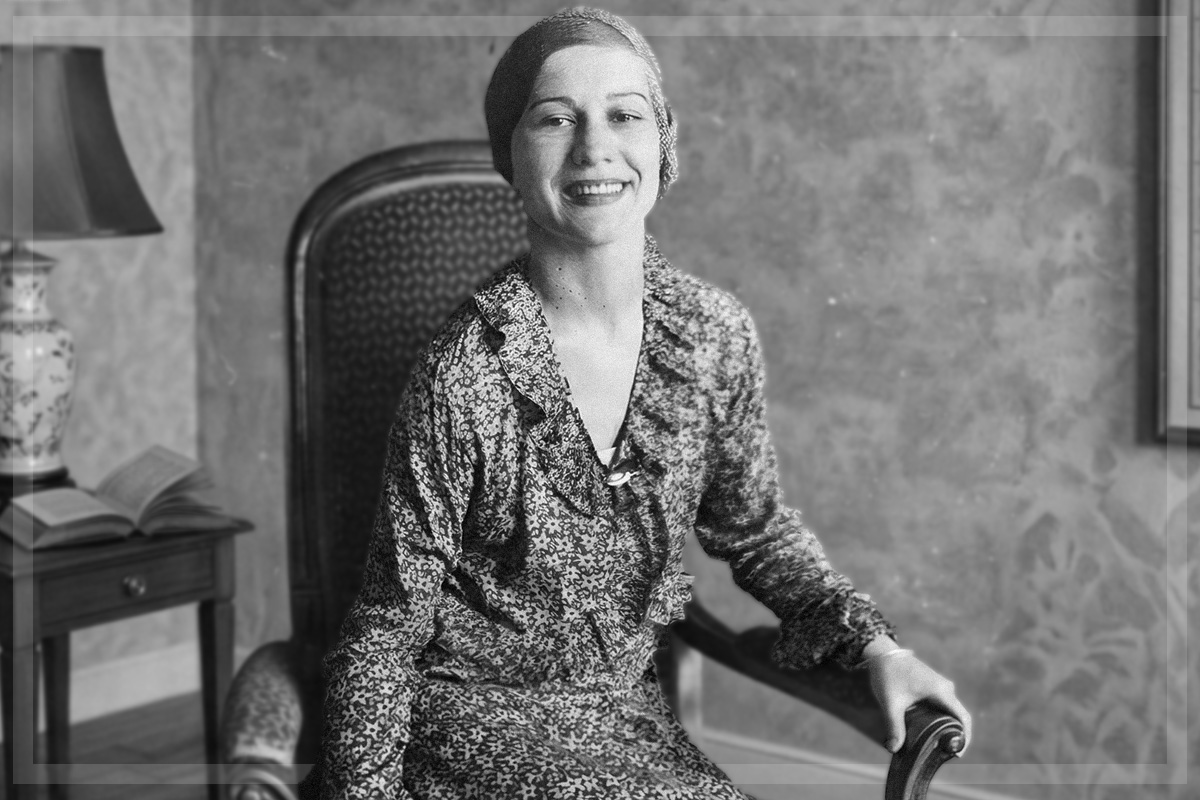
Sofia Yablonska / Sofia Yablonska Foundation. Art design: Huxley.media via Adobe Photoshop
Sofia Yablonska (15 May 1907 — 4 February 1971) was a writer, journalist, and photographer who especially loved capturing women’s portraits. She was the first Ukrainian female traveler (a travel blogger ahead of her time) to complete a journey around the world and describe her impressions in the books Charm of Morocco, From the Land of Rice and Opium, Distant Horizons, and Two Measures — Two Weights. She was known by the nicknames Wild Ukrainian Woman and Teura (a bird with red feathers). From a young age, she decided to live in such a way that no one could ever deprive her of a home, and she consciously wandered the planet throughout her life. She spoke French, but wrote her books exclusively in Ukrainian. On every journey, she always took with her Kobzar, a carved plate, and a traditional Hutsul motanka doll.
THE LONG ROAD TO VANILLA
S
omething did not work out in Taganrog, the hometown of Anton Chekhov. Perhaps the dry climate did not suit her, nor the biting winds, the tobacco scent of chicory, or the sweetish smell of ragweed. She was irritated by the labor school where the young girl was taught to make shoes, and by the language that sounded overly rounded to her ear. Then there was her brother Myron, who did not survive typhus and remained forever by the shores of the Sea of Azov. At last, in 1921, her father reconsidered his political views (which had been Russophile) and brought the family back home to Lviv Oblast. There he received a parish, while Sofia began grasping at everything at once. She learned cutting and sewing, trained in teaching and acting, and attended courses in commercial activity for women. Yet something inside her was restless and rebellious, longing to act against expectation, against convention, against the current.
Not to follow the path of a Galician priest’s daughter, whose only interests were cooking, embroidering, and praying, but to try to leap above her own head. So she began earning money on her own instead of waiting for some young priest to pull a few zlotys from the pocket of his cassock. The young woman studied documentary filmmaking, managed two cinemas in Ternopil, and dreamed of travel, because even as a child she had been fascinated by vanilla pods: “How wonderful that country must be, where an ordinary bean gives off such fragrance…” Because of this, she promised herself: “Perhaps one day I will fall into a very deep abyss, perhaps I will break through the earth and finally reach the land where vanilla grows”. Later, having saved a little money, she fled to Paris in 1927.
THE NOBILITY OF A “WORTHLESS LITTLE CREATURE”
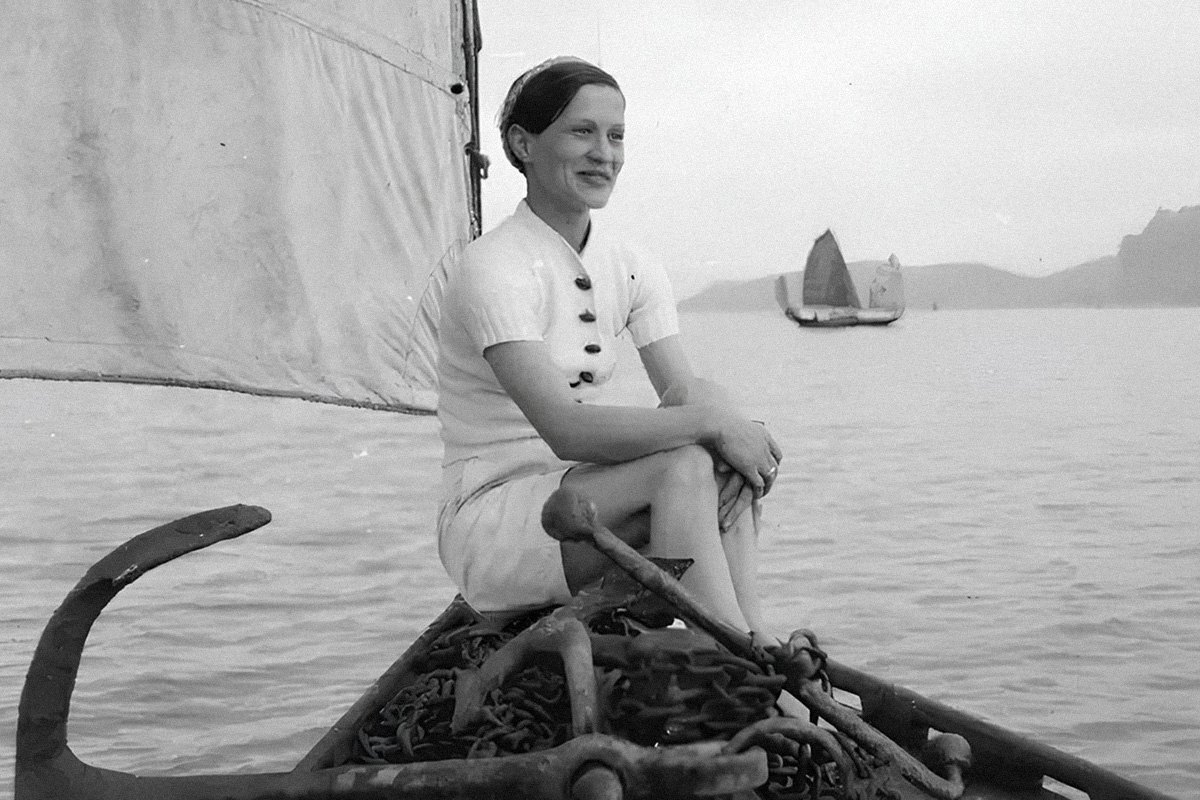
Such an act was considered unheard of, for it was deemed improper for a twenty-year-old girl to travel unaccompanied to the city of love and vice. To the city of fashion, cabaret, avant-garde, and jazz. It was forbidden for an unmarried young woman to wash windows, pose nude for blockheaded artists (three hours — 30 francs), race across the stage, study photography, dream of an acting and literary career, and even live without marriage to the painter Christian Calliar. Soon she met another émigré of the same kind, Volodymyr Vynnychenko, hoping to receive a review of her text. The forty-seven-year-old ladies’ man christened the girl “a tiny but interesting product of our dear history”, then called her a sexy doll, and became quite seriously infatuated, since Sofia was slender and delicate, with dark copper-tinted hair, clear skin, lively brown eyes, and almost childlike hands. At first, he resorted to tried and tested methods and devices. From the position of a master, he advised her to begin with short prose rather than novels. When nothing came of it, he gave way to wounded pride. Behind her back he called her a worthless little creature and mocked her imperfect Ukrainian, claiming that the language of the “debutante” was dreadful, Galician.
WITHOUT MELANCHOLY
Be that as it may, Sofia deftly slipped from his lustful hands and headed two and a half thousand kilometers away to Morocco, for she longed to discover Africa for herself, to feel its colors, and to tell her compatriots of its wonders. While Galician women concerned themselves exclusively with family and children, baked cheesecakes and blessed willow branches, and eagerly read Olha Franko’s advice on preparing Lviv-style tripe soup “popivna”, she wandered through Marrakesh. On the very first day she wrote in her diary: “Drunk with impressions, with the strong smell of sweaty bodies, roasted lamb, tallow, oranges, shouting, dancing, Moorish and Arab music, I returned from the Arab entertainment square. My head spins like the wheel of a child’s pinwheel. I stand on the threshold of my room, holding on to the walls with one hand, while with the other I search for the electric switch…”
She went on to describe storytellers who, for five sous, spun absurd tales; doctors with herbs and fish scales; fortune-tellers who established contact with Allah through trembling fits. Snake-eaters (the poisonous pleasure cost ten sous), dancers, fire-swallowers, and prostitutes. She visited a harem, drank tea with a local caïd, and endured his attempt to gift her one of his wives — an eleven-year-old girl. A strange conversation arose with the sultan, who considered Ukrainians and Russians to be one people. The traveler immediately drew a map and pointed out that Ukrainians numbered forty million, and that Ukraine was one and a half times larger than France. She did not stay in a hotel, but lived among ordinary Moroccans. In the company of silent palms, lemons, oranges, and olives. Above her head — the blue of the sky, with not the slightest hint of urban melancholy. Nearby were people who, when laughing, held their hands over their hearts, explained every event as “the will of Allah”, and advised one to kiss the hand one could not cut off.
AROUND THE WORLD IN TWO YEARS
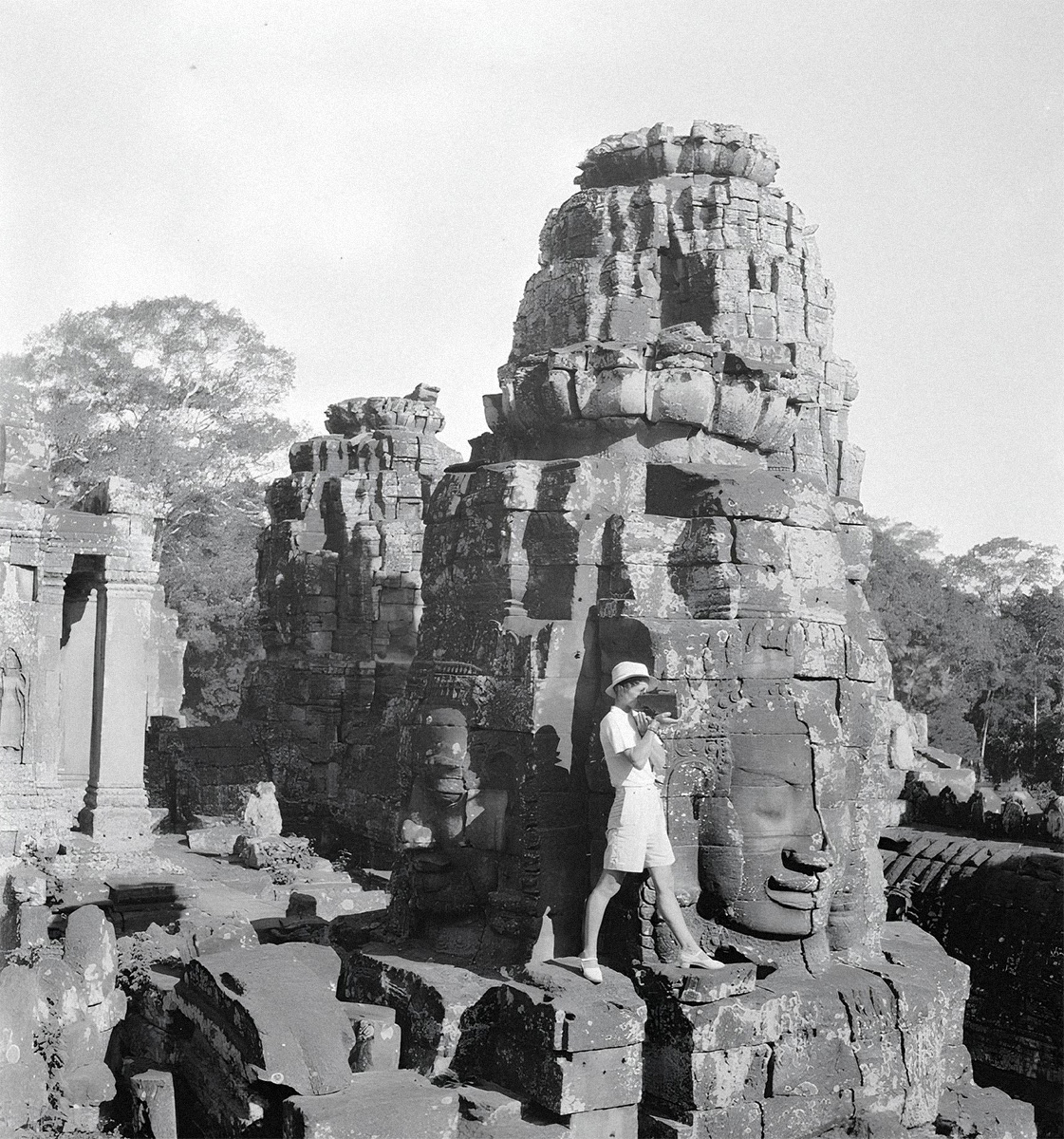
The journey lasted four months, and the impressions were enough for an entire book. A Galician publisher suggested calling it One Leap to Morocco, but Sofia did not care for such a title. Thus Charm of Morocco was born. The travel novel became a bestseller, and the traveler drew packed halls of listeners. She spoke of mirages with blue trees in green water, boys’ triangular forelocks (by those locks Allah would pull them into paradise), and the illusion that Arab women were believed to have no souls. Afterward, she visited her parents, helped her mother with the family boarding house, earned qualifications as a cinematographer, and then set off for Indochina. Over the next two years she visited Egypt, China, Laos, Cambodia, Vietnam, Australia, New Zealand, Canada, and the United States. She also reached Ceylon, the Malay Archipelago, Java, Bali, and Tahiti. The young woman was in no hurry to marry, for her main task was to find herself, not to learn how to perfect borscht, and also to discover paradise islands free from violence and oppression. She declared Tahiti the ideal island for life.
THROUGH A NEWSPAPER CRACK
To feel financially independent, she signed an agreement with the French company Optorg-Yunnan-Fou and set out toward the Great Buddha, endless walls, and ginseng clearings. It was a fair exchange: they gave her money, she gave them video footage. It was no easy task, because many Asians believed that a camera steals the soul, and if a white person stood behind the camera, then it was practically Judgment Day. In the tea province of Yunnan, Sofia spent hours waiting at crossroads for workers returning from the rice fields, but the moment her “models” noticed the strange European woman, they instantly fled. That was when she invented her famous trick. She rented a little shop at the market, supposedly for selling airplanes and automobiles, covered it inside with newspapers like wallpaper, and left a tiny peephole through which she filmed life. She captured bargaining, quarrels, weddings, busy couriers, exhausted rickshaw pullers, a column of convicts, and the funeral of a rich man. Once, a flood struck. The water rushed forward at unbelievable speed, the locals hid themselves away, while she jumped into a boat and set off to observe the surrounding world. In Indochina, she developed an addiction to opium. The young woman became attached to an old man in the hope that he would reveal the secrets of the Asian soul, but instead of calligraphy, etiquette, and the tea ceremony, he introduced her to poppy milk.
THE GREATEST JOURNEY IN A FAMILY BOAT
It seems she experienced everything: being pelted with stones, malaria, the bite of a banana viper, and the effects of a poisonous orchid. She witnessed street executions and the traumatic tradition of foot binding. More than once, she drew a map of Ukraine on the ground, in the sand, and in rice and corn fields. She heard hundreds of thousands of voices, hundreds of thousands of shades of weeping and laughter. It was in China that she fell in love with the French diplomat Jean Oudin and gave birth to three sons: Alain, Danko-Michel, and Jacques-Mirko. From then on, she gave up wandering, for she had children to rock to sleep, raise, and help with their lessons. She often cooked dishes from Galician cuisine, and at Christmas prepared her husband’s favorite meal — kutia. She dreamed of building a house in the Carpathian Mountains and even made a model of the home, but those plans were interrupted by World War II. She spent her later years on the island of Noirmoutier in a house she designed herself. Beneath the windows, sunflowers and hollyhocks gazed upward with wide eyes. In the most prominent place stood a plate inscribed, “We are glad to share what we have”, and a set for smoking opium as proof of her small victory over herself. Sofia Yablonska departed this world as a true traveler. The sixty-four-year-old woman died in a car accident while taking the manuscript of a new book to her publisher.
When copying materials, please place an active link to www.huxley.media
Select the text and press Ctrl + Enter


