ZORYANA KUSHPLER: on the death of opera, cultural imposture, and the superhuman abilities of Plácido Domingo


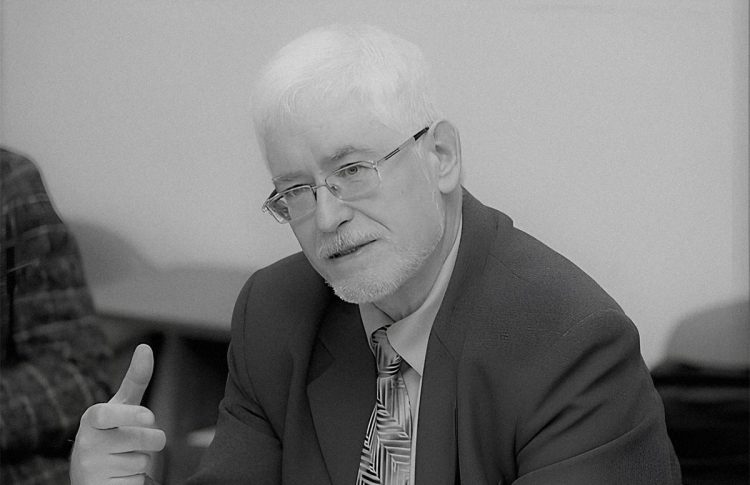
Zoryana Kushpler / Photo from a personal archive
SHORT PROFILE
Name: Zoryana Kushpler
Place of Birth: Lviv, Ukraine
Profession: Opera singer
This artist belongs simultaneously to two cultural worlds — Ukrainian and Austrian. She has performed with almost all the stars of the contemporary opera scene. Theatres on nearly every continent have applauded her. She considers music a form of prayer, and talent — a gift from God. Why does an opera star need to speak eight languages, master acting, play the violin, and know how to fence? All this and more — in Zoryana Kushpler’s exclusive interview for our publication.
MY HEART HAS ALWAYS BELONGED TO OPERA!
I
n Kyiv, I have a family where, for several generations, everyone has been sailors — a whole large dynasty. When your grandfather is a sailor, your father is a sailor, you start talking and immediately say: «I want to be a sailor!» The same was true for me — until about the age of 13, I never really thought about where fate was leading me and couldn’t even imagine that life could exist beyond music. My father, Ihor Fedorovych Kushpler, was born in a village near Lviv. Naturally, everyone there sang.
You know, in Ukraine everyone sings — at home, on the street, at weddings, at Christmas… Life was like everyone else’s. But suddenly, out of nowhere, he developed a great desire to study music. At 14, he went to study in Sambir, then in Drohobych, and later in Lviv. I was born into the family of a philharmonic soloist who soon became a soloist of the Lviv Opera. My mother was a pianist. She taught at the Department of Accompaniment, and when I was five, she became the dean of the Vocal and Conducting Faculties — and eventually even my own dean.
I was born and raised in a family where classical music was always playing. At home, my mother was constantly at the piano, and my father was singing. Their students were always visiting us, playing, and singing as well. Just like a child growing up among sailors has no choice but to dream of the sea, I had no chance to develop in any other direction! I first entered an opera theatre when I was about two years old — and I think that’s when I left my heart there. It has remained there ever since. To this day, I feel the same enchantment with this art form as I did when I was a child.
I CRIED FOR THREE HOURS AFTER LA TRAVIATA
When I was seven, my mother took us to the cinema to see Miloš Forman’s Amadeus. It’s not really a film for small children, but we persuaded her to buy the tickets, and she agreed. I still remember every frame of it and the magical feeling I had while watching. Later, as an adult, I rewatched the film several times — and each time it felt as though I was seeing it for the first time. When I was nine, I went to see Franco Zeffirelli’s film version of La Traviata, starring Plácido Domingo and Teresa Stratas.
I remember that some people were leaving the cinema during the screening. I couldn’t understand why. I cried my heart out almost from the first note and couldn’t comprehend how anyone could not feel the same. Zeffirelli built the story so that it seemed as if he rewound time. During the overture, a young man carries things out of a house and notices a portrait of a beautiful woman. When he turns around, he sees her alive — but she is very ill and has already lost her former beauty.
At that moment, I started crying — and I cried without stopping for nearly three hours. I’ll admit honestly: I’m not a person who cries easily, even in difficult life situations. It doesn’t happen to me often, but music seems to touch the deepest strings of the soul. And I’m deeply grateful to music for making me feel alive, for reminding me that I am vulnerable.
TARAS BULBA TAUGHT ME ACTING
Opera is a syncretic art form that combines music, visual art, stage action, and dramatic text. Music is the main protagonist of opera, but everything else is no less important. I have been standing on the opera stage for 30 years now, and looking back, I can say that I have built my professional path consistently. In fact, I started as a violinist at the Solomiya Krushelnytska Specialized Music Boarding School in Lviv (now a college), where my sister and I were both enrolled. At a certain age, a child’s voice changes, so there was no point in studying opera singing yet.
My sister studied piano, and I studied violin. After school, I entered the conservatory to study in two faculties — vocal and string. My parents encouraged me to pursue the violin. Their life experience told them that a career in singing was uncertain, while a violin in one’s hands promised a stable and predictable profession. At that time, the Lviv Music Academy also had a drama faculty, where true masters of acting taught — Bohdan Kozak and Fedir Stryhun.
I had known Fedir Mykolayovych since childhood. To me, he always resembled Taras Bulba. In fact, for a long time, I believed he was Taras Bulba — one and the same person! I still remember walking into his office and exclaiming, «I want to study with you. Will you take me?» He said, «I will». That’s how I found myself in the acting faculty, and when I came home, I told my parents: «Mom, Dad, I’m now officially studying with Fedir Mykolayovych. Goodbye, violin!» After all, I couldn’t possibly continue studying in three faculties at once! From Fedir Mykolayovych and his wife, Taisia Yosypivna Lytvynenko, I received an immense, magical, and inspiring sense of the stage — and of the actors you share it with.
A SUCCESSFUL CAREER IS CONSISTENT GROWTH!
Since then, all my most interesting stage work has been with theatre directors. Collaborating with directors who come to opera from dramatic theatre is pure magic. It’s an entirely different approach — a different way of analyzing personalities and the relationships between characters. I remember Three Sisters, an opera production in which I performed in Switzerland. The director was the German Gerd Heinz, head of the Zurich Drama Theatre. Or my work with Kirill Serebrennikov on Parsifal at the Vienna State Opera. I will never forget coming home at midnight — completely exhausted, but indescribably happy.
Consistency of professional growth is extremely important. Just think how many young singers graduate every year all over the world. In Vienna alone, there are several music universities. Yet only a few manage to build a real career. Why? Because success always requires a synthesis of many qualities that are developed gradually. Even the most brilliant voice cannot carry it all. In addition to the voice, you need acting skills — and knowledge of languages, which I understood already in my first year.
THERE ARE NO LIMITS TO PROFESSIONAL GROWTH!
I can say that I was lucky with foreign languages from the very beginning — our conservatory had an outstanding Italian teacher. All her students spoke Italian fluently. After just one year of studying with her, I was already working as a translator. In fact, I earned my first money at the age of 19 not as a singer, but as an Italian translator. Half a year ago, I passed the B1 level exam in Spanish — that’s already my eighth language. I still love learning, developing, and diving deeper into everything related to my profession — and beyond it.
For example, I would be interested in trying myself in the cinema. I already have a little experience: once, in a film by the Italian director Francesco Rosi, I performed two songs. But I wasn’t in the frame — another actress sang with my voice. Sometimes I wonder whether there is a point beyond which professional growth becomes impossible or meaningless. I believe there isn’t. A person can never, within one lifetime, master all the treasures that their creative profession reveals before them.
THE ABILITY TO GIVE IS A GENETIC HERITAGE
Creativity is an endless process. One can sing, perform in productions, or even try oneself as a director. Over the past three years, I’ve started teaching very actively. I am a professor at the Mozarteum University in Salzburg — the first Ukrainian woman ever to hold such a position, by the way. At the same time, I give many master classes around the world — in Japan, the Baltic States, Belgium, Germany… I truly enjoy teaching and the opportunity to pass on my experience. For thirty years, you accumulate, and then, at a certain point, comes the realization that it’s time to give back. It feels as if a new «window» has opened in my life.
Thank God, I’m good at sharing something truly meaningful and important with others — and I enjoy it immensely. Perhaps it’s my genetic heritage. My father was exactly the same — he studied languages, taught, sang, published a newspaper, and wrote songs. Unlike him, unfortunately, I don’t compose music — I simply don’t have that talent. But recently, I published a collection titled Ukrainian Arias and Romances from the Repertoire of Zoryana Kushpler, which also includes works by my father that I perform with great pleasure.
When the full-scale invasion began, I came to Lviv, and in the Organ Hall — together with conductor Ivan Osypovych and the refugee orchestra from the Luhansk Philharmonic — we recorded an album of Ukrainian arias and romances titled Ukrainian InterMezzo, released in Austria by the Gramola recording label. In my opinion, the album turned out to be both organic and deeply emotional.

DEMEANING OTHERS IS NOT LOVE FOR YOUR OWN
Since I studied both in Ukraine and in the West — in 1998 I continued my education at the Hochschule für Musik in Hamburg — I find myself working within a kind of space between two musical education systems: the Ukrainian and the European. These are somewhat different cultural worlds, yet they complement each other perfectly. I’m often asked how Ukrainian culture differs from others, and whether I have to «defend» it, so to speak. I believe Ukrainians shouldn’t have to prove anything to anyone — that’s a sign of inferiority. In my view, any comparison is inherently diminishing; there’s no love for one’s own in it. It’s as if a mother were constantly comparing her own child to others.
What interests me most is Ukrainian culture itself — it has its own roots, its own worldview, its own intersection of eras and influences. We must develop and promote our own heritage at the highest level. I’d like to draw attention to how little of Ukraine’s musical legacy has been published. Almost everything available was released during Soviet times, and only about 10% of it has been digitized.
ATTACK YOUR OPPONENT WITH PLEASURE!
Hand on heart, I can say that without my solid Ukrainian education, had I studied only in the West, I would never have become the singer and musician I am today. But the reverse is also true — both worlds are equally important to me. I lived between these two worlds for an entire decade, from the age of 18 to 28, and I didn’t waste a single day of that time. Sometimes I wondered: why do you need to study this or that? Where will it ever come in handy? But life later showed me — nothing happens by accident.
For instance, in Hamburg, where I studied after 1998, we had as many as four semesters of fencing! It was taught by a fantastic woman who looked very much like Coco Chanel — petite, elegant, and stylish. She always dressed in black and white and spoke the most refined, beautiful German.
She used to tell us, «Attack your opponent with pleasure!» At the time, I didn’t really understand why I needed fencing, but she was such a brilliant teacher that I attended her classes with great joy. A few years later, at the Vienna State Opera, I had to perform in Parsifal. At the first rehearsal, they handed me a rapier — and that’s when I realized why I had spent two years fencing at the Hamburg Academy. I felt completely natural, as if I had been born with a sword in my hand and in costume.
ANYTHING IS POSSIBLE IF YOU ORGANIZE YOUR LIFE
Life proves that even the things that seem like complete nonsense will eventually come in handy. Opera is a syncretic art form where the actor and the singer are one and the same person. You have to sing while sitting, lying down, hanging, fencing… Directors don’t really care how you manage to do it. For example, they might tie your hands and feet to a spinning wheel — and you have to sing while it’s turning. So, besides vocal and musical ability, opera also demands good physical condition. I do sports, try to visit my fitness trainer more or less regularly, and practice yoga. But there’s nothing extraordinary about that, because real life is just as multifaceted and syncretic as opera.
Let’s not forget that I’m not only an opera singer and a teacher, but also a mother, a wife, and a daughter — and I have a very cute dog named Boria, who wants to go outside three times a day. So the operatic syncretism never ends beyond the stage either. My philosophy is that a person can achieve anything they desire. It’s all a matter of organization. Every day of mine is planned and written down in my daily calendar by the hour — and I constantly check it.
ONLY AN IMPOSTOR IS INDIFFERENT TO WHO THEY REALLY ARE
I believe that the desire to constantly learn something new is part of Ukrainians’ genetic code. We are, in general, a very enlightened nation. I have lived in the West for many years, yet I have never broken my connection with Ukraine. I’m aware of all the complexities of the debates about Ukraine’s past and future, but I believe that in the 30 years of independence — despite all the hardships — we have developed tremendously as a nation and learned a great deal. We have unity, self-understanding, and love for what is ours.
My son is now ten years old, and he speaks perfect Ukrainian. You would never guess that he was born and lives in Austria. Once, he asked me: «Why do I need the Ukrainian language if I live in Vienna?» I told him that it is vitally important for a person to know who they are — that’s the very core upon which their whole life is built.
Only impostors pretend to be someone they are not. If you don’t want to be an impostor, you must know the culture, literature, folklore, and philosophy of your people — and take pride in them. I believe this is what gives a person a strong sense of self-worth and, consequently, confidence. And that is extremely important, especially when you have the privilege of being among truly great people.
PLÁCIDO DOMINGO — A MAN WITH SUPERHUMAN ABILITIES
Recently, my son and I visited Madame Tussauds Wax Museum in Vienna. Pointing at the figure of Luciano Pavarotti, my son asked, «Mom, did you sing with him?» — «No», I said, «unfortunately, I didn’t have the chance». By the time I began performing at a serious level, he had already passed away. But I was lucky enough to share the stage with the other two tenors of the «great trio» — Plácido Domingo and José Carreras. Plácido, by the way, is something of an alien — an absolutely phenomenal person with truly superhuman abilities. I stand by every word of that!
First of all, he is still singing at the age of 84. His voice remains instantly recognizable, unchanged by time. He is still passionately in love with what he does. Plácido, by the way, is not only a singer but also a conductor. We sang together in Nabucco, and in Madama Butterfly he conducted. Once, while we were working together on Nabucco, I found out that I was going to have a baby.
A year later, Plácido returned to perform Nabucco again, and I came to the theatre with my little son. Plácido joyfully exclaimed, «Who’s this?» I said, «My son». He replied, «How is that possible? Last year, there was nothing yet!» And just then, Mark made a sound. Plácido laughed and said, «Oh! So he’s a tenor!» I answered, «If he sings like you, may God bless him. And if not — then better not». We both burst out laughing.
THE GREATNESS OF A PERSON LIES IN SIMPLICITY
Why did I tell this story? Just imagine how many people Plácido has met and continues to meet. Yet he has an incredible memory — if he meets you once, he will remember everything about you: your name, your children’s names, the circumstances in which you met. He remembers everything he’s ever heard about your family and will ask how your husband is, how your parents are, even how your dog is. Plácido Domingo has a phenomenal energy and work ethic — truly astonishing for his age.
He would come to rehearsal, work through it, board his plane, fly to Madrid, watch a Real Madrid match, then return the next morning to sing at the orchestral rehearsal — and perform in the evening’s production. Afterwards, he would spend two more hours signing autographs and taking photos with fans. We waited for him in the theatre restaurant, where a beautiful cake is always served for the soloists after the performance. And even after all that, he still came to join us — he didn’t refuse a single person!
That’s the kind of star he is — utterly simple. And it’s in this simplicity that the greatness of his personality is most deeply felt. Over the past twenty years, I think I’ve had the chance to work with almost everyone performing today in the top league of opera — those who have built truly global careers. I’m deeply grateful to God for that, because the exchange of energy with such people is incredibly inspiring. They are all very special, each with their own charisma and approach to life.
I admire talented, dedicated people because they always demand the utmost from themselves — and I know how much work that takes. Maybe for a year or two, you can ride on luck. But to stay on stage for 20, 30, or 60 years — that’s an extraordinary achievement! Just think about it: the world keeps changing — the repertoire changes, the audience changes — and you must constantly change with it. What you sang at 30, you will no longer sing at 50.
PAVAROTTI REVOLUTIONIZED OPERA
Take, for example, Luciano Pavarotti. In his time, he brought about a true revolution in opera — he brought it closer to modern audiences. It all began with The Three Tenors. The trio of Pavarotti, Domingo, and Carreras became one of the most successful projects in the history of classical music. Then came the series of charity concerts, Pavarotti & Friends, where Luciano performed with other stars, including musicians and singers from pop culture. I had the honor of performing with him in one of those concerts.
I believe Pavarotti showed us that genres can be blended. That’s how the «crossover» trend emerged. Opera, in any case, must go beyond the walls of the opera theatre. This is a demand of modernity — it encourages the fusion of different genres. Although when opera and pop stars share the same stage, certain «subtleties» must be kept in mind.
For instance, opera singers traditionally perform without microphones. But alongside pop stars, that rule is often broken. In such cases, it’s not they who adapt to us — we adapt to them. As a result, young audiences grow accustomed to this amplified sound, perceiving it as the norm. And when they come to the opera house, the natural acoustic sound feels strange to them. They find the opera lacking in decibels.
I DON’T BELIEVE IN THE DEATH OF OPERA!
By the way, I raised the issue of amplified sound at a forum recently organized in Salzburg by the Ministry of Culture and the Mozarteum University Foundation, where I teach. Among many problems of our time, I believe we must also pay attention to music education in schools. For some reason, music has been made an optional subject in Western schools — and that is a true catastrophe! Children are falling out of the space of musical culture. Music through headphones is not at all the same as the living sound of an opera stage.
I understand that it probably won’t withstand competition forever, and sooner or later, opera might also move toward microphones. But what could that lead to? For example, the very notion of «large» and «small» voices would disappear. In opera, anyone could be amplified — even a performer with a voice as small as a mosquito’s. If we follow this tendency to its logical end, it would mean amplifying the orchestra as well.
No matter how you look at it, everything that is amplified loses authenticity and naturalness. But I don’t want to sound pessimistic. I don’t believe in the death of opera. Rather, I think we will witness a new stage in its evolution — one in which some things will inevitably be lost, but new ones will be found. Perhaps the audience for classical music will eventually divide into two groups: those who value the live sound, and those who prefer the amplified one.
OPERA IS A DEMOCRATIC ART FORM
The modern world is incredibly diverse. It offers space for the widest range of tastes and musical cultures. For example, during my many international tours, I noticed that the quality of the audience varies from country to country. The audience in Japan is particularly fascinating — they react to opera with extraordinary emotion and enthusiasm. Yet perhaps nowhere is opera loved as deeply as in Austria. It’s no surprise that so many of today’s opera singers choose to live in Vienna — and they are easy to understand.
Mozart, Beethoven, Schubert, Brahms, and Liszt all lived and worked here. In Germany, too, there are many opera lovers, but they tend to be more reserved. In Berlin, there will never be a long line of fans waiting for your autograph — perhaps a small one in Munich. But in Vienna, you’ll always be greeted by a whole army of opera enthusiasts.
This is likely because Austrian opera is truly accessible to everyone. Modern opera can, in fact, be a very democratic art form. At the Vienna State Opera, alongside the expensive stalls, there are galleries and about 500 standing places. Tickets cost just a few euros. So, for the price of a cup of coffee, you can fully enjoy performances by the world’s greatest opera stars.
MUSIC IS A FORM OF PRAYER AND GRATITUDE TO GOD
I believe that music is a form of prayer. After all, music, voice, and singing are a great gift from God. I have received this gift, and I feel the need to share it — on stage and in the classroom. This is my way of expressing gratitude to the Almighty for this blessing. Therefore, stopping on this path is completely unacceptable for me. I love, I want, and I will strive to keep working until the very end.
When copying materials, please place an active link to www.huxley.media
Select the text and press Ctrl + Enter