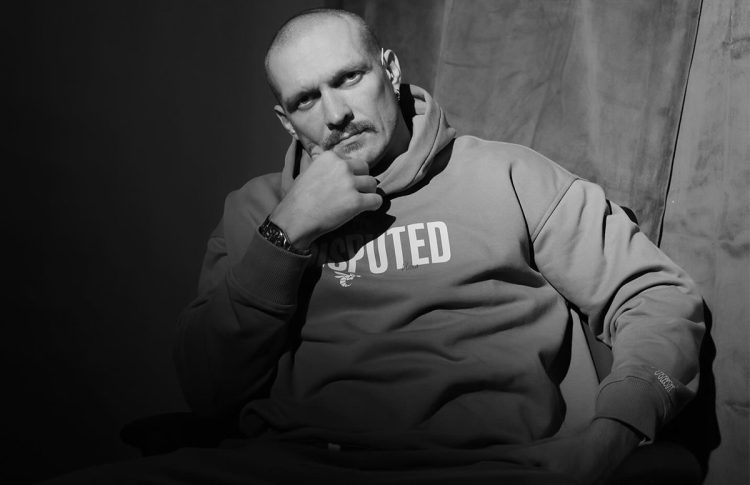
ARTEM POLISHCHUK: a contemporary Platonist on how philosophy changes life


Artem Polishchuk / Photo from the personal archive
SHORT PROFILE
Name: Artem Polishchuk
Date of Birth: October 26, 2000
Place of Birth: Odesa, Ukraine
Profession: philosopher, organizer of the Plato Reading Club
If you believe that philosophy has nothing to do with you or with real life, you are seriously mistaken. This can be proven by the example of the Plato Reading Club and its founder, Artem Polishchuk. If you do not know how, through meaningful dialogue, to transform the chaos and uncertainty of everyday life into harmony and order, now is the time to find out. Welcome to the Plato Reading Club…
WHY READ PLATO ALOUD
T
he Plato Reading Club project has its own small history, which began when I became a participant in Andriy Baumeister’s school, Architect of Senses. There I developed a taste for gathering multiplicity into unity, for bringing order to the chaos of thought. In fact, the practice of free and responsible thinking is precisely what we continue to do now through reading Plato’s dialogues. One could say that I was carried toward Plato by the living flow of life itself. This philosopher had long resonated with me, but initially, it was not I, but another person who initiated the creation of a Plato reading group.
At that time, my work took up a great deal of my time, and I was not at all sure that I would be able to participate fully in this group. However, once I joined, over time I proposed to the participants a daily collective reading of the dialogues using a method that my colleague and I had previously developed while reading literary works aloud together. Several people expressed interest in this format, and this gave the group its start. We got to know each other better, became friends, and then divided into small groups in order to further spread this method of reading Plato.
PLATO AS A CATALYST FOR CHANGE
At first, I was an assistant moderator of the group. Over time, when the original initiator of the idea stepped away from the project, I became the full moderator. At the same time, radical changes occurred in my life — I was fired from my job. I took this as a sign that I needed to focus on the Plato reading project. I had some savings for the initial period; all that remained was to understand how the study of Platonic philosophy could support me going forward. That was when I came up with the idea of the Plato Reading Club.
The heart of the club is our reading methodology, which connects each participant with the others and each of them with Plato’s text. We choose a list of 16 dialogues, divided into 4 levels of difficulty. The number of meetings is adjusted to the specific «quality» of a dialogue. Depending on the length and complexity of the text, we either read it in full or break it into parts.
FOUR HERMENEUTIC LEVELS
At the Architect of Senses school, we had an important course in hermeneutics. Hermeneutic procedures have four levels of understanding a text. In the small groups for daily reading and at the weekly meetings, we learn to read Plato’s dialogues on these levels. This happens as follows. First, we practice «zero reading» — an initial perception of meaning, which, after independent reading, we formulate in 5–7 sentences, highlighting the key concepts and metaphors. Then all of this is discussed together at a weekly meeting with the moderators of the small groups. In this way, we form a kind of panoramic vision — an overview of concepts and perspectives connected in various ways.
After the orientation level comes the interpretation level. We first read independently and then, together, read and interpret fragment by fragment. Interpretation also becomes the subject of deep and lively discussions in the small groups. At the third level, there is, as it were, a step aside from Plato’s text. After detailing the fragments important for understanding at the preceding levels, it once again appears as a unified whole through the works of Plato’s commentators, which we discuss at the meeting.
Just as at the first meeting, each participant formulates 5–7 sentences, but adds one more — the key, main problem of the text, in their view. At this stage, the moderator’s task is to gather all this multiplicity of interpretations into a single meaningful picture. And then, at the fourth stage, to develop one’s thought creatively — for example, to write a short essay, poem, or story in free form about what has been understood.
PLATO IS MY FRIEND, BUT… A MISUNDERSTOOD FRIEND!
It must be said that the practice of free thinking takes into account not only the experience of Plato’s apologetics, but also his criticism. There are many participants who categorically disagree with Plato. True, most often this arises from a misunderstanding of his ideas. As I have already said, at the third level we study the works of Plato’s interpreters, including those who are critical of him. We begin with the commentaries of Losev and move on to contemporary scholars of Platonic texts. Our task is to gain the most panoramic vision possible, from which we can then move into free reflection. By the way, not only differences in evaluations are taken into account, but also differences in translations.
Each translator, each translation, is a separate interpretation of Plato. The participants of our club are mostly Ukrainians who live in different countries: Germany, France, America… Their knowledge of languages helps us better understand particular passages. And of course, we cannot ignore the original language — we even have courses in Ancient Greek. Immersion in Greek constantly brings surprising discoveries, sometimes even purely everyday ones. With words like «pharmacy», «mathematics», and «geography», everything is more or less obvious. But such a familiar word to us as «parsley», suddenly, like the name Peter, turns out to be derived from the Greek word for «stone».
WHY PLATO IS CRITICIZED
Perhaps most often Plato’s opponents focus their attention on criticizing his attitude toward the body. It seems to them that in a number of dialogues, for example in the Phaedo, the philosopher treats it with disdain. But this happens primarily because of an incomplete understanding, because of the absence of a holistic view of Platonic thought. Plato, as is well known, possessed remarkable physical strength and repeatedly won athletic competitions. That is, he embodied the ancient Greek ideal of bodily perfection. It is unlikely that such a person could have treated the body with contempt. Rather, «a sound mind in a sound body» is very much about him.
In Plato’s Academy, philosophers never neglected physical exercise. It is enough to look at the thinker’s bust — such a neck can be seen only on an athlete. Yes, in the dialogue Phaedo he does indeed have an idea of philosophy as a kind of dying. With this metaphor, Plato wants to show that by philosophizing we mentally leave the earthly world, full of bodily attachments and passions, the excess of which hinders thinking. But this, of course, has nothing to do with denigrating corporeality. It is rather an early experience of a theory of self-knowledge, echoes and resonances of which we observe in the later European tradition.
PLATONISM IS THE MOST PRACTICAL PHILOSOPHY
In the dialogue Phaedrus, we see how Plato connects the intelligible world with the sensible one. The latter in no way appears as something that should be renounced in favor of pure contemplation. This brings us to the second most common reproach addressed to Plato — that his philosophy is excessively contemplative and therefore impractical. I also find it difficult to agree with this, since the example of my own life shows how strongly Plato’s ideas can influence life events and destinies. Platonic philosophy is highly practical, because on its basis one can build a full and meaningful life. In my own life, thanks to Plato, there has been far more order; a kind of system has emerged.
None of this would have been possible without Platonic theory and meditation, which form holistic, strategic thinking. For example, the ability to see what is common among everyday tasks, to bring a multitude of activities into a project, and projects into the wholeness of a meaningful life. All of these are mental operations that Plato teaches. In addition, from lectures on ancient philosophy we remember the enormous influence Plato had on European civilization and culture, including through such intermediaries as Plotinus. In particular, on the formation of the Christian tradition. Without Plato, Dionysius the Areopagite would have been impossible. We see how Platonism influenced literature — and here, first of all, we must of course recall Dante. His ideas were reflected in architecture, in the magnificent Gothic cathedrals. Alfred North Whitehead’s famous phrase is widely known: «All philosophy is a footnote to Plato.» And this is indeed so.
WHY PLATO IS LOVED
If we speak about what members of the club value most in Plato, it is probably the figure of Socrates. The way this historical character appears in Plato’s dialogues strikes the reader to the core. Willingly or unwillingly, one begins to absorb and practice the Socratic method of questioning and conducting discussions. But beyond Socrates, many things become objects of discovery and even shock for club participants, because many Platonic ideas have reached us in a distorted form. Take the very word «idea», for example. We understand it as a kind of mental representation of things, something we possess. We say, for instance, «I had an idea». Plato, however, has a completely different understanding of the idea.
Or take the theme of self-knowledge, which unfolds starting with the Alcibiades. A person’s encounter with oneself is an exceptionally relevant topic for the modern world. In the stream of information that overwhelms our minds today, it is not easy to answer the question «Who am I?» Plato’s dialogues teach us how to rise above this stream and see ourselves, how to turn toward ourselves. Do you want to rule others or take care of others? Start with yourself: know yourself, first learn to govern yourself, learn to take care of yourself.
ARE YOU SURE YOU KNOW WHAT LOVE IS?
Or love — that without which a person of any culture or era cannot live. Yet we mostly rely on a commonplace notion according to which love unfolds between two people. In Plato, we see a far more complex picture. In his dialogues, love is the basic energy of the universe, permeating literally everything. It is a force that draws all living things toward the One; it is directed not horizontally — from person to person — but vertically, toward some higher, transcendent principle. And our attraction to bodily beauty and pleasures is merely a distortion of the eternal striving toward the First Principle. At the same time, Plato speaks of two hypostases of a single love — Aphrodite Urania (heavenly) and Aphrodite Pandemos (earthly, bodily, or almost literally, «of all the people»).
It seems to me that both are present in the life of each of us in one way or another, and that we should learn to build a proper relationship with them. For Plato, true love is love for the First Principle, which directs us toward knowledge — first and foremost, knowledge of ourselves. That is, from knowing a multitude of things, from bodily, sensual pleasures, we move toward contemplating ourselves as a kind of «unity». Therefore, the hypostasis of Aphrodite Pandemos is extremely important — it is from awareness of earthly love that our ascent to heavenly love begins. So that the energy of love does not become destructive, it must be given the right direction through a certain reflection, a skill of deliberate thinking about oneself and the world. But how well does the modern person understand this?
PLATO AS A UNIVERSAL «SWITCH»
Instead of looking inward, we stare into the depths of the internet and the smartphone. We surrender ourselves to all kinds of bodily drives, losing control over them — they are never enough for us, so we keep searching for more and more. This is how we lose ourselves; a sense of lack, incompleteness, and absence of meaning grows. That is why Plato, for the modern person, is the most important «switch» from external space to internal. We slow down and begin to reflect calmly. And suddenly, for the first time, we notice the ideas and values that move us and our world. As a rule, they are not ours — they come to us from outside; we do not test them, do not criticize them, do not subject them to doubt.
Plato’s dialogues make it possible to gain stability, a solid inner foundation. But external support is no less important. As mentioned above, following Plato’s example, it is desirable to be not only in good mental but also in good physical shape. This does not require powerlifting. One could say that striving for physical health is a particular case of the virtue of temperance, because physical exercise helps to rein in the passions. By practicing yoga or going to the gym, we leave the space of everyday chaos and bring our body into order.
WHAT IS PLATONIC MEDITATION
I have often noticed this in myself: when consciousness is overloaded with information, it is enough to devote half an hour to yoga, and you restore clarity and calm to your mind, and order and control to your life. At the same time, yoga for me is not a window into an Eastern tradition that remains largely closed to me; I view it solely as a good warm-up, stretching, and strengthening of the body. As for meditation, it can take several forms. For example, Platonic meditation, which I practice, is the gathering of multiplicity into unity. It differs from Buddhist meditation. In Platonic meditation, one can reflect on how one’s day or week has gone. Such-and-such events happened during this time, such-and-such things I did. What was important? What was good, what was bad? What unites them?
Essentially, this is work with one’s worldview. You identify your interest in this world, the meaning of existence, and your core values. With this approach, philosophy turns from abstract speculation into a real life practice. I even have a dream to create, in the distant future, something like a «village of philosophers», where life would be arranged in a Platonic way. Something similar already exists now, but in the virtual world — in the form of our club. In essence, it is already a «small family». It often happens that our daily meetings last not the planned 30–40 minutes, but for hours — people are so deeply engaged by the topics we raise. We know each other well, are always glad to communicate and create together. From time to time, on Zoom, we even stage small theatrical scenes. I sometimes like to write a short story, for example about the transformation of a character, sensuously depicting this process.
HOW PLATO’S DIALOGUES CHANGE PEOPLE
From the very first weeks of being in the club, a person feels its influence. Because we read aloud daily in small groups, diction changes. The ability to express one’s thoughts and to hear one’s interlocutor improves. These are important skills in today’s reality. A habit of slow reading develops. And gradually it slows down even more when you are simultaneously reflecting on the text rather than skimming it diagonally. In the club, you gain new friends, and friendship in itself already has a therapeutic effect. Through reflection and discussion, we form a more meaningful view of the world, which inspires new searches and plans. Among them, of course, is organizing opportunities for live communication and philosophical workshops in an in-person format.
We also want to achieve greater scholarly rigor in our work and our products. For example, to conduct mini-research projects based on academic sources. Plans include creating schematic maps of Plato’s dialogues. Because with Plato we are dealing not with individual texts, but with a metatext — a semantic whole, where everything is intertwined and interconnected. Perhaps the problem of translation adequacy and terminological accuracy can be addressed using artificial intelligence technologies. In a broad sense, our mission is freedom of thought: we want to popularize Platonism, expand the boundaries of the Plato Reading Club, and encourage philosophical reflection and debate in the public space.
When copying materials, please place an active link to www.huxley.media
Select the text and press Ctrl + Enter