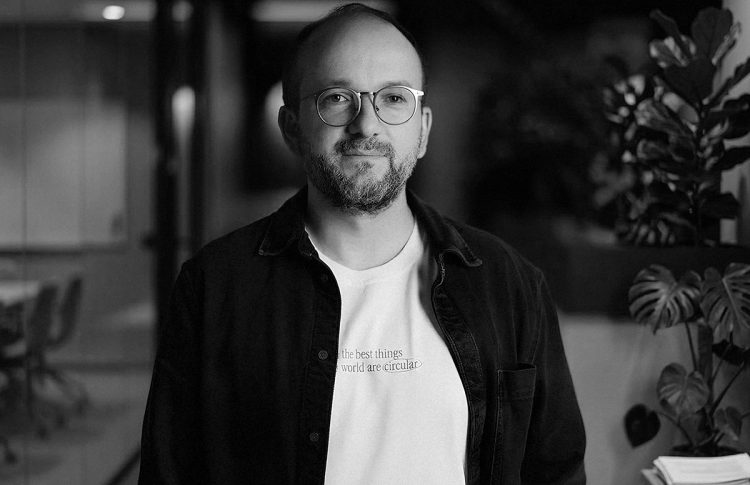
ZOYA LYTVYN: On Education as an Instrument for Achieving Great Goals


Zoya Lytvyn / Photo from personal archive
SHORT PROFILE
Name: Zoya Lytvyn
Date of Birth: April 2, 1986
Place of Birth: Kyiv, Ukraine
Profession: Ukrainian public figure, entrepreneur, and educator
Zoya Lytvyn is an entrepreneur, founder of an educational institution that was included in the TOP 100 most innovative schools in the world, a public figure, and head of the Ukrainian centre of the World Economic Forum. She is also the founder of the public union Osvitoria, which for more than ten years, has been systematically developing education, training, and supporting teachers, creating free digital learning products, and helping implement reforms. From 2024 to 2026, she serves as head of the GovTech Centre (Centre for Global Government Technology). Her professional mission lies at the intersection of business, education, and systemic change. She speaks about education as an impact business, and about the challenging yet unique experience of combining philanthropy, empathy, difficult managerial decisions, and multiple social roles.
THE CROSSROADS OF ROLES AND THE POWER OF THE LONG GAME
F
ate has shaped my path so that my self-realization takes place at the intersection of different spheres — business, education, public activity, and, of course, family. The challenge is not in having different roles, but in the fact that there is sometimes simply not enough time to combine them all. At the beginning of the war, I was studying at Harvard University and met Kabir Sehgal, the author of 22 New York Times bestsellers, a Grammy Award and Emmy Awards winner. At one point, he received an award for narrating a book by the Dalai Lama. In addition, he is an investment banker, musician, artist, producer, and U.S. Navy veteran — a truly multifaceted personality. I was always amazed at how one person could combine such different pursuits, so I asked him how he managed to hold it all together. Kabir sent me his article for Harvard Business Review, where he formulated a simple conclusion: spheres of activity do not conflict with one another — they strengthen one another.
It is similar for me: I feel naturally at the crossroads of social and creative roles. I have always understood the importance of education. But my path in business began with marketing and communications — only later did I take my first steps in education, and then philanthropy followed. I believe one should always give back — it brings life into a certain harmony. Perhaps that is why the desire to give back became so naturally intertwined in me with educational projects. I believe that education is the most important point of effort for changing the state, Ukrainian families, and individual citizens. It provides the highest level of security, prospects for development, and the greatest “returns” — just not instantly, but over the long term. That is why those who play for the short term and expect quick results often underestimate it.
WHEN PHILANTHROPY WORKS TOGETHER WITH BUSINESS
At a certain point in my professional life, I managed to combine my passion for education and philanthropy with entrepreneurship. When you build a school, invite experts, develop methodologies, and at the same time realize that there was nowhere in the system to learn these things because of years of underfunding, a need arises for broader civic engagement. Philanthropy gradually evolves into systemic solutions that can be scaled. Digitalization is now my third direction: innovation, trends, and access to high-quality public services, among which education is one of the key ones. During the war, I could not shake the feeling that I was not helping the state enough, yet I was not ready to take a government position. So I found a format “in between” — where there is a demand for support and an opportunity to act independently.
For the past year, I have headed the Ukrainian centre of the World Economic Forum — in fact, a think tank, or even a think-and-do tank: a structure that not only researches but also implements solutions. Why do I mention Harvard University? Because the idea of mutual reinforcement between roles is highly practical. By working with innovation, especially high technology, I better understand what tomorrow’s world will look like — and how to prepare students for it. And to prepare students, one must inspire and develop teachers. That is why civic engagement naturally complements my educational and entrepreneurial work. But it is extraordinarily difficult. One of the most valuable meetings I had at Harvard was with Lawrence Summers, former president of the university and former U.S. Secretary of the Treasury. He said, “You can do anything, but you can’t do everything”. Life is like a buffet: you may choose many things, but not all at once. There is only one plate — and it has limits.
When I took on a third major direction — launching the WEF centre and digitalization initiatives for the state — I quickly realized that while it was important and exciting, constantly managing three large-scale projects in parallel was simply too much. I am now completing this stage and handing over responsibilities. If someone had told me earlier that it would be this difficult, I would not have believed it — I needed to try for myself. It is possible, but we each have only one “plate”. To achieve more at work, one often has to sacrifice something in personal life: self-development, time with family, or other important roles.
ROLES CHANGE — VALUES REMAIN
I switch easily between roles, but as a person, I do not change. Tasks and focus may shift, yet values remain the same. If orderliness matters to me, it matters both in family life and at work. What works in interaction with a team functions just as naturally within a family. So changing roles is more a change of perspective than a “change of self”. I know people who are very different at work and at home, but I do not have that kind of split identity. And that is probably a good thing. Historically, business has often been perceived as a “male world”. So the question arises: is there such a thing as a “female management style”? From my experience, I see individual styles rather than a division into “female” and “male”. Management is not mathematics with a single formula. People of different psychotypes can achieve excellent results: some through distributed leadership, others through authority.
Around a true leader, people usually gather who feel comfortable with that person’s style, and this works organically. Research by Gallup, Forbes, and Fortune points to certain differences: women are often less inclined toward risk and more empathetic. In part, I recognize myself in this. There is more caution in my decisions, and sometimes I have to “translate” emotional nuances in communication that others may not notice. I also see how some women in leadership positions try to imitate a harsh “male” model and become more authoritarian than they truly are. It seems to me that differences do exist — and that is normal. To be equal, there is no need to deny differences: one can be different and equal at the same time.
Since my husband and I both come from the business environment, people often ask about mutual influence within our family. Friends say the changes are noticeable: for example, my husband has become more interested in impact, and his level of empathy in dealing with people has grown. My husband is a successful entrepreneur with a larger-scale business than mine. What impresses me is that I studied management and leadership theories at university, while he is self-taught and built his approach through practice. When I face crisis situations where theory is difficult to apply, he often offers out-of-the-box solutions — drawn from experience, life wisdom, and freedom from rigid frameworks. He is an excellent chess player. So, despite my empathy, he is better at reading hidden motives and manipulative games that I do not always notice, because I myself do not use manipulation and prefer direct communication.
THE HARDEST DECISIONS ARE ALWAYS ABOUT PEOPLE
In every person’s life, there are psychological barriers: moments when one must gather oneself and make a decision that has long been overdue. In business, this happens more often — the level of responsibility is different. For me, the most difficult decisions are always about people. Situations vary. Sometimes a person is valuable and talented, but burned out — and you understand that you cannot “fix” this for them. Or someone is going through difficult circumstances and escapes into work instead of processing and accepting reality. Sometimes you grow attached to a person, yet you see that in this role, they have already given their maximum, are no longer oriented toward growth, and stagnation begins. Or a person is simply unable to cope, even though you understand their context and sympathize with them. There is a dilemma in this: you empathize with the individual, but you understand that the team should not have to suffer. Making this process win-win is almost impossible. In the long run, everyone usually realizes when it is time to part ways — the team, and the person themselves. But such decisions are always the hardest for me.
What helps? I study a great deal, learning management approaches and the values of other organizations. During conversations with the team at Netflix, I was struck by their metaphor: we look at a collective not as a family, but as a sports team. In a family, you cannot simply “replace a player”. But in sports, if someone is consistently underperforming and cannot correct it, they have to be replaced — otherwise everyone suffers. There are also “fans” — clients, partners, those who trust you and expect results. That metaphor helped me rethink my approach: an organization with clients and a large team is not a family. It is a sports team with a shared goal, where everyone must contribute. And at a certain moment, one must have the courage to make difficult decisions — not out of indifference, but out of responsibility to others.
TEAM BUILDING: IN SEARCH OF A METAPHOR
If I look at the history of my organization, team building has been a search for a working metaphor. At first, it was a family. Later, it became a sports team, though with certain family-like qualities. Because I still work with people who inspire me and with whom I feel comfortable. It seems to me that this is a universal recipe for success: to do what inspires you, with those who inspire you. That is why, no matter how modern the management model may be, I know what my team lives by. We do not abuse boundaries, but we can call one another at night or on weekends if it is truly necessary. At the same time, results at work remain the priority. There is another metaphor as well. A company is a kind of “cosmos” that it creates. Do I feel like a demiurge? Partly, yes. I am convinced that at a certain stage, an organization reflects its founder — whether that person realizes it or not. When a business transitions to a board and corporate governance, that personal component fades, and this is a natural stage.
If we are building something for decades, then sooner or later it will either change ownership or move into another management model. I do not strongly believe in the idea of a family business as the only scenario of succession, but I am convinced that as long as there is a leader, the business reflects that leader’s inner world. Does what I create reflect me? I think, to a large extent, yes. The rest is the contribution of other people. Besides, I lead several organizations in parallel, and not everything can be seen or controlled at once. Sometimes, only by analyzing specific cases together with the team does a clearer shared vision emerge. And yet, there is no one-hundred-percent reflection — it is more of a horizon. We change, and the business changes with us. I study a great deal, but so does the team. For example, with the emergence of a third direction in my business, a CEO with interesting experience joined us, and thanks to this person, I reconsidered some approaches and discovered new ideas.

DEISM AND THE LEADER AS THE SYSTEM’S “COMPASS”
There is a philosophical concept known as deism: God “set” the universe like a clock and then stepped away. For a creator, this may be acceptable. For a human being, it is not. A business owner cannot simply observe from the sidelines. One must intervene in the corporate universe to be a compass that calibrates movement, clarifies direction, examines difficult precedents, and corrects the course. At the same time, it is important to build a system. But wherever people are involved, there will never be a perfect clockwork mechanism. They are influenced by everything: a night of shelling, events within the family, the information environment, emotional strain, reflection, and the reassessment of values. An organization is not a sterile Petri dish. New challenges and new meanings constantly emerge, shaped by dozens of factors — not only by the founder. Moreover, business is a demanding environment: competition, the struggle for market share, and the constant need to defend one’s position. That is why the role of a leader is to combine systemic discipline with sensitivity to people and to change.
IMPACT BUSINESS: PROFIT AND PURPOSE
Business sometimes requires decisions that run counter to emotional empathy. How can this be reconciled? In my case, it is important to understand that I am engaged in an impact business: for profit, but also for purpose. There is a clear value-driven mission. If I focused solely on profitability, the resources invested in a school — especially one that aspires to be a benchmark of modern education — could have been invested more efficiently in financial instruments. The return might have been greater. But in this project, not only does profit matters, but also social impact. When the value component partly compensates for the unrealized financial return — that is, the impact. In education, I was surprised to discover that many people think within a paradigm of competition rather than cooperation. But I am convinced that one cannot build an “island of happiness” in an ocean of dysfunction. That is why much of what has worked in our school we transfer into the civic sector: our specialists train teachers and principals of public schools free of charge. Because this is about a shared future. Our children will live alongside other children who studied in other schools.
If you do not share know-how, then the “island” has no meaning. Of course, one can hide one’s developments and preserve some competitive advantage. I am a competitive person, but competition is more interesting to me when you share what works, when you learn from colleagues who have improved something. In a certain sense, our school is a social laboratory where educational and communication technologies are born that can later be scaled. And this is not an abstraction. Ukrainian education was underfunded for decades. We have strong traditions — mathematical schools, engineering programs. But we lost much in terms of modern competitiveness. The Soviet system was strong, yet today it no longer corresponds to a world in which a graduate must not only find a job, but know how to create one — a company, perhaps even an entire industry. This concerns concrete methodologies that were not implemented for decades because of a lack of resources and focus. Yet they demonstrably work.
For example, classroom management — managing a classroom — is a science with measurable results. Or neurobiology, which is effectively not taught in pedagogical universities. We had a revealing case: a boy with serious learning difficulties enrolled in the school. His family was convinced that he was simply very lazy. But when we invited a specialist from Canada for consultation, it turned out that the issue was not discipline. The child lacked a small area of the brain responsible for concentration and long-term memory. Pedagogy is a science. I believe a successful bank can be created by a financier, an IT specialist, or even a military officer. But a good school can only be created by those who have studied pedagogy deeply and systematically. Neurobiology and inclusive education, the integration of children with different experiences and characteristics — all of this requires a professional approach.
BUSINESS AND UNIVERSITIES: AN INVESTMENT WITHOUT GUARANTEES
Our pedagogical developments can be applied much more broadly than in secondary education. Some people from our team later go on to lead corporate universities or join educational platforms within business. Ukrainian companies are actively investing in education because they have understood that training employees only “at the entrance” is often too late. It is more effective to partner with universities and update programs while students are still studying. But certain problems arise along this path. The first is that talented practitioners are better rewarded in business than as university professors. That is why corporate universities often emerge first, followed later by broader cooperation between business and academia. The second problem is that a large company may update programs, involve practitioners, and organize internships — yet there is no guarantee that students will come to work for that same company. But overall, the ecosystem benefits, and the general level of preparation rises.
I am convinced that business can raise the standard of education even without direct state intervention — provided that the state does not interfere. Today, education is heavily overregulated. Standards must exist: education is an instrument for achieving major national goals. The problem is that we as a country still have not formulated them, nor have we formulated a national idea beyond the short-term aspiration simply to endure. We lack a strategy for the development of education and an understanding of how it can contribute to the economy and to an innovative breakthrough. That is why business takes the initiative and partners with universities independently. Cases exist, but this is not yet a system. I believe that to scale the effect, the state is also needed. In the end, complex things are easier to accomplish together.
Here I would like to mention a mentor — Ülo Vooglaid, the oldest parliamentarian of Estonia, a thinker and philosopher. His book Think Like a Citizen was recently translated into Ukrainian. He specializes in systemic transformations and methods of irreversible positive change, and was involved in helping Estonia leave the Soviet paradigm. Ülo taught that a system can be changed in two ways. The first is to create precedents — pilot projects of a new system. The second is to work with agents of change. Universities can create pilots and precedents. But making this mainstream without the state is impossible.
MASLOW’S HIERARCHY IN EDUCATION
For me, my school is precisely a pilot model of modern Ukrainian education. And our work with teachers through a civic organization — training, support, and development — is exactly the work of cultivating agents of change. What does a teacher lack in order to be effective and to enjoy the profession? I would like to give an elegant answer, but we need to be realistic. Abraham Maslow’s hierarchy of needs has not been abolished: teachers simply lack decent salaries. I know both young and experienced professionals for whom this is a calling. They may not yet have a strong instrumental foundation — classroom management or neurobiology — but they constantly learn and intuitively find approaches to children. And yet, they often cannot remain in the profession. If a person wants to live normally, help their parents, and build a family, at the current level, this is almost impossible. An 8,000 hryvnias take-home pay for 22 teaching hours a week is too little. There is a phrase attributed to Otto von Bismarck that wars are won by schoolteachers. But closer to me is a thought by Ronald Reagan: when people at the Pentagon complained about defense budget cuts and rising spending on education, he replied: “If you think national security is decided in the Pentagon, you are not thinking big enough. National security begins behind a school desk”. I am convinced that this is exactly so.
THE PRESTIGE OF TEACHERS AND RETHINKING SUCCESS
Research shows that the systems of “educational superpowers” are united by two things. First, the teaching profession there is prestigious and holds a higher status than that of a doctor or military officer. Second, the best applicants choose pedagogy. This is directly connected to compensation. And it also seems to me that we as a society thank teachers too little. Parents often appear at school only with complaints, but when a child wants to learn, we rarely express gratitude for that — we take it as something normal. My own understanding of success has also changed through my experience with the school and philanthropy. Criteria cannot remain the same throughout one’s life. For me, recognition is how others see you; success is how you feel about yourself and whether you are achieving what truly matters. At the age of twenty-five or twenty-six, a “successful person” for me was someone already out running at six in the morning and ahead of everyone at work by eight — even on a Saturday. Now I value life-work balance much more and make sure it exists in my own life. Of course, when you are just building a business, you burn with it and are ready to give it everything. Like-minded people come along who are willing to work on weekends. At a certain stage, success means feeling that these people are “on board” with you and that together you are moving quickly toward a place where no one has been before.
When copying materials, please place an active link to www.huxley.media
Select the text and press Ctrl + Enter