A GOOD YEAR: the events and films that will make us remember 2025

Art design: huxley.media via Photoshop
It was not just a year that came to an end, but the first quarter of the 21st century. For cinema, 2025 turned out to be neither better nor worse than 2024. Yes, there was not a single premiere that the whole world discussed the way it once did with Barbie and Oppenheimer. The theatrical box office last year was shaped primarily by films aimed at children and teenagers. And the latter responded best, as before, to sequels and remakes of already successful franchises — ranging from Jurassic World: Rebirth and How to Train Your Dragon to Captain America: Brave New World, Lilo & Stitch, and Predator: Planet of Death. Besides children and teenagers, these films also resonated with their young parents, whose youth fell in the 2000s or the early 2010s. Wars and the polarization of society push audiences to retreat, to immerse themselves in nostalgia for better times and a lost paradise. And Hollywood filmmakers are clearly making skillful use of this.
T
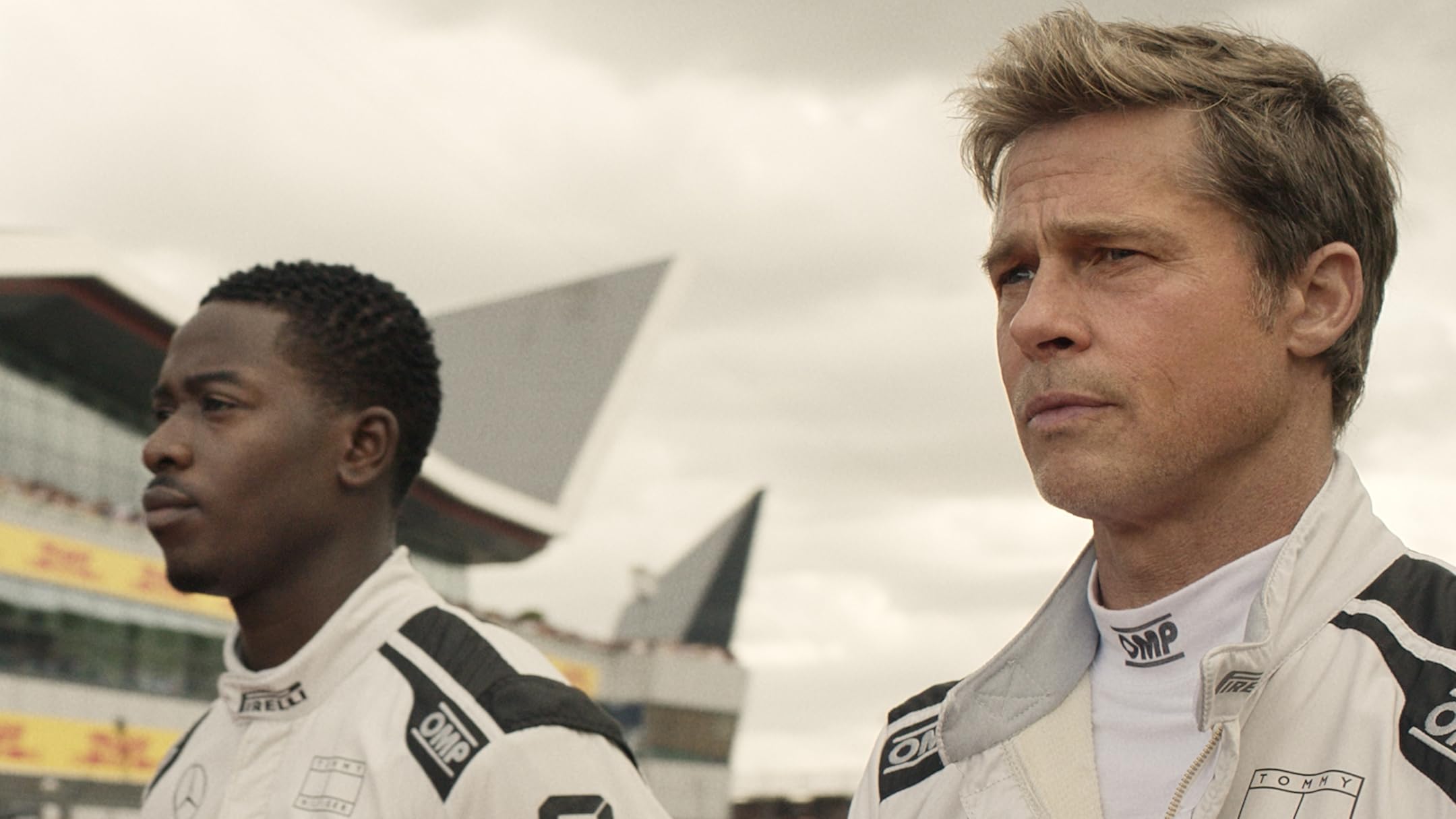
he frames of nostalgia shifted markedly in 2025. If the 1980s had previously been in vogue, followed by a surge of enthusiasm for the 1990s, then in the past year audiences began to miss the 2000s as an era of abundance and a certain sense of stability. Hence all these sequels to franchises that originally launched in the 2000s. If one tries to formulate the audience’s demand in 2025, it comes down to escapism and safe entertainment. In addition to the examples mentioned above, this category includes Disney’s Zootopia 2 — a model of top-tier entertainment for both children and adults — as well as the classic sports drama F1 starring Brad Pitt, directed by Joseph Kosinski, about a retired racer who returns to top-level motorsport three decades later after surviving a severe injury and poverty.
Along with the race car, Pitt’s character also acquires a young, hot-headed teammate who needs not merely supervision, but mentoring. Traditional to the point of being old-school, F1 wins audiences over with its technological edge: the Apple company that produced the film developed a special camera based on the iPhone to shoot the racing scenes. Yet, of course, more than any camera, it is Brad Pitt’s charisma that keeps viewers glued to the screen.
The biggest box-office hit in the history of global cinema — not just of 2025 — turned out, for the first time, not to be a Hollywood production. It was the sequel Ne Zha, a Chinese action fantasy that grossed more than $2 billion worldwide.
Hollywood today is indeed not in its best shape. The dream factory is, as they say, at a crossroads. With each passing year it becomes increasingly clear that the very model of the film business and of film consumption is changing. Traditional solutions are working less and less often. The Hollywood majors that dominated for decades are being pressed by new players — technology giants. And if the once highly successful Pixar in 2025 merely began to limp (two of the studio’s major bets failed at once — Inside Out 2 and Elio), then Warner Bros. ended up being absorbed by the Netflix streaming service altogether.
At the close of last year, the biggest deal in the history of the film industry took place — $82.7 billion. That was the unprecedented sum Netflix paid for the legendary Hollywood studio with all its assets, including film production and streaming. The internet is full of photographs showing Netflix executives Ted Sarandos and Greg Peters proudly touring the kingdom they have acquired. Besides Netflix, Paramount Skydance and Comcast, which owns Universal and NBC, also fought for the Warner treasures. But their main competitor simply offered more money. Now, however, Paramount promises to strike back, threatening to rattle its rival with serious antitrust measures. Moreover, an opponent of this deal is Donald Trump himself, whose close friend, the multibillionaire Larry Ellison, stands behind Paramount Skydance and dreams of acquiring Warner Bros.
For now, one of the most famous Hollywood studios in the world — founded by four brothers from a poor Jewish family that emigrated to the United States from Poland at the end of the 19th century — now belongs to Netflix under the terms of the deal. Along with the studio, it acquires DC Studios, the HBO cable channel with its streaming platform HBO Max, as well as the complete library of rights to iconic Warner films. These include, of course, the Harry Potter and The Lord of the Rings sagas, the series The Sopranos and Game of Thrones, plus the entire DC universe, as well as golden classics such as Gone with the Wind (1939) and Casablanca (1942), and more recent studio hits like Christopher Nolan’s Dunkirk (2017) and Paul Thomas Anderson’s One Battle After Another (2025). Hollywood is in turmoil. Its inhabitants are seriously worried about the future of theatrical distribution. After all, Netflix has repeatedly stated that it is betting exclusively on online viewing and considers the theatrical tradition archaic and therefore obsolete.
In 2025, having outlived their time, an entire constellation of major Hollywood stars who had served for decades as its living symbols passed away. In January, David Lynch died — the most avant-garde of directors within the Hollywood mainstream and the most mainstream among the avant-garde. Rising to fame with the utterly experimental expressionist nightmare Eraserhead and earning a total of eight Academy Award nominations for the politically correct The Elephant Man, Lynch had led a reclusive life in recent years, communicating with his fans via social media, where he regularly appeared with weather forecasts.
His death came as a genuine shock to millions of viewers around the world who sincerely loved Lynch’s infernal villains, his fatal women, the red curtains, the heart-aching songs — in fact, that entire «strange» cinema of his, resembling a headlong dive into the beyond, into one’s own subconscious, where dream is indistinguishable from reality and from which one cannot emerge alive.
After Lynch, Val Kilmer and Michael Madsen also passed away. The death of Robert Redford came as an absolute surprise — an actor, a heartthrob, a millionaire, a liberal raised on the yeast of «New Hollywood», the founder of the Sundance Institute and the eponymous independent film festival that long ago turned into Hollywood’s own hunting ground. But first and foremost, Robert Redford was, of course, a major star who felt uneasy about his own good looks. With a single smile, he seemed to address the entire outside world. Sydney Pollack, who cast Redford in seven of his films (including the cult thriller Three Days of the Condor from 1975), described him as «an interesting metaphor for America, a golden boy with a dark soul».
To many of his screen images, Redford added ironic wit and complex psychology. His defining roles were romantic yet flawed heroes. Such, for example, was Gatsby, whom he played in 1974 — seductive, impassive, beautiful, and vulnerable. The core of his career became the role of the Sundance Kid, Paul Newman’s partner in one of the most successful westerns of all time. Butch Cassidy and the Sundance Kid (1969), directed by George Roy Hill, was built on the chemistry between its two central characters — attractive outlaw humanists and romantics. Of the two protagonists, Redford always played the one who combined restrained humor, persuasive intelligence, and unshakable idealism.

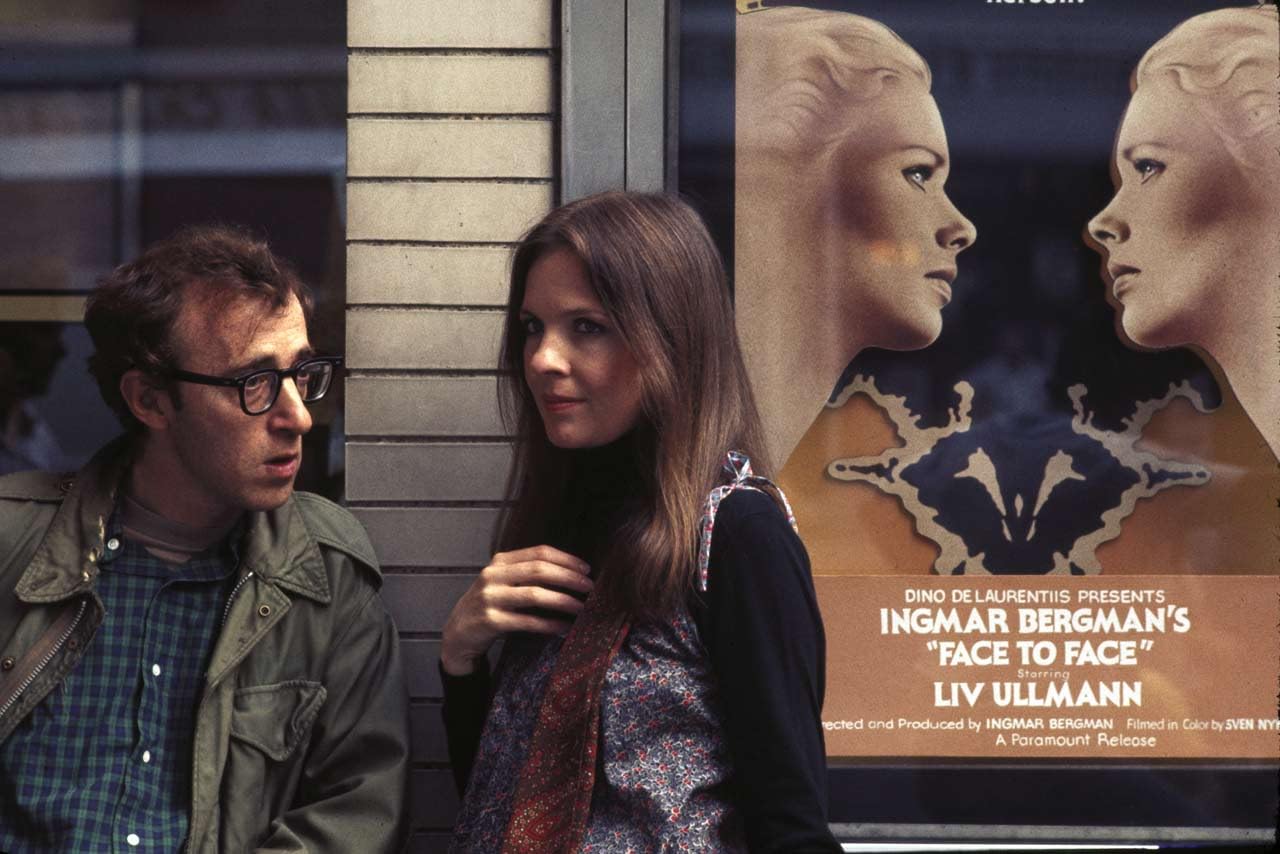
Another major loss of 2025 was Diane Keaton, one of the key actresses of New Hollywood, who specialized in roles of rebellious intellectual women. Francis Coppola saw in her the quiet Kay Adams, destined by fate to become Michael Corleone’s wife and to rebel fiercely in the shadow of her all-powerful husband. Warren Beatty, who shared a long romance with Keaton, made her his on-screen wife in the drama Reds (1981) — a biopic about the life of John Reed, an American writer and reporter, a committed communist, and the author of the book on the revolution Ten Days That Shook the World. Keaton’s Louise Bryant is not merely an emancipated intellectual, a revolutionary, a mad individualist who feels icy disdain for any form of stability, but a true adventure of spirit and mind. Yet, of course, Keaton’s most important creative partnership grew out of another romance — with Woody Allen.
The story of how that relationship failed became the great film Annie Hall (1977), which brought both of them Oscars, and Keaton additionally a Golden Globe, a BAFTA for Best Actress, and the status of a cinematic Gioconda — a style icon and principal role model who taught millions of smart girls how to wear men’s clothing with elegance. Just two years later, the two of them finished the world off with Manhattan (1979): from the moment of the film’s release, New York — previously criminal and scarred by filthy streets — was cleansed to sterility and began literally to reproduce the characters played by Keaton and Allen.
They first filled the screens, and then all the cafés and restaurants of the West Side. Diane was so convincing as Mary Wilkie that all the most educated, free, and ambitious women of Manhattan immediately began to imitate her — a Manhattan that since then has been indistinguishable from «Manhattan». Keaton here is pure hyperbole, the embodiment of all of «Sex and the City» taken together, the gold standard of «intellectual glamour». This is how we will remember her. And together with her — the great Gene Hackman, who also passed away in 2025, another Hollywood star without whom it is hard today to imagine classic American cinema.
The fact that cinema today is in crisis has been repeatedly emphasized by major film festivals as well. The oldest of them — the Venice Film Festival — even produced a poster on the subject: it depicts numerous characters standing on staircases and towers of different heights, gazing somewhere beyond the horizon, as if trying to make out the future of cinema and their own. As for major «festival» cinema, the kind shown every year in Berlin, Cannes, and Venice, what prevails here is so-called art mainstream — films suitable at once for a narrow and for a broad, and therefore non-festival, audience.
And most intriguingly, the majority of these films address the theme of complex family relationships. This is the case, among others, with Joachim Trier’s Sentimental Value, which won the Grand Prix at the 78th Cannes Film Festival. This Norwegian melodrama playfully tells the story of the small tragedies of the members of one Norwegian family — two daughters and a father-director who decides to turn their old house into the set of his new film in order, at last, to establish contact with his children.
Roughly the same themes are explored by the triumphal winner of the Venice Film Festival — the Golden Lion–winning film Father, Mother, Sister, Brother by the American Jim Jarmusch. In fact, 2025 was the year of Jim Jarmusch. Having never won the top prizes at the world’s major film festivals, this globally revered auteur finally received the gold he had deserved his entire life. And perhaps, if one were to try to name the film of the year — albeit very subjectively — it would be Paul Thomas Anderson’s One Battle After Another. Another family story that, at the same time, reflects not only contemporary America but the entire world of today.
Anderson portrays it with such exhaustive precision that it is impossible not to recognize it all. Fascist-leaning revolutionary zealots, fiercely fighting for everything good against everything bad, and sentimentally merciful fascists, patriotic guardians of traditional values — both are equally repellent here. Yet Anderson, despite his passion for experimentation, has always been and remains a traditionalist — a person who feels compassion for another human being. That is why One Battle… is built at the intersection of schadenfreude and warm compassion for its characters — superfluous (despite their political convictions) and vulnerable people who cannot find their place in the world. The characters played by Leonardo DiCaprio and Sean Penn — a hippie sympathetic to militant radicals and a boot-wearing officer — are political opponents disputing the paternity of a teenage daughter, whom DiCaprio’s character is raising alone. Both are unhappily in love, dysfunctional men, suffering from loneliness because of their instability.
One Battle After Another is unconventional cinema. That is probably why it irritates fools so much. It features ambiguous characters, complex camera choreography (with deliberately careless movements, inventive push-ins, and at times nausea-inducing dynamic tracking shots), an energetic rhythm, trademark expressive scenes, and the nervous soundscape of music by Jonny Greenwood (co-founder of Radiohead). One Battle After Another touches upon the darkest ulcer of our time — loneliness, fear, hidden darkness. Watching what unfolds on screen, one realizes the horror and despair that surround human life, how thin the film we walk on is, and how easily one can fall into madness even with the best intentions. One Battle… is filled with a premonition of global catastrophe. The old world is coming to an end — with its cult of excessive comfort, aggressive benevolent populism, lies, and pretense. But Anderson is a pessimistic optimist, and together with despair, he gives us hope. At least for 2026.
When copying materials, please place an active link to www.huxley.media
Select the text and press Ctrl + Enter