PHILOSOPHY OF ESCAPE: the films “The Hole” and “Being John Malkovich”


Art design: huxley.media via Photoshop
The central theme of this edition of the Cinemasophy column is escape. In one case — from prison, in the other — from one’s own dull life into someone else’s, a glamorous one. Even if only for a brief fifteen minutes. The characters of one film carve a “Hole” into another life with their own hands. The characters of the second discover it behind a hidden door between the seventh and eighth floors of a Manhattan office building. The heroes of the late 1950s tried with all their might to break free from their cages: from Wajda’s “canals”, from the Gestapo cell in Robert Bresson’s drama, from America’s San Quentin and Alcatraz, from the “Elevator to the Gallows”.
The French director Jacques Becker closes the topic once and for all. He shot his film in a quasi-documentary manner, inspired by a real escape and entrusting the reenactment to the very people who took part in it. Yet The Hole is not a reconstruction, not an investigative experiment, but a parable of biblical stature. American director Spike Jonze — on the contrary — is as far from reality as possible, preferring the near-hallucinatory fantasy of screenwriter Charlie Kaufman about an attempt to flee… from oneself into the beautiful life of a Hollywood star. And yet it looks so realistic that for a quarter of a century, viewers have been recognizing themselves in its characters again and again.
THE HOLE (LE TROU, FRANCE, ITALY, 1960)
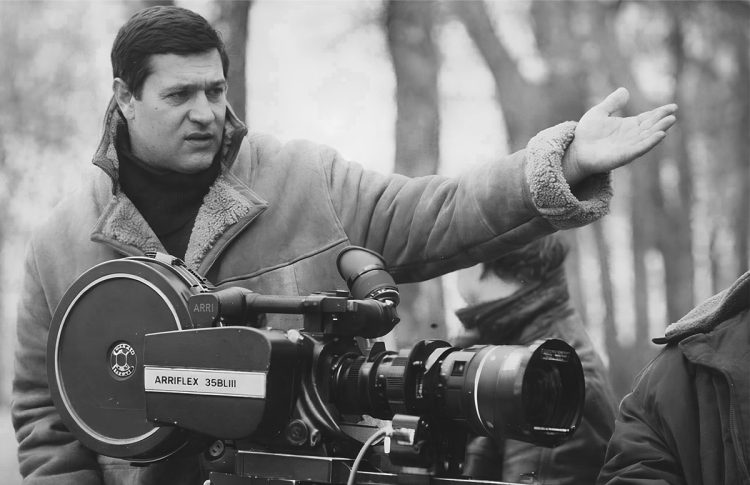
Director: Jacques Becker
Starring: Michel Constantin, Philippe Leroy, Jean Keraudy

F
rench thriller about a prison escape, told and shown through the eyes of an unlucky murderer named Gaspard (Constantin), who, once placed in a shared cell, instantly wins the sympathy of both the guards and the inmates — the latter soon letting him in on their plan for an upcoming escape. The final work of Jacques Becker — a major French auteur — adapts a real escape attempt from 1947, reenacted on screen by non-professional actors, one of whom, Jean Keraudy, was directly involved in that very story.
And it was narrated — sharpened artistically just a little — by his own accomplice José Giovanni. Before becoming a fashionable writer, screenwriter, and director (Two Men in Town), he not only fought in the Resistance but also took part in the postwar French underworld. He was even sentenced to death and saved only because his father managed to reach the president himself.
The great Jean-Pierre Melville (Le Samouraï, Le Cercle Rouge) sincerely believed The Hole to be “the most beautiful film in the world”. Another French classic, René Clément, even cried at the premiere. He cried, eyewitnesses claim, because he wasn’t the one who made The Hole. This film broke the hearts of at least two dozen more filmmakers in our time as well. And it will break more. And as for how many audience hearts it has captured — countless.
The Hole is the story of a charming Judas and the band of thieves who trust him. What they are in for is unknown and irrelevant. Their sins are unlikely to be lighter than Gaspard’s — but for the viewer, the fugitive is right by definition. After all, the viewer too is a kind of prisoner in the anti-world of bars and concrete that Jacques Becker constructs, where everyone tries not to make noise, not to draw attention. Where, instead of music, there are the steady, rhythmic strikes of a steel bar against stone floors.
In The Hole Becker ignores psychology. The manual of escape is more beautiful than any poem. He uses a minimum of words, a maximum of melancholy, a hundred tiny details of the escape mechanism, and finds the perfect distance between viewer and characters. The scene in which the five inmates smash the concrete floor of their cell — shot almost in a single four-minute take — looks so convincing that one has no doubt that the characters in 1947 needed just as much time and effort in real life. In fact, the entire escape sequence looks so realistic that it seems the director himself must have participated in it, capturing it all on a body camera.
Here is the group of accomplices working around the hole in their cell: a hermetic frame in which a silent performance unfolds. The director compels us to empathize with the fugitives, making us more than passive observers. The viewer is given a perspective almost divine — seeing the whole outline but forced to imagine the details. Becker endows his prisoners with the grace of magicians and the sadness of angels, drawing out maximum compassion. From the very beginning, you understand both Gaspard’s point of view and that of his cellmates. They seriously consider whether to abandon the escape altogether after the appearance of this impenetrable stranger, or to make him (read: the viewer/God) an accomplice by revealing every detail of the plan.
Becker invented a stylistic device later borrowed repeatedly in other escape thrillers: muting the sound in key scenes. The only difference is that his successors merely muted — Becker silenced. Completely. Moving the characters beyond mundane realities, Gaspard — through whose eyes we see everything, as he is effectively the narrator — is not like the others: his education, his manners… All this sharpens the overall perspective. It is the gaze of someone unaccustomed to prison life, an outsider.
Gaspard’s otherness creates tension within the group of inmates, a certain psychological charge that reaches tragic intensity in the final, climactic scene, where the merciful director spares us from witnessing the betrayal by performing it for us — like fate itself. Gravely ill during filming (he had hemochromatosis — a condition in which the body accumulates far more iron than it can process, and so after death he would literally turn into a statue of iron), Becker died while the film was already in post-production.
As if he could not bear the fact that the escape failed. His son completed the film, following the director’s last wishes, releasing a 140-minute author’s cut. Later, producer Serge Silberman shortened The Hole by about 24 minutes to make it “even closer” to the viewer — and to transform the viewer into an accomplice in this brilliantly doomed crime.
BEING JOHN MALKOVICH (USA, 1999)
Director: Spike Jonze
Starring: John Cusack, Cameron Diaz, John Malkovich, Catherine Keener

Arguably the most inventive Hollywood film of the past quarter-century — an unquestionable masterpiece, not designed for straightforward consumption or quick decoding. That is exactly how Spike Jonze conceived it: a conceptualist, a master of cinematic pranks, a former music-video wunderkind (the creator of the most playful and vibrant videos of the late 1990s — so good they were taped from MTV onto VHS cassettes and spread “hand to hand”), the son-in-law of Francis Ford Coppola, and, without doubt, the most resourceful American filmmaker of the turn of the millennium.
He is the one who turned the Beastie Boys into characters of a 1970s cop show in Sabotage, forced Björk to step into Catherine Deneuve’s shoes from The Umbrellas of Cherbourg in the video for It’s Oh So Quiet, and then danced foolishly in front of the camera in Fatboy Slim’s Praise You. He sent George Clooney on a treasure hunt for Saddam Hussein’s gold in the adventure film Three Kings (1999); shot a tender fairy tale, Where the Wild Things Are (2009), about a disobedient boy who ends up on the far side of his own loneliness; turned Joaquin Phoenix into a fragile hipster and failed writer who falls in love with a high-intelligence operating system voiced by Scarlett Johansson (Her, 2013); and directed Nicolas Cage in the tragicomic puzzle Adaptation (2002), where Cage played both the real screenwriter Charlie Kaufman (Confessions of a Dangerous Mind) and his fictional twin brother Donald so convincingly that the Academy nominated the latter for an Oscar (for Best Screenplay).
It was Adaptation that Jonze eventually arrived at after filming Kaufman’s script for Being John Malkovich — the story of a neurotic puppeteer, Craig (John Cusack), who, out of financial need, takes a clerical job at a mysterious company whose office — with an absurdly low ceiling — is located between the 7th and 8th floors of a Manhattan high-rise (giving the entire premise a whimsical, almost Harry-Potter-like flavor, as if rehearsing its magical platforms). There, Craig accidentally discovers a hidden door that serves as a portal into the mind of a Hollywood star. Whoever enters it gets fifteen minutes of seeing the world through John Malkovich’s eyes and reading his thoughts — before being spit out onto the shoulder of the New Jersey Turnpike.
Craig teams up with his ambitious colleague Maxine (and falls for her). They charge $200 a head for a visit inside Malkovich, luring customers with a cryptic newspaper slogan: “Ever wanted to be someone else? Now you can”. Making a forty-year-old actor the central meme of an eccentric comedy is a challenge in itself. At the time, Malkovich was known mostly as a prominent experimental-theatre actor with a handful of striking film roles (mostly intelligent, cold, unpleasant characters), an Oscar nomination (In the Line of Fire), and the sort of name that isn’t printed above the title on posters — let alone placed in that title.
The actor himself initially doubted the project (he liked the script but found it impossible to execute), and it took Francis Ford Coppola personally calling him — asking him to “give the kid a chance”, something like “in ten years we’ll all be working for this guy” — to persuade him. Jonze justified the bet. Thanks to his talent, Kaufman’s “purely literary and vicious joke, untranslatable into visual language” became an excessive (like its author), truly great film — one without a centre of gravity, forever losing its balance. You fall into it the way unsuspecting characters fall into the portal leading into the head of the star of Stephen Frears’s Dangerous Liaisons or Bertolucci’s The Sheltering Sky.
A trickster and a charmer, part lawyer, part psychoanalyst, Jonze allows himself to be eccentric with Major Studio money and to cheat within the rules, producing in the end an incredibly intelligent, darkly comic film stuffed with mysteries about human nature, the desire to escape oneself, and the fifteen minutes of fame that Andy Warhol once predicted for everyone.
According to Jonze, we are all John Malkoviches and don’t understand ourselves — or whether we even exist. And if we do — is this really a life? If one wishes, Being John Malkovich can be read as an absurd joke. Even as a collection of such jokes. And absurd jokes, taken together, do not add up to a joke book — they add up to something optimistic and wise. Which is precisely what Jonze’s film is.
When copying materials, please place an active link to www.huxley.media
Select the text and press Ctrl + Enter