BORIS BURDA: How to Glue Anything Together Securely

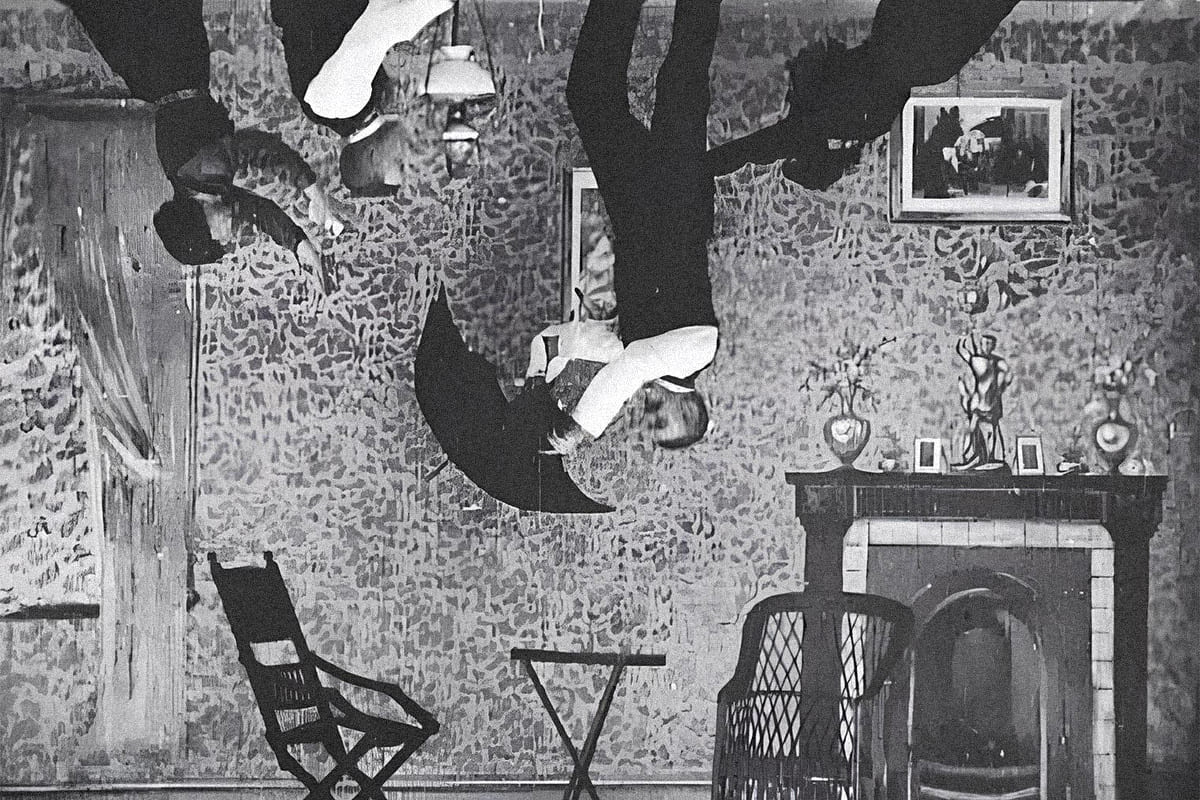
Still from Robert Paul’s film Upside Down; or, the Human Flies, 1899 / player.bfi.org.uk
ATTENTION — QUESTION!
English filmmaker Robert Paul was the first to practice flipping the image upside down. Name the product whose advertising uses this technique especially often.
ATTENTION — THE CORRECT ANSWER!
Of course, glue — the characters are stuck to ceilings and walls.
WHERE IT ALL BEGAN
F
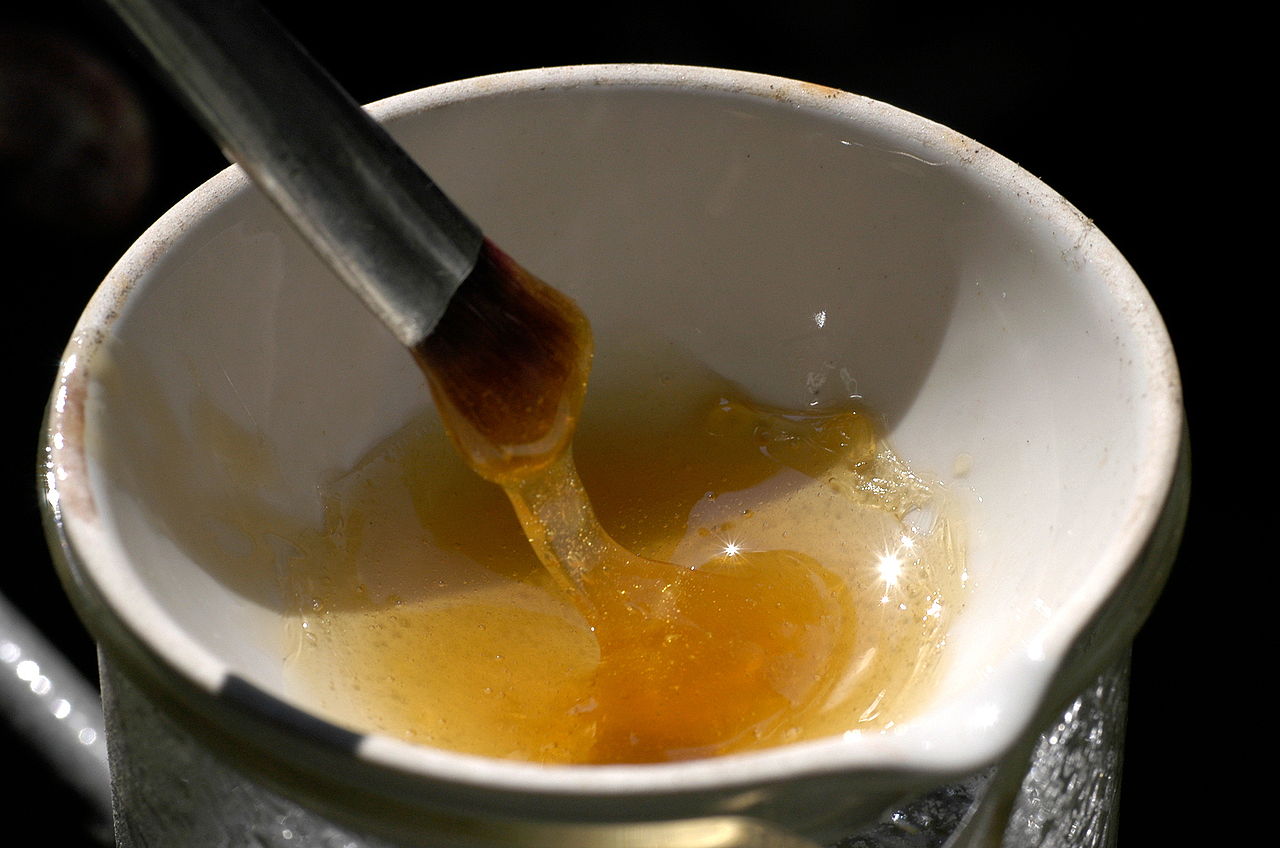
or hundreds of thousands of years, people made tools from a single piece of stone or wood. They chipped away little by little until the stone took the shape they needed. They scraped off small splinters until the wood fragment they required appeared. But literally until the very beginning of the Bronze Age, their tools were always a single piece of wood or stone. Yet about 7,000 years ago, at the very end of the Neolithic era, items glued together with birch resin began to appear in burials — the first glue invented by humans. The adhesive was strong enough to be used even for making weapons: among the finds from that period were spears with glued-on tips.
The ancient Egyptians also used resin, but they sealed mummies with a mixture of beeswax and oil, and for fastening sheets of papyrus they invented a flour paste. Babylon also made its contribution, using bitumen, which is essentially a kind of glue as well. Since then, the use of adhesives in technology has become a fairly standard practice. During the Middle Ages, a glue similar to the common carpenter’s glue appeared — it was made, just as it is today, from the bones and tendons of animals. The ingredients were boiled, strained, and then evaporated until they thickened. In 1690, the first factory producing glue exclusively even appeared in the Netherlands.
This is the most thoroughly studied history of this product, yet new facts may still introduce corrections to it. There is evidence that our cousins, the Neanderthals, also used glue. Its main components were bitumen and ochre. If this is indeed true, the history of glue production would extend by an entire order of magnitude. Meanwhile, a new casein glue was invented, obtained from processed milk products. Already in the nineteenth century it began to be produced on an industrial scale in Germany and Switzerland. And in 1912 a patent was obtained for the well-known PVA. The number of adhesives kept growing, and each of them was different.
THE SECOND TRY
But the inventor of one of the most popular types of modern glue did not succeed right away. Everything worked out for him — but only on the second attempt. Even in life: when he was sixteen, the car he was traveling in collided with a train, and he spent six weeks in a coma. One could say that he began life again from scratch. His health returned, and he chose the career of an organic chemist. When, in the wartime year of 1942, he began searching for a transparent polymer for use in firearms, his attention focused on a new class of substances called cyanoacrylates.
He tried to use them to replace glass in aircraft gun sights. But the material proved extremely inconvenient to work with — it stuck to everything, which made handling it very difficult. The idea of using it was abandoned, and our protagonist, Harry Wesley Coover, returned to his research on the synthesis of vitamin B6, where he achieved considerable success, and for years did not recall his studies of cyanoacrylates.
But in 1951, after moving to Tennessee, he and his colleague Fred Joyner began working for the company Eastman Kodak, which wanted to obtain new materials for the cockpit lamps of jet aircraft. There the return to cyanoacrylates happened — perhaps they would work after all, since they were strong and transparent… For such applications, it is necessary to know the refractive index of transparent materials. This is usually measured with a refractometer.
According to an engineering legend, when Joyner placed cyanoacrylate between the lenses of the refractometer, they simply stuck together and could not be separated (quite likely this is exactly what happened!). That was when Harry Coover finally realized that the monstrous stickiness of the new polymer, which had prevented it from being used as a structural element, turned from an annoying drawback into an advantage if it was used as an adhesive. In this role it proved so effective that it gave rise to a new slogan — SuperGlue.
FROM IDEA TO PRODUCT
Good adhesion is not the only thing required from glue. First of all, it should not stick so well that it hardens right inside the container. For this reason, stabilizing substances had to be selected. Then plasticizers were needed to make the glue less brittle and more resistant to heat, acids, and alkalis. This took seven years. But no solvents, which must evaporate for the glue to harden, were required. The glue itself is a monomer that polymerizes fairly quickly when it comes into contact with water vapor contained in the air. However, another problem arises — if the glue is not tightly sealed, it seals itself.
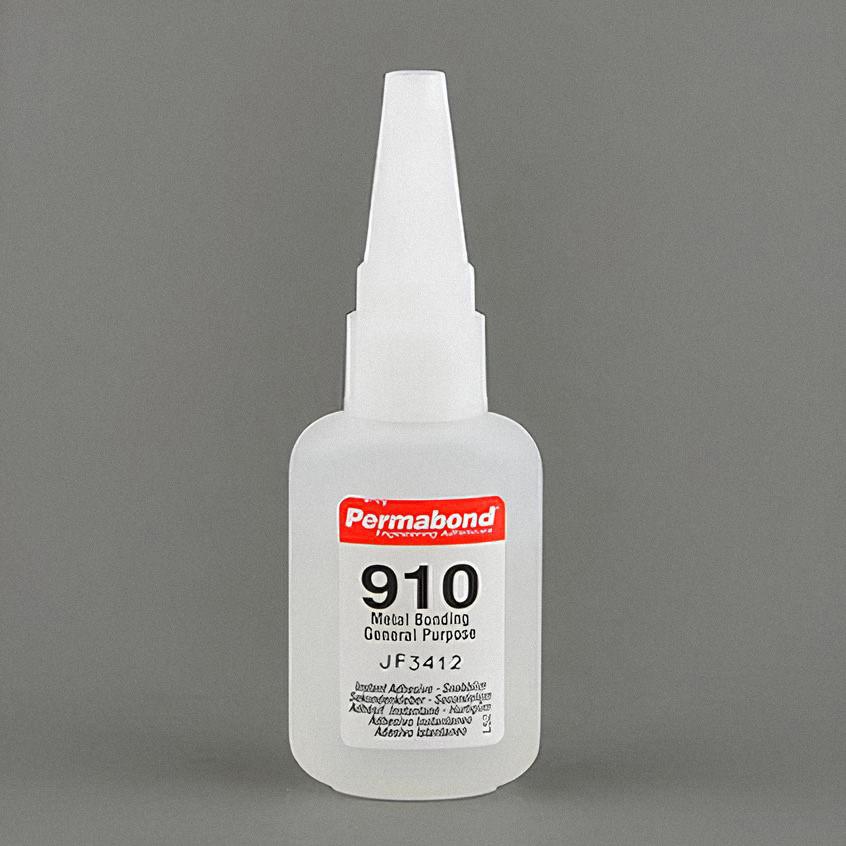
This problem was solved by making the neck of the glue container tightly closable and very thin, so that if it sealed up, it could not be pierced again with a needle. After a long period of refinement, superglue finally entered the market under the name Compound 910. At first, however, it did not impress anyone — just another glue… What helped attract attention was an eccentric trick. Harry Coover was invited to appear on Gary Moore’s popular television show I’ve Got a Secret. There, anyone could demonstrate something unusual and surprising. And with the help of superglue it was easy to amaze people who had never heard of it.
In front of the audience, Coover used a single drop of «Compound 910» to attach a metal crossbar to the end of a lifting cable. Just a couple of minutes later, he demonstrated the strength of the bond: he held onto the crossbar himself and asked the host to do the same, and then assistants lifted both of them off the floor.
To me, this was very symbolic. First, the glue immediately demonstrated its astonishing properties: a tiny drop held two people at once. Second, two people — Coover and Joyner — were its main creators. And third, its discovery also happened twice: at first it went unnoticed, but later…
UNUSUAL ADVERTISING
Soon the press was filled with a series of astonishing reports. For example, about a schoolboy from Mexico who desperately wanted to skip a school day he disliked, he glued his hand to the back of his own bed with superglue. Doctors and parents spent the entire day trying to detach him without cutting off his hand. And a German man who ended up in a Spanish prison did not want to part with his fiancée who had come to visit him. She poured superglue over her hands, and they exchanged a firm handshake. It took the prison staff several days to separate the lovers. If you ask me, they didn’t have to try that hard…
Perhaps even more ridiculous and tragic was the prank carried out by some jokers never found by the London police, who poured superglue onto a toilet seat in a public restroom. The unfortunate victim had to be taken to the hospital together with the steel seat and freed only there. A certain Ronald from Vermont probably set the record. To demonstrate the incomparable qualities of superglue to foreigners, he glued his hand to the soft parts of a 12-year-old rhinoceros named Sally. No one warned him that the animal had recently been given a laxative, and 115 liters of the obvious result had to be cleaned up with three shovels.
However, at least one of these unexpected uses of superglue turned out to be genuinely useful — for example, during the Vietnam War. With large-area wounds, the main thing is to stop the bleeding as quickly as possible. Soldiers came up with a solution without consulting doctors: they simply poured superglue into the wound, and the problem was effectively solved. Today superglue no longer needs eccentric advertising — it is extremely popular. The only drawback is that it cannot withstand very high temperatures — a maximum of about 125 degrees for special varieties. But this shortcoming of a substance that was «born twice» is forgivable if its inventor was also born twice.
When copying materials, please place an active link to www.huxley.media
Select the text and press Ctrl + Enter


