THE SECRETS OF TARAKANIV FORT

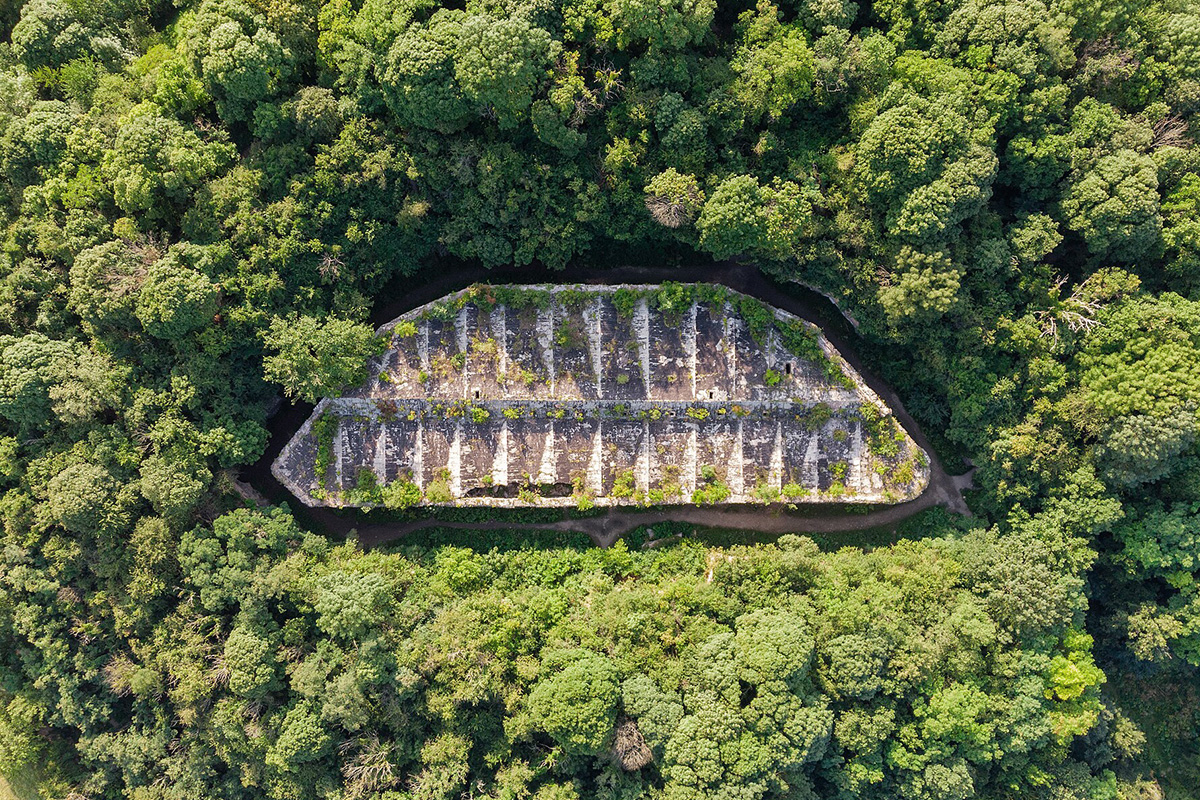
A bird’s-eye view of Dubno Fort, Tarakaniv village, Rivne region / wikipedia.org
Amazing stories are told about this fort. It is called a place of power, and people speak of its unique, incomparable energy… But that already lies beyond the realm of the real. Reality, meanwhile, is no less fascinating. The Tarakaniv Fort is an impressive fortress dating back to the period of the First World War, the only structure of its kind in Ukraine. There are no true equivalents to this fort in other European countries either. However, two military defensive sites in France bear some resemblance to it.
During the time of the Russian Empire, the Rivne region was a border zone, which created the need to fortify this frontier. At the end of the 19th century, near the village of Tarakaniv in the Rivne region, not far from Dubno, the construction of a military fort began by order of Emperor Alexander III. The structure had a clear strategic purpose — to defend the railway and the roads from Kremenets and Radiviliv, to hold back enemy advances, and to provide a base for retreating troops.
CREATORS OF THE FORTRESS
T
he ideologist behind the creation of the structure is considered to be the military engineer of German origin, Count Eduard Totleben. The construction itself was directly supervised by another military engineer — Colonel Borisov. The first works were carried out in the 1870s — the site for the future fort was prepared, and an embankment was formed. The construction of the walls and buildings took five years — from 1885 to 1890. The work progressed with difficulty; however, in 1890 the construction of the new Dubno Fortress was completed (it began to be called Tarakaniv Fort much later). Tsar Alexander III personally inspected the structure, as 66 million rubles from the imperial treasury had been allocated for its construction. According to military specialists and engineers, the fort fully met its intended purpose and even exceeded expectations. In addition to stone and brick, a new material at the time — concrete — was used in the construction, which gave the structure additional strength.
USE OF THE FORT FOR MILITARY PURPOSES
However, Russian troops never once used Tarakaniv Fort for its intended purpose. As early as 1900, a warehouse was set up there, and later the premises were converted into a prison. During the First World War, the Russians decided that they did not need the fort at all and surrendered it to the Poles without a fight. Later, however, they came to their senses, and in 1916, during the Brusilov Offensive, after shelling the fortress with their own artillery, they regained it. Units of the 4th Austrian Army were driven out of the fortifications. In these battles, 200 Austrian soldiers were killed and buried near the fort. During the Second World War, the fort was surrendered again, this time to the Germans… Such is its history.
DETAILED OVERVIEW
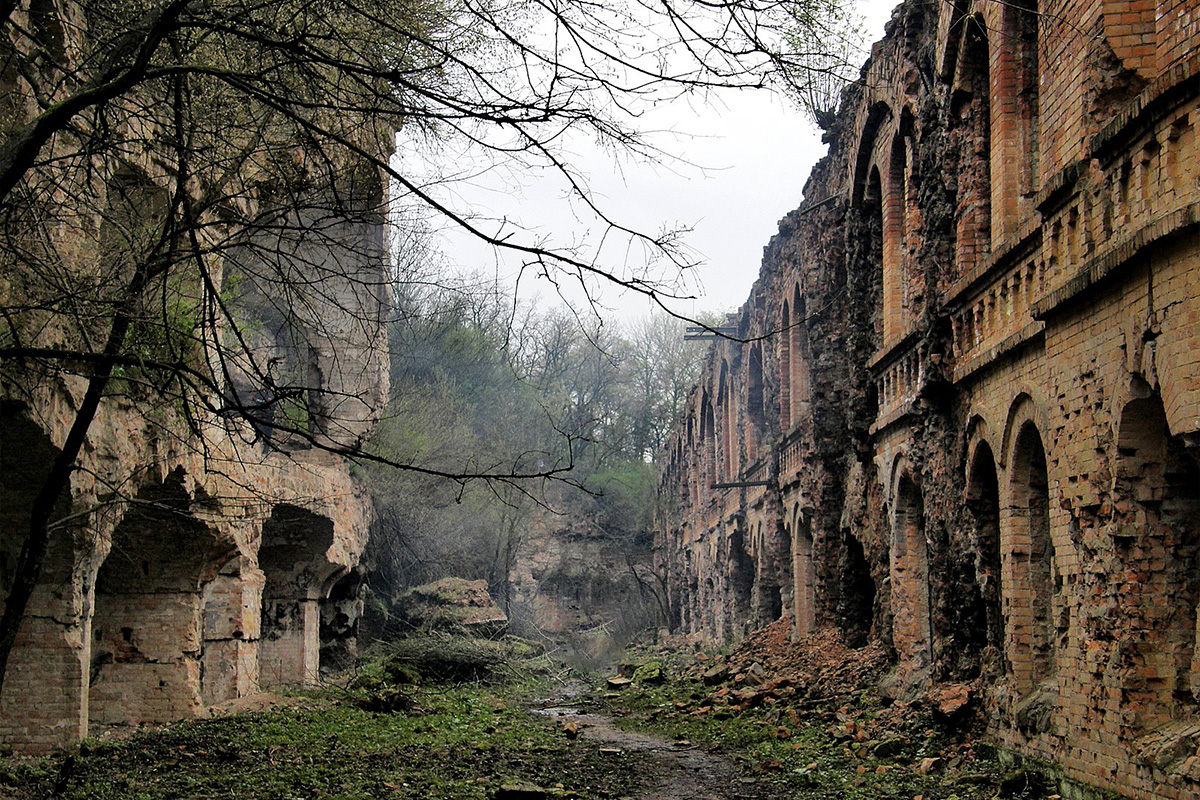
Tarakaniv Fort is a concrete-and-earth fortification constructed with the use of brick and cast-iron elements, from which, in particular, all the staircases and doors were made. It was possible to enter the fort only by means of a retractable iron bridge. During a siege, it was, of course, concealed; a special chamber beneath the embankment was built precisely for this purpose. The inconspicuous tunnel of the main entrance leads to the administrative building of the fort. This is a large two-storey structure that housed living quarters, storage facilities, and utility rooms for the artillery company and the commandant’s headquarters.
In shape, Tarakaniv Fort resembles a rhombus. Each of its sides reaches 240 meters in length, and the outer walls of the fortification are 3 meters thick. As many as four underground passages led to the fort itself. This allowed the military, during enemy bombardments, to move freely along a continuous corridor. Surrounding the fort is a deep moat with earthen ramparts, which can be accessed through a 100-meter underground tunnel. In its time, this served as a trap for uninvited guests.
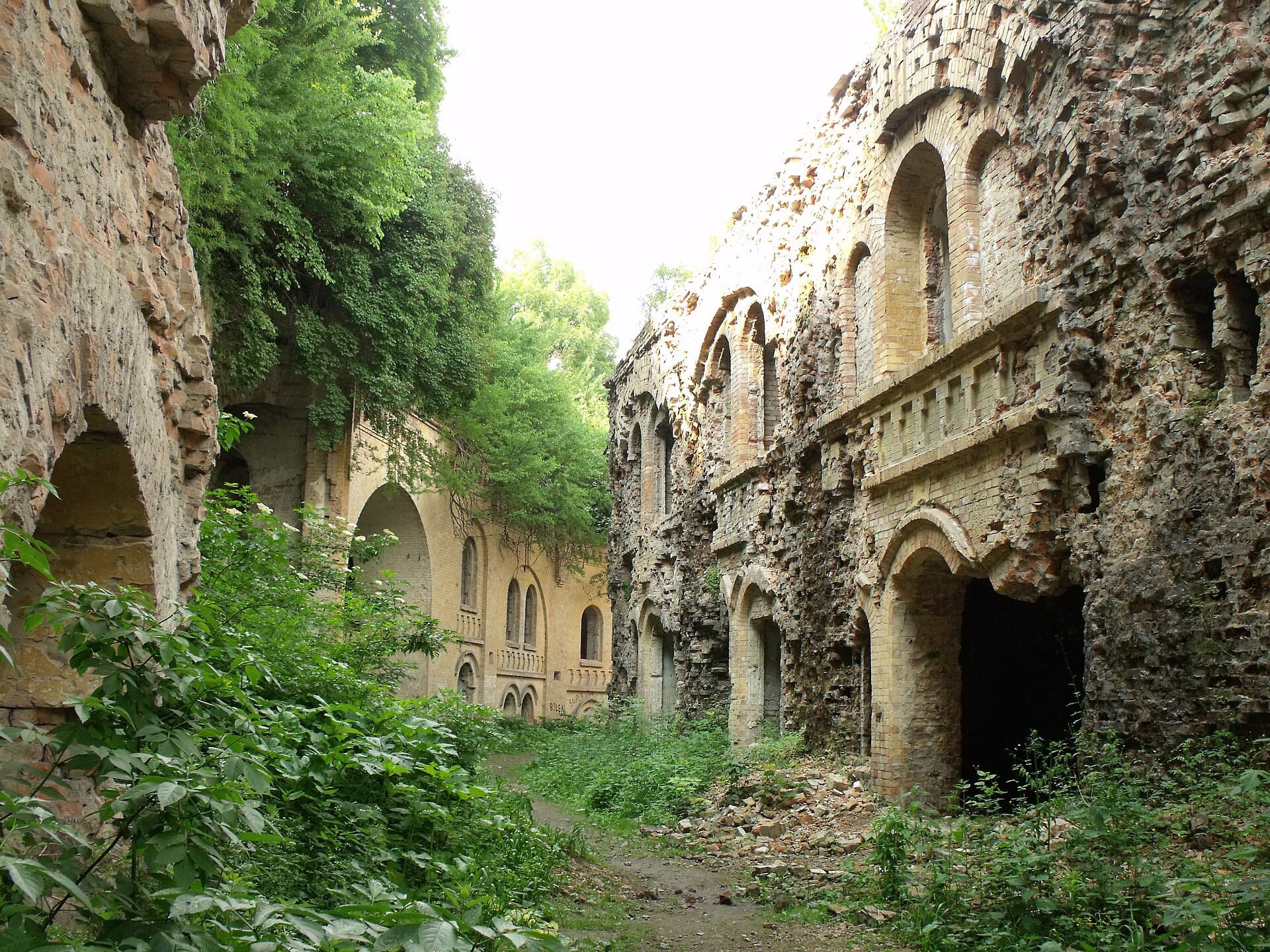
Along the perimeter of the fort were the so-called safe casemates, which also served to support the fortress rampart. In total, there were 105 casemates, 35 of which were suitable for living. Altogether, they could accommodate up to 800 people. Each casemate had a specific function: it was intended either for combat operations or for living quarters. There were storage rooms, an infirmary, an operating room, disinfection chambers, a morgue, toilets, and wells. All casemates were equipped with ventilation and stove heating.
In addition, the fort had a sewage system and a water supply, and a special furnace was built for burning waste. Electricity was supplied to all premises — both the underground corridors and the rooms. Furthermore, in 1899 the fort was equipped with telephone communication. In 1901, a church was built in the central barracks. In 1965, the Ministry of Trade of the Ukrainian SSR attempted to set up a warehouse for canned goods on the site of the fort. The casemates were cleared, shelving and doors were installed, and lighting was fitted; however, excessive humidity and evaporation made it impossible to store food products. There was also an attempt to establish a warehouse for automotive and tractor spare parts. Once again, extensive preparatory work was carried out, but the idea was abandoned for the same reason.
LEGENDS
As early as the last century, climbing plants were planted around the fortress for camouflage. They spread and entwined the trees and stone walls, so today the military fortification resembles an abandoned city from a fantasy action film. The façade wall has long since disappeared, and wherever possible, grasses, trees, and shrubs have broken through. The fortress keeps many secrets and eerie stories about ghosts. Apparently, they truly exist, as they have been frightening local residents for so many years. At the beginning of the 20th century, many soldiers were killed here; it seems their souls still wander around, unable to find peace. It is said that the ghost of a priest sometimes roams the fort and is still seen in the chapel. According to locals, at dusk his shadow flickers, and sometimes the sounds of a service can even be heard, adding even greater terror to what is witnessed.
One of the most popular legends tells of a powerful generator, supposedly still functioning, which the Germans allegedly installed somewhere underground during the Second World War. If one were to enter its zone of influence, it is said, one could travel through time. A variation of this legend claims that the Germans organized a secret laboratory here for the production of the latest weapons. It is believed that a research unit of the secret Nazi organization «Ahnenerbe» (which became part of the SS in 1939) was located on the territory of the fort. On the eve of their retreat in early 1944, the occupiers allegedly mined and concreted over the equipment in the tunnels — so thoroughly that it is still being searched for today.
There is also a version — perhaps absurd, but who knows — that Soviet military forces set up a nuclear weapons depot here. However, local researchers present their own facts suggesting that from 1946 to 1960 the fort was occupied by NKVD officers, and many premises were filled with concrete… even the ventilation shafts. Why?.. Still, it is not reliably known whether this is true. According to legend, NKVD officers also killed anyone suspected of collaborating with the UPA. There is yet another tale about a trap room — when an outsider entered, the floor would instantly flip over, and the victim would fall into a deep well…
…AND REALITY
As for walking around the fort: it is essential to wear closed clothing. Throughout the entire territory grows the poisonous Sosnowsky’s hogweed — tall (up to 1.5–2 meters) sprawling plants with white umbrella-shaped flowers. Even a single touch of its leaves can cause the skin to blister severely, and the blisters may take months to heal. That is the real horror. Tarakaniv Fort has survived several wars — the First and Second World Wars, the Civil War, and the Polish–Soviet War. Yet it was not these conflicts that destroyed the fortress. It is being destroyed by time and careless treatment… Nevertheless, Tarakaniv Fort is a remarkable tourist attraction with a unique history, located just 200 meters from the Kyiv–Chop highway.
When copying materials, please place an active link to www.huxley.media
Select the text and press Ctrl + Enter


