BORIS BURDA: How to leave a stadium without problems

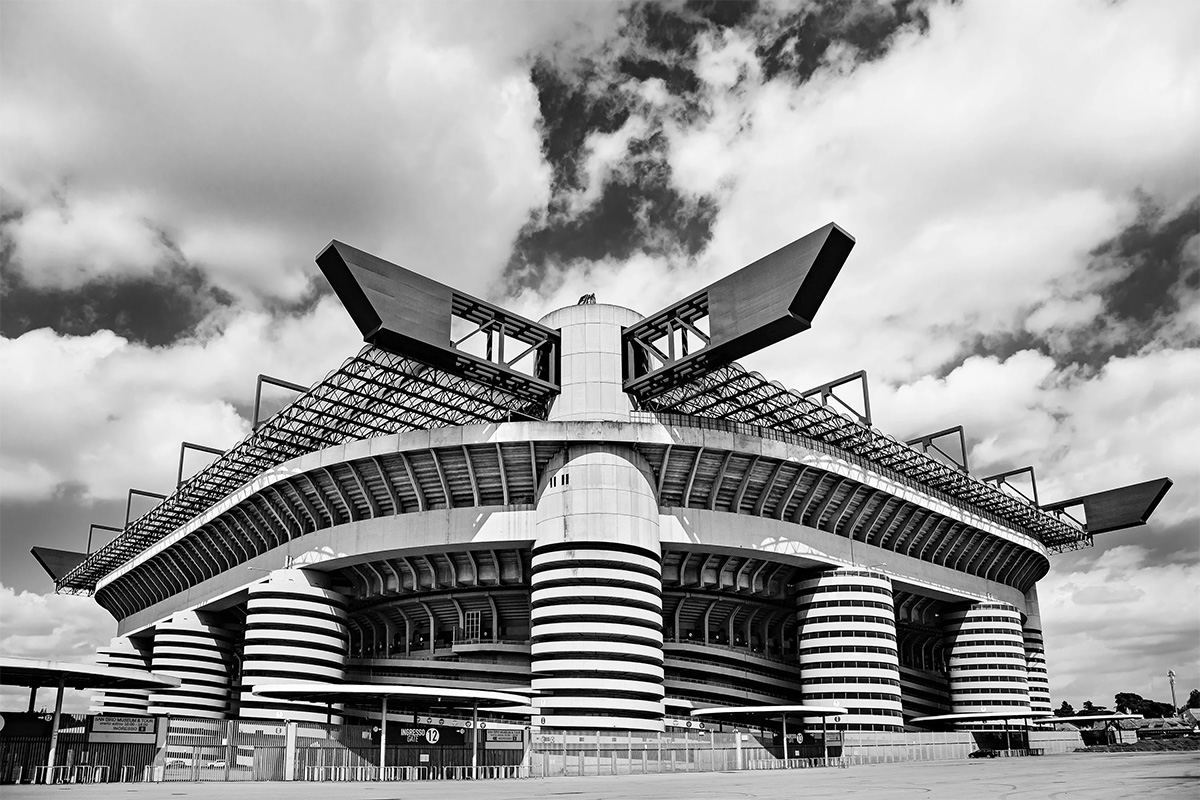
San Siro is a football stadium in Milan, Italy. It seats 75,817 spectators, making it the largest stadium in Italy and one of the largest in Europe. Designed with quick exit routes in mind / etsy.com
ATTENTION — QUESTION!
The Athenian hill of Pnyx was a site of popular assemblies. The quorum for deciding important issues was approximately 6,000 people. Translate the Ancient Greek word «Pnyx».
ATTENTION — CORRECT ANSWER!
A crush — during assemblies, the crush on the hill was horrific…
HOW CITIES GREW
A
t first, clusters of ancient people roamed the territories that fed them, like herds of even-toed ungulates. When humans invented agriculture and realised that it could sustain them no worse than hunting, they began to shift to a sedentary way of life. The first settlements emerged and started to grow until they eventually became cities. For now, the oldest city on the planet is considered to be Jericho, mentioned in the Bible. Its emergence is dated to around 9000 BCE, which is 5,000 years earlier than the moment when, according to Catholics and Protestants, the world was created at all. We will not argue with them; we will simply note that Jericho arose a very, very long time ago.
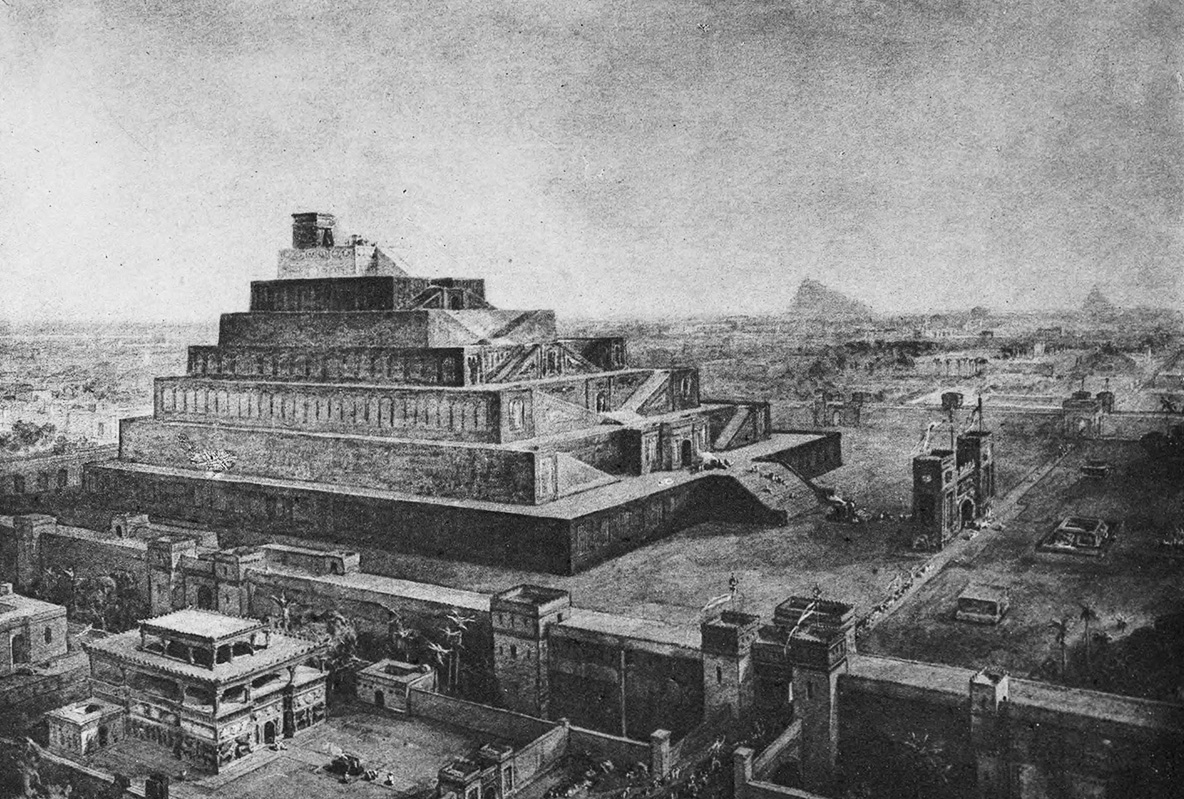
Somewhat later, the appearance of cities in Mesopotamia is recorded — Eridu was founded around 5400 BCE, and Uruk, which some call the first megapolis, emerged a little later, in the 4th millennium BCE. By 700 BCE, the ancient super-giant city of Babylon had reached a record population of 100,000 people. The first million-city was Rome, which gained strength at the beginning of the Common Era. Apparently, Alexandria quickly caught up with it. Crowding there reached such an extent that Julius Caesar had to issue a decree banning carts and chariots from moving through the city during the day, while visitors were forbidden to do so even at night, only on foot or in litters.
THEATRES AND AMPHITHEATRES
Managing such masses of people was not easy. One of the best ways to do this was described by the ancient Roman satirist Juvenal in his famous phrase: «Bread and circuses!» Since spectacles were as important as daily bread, it was necessary to decide where the city’s population would consume them. This is how the first theatres emerged. Near the Acropolis, for example, there were two ancient theatres at once — the Theatre of Dionysus, which appeared in the 5th century BCE and hosted tragedies and comedies for more than 15,000 spectators, and the Odeon of Herodes Atticus, built in 161 CE, which still operates today and accommodates 5,000 viewers.
However, there are also plans to restore the Theatre of Dionysus. In ancient times, this theatre in a certain sense also functioned as a sports arena — in a single day, audiences watched the works of three authors, each of whom presented three tragedies and one «satyr play», and the best received an award. But there were also true stadiums, where horse races and chariot races were held, as well as gladiatorial combats — also a kind of sport! At times, so many people wanted to watch that the capacity of ancient stadiums rivalled that of modern ones.
The Roman Flavian Amphitheatre, now commonly called the Colosseum, could accommodate more than 80,000 spectators, while the Circus Maximus, according to some data, held up to 380,000 people — there are nothing even close to such stadiums today! Modern stadiums do not reach such dimensions. The legendary Maracanã in Rio de Janeiro not so long ago hosted up to 200,000 people, but after reconstruction it lost its famous «geral» — standing areas behind the goals — and now accommodates only 78,838 spectators. The main reason for such measures is crowd crushes in which people were killed.
ENTRY — A PENNY, EXIT — A ROUBLE?
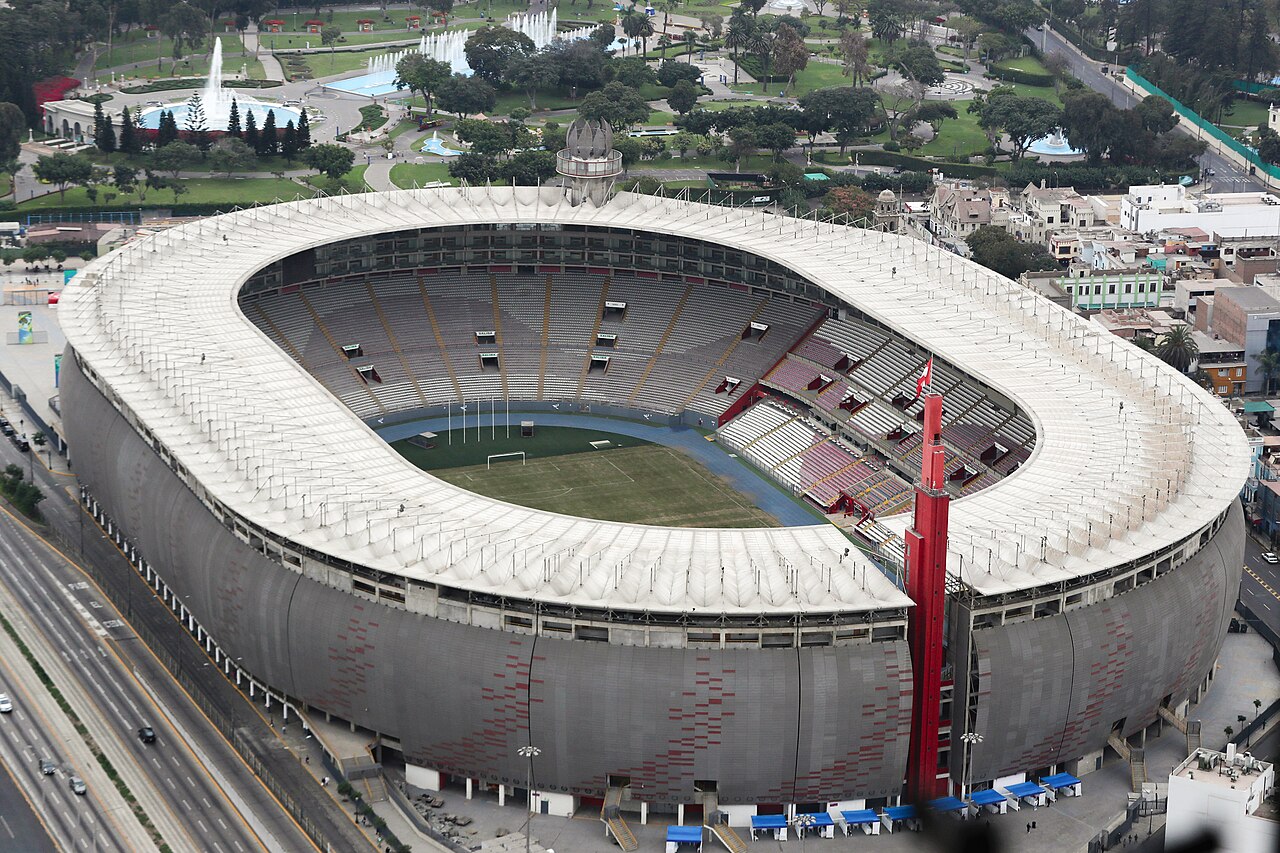
The gathering of tens of thousands of hard-to-control fans has always threatened unrest, sometimes horrific — such as the incident at Estadio Nacional in Lima, when the referee disallowed a goal by the home team. Riots broke out, the police used tear gas, and a crush ensued. 328 people were killed, more than 4,000 injured. This is, of course, a record death toll, if one does not count the «Football War» between El Salvador and Honduras — about 6,000 killed and 15,000 wounded. However, it is unclear how to classify the events at a stadium in Buenos Aires in 1968. There, fans started a shootout right in the stadium, panic erupted, and 74 people died in the crush. Football is loved to such madness not only in Latin America. Africa has its own share of fans — on July 2, 2008, 33,000 tickets were sold for all seats at a stadium in the Liberian capital Monrovia, along with approximately 45,000 counterfeit tickets. Because of such a sell-out, a stand collapsed; 11 people died in the crush, and the number of injured was countless. Africa, in general, has it hard — there are too many reasons for anxiety there.
Here is another case: at a stadium in the Congo in 2008, the goalkeeper of one of the teams, in full view of everyone, cast spells of local spirits on the opposing players! They rushed into a fight, the fans came to the aid of their teams — and in the end, 11 people were crushed to death and many others were injured… At times, fans suffered and died from an overly devoted love for their team. On April 4, 1954, not all supporters of Tbilisi’s Dinamo managed to get tickets for the match against Spartak, and they knocked down the stadium’s iron gates as if they were made of fluff. Twenty people died in the resulting crush — according to official data, at least, bearing in mind it was 1954… Even without any incidents, there were always two dangerous moments for stadium visitors — entry and exit. Exit was worse: people arrive at the stadium at different times, but everyone rushes for the exit at once after the referee’s final whistle. You have to squeeze through narrow passageways — even if you don’t get crushed, you’ll certainly hear plenty of swearing…
A SAVING MEASURE
I, too, used to push my way through those narrow passageways — in my youth, I was such an avid football fan that I didn’t even buy single-match tickets. At the beginning of the season, I would get a season pass, which fully secured my seat on my beloved 16th stand (out of the sun, though it was actually available for sale), and after every match, I would force my way through the crowd for at least 20 minutes. I won’t exaggerate — there were no casualties, as far as I know, but the pressure from all sides could be quite palpable, even without any particularly malicious intent — there was simply nowhere to go. For pickpockets, this situation was literally a godsend: a fan pressed in from all sides was unlikely to notice someone else’s hand in their pocket, since they were being shoved from every direction!
But at one match (I don’t even remember anymore who was playing against Chornomorets), before kickoff and again at halftime, an announcement was made that a surprise awaited everyone after the end of the game. And indeed, as soon as the match ended, the spectators who lingered in the stands (the overwhelming majority) were told that a lottery draw was about to take place! At first, everyone thought, «What’s that to us?» At the time, all Soviet people were forcibly given state lottery tickets as part of their wages — refusing was only possible with a scandal, and most people preferred not to get involved. These lottery draws attracted absolutely no one, and nobody wanted to watch them. But the loudspeaker kept broadcasting and announced that any ticket to this match, with its row and seat number, was participating in the lottery. Immediately, a vehicle loaded with prizes rolled onto the running track — mostly household appliances, and not cheap ones at that. Winning such a prize was something everyone would want!
LOTTERIES AND SPORT
To be honest, it didn’t even occur to me that this could somehow help — surely everyone would stay for the lottery, and then, once it was over, stand up and rush for the exit as usual. But the organisers had thought it through: first they drew prizes for several stands, then started drawing for others, and by that time some of the spectators had already gone home. On that day, there was absolutely none of the usual crush at the exits. Everyone was satisfied and praised the new idea — who wouldn’t like even the hypothetical chance to get something valuable for free? People began going to the stadium more willingly, and most likely the increased ticket revenue fully covered the cost of the lottery, and perhaps even generated a profit.
Gambling people tend both to support teams passionately and to love lotteries. Soon, a whole range of sports lotteries appeared in the USSR — «Sportloto», «Sprint», and many others. To understand how successful they were, one single fact is enough: a quarter of the entire budget of the Moscow Olympic Games was provided by revenues from sports lotteries! Lotteries also left their mark on art, with the help of the best Soviet directors — Ryazanov made The Zigzag of Fortune, and Gaidai made Sportloto-82. The proceeds from lotteries were used to build the British Museum and a number of American universities — Harvard, Yale, Princeton… And, at the same time, they helped get rid of crushes at the exits of our stadiums…
When copying materials, please place an active link to www.huxley.media
Select the text and press Ctrl + Enter


