ОH, LOVE: the husband’s name is now feminine, and the wife’s name is written with a lowercase letter


Art design: huxley.media via Photoshop
UNREMARKABLE EMPEROR
T
he name of the Roman emperor Claudius is not particularly prominent in history. Both his predecessor, Caligula, and his successor, Nero, so far surpassed him in their level of villainy that historians found them far more interesting to write about. Even such a striking detail of his biography as his murder did little to make him stand out — among the first twelve Roman emperors, eight were killed. True, in some respects, he fully matched the morals of this unique circle — exactly half of his marriages ended with the violent death of one of the spouses, the last being his own death, at the will of his fourth wife. As for his third wife, apparently the one he loved most, she passed into the next world by his own order.
Claudius’s childhood and youth gave no reason to suspect excessive amorousness — throughout his early years, he was seriously ill, and his intellect did not impress either, to such an extent that his own mother, Antonia, wishing to reproach someone for dullness, would say that this person was even more foolish than her son Claudius. Nevertheless, from an early age, he persistently studied literature and even published his works. But at that time, he remained as far removed as possible from the politics of Rome and held no significant offices.
FIRST MARRIAGES
In the will of Augustus, he was listed among the heirs of the third rank. Tiberius, who succeeded Augustus, was his uncle, yet he showed not the slightest concern for his nephew. At the age of 21, Claudius married for the first time to the noble patrician Plautia Urgulanilla. The son born during this seventeen-year marriage — the longest of Claudius’s marriages — did not live long, while a daughter was born only after the divorce. Claudius accused his wife of infidelity with a certain freedman. Later, he even tried to claim that Urgulanilla had attempted to kill him, but, as usual, few paid attention to him. Soon after the divorce, Claudius married for the second time — to Aelia Paetina, the half-sister of Sejanus himself, the all-powerful favorite under Tiberius, whom everyone in Rome feared even more than the emperor. Perhaps this was the reason for the brevity of their marriage — Tiberius made Sejanus so powerful that he himself began to wonder why he needed such a rival, accused him of conspiracy, and executed him, after which Claudius quickly rid himself of the compromising kinship.
THE MATCHMAKER — CALIGULA HIMSELF
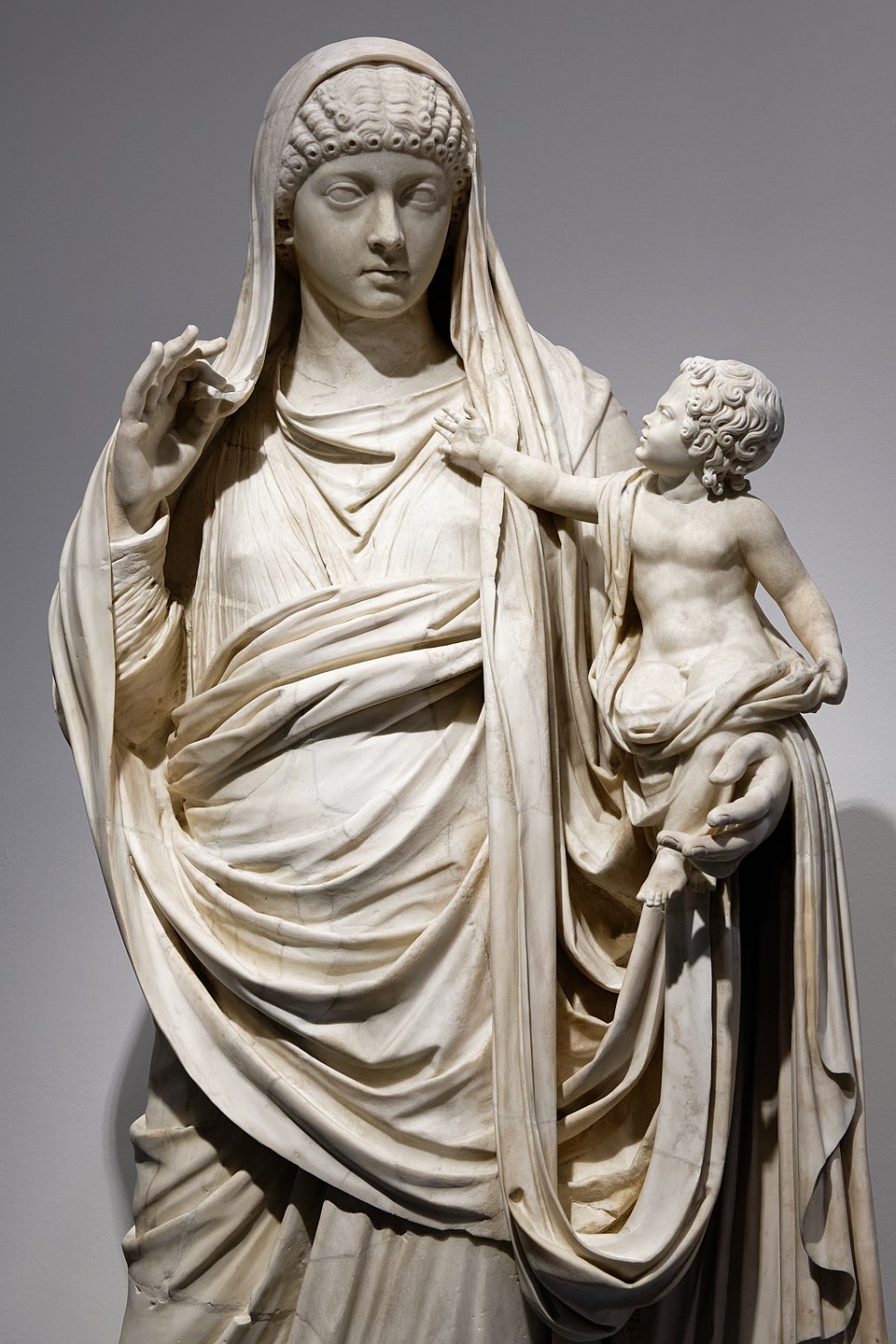
In 37 AD, Tiberius died, and Caligula ascended the throne. At first, he even began to promote Claudius, who was his own uncle — he appointed him consul alongside himself, which gave Claudius no real power but was highly honorable. Soon, Caligula even arranged his uncle’s marriage to a girl more than twice his age, and of a very noble lineage — her father had been a consul, and her mother was the daughter of Mark Antony. Her name was Valeria Messalina; the second part of her name is sufficient — it is by this name that she is known even today.
Caligula’s attitude toward Claudius quickly became contemptuous — the latter’s unpresentable appearance and timid behavior contributed to this. Claudius became a favorite target of the emperor’s coarse humor. When the Senate sent Claudius to Caligula to please him with news of yet another uncovered conspiracy, he was outraged that they were sending his uncle to him as if he were a child. He ordered him to be thrown into the river — fortunately, he later allowed him to be pulled out… Thus, Claudius lived under his nephew — formally his closest relative, in reality a whipping boy. Though not exactly a boy — after all, he was already over fifty, married, and his wife was quite a noticeable figure.
NOT THE WORST EMPEROR
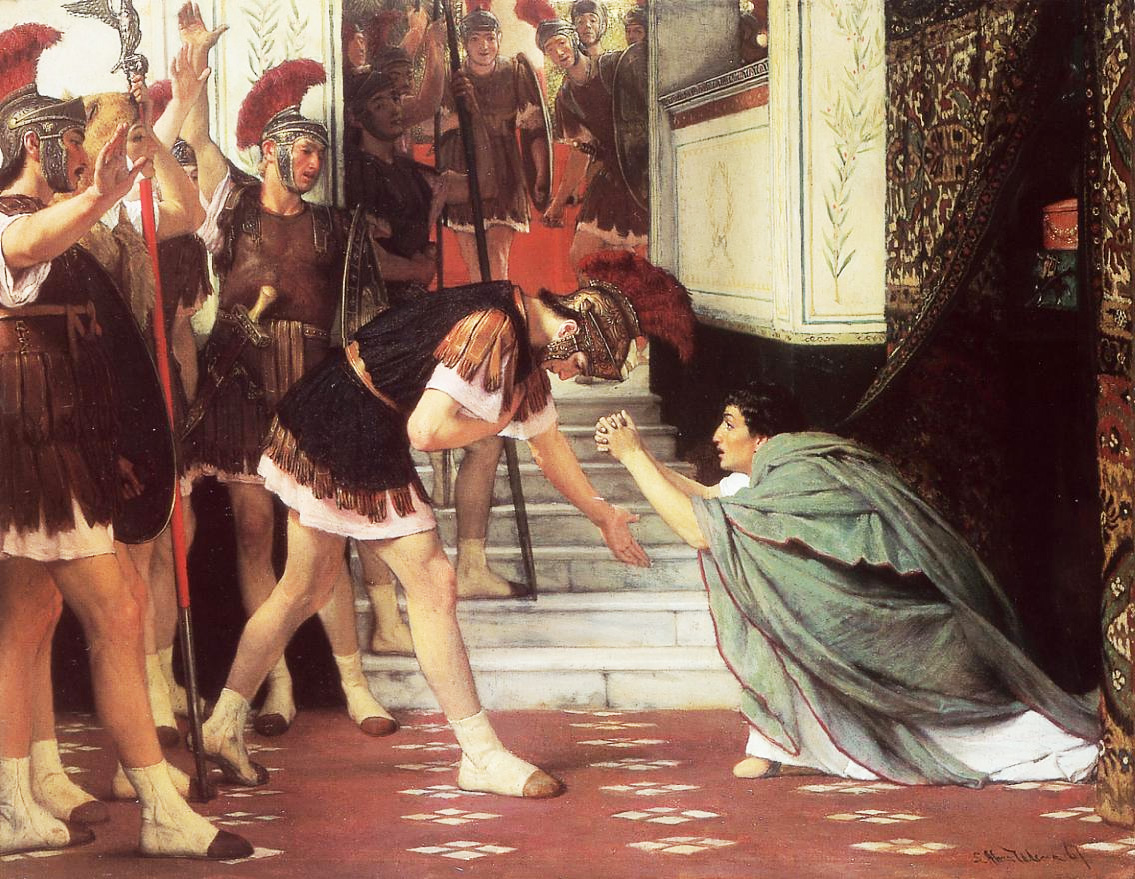
However, Claudius — and indeed all of Rome — did not have to live under Caligula for long. The emperor became increasingly avoided after he not only proclaimed himself a god during his lifetime but also officially declared war on Jupiter and Neptune. Soon, the conspirators killed Caligula, and one of them pulled the deathly frightened Claudius out from behind a curtain. He was certain his final hour had come, but instead, he was offered the throne. This was hardly surprising — after all, he was the closest relative of the deceased emperor, apart from his wife and daughter, who had already been killed just to be safe. And in general, any courtier would find an incompetent emperor far more appealing than a tyrannical one.
Yet Claudius proved to be a more stable figure on the imperial throne than many of his more flamboyant counterparts. Taxes were collected, the state machinery creaked along over stumps and potholes, one Roman denarius could be exchanged without much scandal for four sesterces or ten asses, the streets of Rome were occasionally swept — in short, calm and order. Even at the borders, if things were not entirely peaceful, it was due to yet another war of conquest unleashed by Rome itself, such as biting off another piece of Britain, which, incidentally, was successfully won. One could live quite comfortably under such an emperor!
FAMILY HAPPINESS
And, what is also quite pleasing, the emperor clearly loves his lawful wife or, at the very least, feels genuine affection for her. In less than three years, their marriage brought the imperial couple two children — Claudia Octavia and Britannicus (Claudius did not take this illustrious name, honoring the success of the campaign in Britain, for himself, but instead bestowed it upon his two-year-old son). Could it be that family happiness reigned in such a rare example of an imperial family? It seems that for some time, it did — both spouses were satisfied. Ancient historians even suggest that Claudius loved Messalina. If he loved her, then he must have trusted her to some extent. Perhaps he even counted on her marital fidelity. Well, of course, that may be an exaggeration — but it is possible he at least assumed that if she was unfaithful, it was neither often nor on a scale capable of astonishing the Romans of that era. However, he neither knew nor could have imagined the true state of affairs — apparently, he could not believe it. But we can. For us, “messalina” is a lowercase word with a very particular meaning.

A PHENOMENON OF NATURE
The fact is that Valeria Messalina did not merely cheat on her husband — she managed to do so a double-digit number of times a day. I must admit, I am curious about how Roman historians could have known such details, yet they all write roughly the same thing. For instance, they describe a challenge she allegedly issued to the famous courtesan Scylla. The essence of their contest was simple: who could satisfy more men, doing so without interruption. Scylla dropped out at the twenty-fifth man, having spent an entire night on her admirers without a break, whereas Messalina surpassed her twofold and only ended her triumphant streak at the fiftieth.
Of course, our contemporary Lisa Sparxxx, who satisfied 150 men in just 7.5 hours, would likely respond to Messalina’s achievements with little more than a dismissive smirk, but such mastery required centuries of progress… Messalina is also accused of owning her own brothel, where, under the guise of anonymity as a lowborn servant of Venus, she herself provided boundless pleasure to any Roman who stood in line — naturally, for a set fee — the customary two asses (the price of a loaf of bread or a bottle of inexpensive wine). As you can imagine, it was not money that motivated her — she also generously rewarded her ladies-in-waiting for engaging in sexual relations with their husbands and lovers before her very eyes.
WITH THE HUSBAND’S BLESSING
How many men did Messalina have? Printed sources mention an estimated figure of 8,000 — it is easy to calculate that, with such insatiable amorous activity, this is вполне plausible. The only question is how Claudius managed not to suspect anything for a double-digit number of years, despite being surrounded by hundreds of spies. I am sure that certain rumors did reach him, but he himself did not wish to get to the bottom of the matter. After all, Messalina never refused him! At times, he even helped his wife multiply her achievements. When she desired the young actor Mnester, and he tried to evade her, she went straight to Claudius with a complaint, claiming that the insolent actor refused to carry out her wishes (naturally, without specifying what exactly those wishes were). Claudius immediately summoned the rebel and indignantly asked how he dared not obey the empress’s commands. He ordered that henceforth he should not even think of behaving so arrogantly and must immediately carry out everything she, despite his low birth, commanded him to do. From then on, Mnester, by order of the emperor, eagerly and zealously satisfied the empress’s whims, for which he later paid with his life — but more on that later.
WHILE HER HUSBAND WAS STILL ALIVE
After that, Messalina inwardly decided that everything was permitted to her. Absolutely everything. Had anyone ever dared to oppose her, to stand in her way? No one — not even the emperor himself. Any other person who might threaten her clearly meant less than the Roman emperor. What, then, was illogical in this reasoning? Nothing? Exactly! And so, if such a woman took a liking to the handsome young senator Gaius Silius, she could not only draw him close, not only lavish affection upon him, not only engage in an affair with him — she had to bind him to herself forever! How was that to be done? What, after all, was legal marriage for? No problem — see above. Would Emperor Claudius object? And who, after all, was he? Let him try! And so Messalina entered into a new official marriage — entirely lawful, except that the bride was already married. Did she really think that such sacrilege would go unpunished? That the true masters of Rome — Claudius’s ministers, mostly wealthy freedmen who had forced their way to the foot of the imperial throne with their brains, fists, and elbows — would allow such upheaval in society?
THE DEATH OF A RECORD HOLDER
The closest of Claudius’s officials, his minister Narcissus, immediately informed the princeps of what had happened. In bewilderment, he asked: “And who, then, is the emperor now?” He was assured that the emperor was still only him — Claudius. He calmed down at once and began issuing orders. In principle, Claudius was not a cruel man; he took no pleasure in watching torture, savoring the suffering of the condemned, or relishing the smell of flowing blood and burning flesh. He simply had to govern the state, and for that, one must sometimes make difficult decisions. Nevertheless, not so many people perished — the unfortunate Mnester and the foolish Silius, of course, as well — how could he have expected to survive? With his short-lived bride, things were more complicated — Claudius, distributing punishments for this wedding, at first kept silent about the bride herself.
Only when he was insistently asked what should be done with her did he reluctantly mutter through clenched teeth: “Let her… do it herself”. This clarified matters, and a trusted officer was immediately sent to Messalina to convey this imperial mercy. Both the officer and her mother, Lepida, urged her to make use of the emperor’s mercy quickly, before Claudius changed his mind. But Messalina would either raise the dagger to her throat or chest, then lower it again and begin wailing at the top of her lungs. For some time, the situation remained unresolved, but in the end, the officer decided that the essence of the imperial order was more important than its details, and with a single stroke of his sword, he resolved the matter. Or so he thought…
AND THEN — EVEN MORE
Claudius soon entered into a new marriage with Agrippina the Younger, the daughter of the great Germanicus, the sister of Caligula, and the mother of a child who, only somewhat later, received the name Nero. She quickly ensured that Claudius appointed Nero as his heir instead of Britannicus, but that was not enough for her. In 53, she married Nero to Octavia, the daughter of Claudius and Messalina, and in 54, just to be safe — so that Claudius would not change his mind about the succession — she poisoned him. Nero ascended the throne and, in turn, to be on the safe side, poisoned Britannicus, executed Octavia, and then ordered Agrippina herself to be killed. Nero, too, was later killed, and within the year following his death, four emperors succeeded one another on the throne. Now you can appreciate how relatively prosperous the reign of Claudius actually was — simply a necessary interval between Caligula and Nero. Without it, all Romans might have gone mad. And, in essence, his marriage to Messalina was a happy one: two children, normal relations at least from one side… After all, she clearly loved him and never refused him her affection. Not only him? So what!
When copying materials, please place an active link to www.huxley.media
Select the text and press Ctrl + Enter