EDGAR VINNYTSKY: «To Be, to Hear, Not to Hurry»


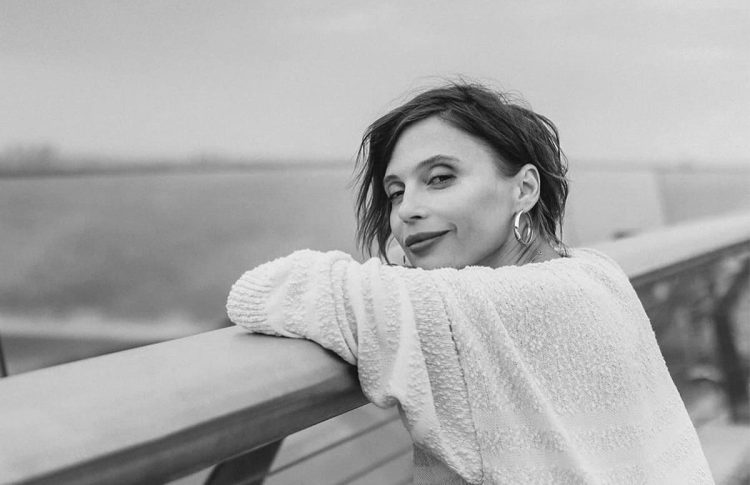
Edgar Vinnytsky / Photo from personal archive
SHORT PROFILE
Name: Edgar Vinnytsky
Date of Birth: June 5, 1994
Place of Birth: Kyiv, Ukraine
Profession: Poet, Musician
Edgar Vinnytsky is a contemporary Ukrainian poet and musician, an independent artist, a TEDx speaker, and a participant of The Voice of the Country. He is the founder of the movement GENERATION OF OPEN PEOPLE. In July, his ninth book was published — a collection of poems titled Her.
«The first infusion is not for drinking. It washes away the dust. It lets the leaf wake up…» That’s how our conversation begins. The recorder switches on, and the camera barely catches the light. We sit in silence. The tea hasn’t been poured yet — but something is already happening.
«The first infusion is like a preface to a conversation: we wash the tea», says Edgar. And in this simple, almost everyday gesture, there is a ritual without pathos, meaning without embellishment. «Now, in the cup, there’s silver gaba, a light oolong. It contains what helps you see the pause between thought and action. There are automatic reactions, and there is the possibility to choose: to get involved or to observe. Tea teaches this pause. It doesn’t force, it offers. It’s like a partner to me. Sometimes it’s just the two of us — tea and I — and that’s enough».
Svitlana Pavlyanchyna: And to hear the tea…
Edgar Vinnytsky: You need… to stop shouting. I mean, coffee, sugar — that’s the orchestra at full volume. And tea — that’s a quiet, almost transparent melody. To hear it, you need to grow a bit silent inside. There is no such thing as bad tea at all. And no good tea either. I think good and bad are one and the same path. Like a cup of tea, you drink not because it’s perfect, but because you are here, and so is it.
GOD
Good and bad —
From the same soil.
I don’t believe in God,
I know God — for certain.
Convulsive clicks
In the style of the Internet —
Countless religions
People have spawned…
All have lost count,
While holding the truth.
I, unbaptized,
Observe God…
And there is a place for everything
In the infinite essence.
God is not a word. Instead —
You could say «jelly».
You could start
Calling it Being.
And the one who is mute —
May simply remain silent.
That too can be heard,
Though not with the ears.
How beautiful, O God,
We breathed with You!
With every drop of childhood,
Dissolving into dance,
We remembered the means
That creates space.
Gratitude —
It is a pure prayer.
Thus, inside a poet
The battle disappears.
There is no place without God,
In the Universe of Being…
Words are small, impoverished,
They can be lost…
Beyond forms, beyond colors,
Beyond meanings — a threshold.
Stepping across the threshold —
There is a moment. And that is God…
S. P.: Why do you think people keep listening to poetry — in the age of reels and endless scrolling?
E. V.: I think it’s because truth has always been expressed through people, just in different forms. In different times, with different voices, but — in the same way. I don’t pretend I want to keep up with the pace. I don’t try to be «relevant», I simply let the poems walk their own path. If they are alive — they will reach their destination. The form will find them on its own.
S. P.: What happens when you write? Does this process have a structure? Do you yourself know what will come next?
E. V.:I find something like a golden mean. Every poem I write is the first one. And the last. I never know if there will be another. It simply appears. You need to try to live through the state from which it came. Because poetic states are not thoughts, they are space. They are wider than our habitual perception, than our understanding.
S. P.: In the moment of reading, are you more with yourself or with those who are listening?
E. V.: I’m very happy when I see that people are listening to me. When I can meet someone’s gaze — and in that gaze feel: they’ve heard, accepted, been touched. And I think it’s more pleasant for me than for them. And another important fuel is interest. Without it, the technique may be beautiful, but not alive.
S. P.: So, for you, poetry is a way to grasp the elusive?
E. V.:Yes. It’s a way to move along a delicate contour. Because poetry is an art form in a world where time and space intertwine. It begins, breathes, ends. Like a route. Like an impulse. Like a dance where you’re not trying to catch your balance — you are in it. You are the balance.
S. P.: And as a child, were you fascinated by poetry?
E. V.: In a sense — yes. My grandfather, Garik, wrote poetry. The only person in our family who did. It was his inner secret, his special trait. And, you know, the way he lived his poetry — it’s both beautiful and tragic. All his life, he worked in a printing house, printing other people’s books — and never once printed his own.
S. P.: Like a scene from a movie…
E. V.: Exactly. Sometimes I think: how is it possible to spend your whole life working with other people’s words and never once give the world your own? I didn’t even get a chance to ask him that question. That silence between us — it now resonates within me. And the most mystical thing is that I started writing poetry only after his death. Before that, there had only been attempts — one or two texts.
S. P.: Do you feel that the ability to create poetry is something inherited?
E. V.:Yes. I think it’s something like a genetic setting. But not for rhyme — for perception. The ability to hear not the meaning of a word, but its phonetics, its vibration. As if you turn off the meaning, like muting the lyrics in an MP3 file, and just hear the sound. And then — you find another sound to match it, by touch, by ear. Not rhyme — kinship. And when you listen to the world like that, poems come on their own.
S. P.: And if they don’t come? Can you make yourself write?
E. V.:Never. I think poetry begins where technique ends. I can come up with something, but if it doesn’t flow — it’s not a poem. It’s an exercise. That’s why every poem for me is the first and the last. I don’t know if there will be another. But I know I can’t and shouldn’t do it on a schedule.
S. P.: And if a person loves listening to poetry but doesn’t write? Is that a different kind of perception?
E. V.:It’s a different feeling. It’s a listening heart. And it’s no less poetic. One person translates silence into words, another knows how to hear silence in words.
S. P.: You say the first poem came not as a text, but as a wave. What was that feeling like?
E. V.:It’s as if you hadn’t done anything — and then suddenly someone opened a window in your head. And the wind came in. You were just riding the metro, thinking about a play, and then — a line. You didn’t come up with it. It came. I started writing not because I wanted to be a poet, but because I couldn’t not write.
S. P.: And what did the scene you imagined look like?
E. V.: On stage — two houses. Two families. Two New Year’s tables. One with caviar and wine glasses, the other with a teapot and tangerines. The lights go out. And you see not only the people, but the difference in the silence. It was a plan for a play. But it began to speak in rhythm. And instead of scenes, I started writing poems.
S. P.: So the first poem was a play that dressed up as poetry?
E. V.: Exactly. I just wanted to mark out the space. Make a sketch, a scheme. But in the end — the text began to breathe. You don’t write a poem — you catch how it happens to you. It’s not you who creates it. It’s the poem that finds you.
S. P.: And did that inspire you to keep writing?
E. V.: On the contrary. It impressed me so much that I couldn’t write the next one for several years. When you suddenly discover some kind of power within yourself — almost a superpower — you’re afraid of making it worse. I knew there was something real there. And if I tried to repeat it mechanically, it could turn out to be a fake. So I waited until the wave came again. I didn’t make a poet out of myself. I just listened for when it would start resonating inside. Poetry, as I feel it, is something round, soft, flowing. Not a form, but a breath. And you just try not to break its stride.
S. P.: You started out in acting. What did the school of transformation mean to you — and why, at some point, did you decide to step out of that role? Was the turning point disappointment, discovery, or a new recognition of yourself?
E. V.: I liked it. Being an actor is a way of being in the world. But then I realized: Edgar is also a character. And in that realization, there’s something almost Shaolin-like. Life was leading me along its own routes, through experiences I couldn’t bypass, so I could understand the essence. To play someone else — you first have to understand who is playing yourself. It’s a deep story. I went through the dream of being the lead, being beautiful on stage, and getting applause. But at some point I began to see what that wrapping looked like from the outside, I started noticing what theater looks like as a production. And at the same time, I went out into the street — with a guitar, with my voice.
S. P.: But that’s not quite the stage. Not an auditorium, not a spotlight.
E. V.: Why would I need two pairs of eyes if I can look into just one? I’m always looking at one person anyway. Or at a phenomenon. Sometimes you stand before people, read poems — and they all know this isn’t just a meeting. They woke up at dawn, called a taxi, and came to the sea, just to be there. That’s what is sacred. Most of my performances happened without posters or announcements. Thousands of such evenings. Today. Now.
S. P.: You say people live «their own picture». And you? Are you the director of yours? Or the artist? Or maybe an actor in someone else’s production?
E. V.: Definitely not the butler (laughs). I created this picture. And at the same time, I don’t know what will come next. Like when you read a poem: you seem to know, and at the same time you don’t. And there’s no contradiction in that — there’s multidimensionality.
S. P.: Is it possible to truly understand another person? At least someone close. For example, your wife.
E. V.: Katya is unfathomable! You know, I can try to remember her. But then I’m creating a projection. I think: «Okay, she’s like this». And I expect her to stay that way. But time passes — and suddenly she’s already different. Or I can just be with her now. Be near, without interfering. Not asking questions, not saying: «This way is better». Because interference is already violence. But blending — that’s different. I often remind myself: «Don’t interfere, but blend».
S. P.: And how did you know that Katya was «the one» for you? Was it by chance or, on the contrary, very precise?
E. V.: I think it was a decision. Simple, conscious. I generally love simplicity, because there’s enough complication in life as it is. We met on a different level. In the depth of attention to each other, it was something special. We’ve been together for four years now. That’s not so long, but internally it feels like a whole lifetime. When she came, other people began to drift out of my life. For a while, I still fought with myself, but Katya, with her feminine wisdom, managed to make me understand: she had chosen me. And that «chosen» wasn’t said with a voice, but with her whole being. I think when a woman chooses — it’s something monumental. She chooses not with words, but with intuition. Out of everyone — the one. It’s about precision. About recognition.
S. P.: АAnd what did Katya change?
E. V.: Everything. She’s like a little mouse. Quietly, but firmly, she entered. I was the wind. Today — here. Tomorrow — there. Apartments, cities, storylines. With her, the house got a door, order appeared. The murkiness ended.
S. P.: You said you somehow knew you would have a daughter?
E. V.:Yes. Even before we knew we were going to have a child — I already knew it would be a daughter. And I even wrote her a song. Just like that. I was writing and realized: this wasn’t for Katya. It was for her.
The doors open, in a way I’d never known before.
It’s impossible to believe: she enters life so smoothly.
She drifts in slowly, filling it with warmth.
Darling, of course, my life is now your home.
You came, breaking the chaos, inside and out.
Your light has left an eternal trace.
Your light — the true dawn.
Your light, changing nothing,
Helped me see myself.
S. P.: What’s your daughter’s name?
E. V.: Miriada.
S. P.: What an incredible name…
E. V.: It came to Katya long before she was born. Back then, we were like children ourselves. Before the war, before all of this. Just playing. And once, on a train platform, Katya said: «Listen, why is no one named Miriada?» And that was it. It simply settled in. As if it had always been with us.
S. P.: Her — your latest collection. It sounds like a dedication. Who is it addressed to, and where did this book come from in you?
E. V.: This is something completely new for me… because it’s love poetry. These are poems I wrote for Katya. Most of them have never been published — and never will be. That’s their value. They’re like… love notes. At the beginning of the book, it even says: «Without a table of contents or preface», simply — about how love happens. Every poem — in my own handwriting. As if you’re flipping through living notes. I really do write notes like that for Katya. This is our world. And part of that world is in this book. In my other collections, before each poem there was a QR code: you could scan and listen. That had this digital, neoclassical vibe. Here — it’s the complete opposite. I went toward the authentic. I did the design and illustrations myself. I drew them by hand. To make it breathe.
S. P.: Where in Odesa do you breathe freely? Where do you feel good?
E. V.: I feel good at home. I’m comfortable if I myself am comfortable in the moment. I used to think the sea was important to me. But now… now I don’t think so. I don’t always like it, but sometimes — very much. I’ve come to recognize its beauty. Like Brodsky wrote: «Coming to the sea out of season, aside from the material benefits, has that other reason — that it’s a temporary, but still, suspension of the year’s brackets…»
S. P.: You were born in Kyiv. Was moving to Odesa a conscious choice?
E. V.: Absolutely. A very specific one. I’d been to other cities, lived in them. And at some point, Odesa was chosen. Not because I had «always dreamed of it» or «always loved it». On the contrary — I wasn’t ready for this simplicity. When the actor in me «dissolved», that’s probably when I became ready to accept the simplicity of this city. Before that, I was closer to Kyiv or Lviv — that kind of aesthetic. And Odesa — it’s simple.
S. P.: Is simplicity the essence of Odesa?
E. V.: I think so. It’s the ability to look at a person beyond all their roles, statuses, and images. Whoever I am, whoever the taxi driver is — we can talk. Simply. Quickly. As people. That’s Odesa. You haven’t even had time to put on a mask, and the conversation has already happened.
S. P.: You’ve spoken about a world of free people. About a generation of the open. What does freedom mean to you? Is it the ability to leave? Or to stay?
E. V.: Freedom is a complicated thing. Deep. To leave? Where would you go? You won’t really leave anywhere. You’re here. It’s not about running away. Not about ending a relationship or a life. It’s something entirely different. I even have a text on this topic. Want me to read it?
FREEDOM
Once, at a watering hole,
It was far too good.
And, unable to bear the peace,
The animals began to argue…
They spun their demagoguery
From elegant turns of phrase,
Debating as best they could:
Does freedom exist in choice?
Is there a choice, or are we
Merely the consequence of causes?
They traded their quiet and water
For a debate on a loan.
«We are free!» — roared the lynxes,
Falling into the darkness of aggression,
Having never bathed their lives
In serenity and sky.
«No freedom, all are slaves!» —
The cynical hyenas laughed.
Forgetting responsibility,
They reveled in their own captivity.
A heron quietly enjoyed
Being beyond the bounds of knowing.
And her detachment, it seemed,
Caused a tsunami wave.
To destroy her world,
The animals raised a ruckus:
«Lifting one paw,
You cannot lift the other!
So choice is not freedom,
At most — only partly, slightly!..»
The heron — unbothered.
She remained in silence…
Roars and howls, bared grins sparkled!
Everyone was stirred then
By the bird’s refusal to argue.
The heron — a wingbeat, and she was gone…
The quarrels slowly faded.
The truth was clear without measures —
Consensus was reached
When someone became the example.
Inhale and exhale, exhale, inhale…
An argument is no path to freedom.
One who is free from oneself —
That one is truly free.
It’s about how sometimes wisdom lies in non-involvement. In being free from the need to be right. Free is the one who does not argue. The one who doesn’t need to prove they are free.
S. P.: You speak as if there’s someone inside you observing. Who is this observer?
E. V.: Sometimes I feel my «self» is like a swarm of bees. It seems like a single entity. But if you try to find the center — it’s not there. You draw a circle and want to point to the middle: «Here I am». But it’s empty. There’s no one there. There’s only the one watching this swarm. And that observer asks: «Do I want to be right or to be happy?» And that question — it’s the most real one. Because everything begins with it.
S. P.: It seems like you don’t care what others think of you. But is that really so?
E. V.:You know, it’s an interesting thing. In reality — no one cares what others think of them. Because we have no organ that can feel someone thinking about us. We can’t perceive it directly.
S. P.: Do you feel your art influences something bigger than just your own life?
E. V.: I think we are all small drops in a vast mechanism. But that’s exactly the point. I do something — and it’s as if I pass the baton forward. You don’t have to see the result. But if my step helps humanity move even a little — internally, not externally — that’s already of immense value. It’s somehow connected to evolution — not only of bodies, but of consciousness.
S. P.: Do you perceive time as a flow in which we simply move, or as a space through which humanity itself moves?
E. V.: I’m closer to the second. We don’t just live in time, we weave ourselves into it. It passes through us like light through glass. And each spark is a chance to transform something. Even a meeting is already a step. Even the fact that a child to whom you pass on something important will take with them less harmful and more good.
S. P.: What do you fear more — death as an end or as the loss of presence in other people’s lives?
E. V.: Death — it’s bound to happen. Guaranteed. The only event in which you will definitely take part. Right now, I think, is a special time. We think about it. Maybe we wouldn’t if we lived in a different era. But now — we do. Every day.
S. P.: What sound, for you, is music without notes?
E. V.: Good question. I’ve thought about silence in my life, and I’ve realized you can’t actually hear silence — you can only not hear it. Meaning, if you hear something, you’re hearing your thoughts about silence. To truly hear silence, you have to become it. And then any sound becomes part of the symphony of the present.
S. P.: When do you feel truly free?
E. V.:In the present. Now.
S. P.: You once said religion is a distraction. What did you mean?
E. V.: Religion isn’t bad. It’s an attempt to reconnect. But sometimes it becomes not clarity, but opium. Nigmatullin has a line: «Lord, may I take down the icon so I can see better?» It all depends on you. Just remember: the Kingdom of Heaven will not come in an observable way. It’s within. God loves everyone equally, and yet each person is unique to Him. That’s why everyone has their own unique path.
S. P.: Does consciousness manifest through your actions? And is that how self-recognition happens?
E. V.: Yes. Precisely through living, attentive presence here. Through being present. And the more I am present in my actions, the clearer I understand who I am. I start to feel I’m not separate. That everything is one. I believe in live contact. I believe the world is constantly speaking to me.
S. P.: What are «the world’s hints» to you? How do you hear them?
E. V.: It’s very simple. If I notice something, it means there’s already a request inside me — I just don’t know what it is yet. But if I’ve noticed something in this chaos of reality, it’s no accident. It’s my subconscious responding. I start to look at it. Why exactly this? And then the unfolding begins.
S. P.: And what do you do when it becomes completely unbearable? How do you get through it and come out alive?
E. V.:It’s strange, but this morning, just before leaving, one of my own poems suddenly began to sound in me. And I realized: it’s not mine. It simply exists. It comes when it’s needed. And I thought I’d like to read it. It’s called Homeland of Clouds.
HOMELAND OF CLOUDS
Homeland of clouds — mountain peaks,
Millennia-old crests of mighty waves.
Go to them, tell them of your pain,
They will melt resentments into clouds.
Close to the sky, with your feet on the earth,
Stand and absorb their calm.
They listen intently, though they look like stone,
Reminding you who you are…
These mountains do not seek glory,
They grant it to everyone.
They plunge into the sea — gently,
The mountains themselves dive into you.
In this dimension, time is dense,
A moment stretched over centuries.
A stony sea — not of water…
Here is where clouds are born.
S. P.: How do you understand this text? What did you hear in it today?
E. V.:To give birth to lightness — you need to be a mountain. To be the one who gives height, who can stand firmly. And then clouds are born within you — hopes, space, breath. But for that, you need to change your pace. To shift into that dimension where time doesn’t slip away but unfolds. There you see: your life is the crest of a wave. And every movement is a micro-act of evolution. Nothing is difficult — in the moment. Difficulty is a property of our mental constructions. It appears when we start «spinning things up». But the moment is simple. Absolutely simple.
S. P.: What should you do when it hurts or when you’re afraid?
E. V.:Be. Right now. Do what you can. As honestly as possible. Don’t run away. And most importantly — don’t slack off, don’t avoid what is within your power. Because if you can do something — do it. And if you don’t — you’ll regret it. Why don’t you do it? Because you imagine what will happen later, and later, and again later. But that doesn’t exist yet. There is only now. And if you act — the action itself becomes the value. Not the result. Not the benefit. But the action as a manifestation of life.
When copying materials, please place an active link to www.huxley.media
Select the text and press Ctrl + Enter