SCULPTOR YAROSLAV ZAITSEV: on Frozen Time and Living Material

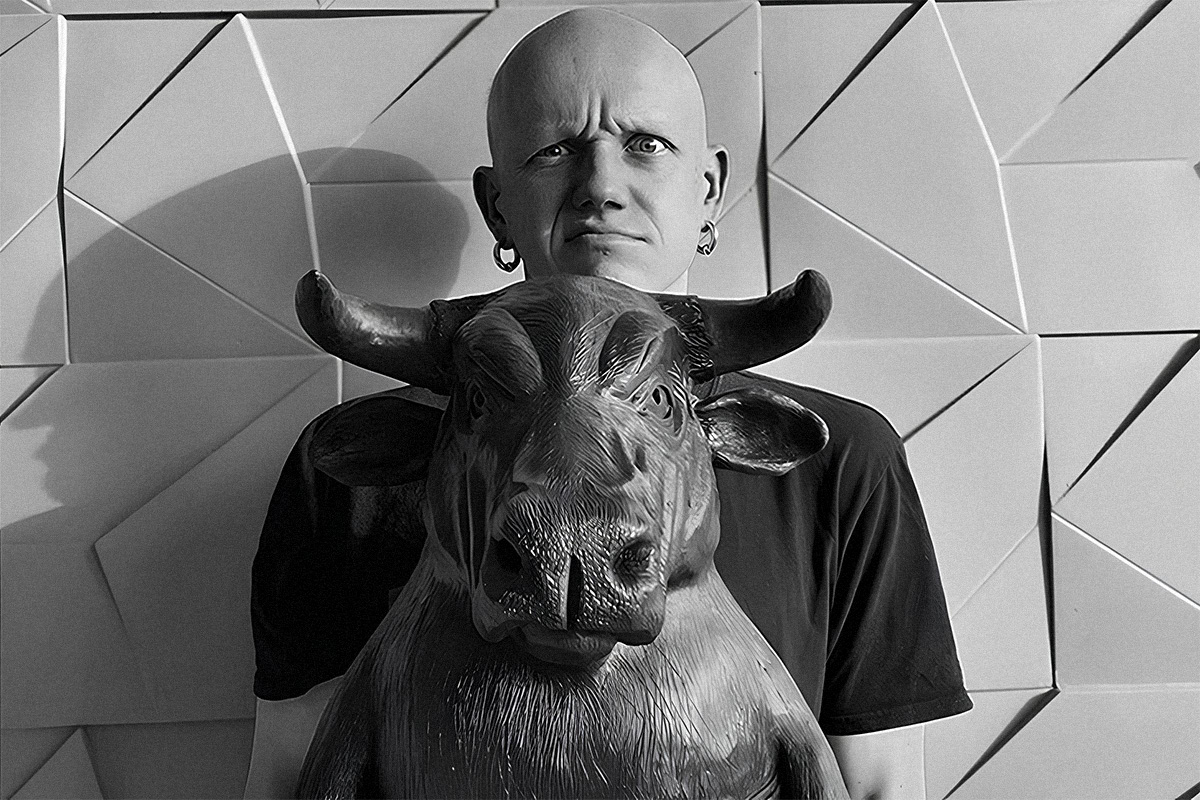
Yaroslav Zaitsev / Photo from personal archive
SHORT PROFILE
Name: Yaroslav Zaitsev
Date of Birth: February 6, 1988
Place of Birth: Odesa, Ukraine
Profession: Sculptor
There are artists who perceive the city not through its streets, but through touch. Sculptor Yaroslav Zaitsev is one of them. His language is clay, stone, plastic, and metal. His works are made for people: modernity, subtle irony, and inner strength.
We met in his workshop to discuss «frozen» buildings, sculpture as provocation, and why it is sometimes better to restore the old rather than build something new. In his words, there is mastery, patience, and the ability to see beauty in chaos.
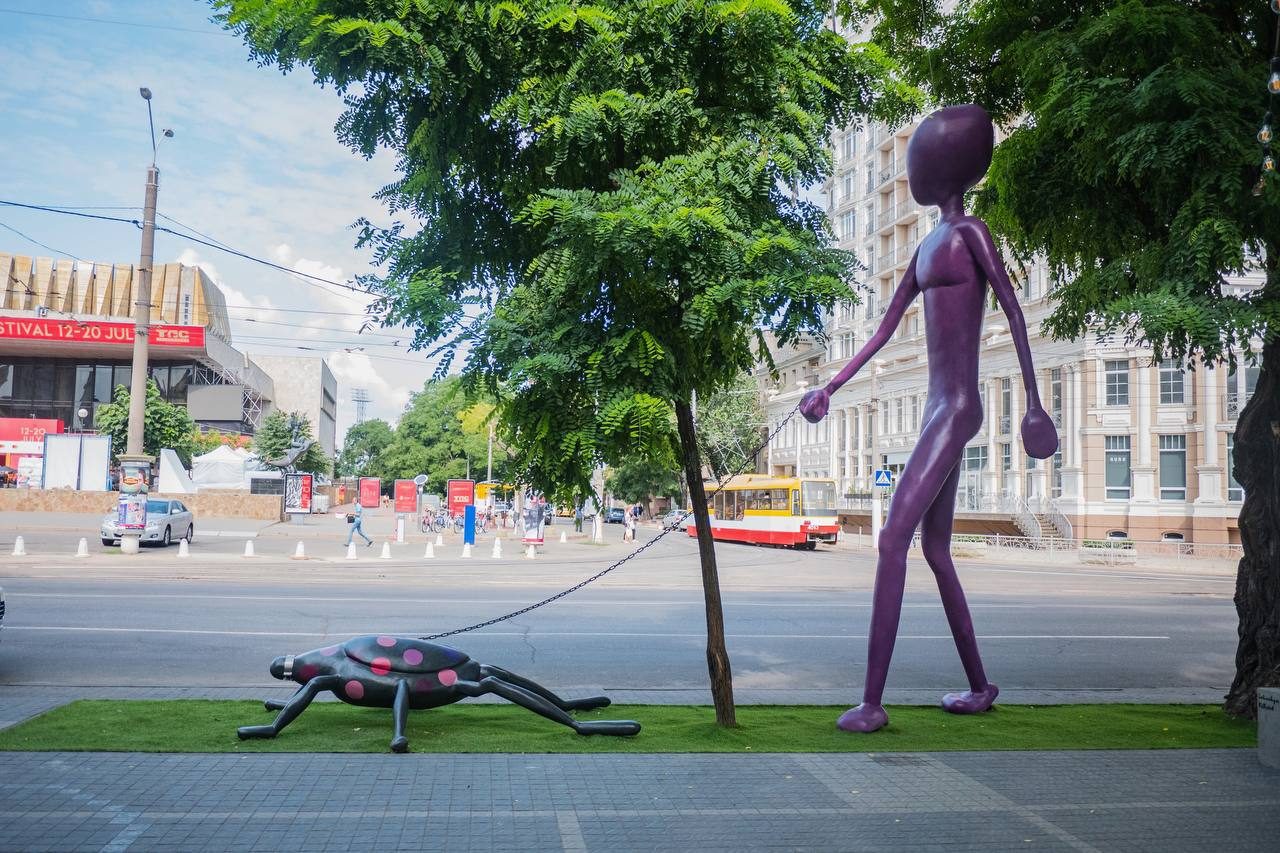
Svitlana Pavlyanchyna: It’s impossible not to notice your works in the city center. When you get to know the city, one way or another, you pass or drive by the bright figures opposite the Music Comedy Theater. They look like guardians — vivid, large, slightly alien. Their scale and color break out of the familiar context of old Odesa, and that’s precisely what makes them special and… provocative. How did they appear in your life? And when did it stop being about size and material and turn into meaning and dialogue with the city?
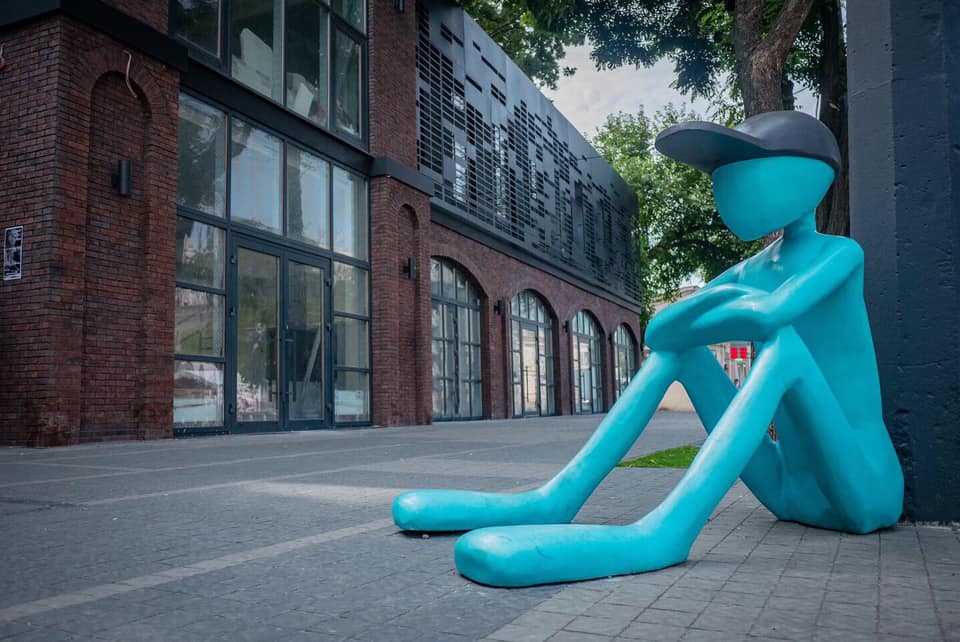
Yaroslav Zaitsev: It all started with the person who built the house where «Kompot» is now located. He became the client. The figures are a collective portrait. They turned out to be images of an entire team. We came up with everything together. Sometimes it felt like a game, sometimes like an argument, but in the end, we found common ground. The figures are made of fiberglass. And among ourselves, we called them «aliens». That was the shared context — outsiders among us. From the very beginning, I understood: they would stand out from the city’s context. And at some point, they stopped being just fiberglass forms and truly became something like aliens — foreign, yet familiar at the same time.
This is precisely the fascinating part for me: the work leaves the workshop and begins to live in the city. The sculptures carry on their own conversation with the street, with the townspeople. It’s another kind of breath. And you realize you didn’t just make a few large figures, you created a reason for conversation. These «guardians» began to gather legends, meanings we hadn’t initially intended. People started discussing them, assigning them stories. And that’s wonderful, because art never promised to be convenient. It promised to be alive. And the living is always a bit provocative. That’s probably what life is — it always finishes writing the artist’s work.
S. P.: What are these figures talking about?
Y. Z.: I think they are silent. Each is busy with their own thing. One is walking a beetle, another sits in the lotus pose, a third holds a book, and the girl on roller skates is eating ice cream. They don’t talk. And there’s something important in that too: sometimes silence speaks louder than any dialogue.
S. P.: And how do you assess this project now?
Y. Z.: I consider it successful. The figures have long lived their own life, though they’ve already faded a bit. We restored them a couple of years later: worked with paints for several nights — almost like a little ritual. Now they could use some refreshing again. But that’s natural: living things require care. Stone also ages, and we don’t find that surprising.
S. P.: And who do they belong to? People perceive them as their own…
Y. Z.: Formally — to the city. But in fact — they are part of the space that belongs to no one. Like the sea. It exists — and it is no one’s.
S. P.: Can we say that scale only becomes meaningful over time?
Y. Z.: Scale… you know, it stops being a number in meters when it begins to affect you. When you stop thinking: «big or small», and start sensing presence. It’s like meeting a person who suddenly towers over you and looks straight into your eyes.
S. P.: You once mentioned that you conduct a dialogue with the world through materials and space. What kind of dialogue is that — a prayer, a code, an argument? Or should the viewer figure it out themselves?
Y. Z.: It depends. Sometimes I want a person to recognize themselves in the figure. Sometimes, on the contrary, I want them to feel a sense of strangeness, to face something unfamiliar. I rarely embed a direct meaning. It’s more like an offering of associations. Art is always somewhere in between: between the author and the viewer, between the familiar and the foreign.
S. P.: What is closer to you in art, architecture, sculpture?
Y. Z.: Abstraction. It’s very close to me — with its freedom and provocation. It carries no obligation to explain, prove, or fit yourself into some style or commission. It works like pure energy. You know, I had long dreamed of seeing Jackson Pollock’s works in person, and when it happened in Venice, it literally blew my mind. It felt like stepping into a different rhythm of reality. You look at his canvases — there seems to be no plot, no figure, just movement, chaos, breath — and suddenly you find something of your own in it. That’s what moves me: the possibility of endless interpretation, when every viewer completes the picture within themselves.
S. P.: Which part of the process is the most philosophical for you — sketching, modeling, casting, installation, or negotiation?
Y. Z.: Modeling, one hundred percent. It’s a meditative process that shapes you as much as you shape it. Not everyone can master it, and that’s where its value lies.
S. P.: Does it ever happen that the very texture of the material — a crack, a chip — suggests a new solution?
Y. Z.: Constantly. That’s what experience is. Experience you can’t buy.
S. P.: Odesa is not an easy city: salt, wind, humidity. How does outdoor sculpture withstand this, and which material is the most convenient for you to work with?
Y. Z.: Honestly, it doesn’t withstand it at all. Any outdoor work requires care and restoration — the sea here wears down not only stones but sculptures as well. That’s why today my choice is «chemistry»: lithium polymers, fiberglass. These materials provide strength, lightness, and at least a partial chance to survive bad weather. Although maybe that’s the truth of it: everything is doomed to be renewed from time to time.
S. P.: And how do you reconcile a commercial commission with independent art?
Y. Z.: I’ve been struggling with that question for many years. Sometimes I think: «Maybe an answer isn’t even needed? Maybe art exists precisely to hold that contradiction — between bread and freedom?» I would like to step away from purely «commercial work», as I call it. Because apart from experience with the material and long-term skill, it gives almost nothing. Neither publicity nor the feeling of freedom.
S. P.: Looking at your path as a sculptor: where are its roots? Did you go to an art school?
Y. Z.: I was twenty-three or twenty-four years old, already an adult, when I first started sculpting. I never graduated from any art institution. I have several completely different educations: a technical school of industrial automation, then the Academy of Refrigeration (I’m a power engineer). After that, I also ship navigation — I was a sailor.
At first, a friend and I started making masks. It was called PaperCraft — fans would assemble paper superhero helmets from printed templates. You glue the sheets together, and you have a mask in your hands. Then we decided to reinforce the paper, add materials, and paint.
I got curious: what if I came up with my own forms? That’s how I first picked up clay. The masks were good, but at some point, I wanted a larger scale. And then the Universe gave me a hint: the director of my yoga club asked me to decorate an empty wall. That’s how my first life-size human figure appeared. That’s where it all began. The pull toward larger forms developed gradually. But scale kept calling me. A small mask is a game. A large figure is already a meeting.
S. P.: You describe your work in quite a materialistic and technical way. Did you have sculptor mentors, role models?
Y. Z.: I’m a techie by nature, and to do what I do, a few components are enough. First, there has to be an aptitude — the desire to master materials and tools. That’s purely a craft trait: loving to make things with your hands, process them, bring them into form.
Second, it’s very important to absorb material, quite literally — anatomy, physiology. I once got deeply into that, and the theory has stuck well in my head to this day. It’s the foundation without which it’s hard to give a figure authenticity.
Third — perseverance. Sculpture demands hours of sitting in one place and literally grinding out detail after detail. And fourth — stress resistance. Because if something doesn’t work out, you have to redo it. Sometimes several times. And not every temperament can handle that.
So no, I can’t name any «teachers». For me, the main co-author remains the process itself, the craft, and probably character. Everything else is superfluous.
S. P.: Who could you call your co-author?
Y. Z.: For me, a co-author can be anything. I used to like saying it was the sea, the city, the air, the sun — they all seemed to interfere in the process. But now I realize: most often, my co-author turns out to be emotions. I like observing how a certain feeling, character, or intonation manifests itself through an image. For example, an animal. Let’s say I imagine a giraffe with a particular expression — and I sculpt it that way.
It’s a kind of game: to take a simple figure and «dress» it with a mood. As a result, the viewer sees not just the animal but also the feeling I put into it. With abstract forms, it’s even more interesting. There, I completely abandon preliminary models or sketches. I just take the material and start «trimming» it until some form emerges. It’s pure imagination, a dialogue with the material where it leads me.
S. P.: The city is your main exhibition hall. How does it influence your work? How do people react?
Y. Z.: There’s a sea of reactions and photos. Some people like everything, some say: «What nonsense!» And that’s fine — art doesn’t have to please everyone. Some things spark debates, but not hostile ones. For example, the guy with binoculars and a cat in «Ventimiglia» became a local attraction, even added to the register. And one of my favorite works in terms of process is a three-meter gargoyle in Chornomorka. Someone posted it on social media with the comment «a devil has appeared». I laughed — and later people told me they went there especially to see it. That’s the moment when sculpture lives on its own, and the city adds its story and its own breath.
S. P.: And what do you think about selfies as a form of contemplation? Profanation or a new rituality?
Y. Z.: More like the third — a new story. You could just take a photo, but a selfie turns the moment into a personal ritual. People take them constantly next to the figures, and it becomes part of the interaction with art.
S. P.: You’re quite ironic. For you, is Odesa humor a way of resistance or a way to make peace with reality?
Y. Z.: Honestly? I don’t believe in «Odesa humor» as a separate genre. Humor is just humor. I’m a native of Odesa, but I don’t see any difference between our humor and that of Kyiv or, say, Poltava. If it’s funny, it’s funny. Perhaps humor is simply heard more often in Odesa.
S. P.: Do you let irony into the material, into stone, into composites?
Y. Z.: Absolutely! I actually think irony is the best glue for sculpture. If you’re going to make a three-meter gargoyle, then let it have character, not just be a «sinister head». People smile — and the material instantly lives more cheerfully.
S. P.: Which city sounds — like a tram, a marketplace, the sea — do you associate with material?
Y. Z.: City sound… Shall we place the sound of the city into material? Then it’s the sound of yet another high-rise being built in plastic.
S. P.: Interesting…
Y. Z.:Because plastic is a very durable material. But the way houses are built… Unfortunately, I like very little about it.
S. P.: If the city had its own museum of today, which buildings would you «put on a pedestal» — what looks important to you now?
Y. Z.: I won’t be original. I like our old buildings: the former Maritime Fleet Museum near the Opera House. It’s empty now, which is very strange. The Bristol Hotel — magnificent. I like the former tram depot. It has a very unusual shape, monumental. A super cool building. There are many such places «without purpose» in the city: they hold energy, history, and architecture, but they aren’t used, and it feels as if they are frozen in time.
S. P.: If you imagine your biography as three oceans — the sea, sculpture, yoga — which of them taught you freedom?
Y. Z.: Probably the sea. Even though I spent the least time in it. I made only two voyages. For a sailor, that’s nothing. One day I said: «That’s it, I won’t do it anymore». And it was one of the most important decisions in my life: to stay there or to leave into nowhere. I chose «nowhere». And maybe it will sound strange, but now the sea for me is just a lot of water (laughs). As for yoga… Yoga is very similar to what I do. Both sculpting and staying in an asana are the same meditative, monotonous state. Yoga taught me to make peace with this monotony. Without it, sculpture would be impossible.
S. P.: If you could install one work in any Ukrainian city, where would it be?
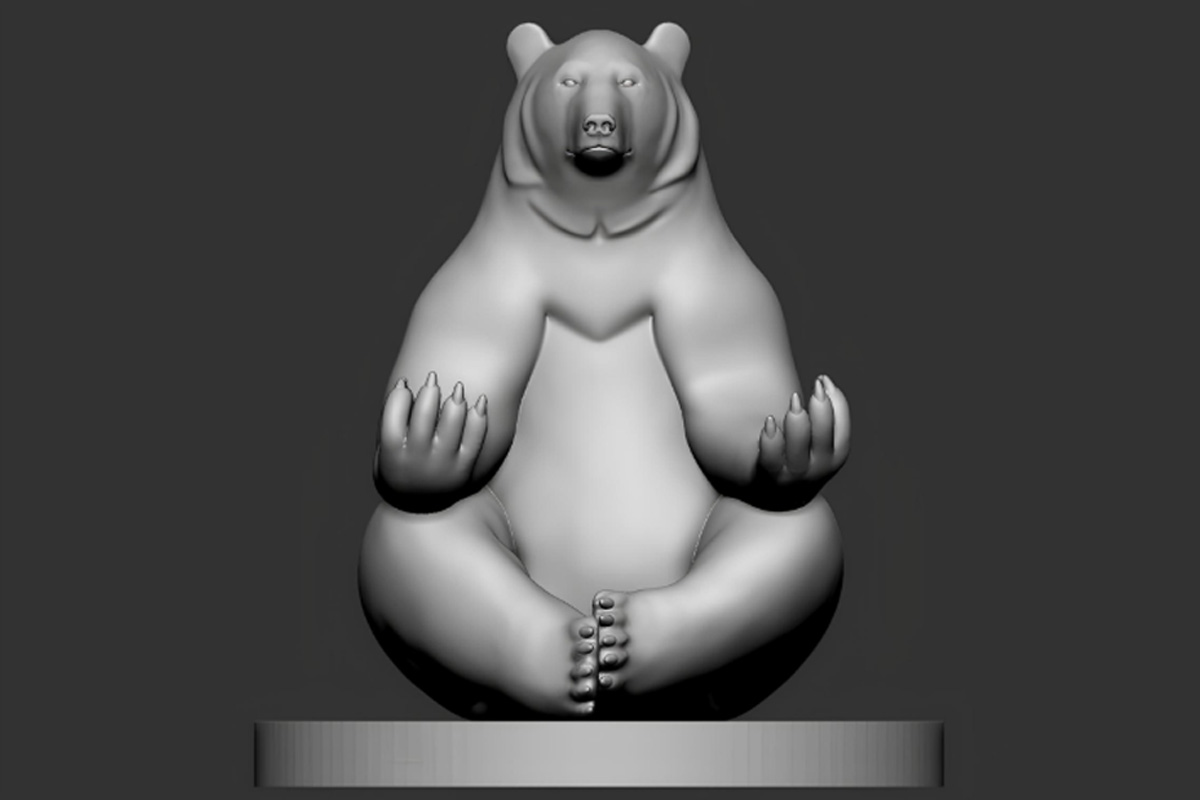
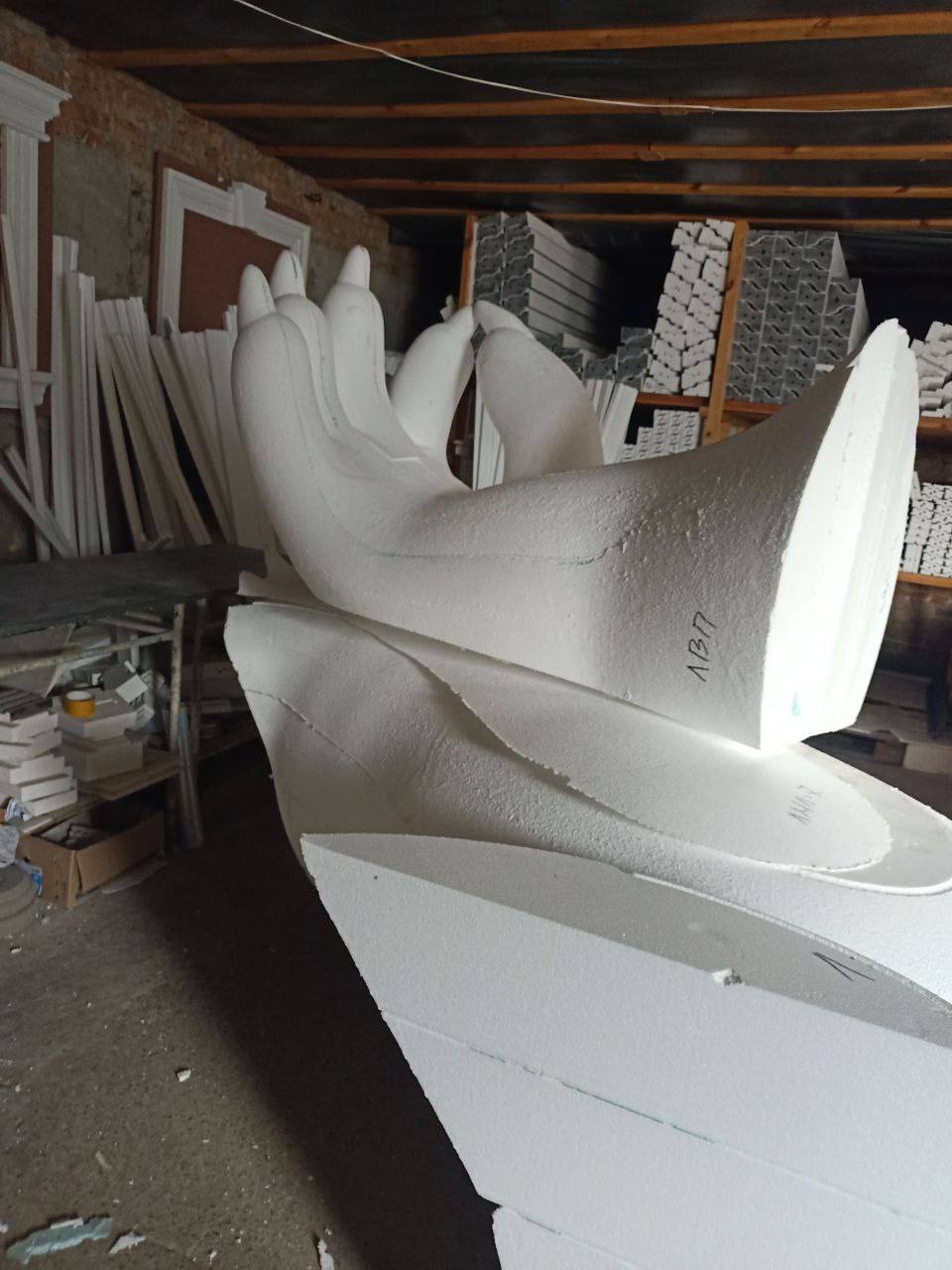
Y. Z.: Oh, let me tell you the story of the meditating six-meter Bear, who will either find his place or become trash. At first, it was a project from an Odesa client — a very specific commission that, it seemed, was destined to materialize. But force majeure intervened, the order was canceled, and all the prepared material ended up with me. So the Bear, even before being born, became my «pet».
Since then, I’ve been looking for an investor: someone who would at least cover the materials and pay the people who will build it. I’m ready to give up my share — what matters to me is that it comes alive and continues to live. The preparation is already there, it just needs to be glued, reinforced with material, and slightly refined. But… six-meter bears, apparently, don’t settle in just anywhere. A budget is needed, and a location. I really want the Bear to find its destiny and its place.
S. P.: Are you ready to sell any of your works?
Y. Z.: I am. But I would definitely take a mold so that a master model remains. Although no, wait. At home I have a skull on which I write the titles of my favorite songs. And when someone offered to buy it — I couldn’t. It’s too personal.
S. P.: You’ve traveled a lot. What would you consciously bring into the Ukrainian context?
Y. Z.: We have plenty of opportunities for improvement. The first, the easiest to mention, is architecture. For me it’s like a knife to the Odesa heart — seeing old buildings collapse as if they’ve just been written off the books. And it’s not about a few dozen — practically every historic house requires not cosmetic work, but serious restoration, even major repairs. Sometimes it seems owners find it easier to wait until the building falls apart on its own and then sell the lot for a new high-rise.
And this is no longer isolated cases, but a system. I don’t see solutions… But I do have one wish that lives inside me: to create in Odesa a space for artists and viewers. Not a museum, not a formal gallery, but a place where art breathes and where people can meet without ceremony. Maybe one day it will happen?
S. P.: The Motonkа Kult project — was it an experimental space for freedom of interpretation, an attempt to “revive” tradition, or something else?
Y. Z.: It was a collaboration with Helen Labartkava. We created the Motankas in 2022, and they traveled to the United States, including New York, Houston, and several other cities. The exhibitions were held under the patronage of the consulate and the Ukrainian diaspora. It felt like a connection between tradition and modernity, like an appeal to deep Ukrainian culture, only in a new context. Each motanka had a name, light, and movement. It was powerful. Now I’m more interested in the theme of abstraction in the city. I like it when the viewer completes the meaning themselves. For me, that’s what living art is.
S. P.: Tell me, what’s harder for you — carving a form or expressing a feeling?
Y. Z.: Probably expressing a feeling.
S. P.: And can sculpture be a confession of feelings?
Y. Z.: Of course — toward one’s muses.
S. P.: Your muse..?
Y. Z.: Mine is Olya. She inspires me. She makes sure I don’t turn into God knows what. She’s very determined, understanding. We’ve been together for more than four years, and before her I was a completely different person. I value and love her.
S. P.: Tell me, what are you working on now? What’s on your workbench at the moment — is it a new project?
Y. Z.: Right now there’s a head in silicone on my table — it’s a piece by one of the guys from my team. He sculpted it himself, and together we’re bringing the process to its final note: making a mold from the clay portrait. For him it’s practice, for me, it’s a joy to watch. And next to it — two figures from my own line. The molds are already a bit worn, they need to be refreshed to give them new breath and the possibility of reproduction. There’s something symbolic in that too: when you renew a mold, you renew the dialogue with time.
S. P.: What would you like to say to the people of Odesa, as a wish — a parting word?
Y. Z.: Tolerance, courage, kindness, and beauty. Let these things, though invisible, connect Odesa and all who love it, keeping the city alive, warm, and inspiring.
When copying materials, please place an active link to www.huxley.media
Select the text and press Ctrl + Enter