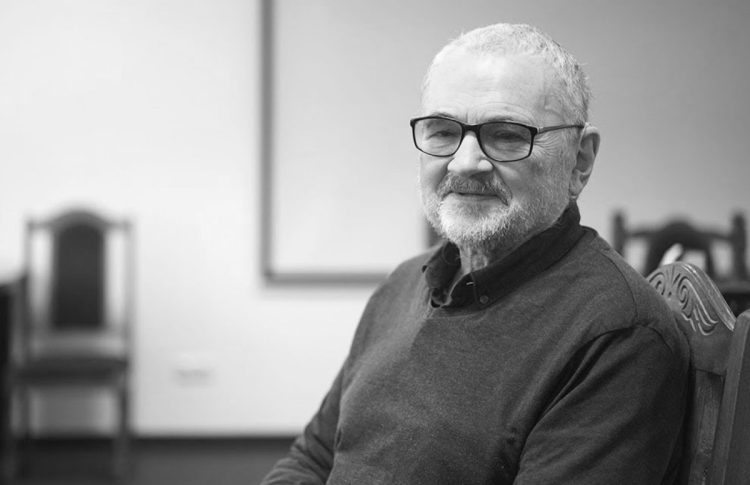
FATHER TARAS CHAGALA: «We live in a religious world where faith is a civilizational resource»


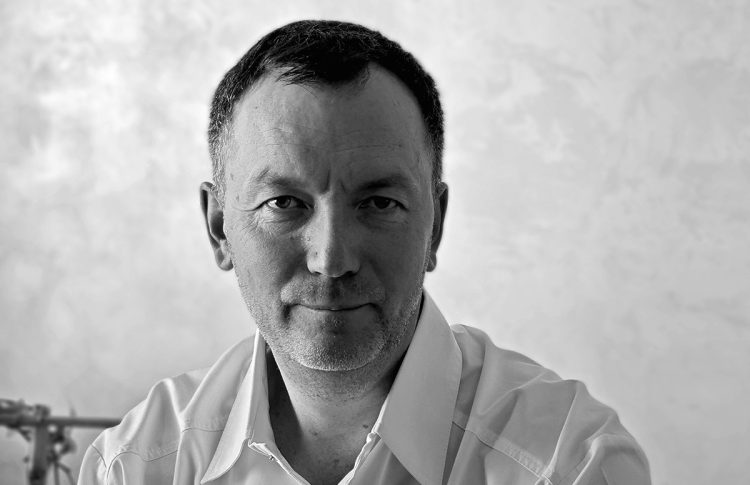
Taras Chagala / Photo from personal archive
SHORT PROFILE
Name: Taras Chagala
Date of Birth: December 27, 1973
Place of Birth: Truskavets, Ukraine
Profession: Priest, Parish Rector
The Greek-Catholic Church of St. Barbara in Vienna is a place beyond Ukraine where a true and living Ukrainian heart beats. The church’s rector, Father Taras Chagala, has a unique experience of intellectual and cultural existence at the crossroads of two worlds — Catholic and Orthodox, Western and Eastern. Why is the Church always a political, rather than a private matter? How are the Church and the empire related? Can «bourgeois Christianity» exist? Why is «harmony» not a Christian concept, and why does the age of AI not cancel the bodily dimension of our being? We are confident that this interview will help you see certain things from a new perspective.
EMPIRE AND CHURCH
T
he Parish of St. Barbara in Vienna, which the Greek Catholics received from Emperor Joseph II in 1784, became the first Greek-Catholic parish outside the compact area of Ukrainian settlement. In general, Galicia became part of the Habsburg Monarchy a little earlier, after the first partition of the Polish-Lithuanian Commonwealth in 1772. As a result, the Habsburgs acquired a vast number of new lands in the East. However, it soon became clear that, compared to their other territories, the region of Galicia was among the least developed.
For Austria-Hungary, it represented something similar to Siberia in the Soviet Union — a remote, «resource-based» region where oil was extracted and forests were logged. Beyond that, it was of little interest. Yet the new lands had to be somehow integrated into the unified imperial sociocultural environment. How could this be done? It was necessary to find a kind of «entry point». That entry point became the Greek-Catholic Church, for only the priests had access to the souls and minds of Ukrainians.
At the time, a popular saying went: «Ukrainians are peasants and priests». In other words, the population of Galicia in those days was divided almost exclusively into these two categories. Of course, the empire did not pursue any charitable goal of developing Ukrainian national consciousness. Yet, objectively, it coincided with the ethnic aspirations of Ukrainians themselves. Greek-Catholic priests not only gained access to higher culture and education but also became its transmitters for the entire nation.
THE «SALT OF THE EARTH» OF GALICIA
When the Church of St. Barbara in Vienna was established, the decision was dictated by the purely pragmatic imperial vision of the Habsburgs. Relying on the authority and cultural level of the clergy, the state gained, in their person, individuals who also performed certain administrative functions in the newly acquired territories. They did the work of civil servants: keeping statistics, announcing state decrees in churches, registering army recruits, counting livestock, recording landowners, and so on.
From the very beginning, the empire sought to use the Church for its own interests, but the Church, so to speak, «overfulfilled the plan». It contributed to the rise of Ukrainian national consciousness and culture. This became apparent quite quickly — already in the 1840s, during the so-called «Spring of Nations».
If you look into the genealogies of the Galician intelligentsia, in the third, fourth, or fifth generation, you will inevitably find a clergyman. Not all of their descendants became priests, but all of them were undoubtedly educated people engaged in enlightenment, and later in political activity. Thus, to a certain extent, it was the Church that directed Ukrainian history toward respect for the individual, their freedom, and their dignity.
IS THERE ANY DIFFERENCE BETWEEN EMPIRES
Our community in Austria and the Greek-Catholic Church in Ukraine as a whole still follow the old nation-building tradition that was formed during the Austrian era. The core of this tradition lies in engaging the people with the highest models of spirituality, culture, and education. People must be educated. Only through the combination of faith and education can the Church respond to the challenges of modernity and support its people along their difficult historical path.
The foundation of this vision, in my opinion, was laid during the time of Joseph II. Before and after that, our Church endured many trials. Yet time and again, it was revived as one of the most powerful nation-building forces. This year, we marked a very symbolic event — the 250th anniversary of the founding of our seminary.
In 1775, Russian Empress Catherine II destroyed the Zaporizhzhia Sich. And that same year, in Vienna, the Greek-Catholic seminary was opened. We can clearly see how one empire destroyed what Ukrainians had been trying to build, while the other, on the contrary, created conditions for their dynamic social and cultural development, helping them rise to the level of the great European nations.
THE CHURCH IS NOT A «PRIVATE MATTER»
During the Soviet era, we witnessed a continuation of Russian imperial policy on a new level. The Church was nearly eradicated. In the 1930s, only two or three priests were still alive in Kyiv. There were more in Galicia, as the hand of the Red Terror reached there later. During the Second World War, Stalin loosened his grip — the Church was allowed to exist on the periphery of Soviet life, but only in a «private format».
That meant people could pray privately, but under no circumstances were they to express their faith publicly or in social life. This false perception of religiosity and the Church has persisted to this day. Modern people often think that faith is something exclusively private, personal, confined to the soul — and, for some, to the walls of a church. In reality, faith has, so to speak, two dimensions. On one hand, the Church must help an individual find their path to the Higher Power revealed to us in Jesus Christ, whom we call the Holy Trinity, the God of Abraham, Isaac, and Jacob. But this cannot be merely a «private matter».
In church, we pray together. The very word liturgy means «common work». The church community connects with God through shared rituals that, by their nature, cannot be private. On the other, non-mystical side, there is politics. The Church’s mission is not limited to the performance of rituals. Through prayer and life in the Church, a person must become better. And when people change themselves, they transform the environment in which they live. In other words, they become involved in human relationships, which, one way or another, is politics.
FAITH IS ALWAYS POLITICS!
By definition, the Church cannot be apolitical. If it stands outside politics, it turns into a mere ritualistic tradition — a kind of accessory to embroidered shirts and folk songs. Do you know what happens when we detach ourselves from the fullness of life? There is a saying: «the church should be driven into the sacristy» — a small church room where the priest changes his vestments.
This is exactly where some try to confine all believers, priests, the Church — even God. The attempt to lock the Church strictly within the boundaries of private life reduces it to a blatantly primitive state. The Soviet Union tried to do precisely that for a long time. Therefore, the task of our Church is to raise the intellectual and spiritual level of both clergy and parishioners so that, drawing on the mystical dimension, they can influence politics. A person of faith is called to make the world in which they live a better place. That is why, by nature, a believer is a political being.
RELIGION AS A STATE-BUILDING FORCE
History unfolded in such a way that states were first formed around a leader. For imperial Rome, it did not matter which gods you worshiped — the main thing was that you revered the cult of the emperor. In Kyivan Rus, by the way, it was almost the same. The Kyivan prince united various Slavic tribes — it did not matter to whom they prayed, as long as they obeyed and paid tribute. It mattered so little that he even tried to create a general artificial pantheon, without worrying much about how organically the different gods fit together.
But the further course of human history took a different direction — the path of unification around religion. Thus emerged religious states, and later, national ones. Today, different people may share the same religion — for example, Islam or Christianity — yet they still remain distinct nations. Likewise, a single state can unite various ethnic groups and religions.
The world does not stand still; it moves forward, constantly forming new formats of human coexistence. It seems that today, belonging to a particular type of civilization plays an increasingly significant role in shaping identity. In my view, Ukraine, with all its ethno-religious diversity, has every chance to organically integrate into these new global trends.
UKRAINIAN ORTHODOXY IS VERY WEAK
Look — there are still European countries that have a clearly defined dominant religion. For example, in Catholic Austria, various faiths exist, but there is one major, «main» one, though within a culture of tolerance, it is not customary to speak about it openly. The same applies to Orthodoxy in Greece. But in Ukraine, there is no dominant religion, because our Orthodoxy is, in fact, very weak.
I once personally conducted research, so I can assert that no more than 20% of Ukrainians can be called strictly Orthodox. About 6% are Greek Catholics, and 5% Roman Catholics. Various Protestant movements are extremely widespread in our country. In addition, there are quite strong Muslim communities — the Crimean ones — which officially represent a fairly large religious group in Ukraine.
We have a great diversity not only of denominations but also of religions. The All-Ukrainian Council of Churches and Religious Organizations now includes 16 members. All of them coexist quite peacefully and issue joint statements. The disputes that existed among them back in the 1990s have long since subsided. The idea of artificially creating some large, unified Orthodox denomination, in my view, is futile. It only leads back to interdenominational conflicts and pushes Ukraine backward in time.
THE EARTHLY STATE AND THE HEAVENLY STATE
Is it even possible in the modern world to build a just and merciful state based solely on Christian ideals? This is a very difficult question. In reality, the world is not built on money and power, but on various communities of people who support one another. No state can exist without a Christian attitude among its people — without the strong supporting the weak, such as children and the elderly.
The concept of a Christian state is not new; it was developed by Saint Augustine in his treatise The City of God. There, he wrote that there exists a «heavenly city» and an «earthly city», which will never fully meet — although we must still strive to bring them closer together. But how can the earthly state be brought nearer to the heavenly ideal of mercy and justice? On this path, rather paradoxical things may happen… Did you know, for example, that prisons were invented by the Church? The Romans had no prisons — they simply executed those found guilty.
Instead, the Church insisted that a criminal could still change for the better and therefore, should not be killed immediately. The earthly state, paradoxically, can take its example from the heavenly one. And it must be understood that perfect states will never exist in this world. In the Middle Ages, it seemed that such a possibility existed, but it was ultimately lost. After the French Revolution of 1789, humanity tried to build a state on the principles of humanism — yet even that did not bring us closer to the ideal.
«HARMONY» IS NOT A CHRISTIAN CONCEPT
One could say that this world endures because people constantly exchange goodness with one another. I mean this in the broadest sense of the word — on spiritual, emotional, cultural, and material levels. This exchange moves us toward the Christian ideal, even though in the dimensions of earthly time and space it remains unattainable. For example, when speaking of entrepreneurs, we could say that their main virtue should be justice.
If business is a fair exchange of goodness, then we make the world a better place. Incidentally, this way of framing the question is very different from the notion of «harmony», which is held as an ideal in Eastern religions. Max Weber once asked why the most competitive and dominant countries in economic and technological terms belong precisely to the Abrahamic religions.
If the world were, from the very beginning, entirely perfect and harmonious, then human action could only worsen it. That is why in the East, the emphasis is placed on non-action and contemplation. In the Abrahamic religions, the view of the human being and the world is different. God created humans so that they might become co-creators of the world. Therefore, He encourages Adam to name everything he sees — animals, plants, and so on. In other words, the human being is called out of nonexistence in order to make this world better.
RELIGION AS THE CIVILIZATIONAL RESOURCE OF THE WEST
For Christians, the world without humankind is still incomplete, unfinished. Of course, along this path, humanity makes many mistakes. It is clear that there is no return to the absolute harmony of Eden. Yet the task of a Christian is to act with courage and responsibility — to move forward and, despite all difficulties, strive to create a better version of this world. Saint Basil the Great said that wealth — whether spiritual or material — is given to people not only as a gift but also as a question.
This is precisely what the Gospel speaks of when Christ tells the parable of the talents. It is worth remembering that, in the literal sense, talents were money. The parable teaches that these talents are not yours to begin with — the master has entrusted you to manage them. Your task is to multiply them so that, with their help, you can bring even more good into the world. This applies not only to individuals but also to those countries that now dominate the world and to whom much has been given by God. One might say that East and West, through the very movement of history, are destined to seek common ground and to be tolerant toward one another.
THE FUTURE OF CHRISTIANITY IS NOT LIMITED TO EUROPE
The Apostle John conveys to us Christ’s wish «that they all may be one». If Christ said this, then one day it will certainly come to pass. Even if it seems to us that Christianity is losing ground in Europe due to certain migration processes, globally, its presence is only growing. There is North America. There is Africa — a vast Christian continent that is rapidly expanding. We also see a gradual increase in the number of Christians in Asian countries. Humanity and the world are constantly changing.
Integration and migration processes are transforming all world religions — not only Christianity, but also Islam, Buddhism, and Judaism. Yet this raises an important question: «Is spirituality possible apart from Christ?» I would rephrase it as follows: «Is healing possible outside the walls of a hospital?»
As early as 1965, the Second Vatican Council considered the relationship between the Catholic Church and other religions. It affirmed that the fullness of knowing God is possible only in Jesus Christ, but signs of God’s presence may exist beyond the Church as well. For example, if a person is not a Christian but listens to their conscience, they hear the voice of God. This, too, opens a path to salvation. It is another matter entirely when someone consciously renounces Jesus Christ after having already known Him — that is a grave sin.
«BOURGEOIS CHRISTIANITY»: WHAT COULD IT BE
Christianity does not contradict so-called bourgeois values. For what are bourgeois values? They are, for example, diligence, neatness, and moderation. It is no bad thing when these bourgeois values are added to Christian love, mercy, truth, and justice. When there are no values at all, a person begins to live by the flesh — «from the belly». Then they lose self-restraint and even those same bourgeois virtues, such as moderation.
Freud said that a person who lives by the flesh follows two rules of life: maximum pleasure, minimum suffering. Both of these life principles are morally indifferent; they have nothing to do with moral values. Virtues such as moderation and self-control do not come naturally — they must be cultivated. Here in Vienna, I see how difficult this is even for many wealthy people. For instance, it can be a great tragedy for someone when, in the queue for a Hermès bag, they are moved from third to fourth place.
WHY WE SHOULD NOT AVOID SUFFERING
There is a fundamental difference between Christianity and the religions of the East. For example, it can be seen in the attitude of Christians and Buddhists toward suffering. The main goal of Buddhism is to end suffering. However, if we try to completely escape suffering, we fail to develop courage and the will to live; we fail to cultivate self-sacrifice or to share with others the gift we have received from God.
Today we see how people in Ukraine demonstrate great self-sacrifice. For the sake of peace and justice, they are willing to give up even the greatest gift — their own lives. At the same time, the war raises very acute «ultimate questions» for Ukrainians and for humanity as a whole. These questions are not about a Hermès bag — they are about the meaning of life and death, and they must be thought through to the end.
The world around us is becoming increasingly complex and chaotic, and the usual linear answers no longer work. How can we find support, a point of inner calm, in this world of chaos? What helps people is not the escape from suffering, but prayer — a sincere turning toward God. Through prayer, the seeds sown in the human soul begin to sprout, slowly giving rise to goodness throughout society as a whole.
WE STILL LIVE IN A RELIGIOUS WORLD
Prayer and Christian faith are not superfluous elements in the modern world — they are its active and creative forces. Take, for example, university education. Without the Church, it might never have existed at all. From the very beginning, every university had four faculties: theology, philosophy, law, and medicine. Modern education and faith are inseparably linked. Education itself is an expression of a worldview.
It is no coincidence that in Vienna, a graduate of a translation or economics faculty receives a diploma as a philosopher. The destruction of theological thought in Ukraine during the Soviet era was not a civilizational norm. In fact, our world remains profoundly religious, even though we rarely notice it. This applies not only to education but also, for instance, to diplomacy.
Here is an interesting fact: in Austria, the car of the papal nuncio bears diplomatic plate number 1. In this way, the state acknowledges that the representative of the Vatican holds precedence — in Austria, he is the first among all diplomats in the world. The world is changing, but one thing remains constant: a person will always need another person. As I have already said, we are created to exchange with one another the various gifts of God — prayers, money, talents, and ideas.
WHY THE BODILY DIMENSION IS SO IMPORTANT
Everything mentioned above also applies to technological progress — including artificial intelligence. For example, I once tried writing sermons with its help. Frankly speaking, they turned out to be rather mediocre. The same applies to a confession conducted by artificial intelligence. AI, in principle, cannot handle tasks that require another human being — their spiritual experience, their vision, their values, their compassion. A human being is a creature made up of spirit, soul, and body.
Our existence extends far beyond any digital algorithms on which AI is based. It is no coincidence that church rituals are called sacraments, for they involve something that cannot be algorithmized. The soul and spirit are more or less clear in this regard, but the body is also an essential aspect.
It is precisely the absence of this bodily element that explains the prohibition against confession over the Internet or with a disembodied AI. Religious life must encompass all components of human nature — intellectual, spiritual, emotional, social, and physical. If any of these becomes virtual, it turns into something else — but certainly not religion. «Physicality» in Christianity is profoundly important because God came to us not virtually but bodily. And the human body, after death, is never lost forever — it will be restored.
CHRIST IS THE SAME TODAY AS HE WAS YESTERDAY
Our attitude toward AI, in my opinion, should be similar to our attitude toward money. It is a tool, not an end in itself. It can be used for good or for evil. There is no need to fear it. You do not fear a phone or a hammer, do you? Everything created by humans can be good and useful. Once people walked on foot, then they invented the wheel, later the steam engine, then the airplane… Artificial intelligence belongs to the same line of technological inventions.
Despite all technological progress, little has changed in the spiritual development of humankind over the millennia. People today love and hate just as they did 2,000 years ago. We have no new values. We have no new views on life. We have no new understanding of God. AI, nuclear energy, or anything else cannot in themselves bring about the apocalypse. Its causes will always be spiritual, not technological.
AI will neither destroy nor save our world. For Christians, there is only one Savior — Christ. He is salvation, the way, the life, and the truth. Faith in Him is the most important thing. For only He can lift us out of any abyss — even if we are sinful, even if we make mistakes or do wrong. It is faith that gives birth to good deeds, not the other way around.
WHY GO TO CHURCH IF GOD IS IN THE SOUL?
Let’s say you are a married person and love your spouse. It is love that motivates you to give gifts, to make your partner happy. You do it naturally, because you cannot do otherwise. Faith is an inner state of a person, but it must have outward expressions. That is why the question, «Why should I go to church if God is in my soul?» sounds rather absurd. Why should I go to a hospital if I can recover on my own? Why should I go to school if I can teach myself?
A person who seeks faith and God is always seeking like-minded people. One learns and grows in faith by sharing religious experience with others. In Christianity, it is impossible to build a relationship with God without this! Christ said: «Whoever eats My flesh and drinks My blood remains in Me, and I in them».
In other words, if I do not go to church, do not partake in the Eucharist, and do not participate in the liturgy, what kind of relationship with God can we speak of? Going to church is not something the Church needs — it is something the person needs. You can imagine whatever you like, but without making any effort on your part, God will not appear in your soul — His place will be taken by egoism.
When copying materials, please place an active link to www.huxley.media
Select the text and press Ctrl + Enter