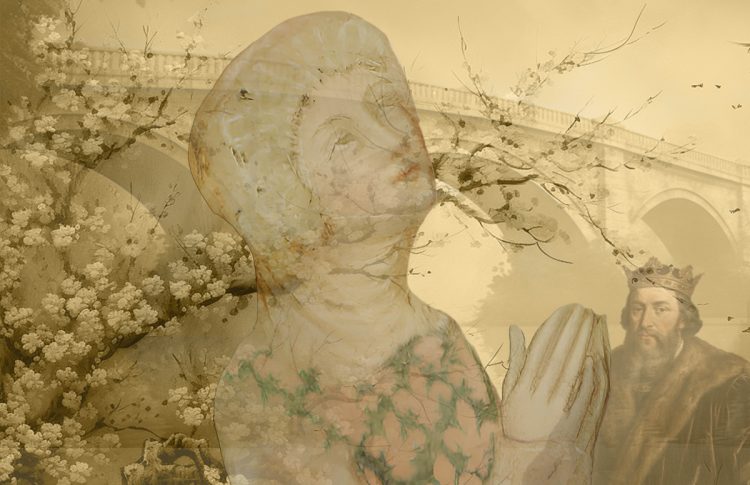
FORTY-THREE AUTUMNS OF HALSHKA OSTROZKA

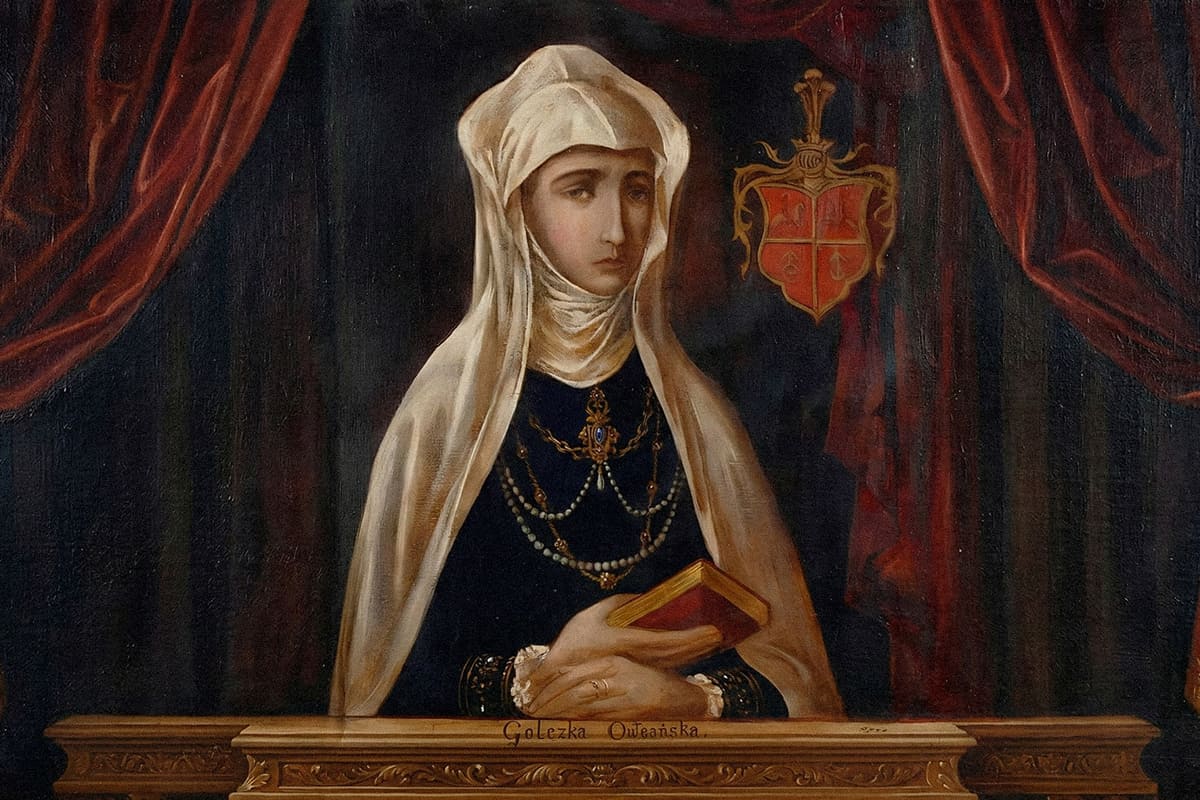
Yurii Nikitin. Halshka of Ostroh, 1996 / wikipedia.org
The girl was recorded in the register as Yelyzaveta, but everyone called her Halshka. From birth she was one of the richest brides in the region (her father owned the city of Ostroh, as well as many towns, settlements, castles, estates, and a house in Vilno). She married three times and never experienced happiness in marriage. She had no right to decide her own fate: decisions for her were made by an eccentric king, an authoritarian uncle, and a calculating mother. She wore only dark clothing, which earned her the nickname the Black Princess. She lived only forty-three years, fourteen of which she spent in the tower of the castle in Szamotuły. She became the first woman patron whose funds were used to build the Ostroh Academy, a printing house, and a hospital.
This story is about Halshka Ostrozka (1539–1582), one of the most mysterious and tragic figures of the Ukrainian aristocracy of the 16th century.
BORN IN GOLD
H
alshka’s father, Illia, died young, at the age of twenty-nine. Some say he fell from a horse and fatally injured his kidneys; others insist that the wealthy nobleman had been given a slow poison. His wife Beata was six months pregnant at the time, so the child first saw her father only in a portrait. Three days before his death the prince sensed the inevitable, transferred his wealth to the family, and asked to be buried in the Kyiv Pechersk Lavra. Outside the windows August was ripening, pears and apples were growing heavy in the gardens, a southern wind busily dried the earth, and the prince’s days were coming to an end. Already in September the twenty-four-year-old widow inherited castles in Stepan, Satiiv, and Khlopotin, and in November she gave birth to a daughter. Time rushed on; winters ruled relentlessly, frost pressed with authority, springs arrived late, and in May green leaves were often stung by snow.
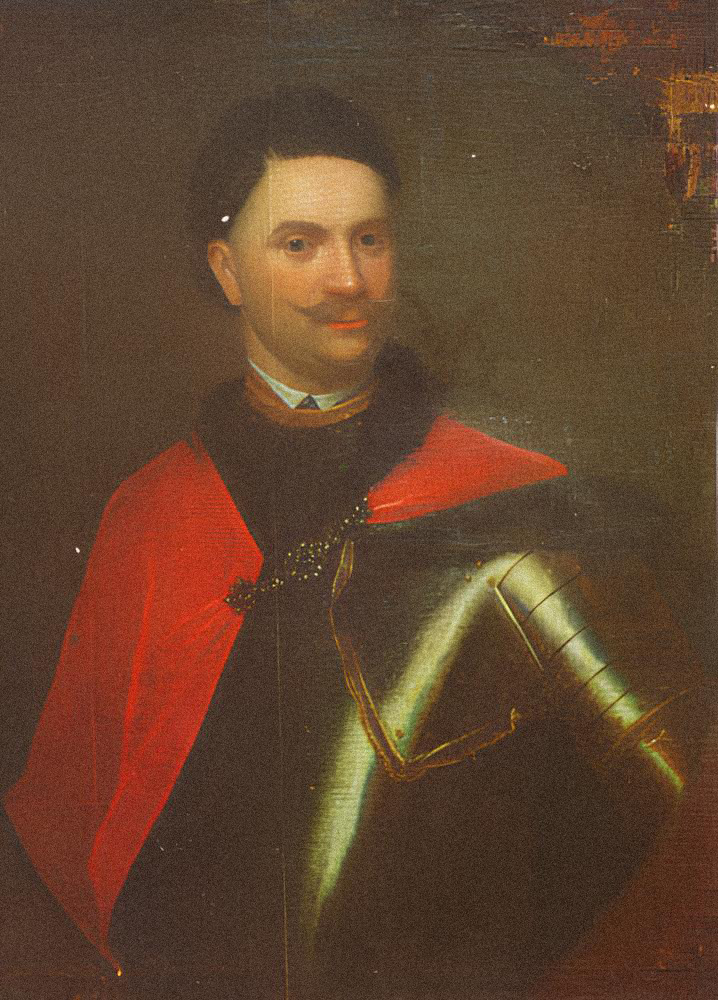
Halshka grew up remarkably beautiful and clever, knew the Ruthenian and Polish languages as well as the Holy Scripture, and before she realized it she had reached the age of brides — the young girl was about to turn fourteen. There was no shortage of claimants to her wealth, and soon a whole line of voivodes, state officials, and princes appeared. Her uncle, Vasyl-Kostiantyn Ostrozkyi, chose for his niece the starosta of Cherkasy and Kaniv, the hero of the defense of Zhytomyr against the Crimean Tatars, a strikingly handsome man educated according to European standards — Dmytro Sangushko. Once he saw the beauty with dark eyes, like mulberries, and from that moment he knew no peace. At first her mother Beata agreed to the marriage, but then unexpectedly changed her mind (she had a rather changeable character and suffered from hysteria; besides, people whispered that she herself would not have minded marrying the dashing prince). The men, however, were determined and did not forgive such frivolity. And so, on September 6, 1553, the uncle and the groom arrived at the castle supposedly as guests. Beata ordered the gates to be locked and not to admit the persistent suitors, so the castle had to be taken by assault.
WEDDING WITH EXTINGUISHED CANDLES
The shouting mother was locked in the attic, and the frightened beauty was hurried to the wedding ceremony. The girl was so terrified that she could not utter a single word, so the vow was given by her uncle instead. It was said that at the most solemn moment the church doors suddenly opened and a powerful wind burst inside. It pressed down the candles and lamps, stirred the banners, and set the bells swaying. Everyone present understood that the sign was a bad one, but Dmytro ordered the ceremony to continue. After the ceremony the newlyweds immediately left for Kaniv, while the offended mother-in-law rushed to the king, saying: «Your Majesty, please deal with this, because in your praised Commonwealth there is complete disorder». The king listened and became truly outraged, because he had his own plans for Halshka. He took away the uncle’s guardianship, confiscated the groom’s property, stripped him of the post of starosta, and ordered that the lady be returned as soon as possible.
Deeply in love, Dmytro decided to escape. He loaded wagons with valuables, cut off his wife’s hair, dressed her in men’s clothes, and set off toward the Czech border. January was slowly fading, and by the end of the month the fugitives arrived in the town of Lysá not far from Prague. A few days later the irreversible happened. The prince was about to have breakfast — capons served with apples, honey, and wine — when suddenly there was a crash, noise, and confusion. Armed men burst into the chambers and opened fire. Halshka was terrified, cried out, and fell at their feet, but her pleas were ignored. Dmytro was stripped and severely beaten, and the princess was forced into a carriage. Soon, the starosta of Kaniv died from his wounds and fever, and for Halshka, who had been married for exactly four and a half months, a new wedding was already being planned.
GÓRKA AND HIS MASOCHISTIC DISORDERS
This time, the decision was made by the king himself: he was eager to become related to the wealthy Polish Górka family. When Beata learned about the coming marriage to a tyrant and an old man (the groom was thirty-five years older), she almost lost her mind. She had wanted the best, yet everything turned out the opposite. She cried, wrung her hands, and finally locked herself in the dressing room, believing that the priest would not dare begin the entrance hymn without the presence of the girl’s own mother. But the priest dared, and within an hour all the vows were spoken, and the union was blessed. At that very moment, a disheveled Beata burst into the church and shouted that the rite had no power. Taking advantage of the confusion, the women ran away. Many adventures followed. While the groom and the king were in Petrykiv, dealing with military matters, Beata and her daughter went to Lviv and asked for shelter in the Church of the Body of Christ (the Dominican Cathedral), where the «dogs of the Lord» lived.
The monks received the wealthy fugitives and, a few years later, married the beauty to Simeon of Slutsk, for whom Halshka felt truly tender affection (the groom was brought into the cathedral dressed as a beggar). Yet the happiness lasted only a few weeks, because Górka came to his senses and arrived at the church with a troop of fighters and cannons to place the defiant ones under siege. For form’s sake, he fired into the air and cut off the monks’ water. Of course, the monks were frightened and quickly handed over the fugitive. Łukasz tried to approach his young wife gently, to win her favor with treasures and velvet, but he failed. So, without much thought, he took the rebel to his castle in Szamotuły, yet settled her not in the chambers but in the Black Tower. As a sign of revenge, the mother transferred her daughter’s property to Slutsk, but the official did not delay in responding. Soon, the nobleman brought his wife the hand of her former husband with the recognizable wedding ring, put a mask on her face, and allowed her only one consolation — a walk through an underground corridor to listen to mass, and the freedom to read books as much as she wished, which she did for entire days.

COLD SKY OVER SZAMOTULY
The four-sided tower, as if pecked by a heavy woodpecker, pressed against the clouds. The windows clustered almost under the ceiling — no chance to jump down. Around it stood crooked trees, indifferent heavenly bodies above, and silent servants. People called the prisoner the Black Princess because for years, the woman never took off her mourning clothes. Beata tried more than once to ransom her daughter, offering Łukasz gold and silver, but he stubbornly refused. In this way, more than ten years passed. Halshka never recognized Górka as her husband, and he no longer insisted, since with gout and arthritis, he had little strength for marital pleasures. In the end, the tyrant died, and the thirty-three-year-old captive received the freedom that had been taken from her. She returned to her uncle in Ostroh and transferred part of her property to him. From then on, she could freely walk through forests and fields, instead of looking at the world through the cloudy window of the Black Tower.
SECRETS OF THE OSTROH ACADEMY
At that time, Vasyl-Kostiantyn was alive and well. For supper, he ate spelt (porridge made from wild grain), with a sauce of pickled salted plums, and he drank vodka made from twelve ingredients, including sugar brought from the Canary Islands. In his castle, a chapel ensemble played, consisting of twenty-two violinists, and six painters worked with their brushes. They painted smiling icons and portraits of the household. He was raising five children and was seriously thinking about their university. He did not wish to send them to distant Europe, and therefore decided to organize their education at home — in the famous city of Ostroh. He shared the original idea with his niece, and she listened attentively and allocated six thousand kopas of Lithuanian money for its construction. The building was erected near the castle with royal scope (it became the third educational institution after the universities of Krakow and Prague).
Nearby he arranged a library and a reading hall. Teachers were invited from different countries of Europe, and learned men began to teach the seven liberal arts: grammar, rhetoric, dialectics, arithmetic, geometry, music, and astronomy for especially gifted students, philosophy, theology, and medicine. The pupils were quickly divided into classes and encouraged with holidays. Of course, education was paid, only boys studied there, and the students were guided on the right path exclusively by male teachers. Almost at the same time, Prince Ostrozkyi founded a printing house, invited Ivan Fedorov from Lviv, and he produced the first Bible. The book contained more than three million characters, twelve hundred pages, and amazed people with a print run of one thousand five hundred copies and the absence of printing errors.
HALSHKA’S CREATION
Unfortunately, the academy existed for only sixty years and then declined. It was revived in independent Ukraine and confidently took third place among Ukrainian universities. Instead of bells, classical music sounds there; instead of white walls, there is modern painting; in the courtyard, there are tennis courts. Excellent students receive laptops for permanent use, and graduates who have achieved remarkable success receive silver rings. Every year, beauties compete for the title «Halshka of the Year», imagining the daily routine of the Black Princess and new details of her testament. The heroine herself, in her constant widow’s clothing, seems to watch the scene from afar, admiring her own creation and Ostroh, the oldest city of magnates.
When copying materials, please place an active link to www.huxley.media
Select the text and press Ctrl + Enter