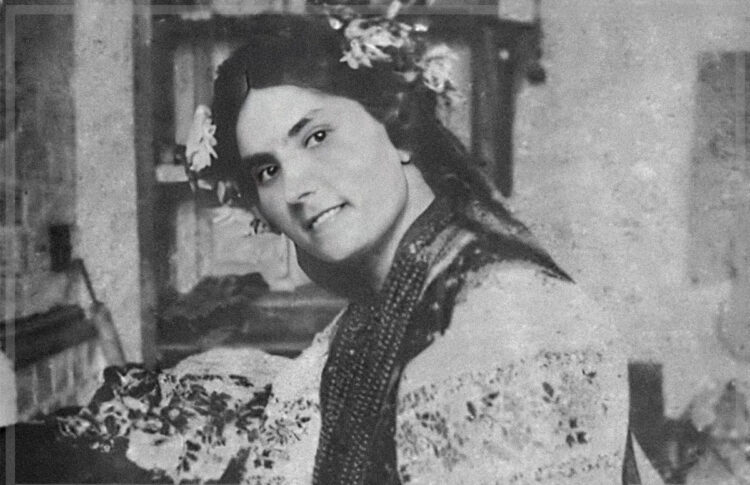
THE STORY OF TATOCHKA: The Greatest Love of Natalia Polonska

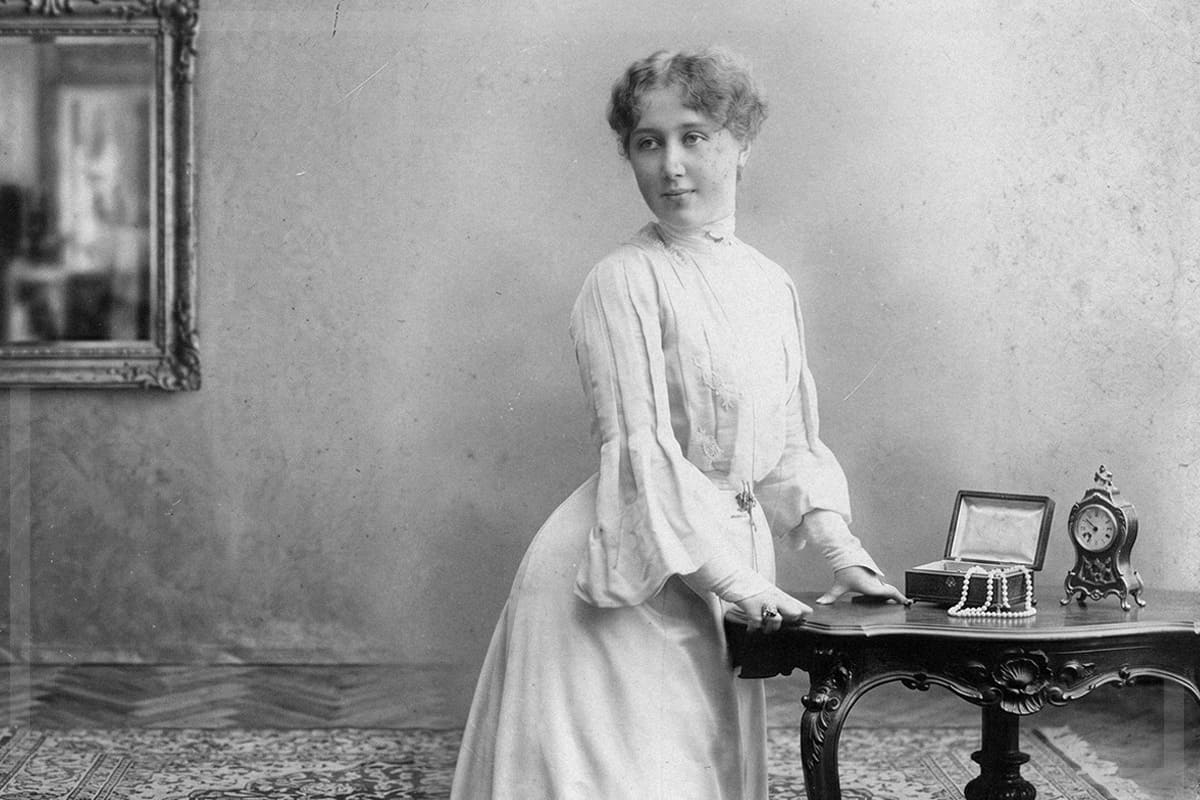
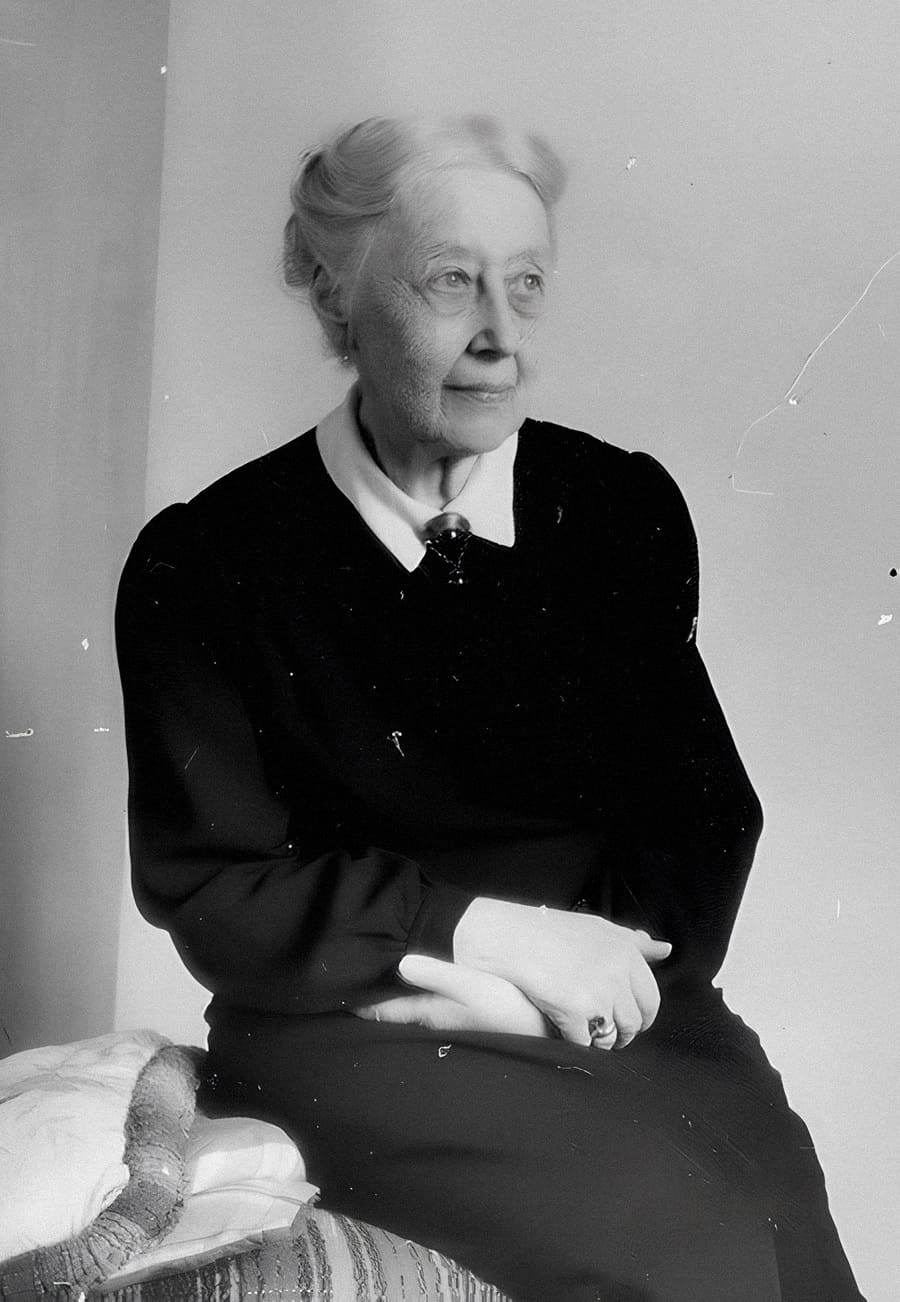
Natalia Polonska, the photograph was taken at the Kozlovsky and Haas Studio in 1902 / wikipedia.org
Natalia Polonska-Vasylenko-Morhun (12 February 1884 – 8 June 1973) was a historian and researcher of antiquity, archaeologist, and archivist who authored around two hundred scholarly works. She was the author of the two-volume History of Ukraine, from which students continue to study to this day. She was born in Kharkiv and died in Darmstadt. She researched the history of Zaporizhzhia and Southern Ukraine, and dismantled the myth of “Novorossiya”. She proved that these lands had profoundly pro-Ukrainian roots from the earliest times.
HOLIDAYS AND WEEKDAYS OF A SCHOOLGIRL
I
n childhood, she was called Tatochka, and later remembered herself with a titmouse perched on her hand. Her father — a nobleman, extraordinarily humane and intelligent — hated war with every fiber of his soul. He combined military service with the study of the past and was interested not only in crusades, the fall of empires, and the details of revolutions, but also undertook writing a book himself. He compiled A Systematic List of Orders and Directives on Artillery from the Beginning of the Eighteenth Century, which Tatochka copied out together with her mother. For this, the girl received her first fee. Soon, the family moved to Kyiv, which greeted them with crowds of merchants, cab drivers, janitors, soldiers, monks, novices, and students.
At Volodymyr Market, food, hay, firewood, coal, and fodder were briskly traded, along with cows and pigs; the tram energetically puffed steam, while the synagogue confidently rose upward. Her father entered service in the Artillery Administration of the Kyiv Military District, while his daughter enrolled in the Fundukleivska Women’s Gymnasium, whose tuition was considerable — twenty-five rubles a year. There, they studied the Law of God, French and German, history, geography, mathematics, arts, needlework, and drawing. Lessons began at 09:00, ended at 14:30, and were conducted in Russian. The girls were required to fast and regularly attend church (missing a service was permitted only for health reasons). They wore long dark-brown woolen dresses and modest hats without flowers or ribbons.
They were forbidden to cut their hair (except in cases of lice), speak with strangers, enter the park, or visit the public library. All of it was meant to raise careful wives who, in turn, would bring up an equally worthy generation. Despite the strict rules, Natalia fell passionately in love with her history and geography teacher, Mykola Vasylenko — an imposing and noble young scholar eighteen years her senior. The girl blushed deeply in his presence, and her friends quickly sketched a caricature in which the delicate gymnasium student extended her throbbing heart to the bearded man. They even captioned it with humor: “This is what love of history leads to”.
THE LIEUTENANT AND HIS AMAZON
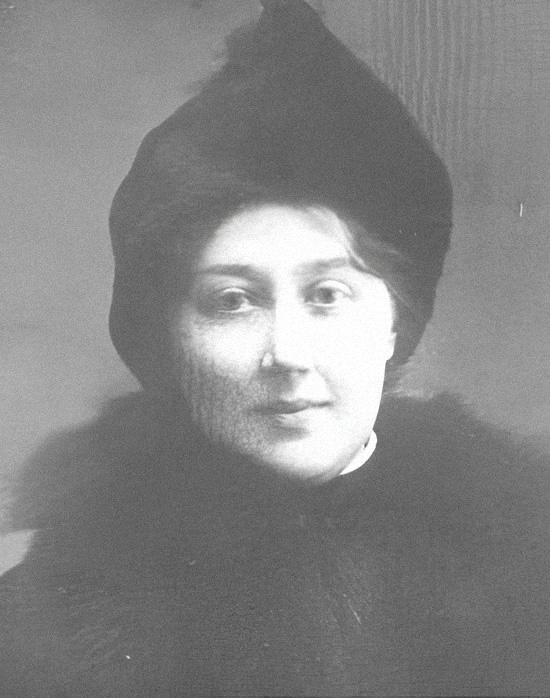
In 1901, the seventeen-year-old graduate finished gymnasium with a silver medal and realized that she was not ready to work as a governess or season cold soups, for she wished to devote herself to scholarship. With this in mind, she enrolled in the Kyiv Higher Women’s Courses and, soon afterward, became an assistant at the Department of History and the Methodology of History. She was fascinated by ancient mythology, especially the Amazons, who, instead of working with wool, rode horses, hurled javelins, and brandished battle axes. It seemed the young scholar managed everything at once: she taught history in several gymnasiums (attendance in her classes was high), took part in excavations under the guidance of Vikentii Khvoika, and married Lieutenant Serhii Polonskyi. Yet no happy family life emerged, for her chosen one did not understand either his wife or her love of books. The husband wanted his beloved to accompany him on military postings, while she, instead of packing suitcases, kept looking toward the Imperial Saint Volodymyr University. This deeply offended him: for her sake, he had fought a duel, risked his life, yet his wife remained more interested in the history of the Zaporizhzhian Sich than in his garrison affairs. She refused to move to Zhytomyr, since her scholarly circle, archives, and libraries all remained in Kyiv.
TRIALS WITH MITROFAN
At last, the marriage ended in divorce, and the historian once again emphasized to her former husband in a letter that when she married, she had never intended to become an ideal faceless wife or submit herself to servitude, for beyond marriage there existed a great many interesting things. For example, the question of why “Novorossiya”, which had arisen on the site of Zaporizhzhia, was not considered Ukraine, although the region had been settled and developed by Ukrainian Cossacks and peasants. Soon afterward, thirty-two-year-old Natalia became the first woman Privatdozent at the Saint Volodymyr University and fell into the orbit of Professor Mitrofan Dovnar-Zapolsky. She attended his lectures and could not resist the charm and imposing presence of Mitrofan. He wore a magnificent mane of hair and a noble mustaches. Like Mykola Vasylenko, he was nearly twenty years older, but he also had a wife, Nadiia Dovnar-Zapolska, and three children. Family was family, yet he went on scholarly expeditions with his colleague, and their relationship swiftly shed its platonic shades. Dovnar-Zapolsky was regarded as a true Kyiv celebrity, and thus introduced his beloved to dancer Isadora Duncan and poet Osip Mandelstam. Their affair lasted for years, but in time it passed as though it had never been.
REVOLUTION AND OTHER CALAMITIES
She received the year 1917 without particular enthusiasm and later wrote in her memoirs: “Teaching ceased. At the university, all lecture halls turned into meeting rooms; in secondary schools, pupils denounced their parents as class enemies… A feeling of hopelessness, helplessness, a foreboding of something even more terrible that was bound to happen…” The revolutionary events caught her in Moscow, from which she barely managed to escape. After returning, she found herself under the siege of Mikhail Muravyov and his band. Soon her father died; a few months later, her mother passed away. Then came the bloody massacre in Mariinsky Park, where 5,000 Ukrainians were killed simply for being Ukrainian. It was precisely then, in that period of black despair, that Natalia unexpectedly met again her first love, Mykola Vasylenko, who by then held the post of president of the Ukrainian Academy of Sciences.
From that moment on, they were rarely apart. Mykola was the only person who supported the former schoolgirl, now a young professor, in the hardest of times (in 1920 alone she suffered Spanish flu, epidemic typhus, typhoid fever, and endocarditis). She was gravely ill and several times called for a priest. In her darkest hour, she wrote the academician a letter confessing her love, yet added a note on the envelope: “To be delivered in the event of my death”. Her chosen one had likely read the declaration beforehand, for he never left her bedside. He was beside her when she was dismissed from teaching, and when the water froze inside her apartment. Natalia later recalled: “A small iron stove burned in the middle of my room. We warmed ourselves beside it, ate baked potatoes, usually with salt, and sometimes even with lard — that was already considered a delicacy”.
COMPRESSED LOVE
In April 1923, the lovers were finally married. The groom was fifty-five years old, the bride thirty-nine. They settled in Mykola’s four-room apartment on Tarasivska Street and could never talk enough, for all their interests proved to be shared ones (Natalia had by then definitively chosen her path and concentrated on the study of the history of Ukraine). Both loved Kyiv passionately and refused to leave the city despite the many purges and arrests carried out by the Soviet authorities. Yet repression reached Mykola Vasylenko as well, who was accused of some absurdity involving the leadership of a secret “counterrevolutionary” organization.
At the same time, the humiliating process of compression began, and all sorts of people were packed into the professor’s apartment, including the family of a worker named Klopfer, who had previously lived in the basement. Natalia wore herself out trying to free her beloved and defend the priceless private library, which had now become the dwelling place of illiterate proletarians. A year later, in April 1924, the court sentenced Mykola to ten years of imprisonment, and she was forced to write appeals to Mykhailo Hrushevsky, Ahatanhel Krymsky, and Mykola Skrypnyk. In the end, the innocent man, whose health had been utterly shattered, was released, though forbidden to hold leading posts in the Academy of Sciences. Be that as it may, the couple lived together for twelve happy years, and their marriage was described as “a beautiful, tender elegy”.
DISMANTLING “NOVOROSSIYA”
These were difficult years. In October 1935, her husband died, and Natalia, as the wife of an enemy of the people, rapidly lost everything: support, income (the professor was demoted to the position of laboratory assistant), and even the right to her room. She survived by retyping other people’s texts while immersing herself ever more deeply in history. At the age of fifty-three, she married the economist Oleksandr Morhun. Though she gave the impression of being an exceptionally calm and balanced person, in truth, she radiated powerful energy and greatly attracted men because of it. In November 1940, she defended her doctoral dissertation, Essays on the History of the Settlement of Southern Ukraine in the Mid-Eighteenth Century, and definitively cleansed Southern Ukraine of the stigma of “Novorossiya”. Then came war, occupation, and a ruined city without bread, warmth, or electricity.
In 1943, fearing persecution by the communist regime, the couple moved with a small suitcase to Lviv (in Kyiv, they left behind a library of seven thousand volumes and nearly one hundred unpublished works). Later, they moved to Prague, historic Wittenberg, and the Bavarian village of Trasfelden. There, suffering from pulmonary tuberculosis and anemia, the scholar perched on a suitcase and typed out her memoirs. In Munich came the flourishing of her career: it was there, in a “light and brilliant style”, that she wrote History of Ukraine, as well as an essay on outstanding women in which she compared the strength of the Ukrainian woman to atomic energy and added: “Ukraine has not yet perished while Ukrainian women live and act”. She spent her final years in a home for elderly émigrés in Darmstadt. Until the very end, she kept tapping away on her typewriter about the life of Princess Olga, the daughters of Yaroslav the Wise, Liudmyla Starytska-Cherniakhivska, and the historical foundations of the Ukrainian Autocephalous Orthodox Church.
When copying materials, please place an active link to www.huxley.media
Select the text and press Ctrl + Enter