IRENA KARPA: “Freedom Remains, but Without Talent It Doesn’t Work”

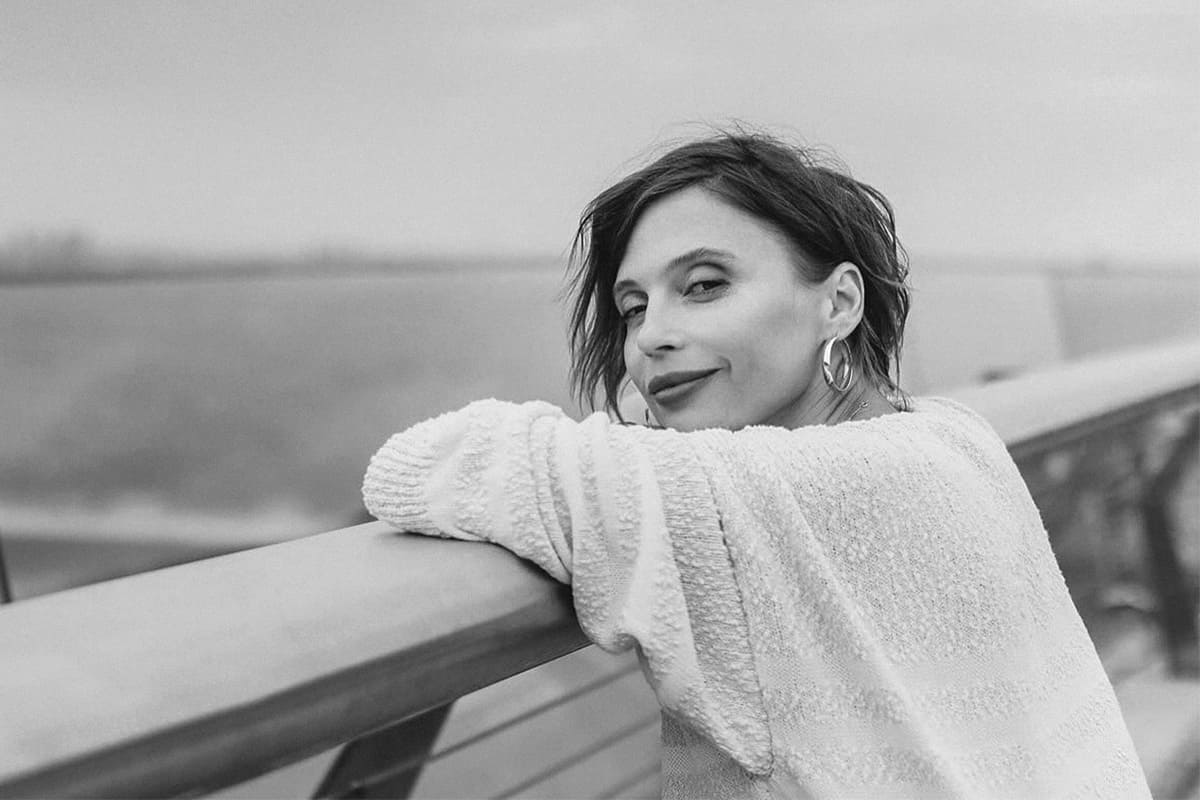
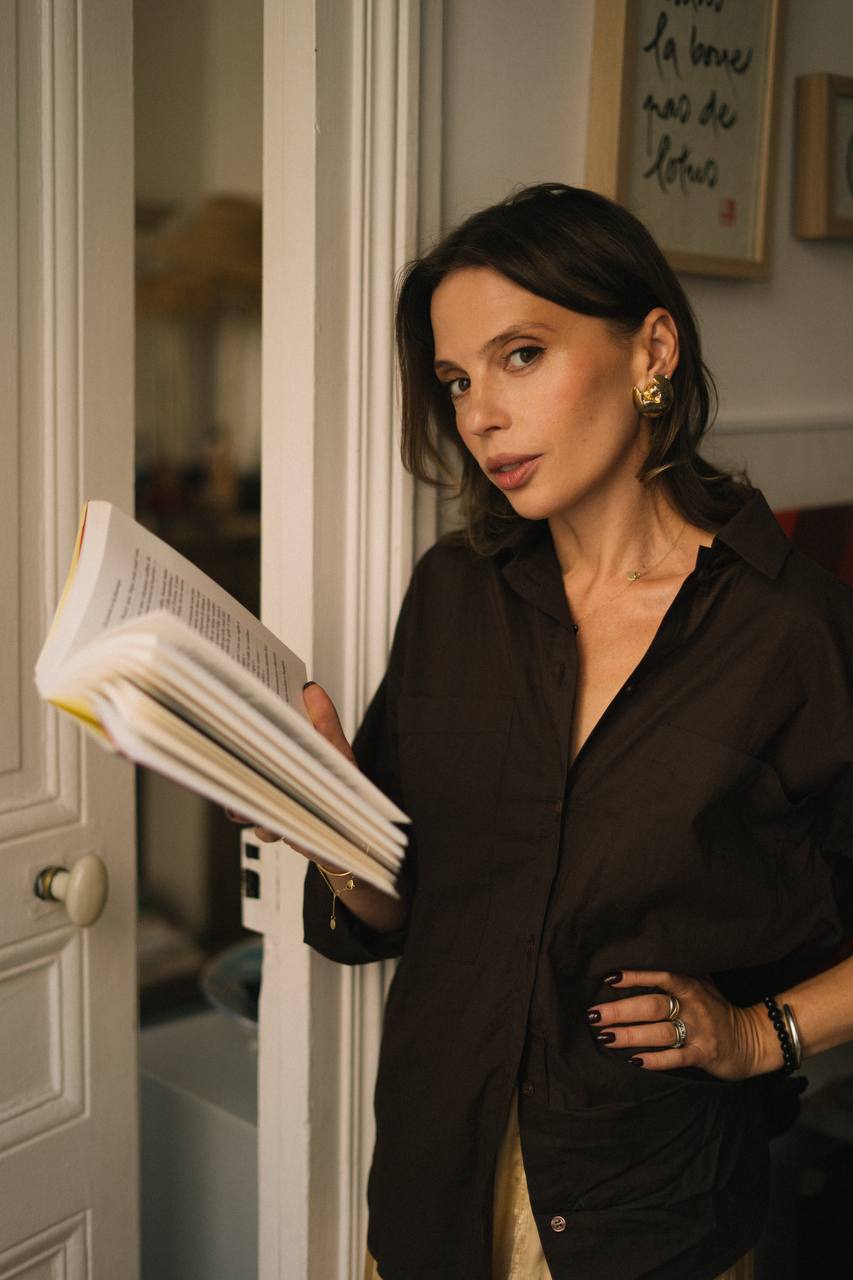
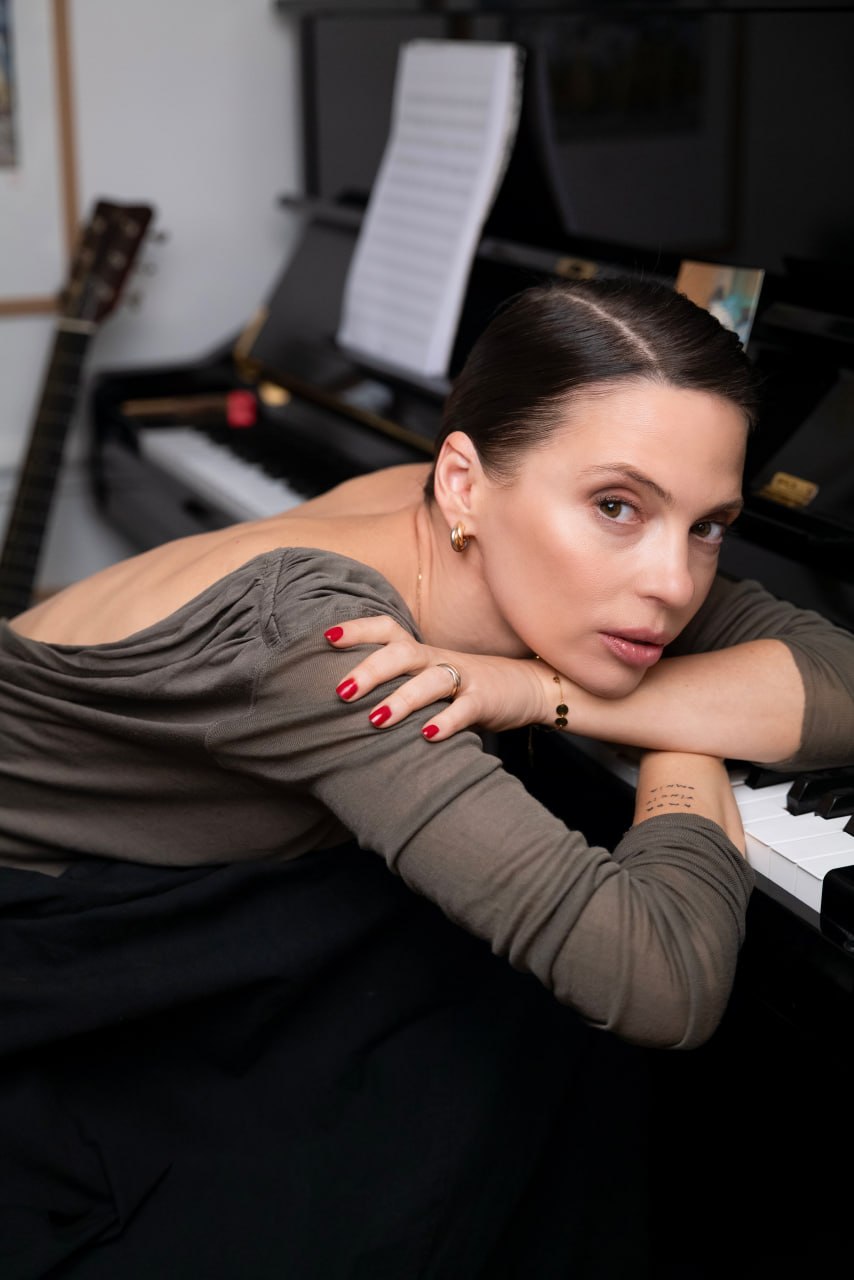
Irena Karpa / instagram.com
SHORT PROFILE
Name: Irena Karpa
Date of Birth: December 8, 1980
Place of Birth: Cherkasy, Ukraine
Profession: Writer, Singer, Journalist
Her first collection, Znes Palenoho, was published in 2002. In total, she has published 14 books, including novels, novellas, and short stories. She is a member of the Ukrainian PEN Club. She served as First Secretary for Cultural Affairs at the Embassy of Ukraine in France. Since 2000, she has been the vocalist and bassist of the band Faktychno Sami, which changed its name to Qarpa in 2007. The band has released nine albums. She lives between France and Ukraine.
We speak with Irena about women’s voices in literature and their role in the healing of society, as well as about how motherhood, war, and personal freedom shape the work of contemporary Ukrainian women writers.
Iryna Mamryha: Your work in the early 2000s was a revelation — frank, provocative, and bold. Most importantly, it was the voice of a young woman, inspiring other young female authors. Do you think there is such a thing as a distinct female voice in literature, different from a male one, or is that an artificial division?
Irena Karpa: I think texts are divided not into male and female, but into talented and untalented. But a woman’s voice truly deserves to be heard — simply because it was suppressed for centuries. Women wrote under male pseudonyms, and in other cases they were either overlooked or dismissed: “that’s for women” or “too academic”. I was once fortunate enough to meet the Serbian poet and literary scholar Milorad Pavić at a Balkan literature festival. At the time, I was the youngest participant at the festival, and he was the oldest. During his closing speech, he said: “Now the era of women writers has begun. From now on, your voice will be the leading one”.
Those turned out to be prophetic words. However, I don’t choose books based on the author’s gender but on whether the text resonates with me. If I were to name my favorite authors today, Kate Atkinson and Amélie Nothomb would be at the top of the list. I follow their new books not because they are women, but because they write brilliantly. In reality, everyone chooses not by whether the author is a woman or a man, not even by whether the writing is good or bad, or by ratings, but by what feels close and necessary at a particular stage of life. Still, I am convinced that women need to be given a voice simply because we were denied that right for far too long. Now we are gaining momentum very quickly.
І. М.: What stereotypes or prejudices about literature written by women have you encountered throughout your career?
І. К.: ЯI have always challenged the conventions established by men, and I was criticized for it. For example, for writing about sex, for portraying heroines who were proactive in intimate matters, bold, and always had agency. What irritated me was the classic form of dismissal: if a woman writes about the body, relationships, or emotions, it is labeled “women’s literature”, “for women”, something secondary. Or, conversely, people would say it was “too ambitious for a woman”. I grew up in a small mountain town where the Hutsul saying, “An unbeaten wife is like an unsharpened scythe”, was treated as something amusing and shocked no one.
Very often, the secondary status of women in traditional societies is perceived as something normal by default. That never worked for me, even as a young child. Even then, I understood that a man cannot be better than a woman simply because he is a man. In fact, it was that childhood sense of indignation that drove me to write about a woman’s right to be free. I think that is what resonates with my readers, just as it does with any woman who has agency, is intellectually engaged, wants to earn her own money, travel, and not depend on a partner. I believe in sisterhood, and it is outrageous to me that even in the twenty-first century, women still shame one another over their bodies, marriage, or careers, when in reality they should simply support each other and understand that you do not find good girlfriends on Tinder.
І. М.: How has the female voice in Ukrainian literature changed over the past 20 years? What are the biggest shifts you see compared to your debut in the early 2000s?
І. К.: It has changed tremendously. When I started in the early 2000s, there were only a handful of women writing boldly and openly. At that time, Oksana Zabuzhko had the strongest voice — for me, it was a real revelation: “Oh, so this is possible?” Today, there is an entire generation of new women authors who are not afraid to speak out. There is also much greater diversity — from serious literary fiction to genre literature: thrillers, detective fiction, erotica, and the supernatural. Women write about everything. But there is another side to it. There used to be a greater sense of freedom: there were no social media with their instant judgment and pressure. Today you can say anything, but at the same time you are constantly looking over your shoulder at the audience’s reaction. Competition among young women writers has also increased. Still, that’s great. I constantly teach women — I lead retreats and workshops so that there will be even more women’s voices. It creates an incredibly inspiring atmosphere.
І. М.: In your early works, you wrote very openly about the female body and sexuality. Do you still consider that provocative for Ukrainian society, or has the attitude changed? Is it difficult to surprise readers today, or is that no longer something worth trying to do?
І. К.: People are still triggered by other people’s bodies. Every new generation is interested in the subject of reproduction. There will always be someone who has just grown up and for whom this is a new experience. It’s really that simple. At the same time, it’s hard to impress readers today with sex alone, especially educated readers. The younger generation is much more uninhibited than we were. That’s why I believe it’s now important to surprise people with the quality of the writing, with new perspectives, with subjects that are still considered taboo. Freedom remains, but without talent it doesn’t work.
І. М.: How important is it for a woman writer to be autobiographical? Where do you draw the line between yourself as the author and your heroine?
І. К.: I always use something from my own life. It’s the easiest way to convey an emotion and an image. I take my “paints” from what I see and experience. For example, I live in Paris, so I write about Parisians. That means I might describe the real bakery where I buy my bread or what the booksellers along the banks of the Seine say. At the same time, my plot is always fictional. I don’t write autobiographies, and I don’t keep diaries. I find it more interesting to take individual fragments of reality and transform them into a new story. Every writer, in one way or another, does a recycling of their own experience. That’s why I always encourage my students to use what they have lived through. Lived trauma, pain, joy — when you give it to a character, the text becomes much more honest and powerful. Experience is my treasure. I will keep repeating that. Even if I’m writing a story about a little boy in an orphanage who desperately wanted to create music but was bullied, I will simply recall situations when I myself was bullied. We can borrow emotions from what we have experienced ourselves.
І. М.: How does literature help women speak about things they used to remain silent about? How powerful is therapeutic writing as a method?
І. К.: It’s a classic psychological method: you write a letter to yourself or to an ex-partner, and little by little you free yourself from the burden. At first, it’s simply a way of bringing structure to the chaos in your head. You write about a breakup, a loss, a trauma — and suddenly answers appear that weren’t there before. Order emerges from chaos. Many of my students came to me carrying deep trauma. I always tell them: write honestly, use your own experience. The cracks in the soul are best filled through creativity. In the therapeutic texts of some of them, I discovered a truly interesting literary voice and style. We continued working through the My Story course, and in the end, it became an entire collection about the first experience of war as lived by civilian women. I think that one day these will become very valuable documents.
І. М.: Russia’s full-scale invasion has affected everything, including creative work. How have your texts changed?
І. К.: In the novel He Returns on Sunday, I introduced a strong male storyline alongside the female one for the first time. To do that, I worked very closely with a serviceman who acted as my consultant. In effect, I allowed co-authorship in my book because I was writing about a world completely unfamiliar to me. I invented the overall plot, but in order for the text to feel authentic, I conducted interviews, verified every detail, and studied the everyday life and psychology of military personnel. Afterward, the serviceman edited everything and would say: “This part is very good. But here it’s obvious a woman wrote it — rewrite it. Men don’t think like that”. I worked on the book for a long time because preserving its quality was essential to me. I didn’t want to rush, as many people did in the first months. Although I was also told: “You have no right to write fiction — you have to process the war”. But the war has been going on for so long now that many things are already being forgotten. A great sense of responsibility emerged, along with new themes: how war changes men, their fears, uncertainty, whether anyone will be waiting for them at home, and what kind of society they will return to. At the same time, I did not abandon the storyline in which a woman becomes stronger, nor the storyline of love. I simply added a new and important layer.
І. М.: Returning to the topic of women: unlike men, women are often forced to make greater efforts to combine motherhood with a career. How do you find the time and resources to combine literature, music, and raising your teenage daughters?
І. К.: I don’t find the time. By now, I think all the experts have agreed on one thing: balance doesn’t exist. I’m an absent mother; I’m rarely at home. I try to stay in touch with my children all the time, but with teenagers that isn’t easy. When you call just to say, “I love you”, sometimes the answer is, “Why are you calling?” — and that’s normal. I remember what I was like at their age. I don’t consider myself a supermom, and I’m certainly not an expert on parenting. There are days when I think, “My God, what am I doing wrong?” In my profession — in literature, music, and teaching — I feel strong and confident. But motherhood is much more complicated. Whether I’m a good mother will become clear when we see whether my children grow up happy. So it’s difficult to say anything definite here and now.
І. М.: What advice would you give to women of different professions and social backgrounds so they don’t feel inadequate in the endless pursuit of having it all?
І. К.: Just remember — there is no one whose life is perfect in every area. Very often, people only show the façade: a successful career, wonderful children, a harmonious family. But behind the scenes, almost everyone has their own pain, anxieties, arguments, and the feeling that they’re “not good enough”. Photos on social media are just beautiful images. Behind closed doors, we don’t hear people arguing or putting each other down. We don’t see that a successful woman lies awake at night because her quarterly reports don’t add up or the tax authorities have shown up for an inspection. People don’t talk about those things. So I’ll say it again: balance doesn’t exist. You can be successful in your career and still feel guilty that your children are growing up without you. You can be a wonderful mother and worry that you’ve neglected yourself. Or you can try to do everything and still find no joy in life, or simply burn out. That’s why it’s important to make time for yourself. We’re so used to saving on ourselves, but never on others. Unfortunately, that’s something we inherited from our mothers and grandmothers. Learn to tell yourself, from time to time: Let it go — and simply live. Set aside time and money just for yourself, without feeling guilty. Your children will grow up and have lives of their own, while you will have less and less time left.
І. М.: How are social media and blogging changing traditional writing? Are they competition or an opportunity?
І. К.: They are different genres. But for writers, social media are definitely an opportunity, not competition. They provide something that never existed before — direct access to readers. I always advise people: keep a blog, write posts, let people get used to your voice. You can be an incredibly talented writer, but no one is going to come knocking on your door. Today, you have to reach out to your audience yourself. The world is highly competitive, so first of all you have to believe yourself and believe in yourself. Social media is a free publishing platform. If you strike a nerve, people will start sharing your work, and by the time you approach a publisher, you’ll already have an audience waiting for your book. Many people sell their books that way — even without a major publishing house. Of course, there’s another side to it: some bloggers mistake themselves for writers. But in the end, readers vote with their wallets. Some people love profound literary prose; others prefer light observations. And that’s perfectly normal. In general, people fall into two categories: the talented and the disciplined. Very often, talented people are not disciplined. But when someone is both talented and disciplined — that’s the real jackpot. That’s when they can achieve great success and create something truly valuable.
When copying materials, please place an active link to www.huxley.media
Select the text and press Ctrl + Enter