SERHII KOMBERIANOV: Collecting Is an Act of Resistance Against Death and a Chance to Have Your Own “Burial Mound”

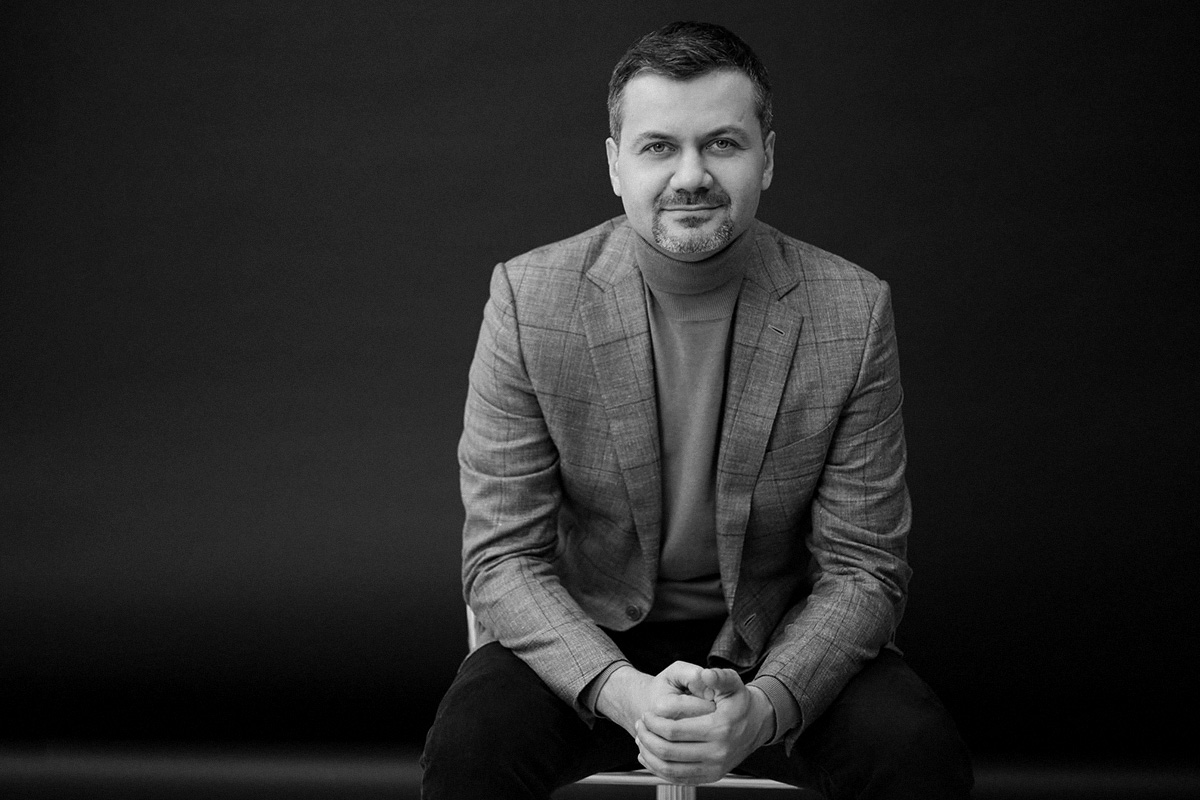
Serhii Komberianov / Photo from the personal archive
SHORT PROFILE
Name: Serhii Komberianov
Date of Birth: May 18, 1981
Place of Birth: Sambir, Lviv Region, Ukraine
Profession: businessman, President of Lean Institute Ukraine, Director of Lean Art Foundation
He wanted to become an archaeologist but became a businessman and the founder of Lean Institute Ukraine, Ukraine’s largest consulting company specialising in operational efficiency. Yet he eventually found his own “burial mound” — in art. Serhii Komberianov has assembled the largest private collection of works by the Boychukists, founded the Lean Art Foundation, and is convinced that collecting is not about ownership, but about research, social mission, and a way of restoring the Executed Renaissance to his country. How paintings on a wall turn into a life’s work, why art should not remain hidden away in storage even during wartime, and what collectors and detectives have in common — in a conversation with Huxley.
THE COLLECTOR-RESEARCHER: SEARCHING AROUND AN IDEA
I
came to collecting for rather practical reasons. At first, I was simply looking for works of art that I could display at home. But this inevitably led me to start studying the artists whose works I was buying. I became so fascinated that I turned into a collector-researcher. This is a distinct type of collector. There are also collector-gatherers, who conduct research as well, but whose priority is ownership, and collector-investors, who buy solely to preserve and increase their capital. My first thought when I buy works is: “What kind of exhibition could be created around them? And what kind of book could be written about this artistic phenomenon?” I did not immediately realise that collecting should be built around ideas. I had to study a great deal of art literature, conduct research, and search for a subject that would truly fascinate and inspire me.
When I was buying paintings for interiors, I began with works by the highly talented artist Anatolii Kryvolap. But later I discovered the Ukrainian nonconformists of the second half of the twentieth century and became fascinated by them. One day, I saw an exhibition of Alla Horska at the Ukrainian House and realised: this is mine — this is precisely the artistic phenomenon I want to study and explore. From there, the thread of my research led me to the Boychukists, to the Executed Renaissance of the first half of the twentieth century, whose continuation was nonconformism. And that was when a real “match” happened: I understood exactly what I wanted to collect and what would distinguish me from others. The Boychukists were a niche that offered me enormous scope for research, because Boychukism is an art movement that was destroyed, and there were no collectors eager to collect something that supposedly no longer existed.
As it happened, one collection of works by the Boychukists first entered my collection, then a second, then a third… Over time, I realised that a foundation needed to be built around this, supporting projects that restore the art of resistance to us — in the broadest sense: nonconformism, Boychukism, the post-Soviet movements of the 1990s, and wartime art. Then a team came together, and we began organising exhibitions. So today, collecting for me is a social mission, a sense that I am doing something important — for myself, for people, for Ukrainian culture. It seems to me that, for most people, collecting comes in waves: you become fascinated by something, then disappointed, get distracted by something else, then become absorbed in it again… But once you find your central idea, it never loses its relevance for you and continues to fill you with energy. Everything seems to come together in the best possible way almost by itself, because the people around you see that this is something you genuinely live and breathe, they become emotionally involved, and this is how all kinds of interesting projects emerge.
LEAN: BUSINESS AND ART WITHOUT THE UNNECESSARY
Unfortunately, collecting in Ukraine is not particularly public — there are very few private collections open to the public. However, there are examples that have inspired me: the collection of the Hryniov family from Kharkiv and the collection of Stella Beniaminova. In Ukraine, collectors generally do not build collections around a single theme, but instead collect almost everything that represents a particular “slice of time”. It is considered good practice for a collector to narrow their focus and have a distinctive feature. Collections are often built around a particular criterion — geographical or, for example, gender-based. One might collect cutting-edge art by women or African artists. At first, my interests were scattered across too many areas, so I had to narrow my focus considerably. This principle is reflected in the name of our foundation — Lean Art Foundation: the English word lean conveys the idea of eliminating everything unnecessary.
On the other hand, the name also embodies the idea of continuity with Lean Institute Ukraine — the consulting company whose profits fund the creation of the collection. In other words, “without the unnecessary” is a unifying creative principle that connects collecting and business, giving entrepreneurial activity a dimension of social responsibility. My collection currently consists of three sections: the Boychukists, the nonconformists, and a section without a specific theme — the result of my initially unsystematic interest in many different things. In my view, a collection without a single unifying idea not only looks chaotic but also spreads resources too thin. That is why I quickly ruled out sculpture and ceramics, for example, focusing exclusively on painting and graphic art. Moreover, at a certain point, I realised that treating collecting purely as a business was quite risky.
A SINGLE-FOCUS COLLECTION AS A STRATEGY
If you invest for the long term, Warren Buffett-style, you need to hold on to a work for at least twenty years before selling it. Overall, however, art is not a particularly liquid asset. It is mainly dealers who can make quick profits through resales. Collectors who focus on flipping paintings, on the other hand, usually end up losing money quite quickly, because the number of buyers is limited and selling a work is not that easy. A narrowly focused collection mitigates some of these risks because it is created not for resale, but for exhibitions, books, and research. Of course, every collector still thinks about the value of the works — it is important to know that the money has not been spent in vain. Taking all this into account, I decided to focus on the nonconformists and the Boychukists — the art of resistance, which had attracted long-deferred interest but had not yet become overly commercialised or mainstream. For example, just a few years ago, works by Alla Horska cost $600–700, whereas today they fetch $14,000–15,000 at auction. Interest in the art of resistance and the Sixtiers movement is growing rapidly. I take this growth into account, although I do not sell anything from my collection — I have no need to do so at present. A single-focus collection becomes something valuable in its own right because it creates a new quality that did not exist before. Avant-garde art provides an example of this: collectors initially focus on Malevich, Kandinsky, and Bohomazov, but then other artists come into view, and their value automatically increases. I expect the same to happen with the Boychuk school.
ART SHOULD “LIVE” AT HOME
Should Ukrainian art “live” exclusively in Ukraine? This is a very complex question. Let me give you an example. Our exhibition at the Ukrainian House featuring works by seventeen women artists of the Boychuk school was an overwhelming success because history and society had unjustly pushed these women into the shadow of the school’s male artists. Yet in some respects, these women were even more talented than their male counterparts. Unexpectedly, it turned out that something similar was being prepared in Europe at the same time. A book by a Dutch researcher about the women of Mykhailo Boychuk’s school was recently published there. In other words, this is not merely my subjective perspective but a broader trend in art research. However, if we were to take the works of these women artists to Europe right now, they would not have the same impact as they did in Ukraine. There is another problem as well: we still lack substantial collections of works by many Ukrainian artists who are highly regarded around the world.
There are almost no works by Malevich himself in Ukraine! I firmly believe that Ukrainian geniuses should be brought back to their homeland, which is why I buy works by our compatriots abroad and bring them to Ukraine. But returning our cultural heritage does not rule out promoting Ukrainian artists in other countries. Taking all this into account, I believe that private collectors play an extremely important role in society during wartime. For security reasons, most Ukrainian museums have now scaled back their activities: artworks are kept in storage, exhibitions are not being held, and insurance is prohibitively expensive. Yet the demand remains — people both inside and outside Ukraine want to see masterpieces of Ukrainian art. Some collectors, myself included, consciously accept the risks and agree to exhibit their works without insurance. This is a delicate issue. On the one hand, keeping paintings in storage makes it possible to preserve them for future generations. On the other hand, we are losing them as a living artistic phenomenon in the present. Some kind of compromise has to be found.
I am currently living in Kyiv, but my collection is gradually being moved to a secure storage facility not far away. When scheduled exhibitions take place in the capital or in western Ukraine, the works can be brought back quickly. It is extremely important that, especially during wartime, the art of resistance should constantly engage with people and speak to them. The idea of buying something valuable and locking it away in a safe in Vienna does not appeal to me at all. A public collection is a living, active collection. Public visibility increases its value, although we have certain problems with transparency in this regard: when corrupt officials buy paintings, they try to hide them immediately to avoid having to explain where the money came from. But I am gradually encouraging businesspeople whose collections have transparent sources of funding to make them public, including by setting a personal example. One of my arguments is security: a work of art whose owner is well known and which has been publicly exhibited is much harder to forge or steal and subsequently resell.

OVERCOMING DEATH: HOW A COLLECTION TRANSFORMS THE COLLECTOR
I am convinced that a collection gradually transforms its collector. At first, I knew only three artists — Kryvolap, Tistol, and Roitburd. I immediately began researching which artistic circles they belonged to. Kryvolap was a member of the Picturesque Reserve. And what was the Picturesque Reserve part of? It belonged to the New Ukrainian Wave. Who else was associated with that movement? The Paris Commune. And what came before it? Gradually, you develop, learn more, and begin to understand things you previously could not accept. In some respects, I used to be very conservative, but now I have become open to contemporary artistic practices. When I began studying the nonconformists, it profoundly influenced both my sense of self and my perception of the outside world.
You study people who had the courage to create art that the world might never have seen. And they knew it. Some were sent to labor camps; others were executed. Overall, the idea of creative freedom and resistance helped me reconsider certain views on life and some of my decisions. I have a hypothesis that the phenomenon of collecting itself is driven by the idea of resisting the inevitable — confronting the fear of death. You collect and come into contact with something eternal, and in doing so, you seem to overcome death, extending your existence through time. Even simply hanging a painting on a wall changes the environment around you. Living in a space surrounded by beauty shapes a positive outlook on the world. While teaching operational efficiency at business schools, I began sharing my experience of how art influences entrepreneurs.
Incidentally, numerous studies confirm that entrepreneurs who take an interest in art interact more effectively with their teams and become more creative and empathetic. Collectors also develop an ability to notice the smallest details, much like archaeologists or detectives, because they are constantly training themselves to recognise not only signs of artistic talent but also forgeries. I once bought several forged works attributed to Prymachenko. I managed to return them to the gallery that had sold them to me. But it was an important lesson: you have to pay the utmost attention to detail. It is worth noting that Prymachenko’s works are forged on a massive scale — only 5% of the works attributed to her on the market are authentic. Works by the Boychukists, by contrast, are hardly ever forged because they remained outside the mainstream for so long. Art history helps identify forgeries — I primarily focus on works that have already been catalogued. It is meticulous detective work: you need to attribute a painting, examine its provenance, establish how it appeared on the market, identify who is selling it, and so on.
THE COLLECTION AS MY OWN BURIAL MOUND
After finishing school, I wanted to study history at university and become an archaeologist, because I had been fascinated by history and excavations since childhood. However, my family had a different opinion: “There are no treasures of Tutankhamun in our burial mounds. You’ll spend your whole life digging in the ground and living in poverty!” But I loved archaeology! What was I supposed to do? Then my parents said: “First, earn some money, then buy yourself a burial mound and dig in it as much as you like!” Years passed, and I built a business and achieved a certain level of financial prosperity. One day, I acquired the artistic legacy of a Boychukist artist — I bought all the works and documents that had remained in his family. I remember calling my mother and saying: “You won’t believe it, but I’ve bought myself that burial mound you once told me about!”
After all, an artist’s archive is a real burial mound that you can “excavate” for years, making new discoveries along the way. In the archive of a Boychukist artist who had died back in the 1970s, I discovered many drawings previously unknown to the general public, along with other remarkable finds. His family had never shown these works, they had never been exhibited, and the documents had never been made public. What followed was a real detective story: some of the drawings looked highly uncharacteristic of this artist. It turned out that they belonged to a female friend of his — also a well-known Boychukist artist, who had tragically died in the 1970s. She had no relatives, so all her drawings and belongings had passed into her friend’s possession. We were able to identify them only because we were fortunate enough to find photographs of these works in the archives of the Voznytsky Lviv Art Gallery. Very few works by this artist have survived, so the discovery was exceptionally important.
A CULTURAL DETECTIVE STORY
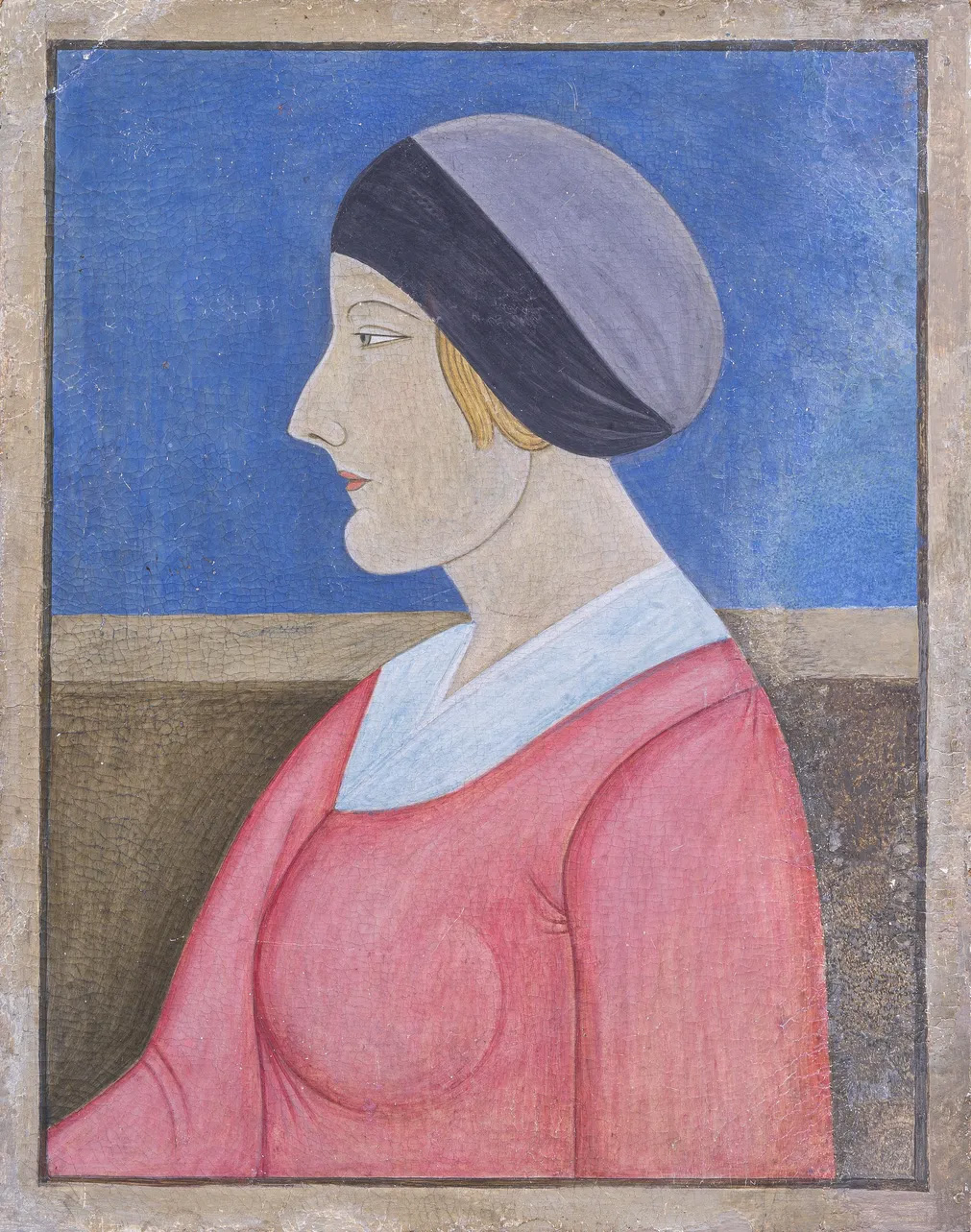
While studying the Boychukists, I realised that they themselves were researchers, masters of grand synthesis. They drew on the art of the Pre-Raphaelites, the Renaissance, Egypt, and Syria, combining it with Ukrainian naive art to give it all a new, contemporary expression. It is fascinating to explore the sources from which they drew their ideas and motifs. I own a fairly well-known work by the Boychukist artist Antonina Ivanova — a portrait of a woman wearing a beret. It turned out that Ivanova had taken an Early Renaissance portrait of a princess of the House of Este as her starting point and placed this princess in the realities of Kyiv at that time. Such things constantly need to be deciphered. I have always had a detective’s way of thinking. It manifests itself not only in solving artistic mysteries but also in my writing — creating detective stories and thrillers. Collecting helps develop this ability because you learn how to look for clues. And one day, I will definitely write a detective novel featuring one of the Boychukists as its protagonist.
Boychukism is an exceptionally vibrant yet complex, nonlinear phenomenon. And therein lies a great paradox, because the Boychukists sought to create monumental art that would be understandable to ordinary people. Yet this “simplicity” was actually a synthesis of different cultures, historical periods, and artistic and philosophical ideas. The idea of resistance in their art is not so straightforward either — it extended far beyond the political context of the time. The Boychukists did not fit into the canon of socialist realism in any way, yet none of them were dissidents or actively opposed Soviet rule. Their resistance lay in the fact that they created art on the boundary between existence and nonexistence. It is difficult to imagine what an artist feels when he realises that his paintings will probably never be seen by anyone. Yet he stubbornly continues to create them, with eternity in mind, believing that “manuscripts don’t burn”. This desperate resistance is not so much political as artistic and existential — a defiance of death and oblivion. Moreover, their resistance was also connected with the national idea.
The Boychukists sought to build a distinctly national Ukrainian art. That is why Soviet critics challenged them: why do you speak of Ukrainian art rather than the art of a unified Soviet people? For a long time, the Boychukists, who were politically loyal to the Soviet authorities, saw no threat in such questions. They sarcastically ridiculed the Russian Peredvizhniki, or Wanderers, whose work Soviet aesthetics officially held up as a model. In the final years before their executions, the Boychukists finally realised the price they would pay for such mockery. They tried to produce socialist realist works “like everyone else”, formally conforming to its requirements, although with very little artistic success — but by then, this could no longer save them. Their early works, however, remain an example of creative resistance — the Ukrainian tradition that my foundation seeks to promote.
THE PEOPLE WERE EXECUTED, BUT THE ART WAS NOT
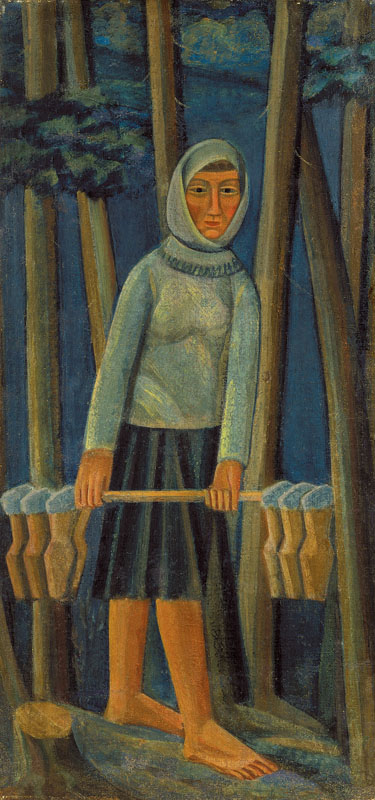
There is a view that Boychukism was an unrealised project of a grand artistic style. After the Boychukists were executed, their works were supposedly destroyed, leaving only a few small fragments of the school behind. My goal is to demonstrate that the Boychuk school has survived as a coherent artistic phenomenon. It has not been destroyed, and we still have works to admire and reasons to be proud. Unfortunately, very few paintings by Boychuk himself have survived. What we have today consists of his early works, preserved largely thanks to Yaroslava Muzyka, who hid his artworks throughout her life and even concealed them inside a wall. But art is not about quantity; it is about quality. Look at Boychuk’s The Milkmaid — it is an exceptionally interesting painting when you break down its composition. In particular, you can identify references to Paul Sérusier, from whom Boychuk learned a great deal.
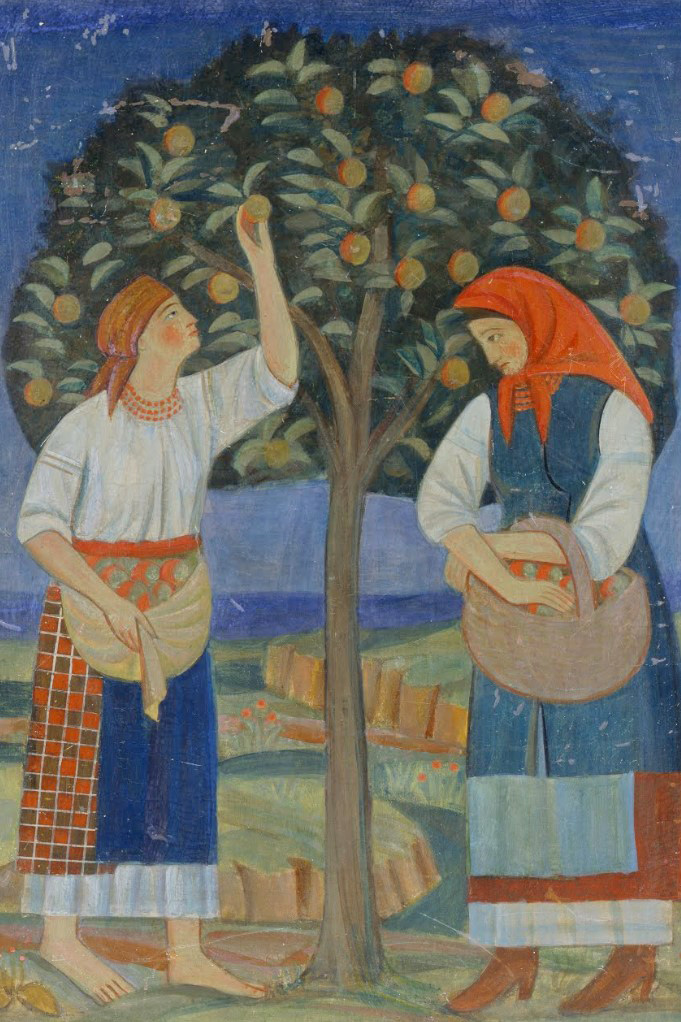
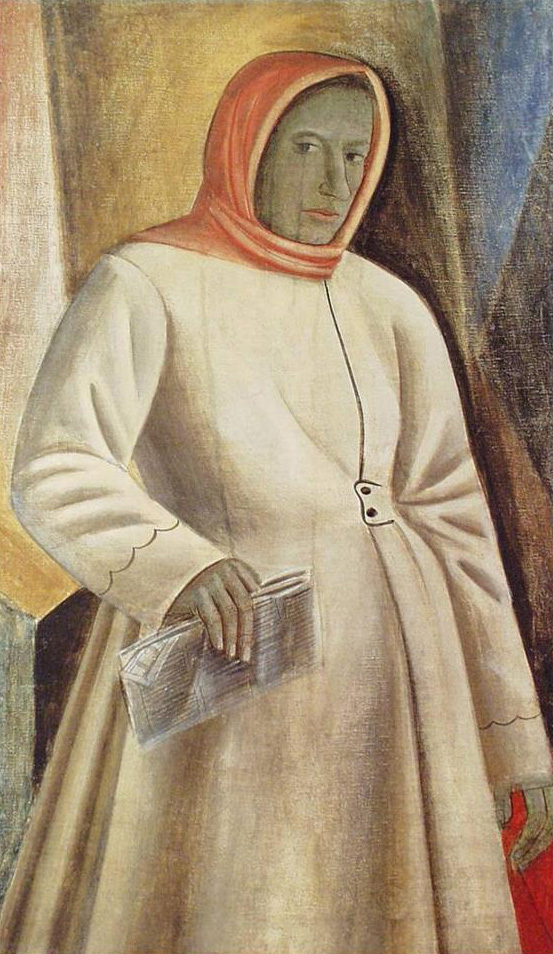
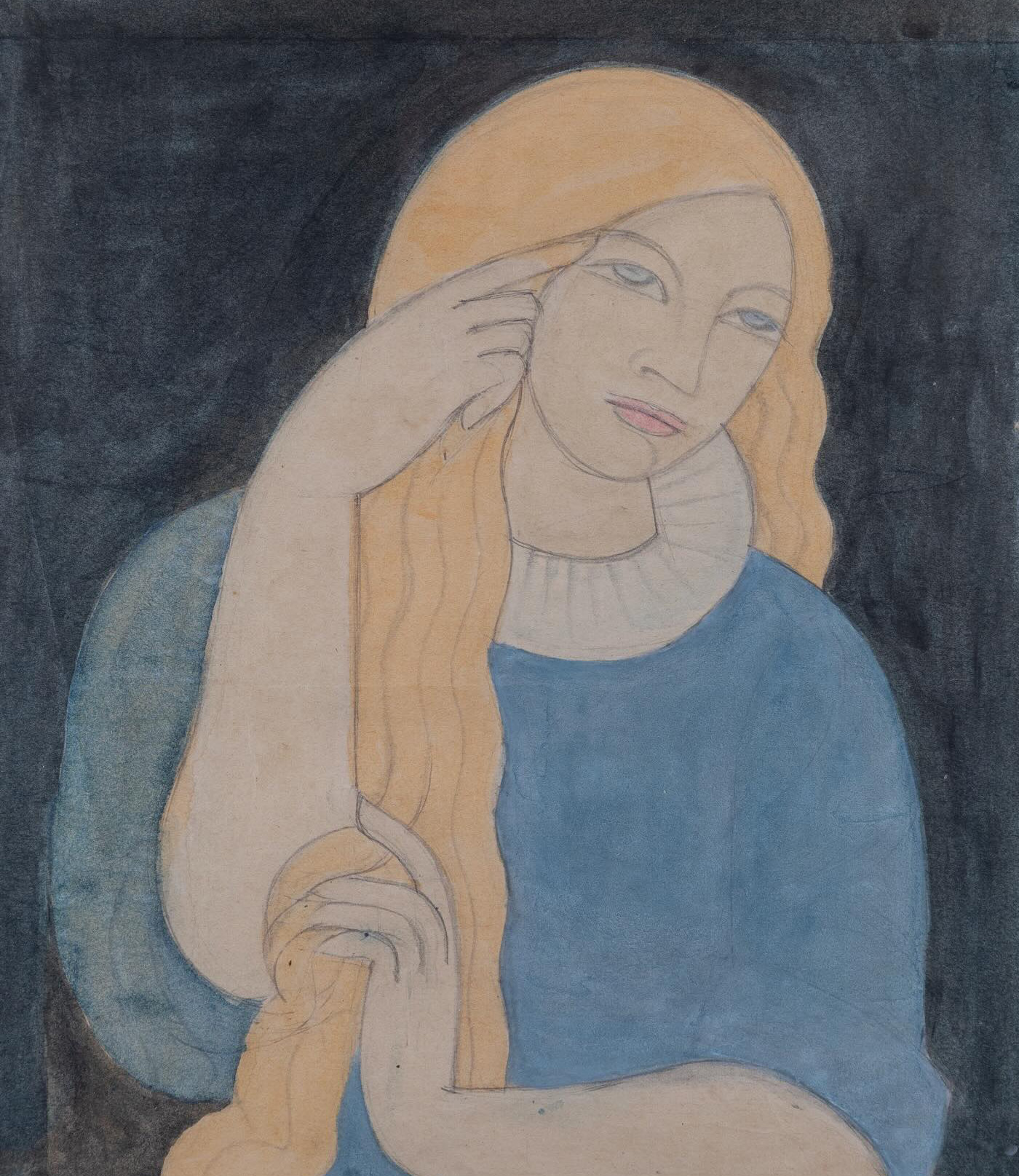
He also had an extraordinarily talented brother, Tymko Boychuk. His painting Women by an Apple Tree is an exceptionally representative example of Boychukism. Consider the fate of Vasyl Sedliar’s Portrait of His Wife, which was once exhibited at the Venice Biennale. The painting was later hacked to pieces with an axe, subsequently stitched back together, and is now preserved in restored condition at the National Art Museum of Ukraine. Take a closer look at Antonina Ivanova’s remarkable Portrait of a Woman in Profile Wearing a Beret or Serhii Kolos’s Girl Combing Her Braid — and you will find it impossible to claim that nothing remains of Boychukism. Yes, the people were executed, but the art was not.
My collection demonstrates that this art not only survived but also profoundly influenced the next generation of artists. Just look at the artists whose mentors were students of Boychuk: Ivan-Valentyn Zadorozhnyi, Alla Horska, Hryhorii Havrylenko, Ada Rybachuk, Volodymyr Melnychenko… I could continue this list endlessly, right up to the present day. This is my inexhaustible “burial mound”, one that requires constant exploration. A significant number of Ukrainian artists have drawn inspiration from Boychuk’s work. Take Fedir Tetianych, for example, one of the boldest artists of Soviet and post-Soviet Ukraine. His works are held in numerous international collections, including the Centre Pompidou, the Stedelijk Museum, and museums in Warsaw and Łódź. Among contemporary young artists, there is Mariia Vasylenko, who works in the Neo-Byzantine style and draws inspiration from the Boychukists. Interest in them is also growing thanks to the Mykhailo Boychuk Academy in Kyiv, whose influence radiates throughout the country.
My collection, which continues to grow, now contains more than 500 works. It is considered relatively small, although it is undoubtedly the largest private collection of Boychukist art. When aspiring collectors ask me for advice, I tell them: “Nothing unnecessary!” Collecting should not become an obsession in which you acquire everything you are offered. Let it be a small collection, but one that reflects your own personality, your tastes, and your values. Remaining true to yourself despite everything — perhaps this is the most important lesson taught by the works and lives of the Boychukists.
When copying materials, please place an active link to www.huxley.media
Select the text and press Ctrl + Enter